Gladstone NOW: The Campaign Join Us on the Journey✕




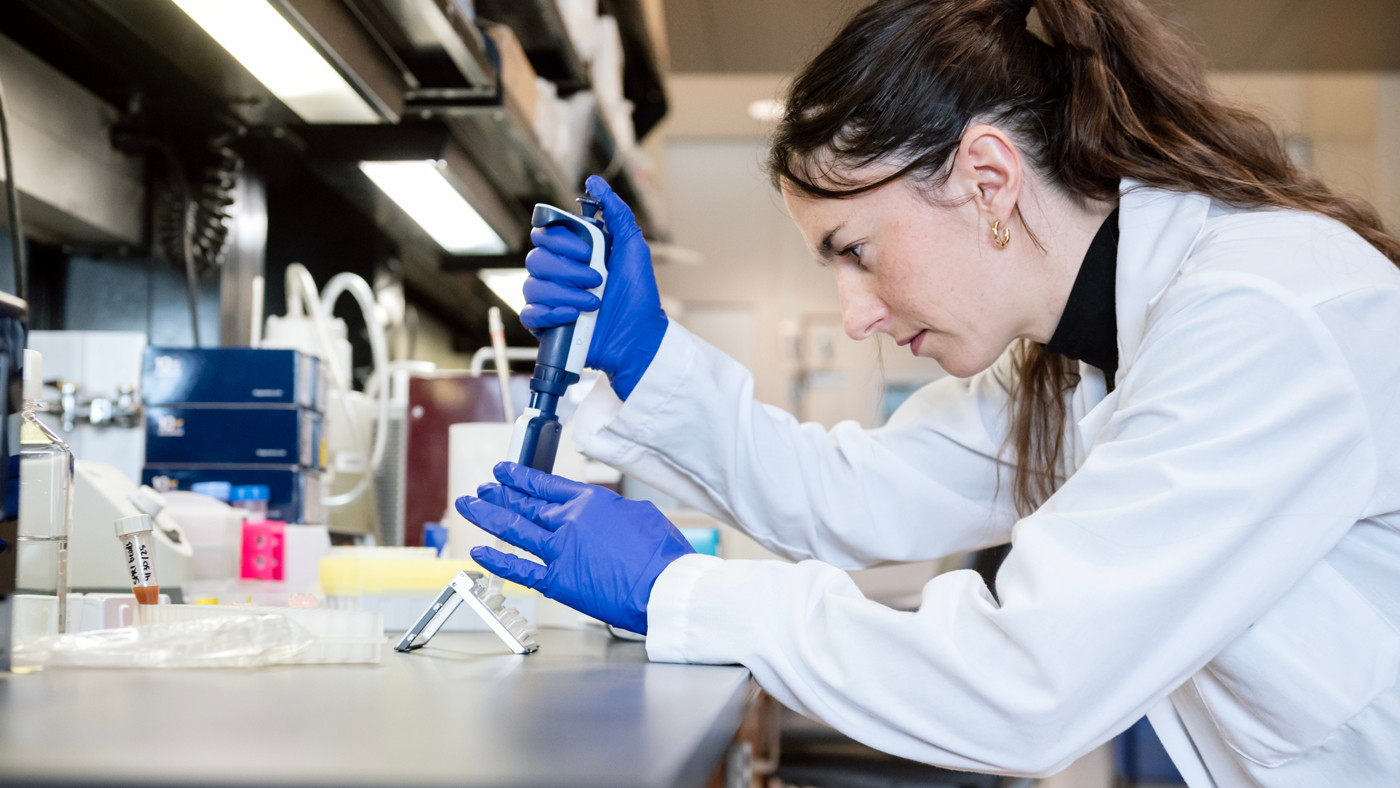
A team of scientists—including Julie Frouard, seen here—developed a novel tool, named HIV-seq, that could uncover new opportunities for treating HIV.
Listen to this article
For people living with human immunodeficiency virus (HIV), life-saving antiretroviral therapy keeps their HIV-infected immune cells from making new copies of the virus, preventing illness and transmission.
Historically, these infected cells have been known as the “latent” HIV reservoir—implying that the HIV within the infected cells is completely inactive.
“But notion that the entirety of the HIV reservoir is latent is actually a misleading description, because some reservoir cells can still be quite active,” says Nadia Roan, PhD, senior investigator at Gladstone Institutes. “Even though antiretroviral therapy keeps full-fledged HIV virus from being made, some of the infected cells continue spitting out viral products.”

A new tool developed by Nadia Roan (center) and her colleagues helped identify key differences in HIV-infected cells before and after antiretroviral therapy, pointing to new possibilities for treating the virus.
That means people with HIV who are on therapy still deal with fragments of the virus in their body, often resulting in long-term inflammation and related medical conditions, including organ damage and increased risk of heart attack. Also, the greater the number of such “active” reservoir cells in a patient, the faster their HIV will rebound if they stop treatment for any reason, such as losing access to it.
If scientists could gain a deeper understanding of the activity of genes in these cells, it could point to new possibilities for treating HIV, for example to eliminate these cells or prevent their ability to spit out fragments of HIV. But existing research methods have not been up to the task.
Now, Roan’s team, in collaboration with a team at the San Francisco Veterans Affairs Medical Center, have developed a novel tool—named HIV-seq—for profiling the features of rare HIV-infected cells from people with HIV.
“Using our new tool, we’ve found key differences in people’s HIV-infected cells before versus after starting antiretroviral therapy,” says Roan, senior author of the study published in Nature Communications. “We hope it will be helpful for understanding how HIV develops, and how the long-lived HIV reservoir can persist for decades in people with HIV.”
Capturing Elusive HIV-Infected Cells
In recent years, a method called single-cell RNA sequencing has yielded an explosion of new biomedical discoveries, because it allows scientists to see which genes are turned on in individual cells. However, it has not worked so well for studying active HIV reservoir cells in people taking antiretroviral therapy.
“When single-cell RNA sequencing was applied to blood samples from patients on therapy, it oftentimes only detected one or two of these cells per person,” says Julie Frouard, PhD, a scientist in Roan’s Lab and one of the first authors of the study. “That’s not enough for a meaningful analysis.”
The problem, the team reasoned, is that the technique needs specific fragments of RNA, which is the molecule that carries genetic instructions. Unlike many other RNA fragments in human cells, much of the RNA produced by HIV does not match the required criteria. So, it is not fully captured by single-cell RNA sequencing, and reservoir cells that actively produce HIV can be overlooked by the method.
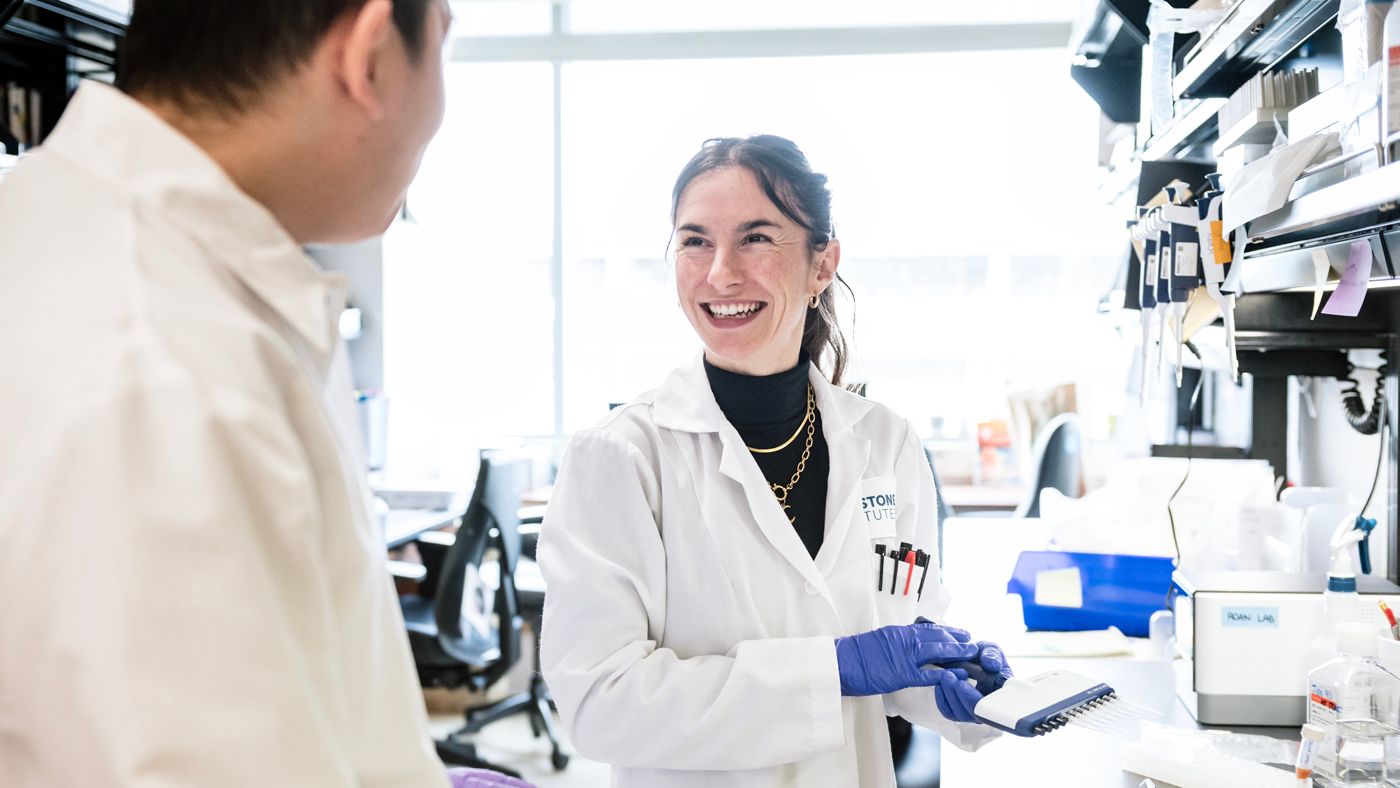
Using the new tool, called HIV-seq, the scientists recovered the highest number of HIV reservoir cells to date from blood samples of people with active HIV infection, allowing them to characterize the cells in a meaningful way.
To address this obstacle, the researchers developed HIV-seq—a novel tool for single-cell RNA analysis that is custom-tailored for the virus. It is specially designed to recognize cells that are producing HIV RNA fragments.
“Pitting HIV-seq head-to-head with the standard approach, we recovered and analyzed more HIV-infected cells, and higher numbers of HIV RNA within those infected cells,” says Steven Yukl, MD, a physician-scientist at the San Francisco VA Medical Center and senior author of the study. “Now, for the first time, we can actually characterize these cells in a meaningful manner for people whose HIV is suppressed by antiretroviral therapy.”
With reservoir cells no longer slipping through the cracks, the team recovered 25 such cells from three people on therapy. When applied to blood samples from people with active HIV infection who had not yet started therapy, HIV-seq recovered more than 1,000 reservoir cells from four patients—the highest number to date.
“Fiery” Versus Quiet Cells
The scientists then leveraged HIV-seq to characterize HIV-infected cells from people with HIV before and after starting therapy, as well as to identify the proteins present on the surface of these cells.
“Prior single-cell RNA sequencing studies have primarily analyzed HIV-infected cells in people who had not yet started therapy,” says Sushama Telwatte, PhD, who is now an investigator at the Doherty Institute, University of Melbourne. “We felt those cells probably look very different from reservoir cells in people on therapy, which can persist for decades while still producing HIV RNA fragments.”
In fact, the scientists revealed multiple differences in HIV-infected cells before and after antiretroviral therapy.
Cells taken from people who had not started therapy exhibited cytotoxic features, meaning they had proteins associated with the ability to directly kill other cells. These cells also had lower levels of specific genes linked to HIV suppression, suggesting that HIV may somehow inhibit these genes in order to rapidly produce new copies of itself.
“In a general sense, I would say that these cells were rather inflammatory, or fiery,” says Roan, who is also a professor in the Department of Urology at UC San Francisco (UCSF).
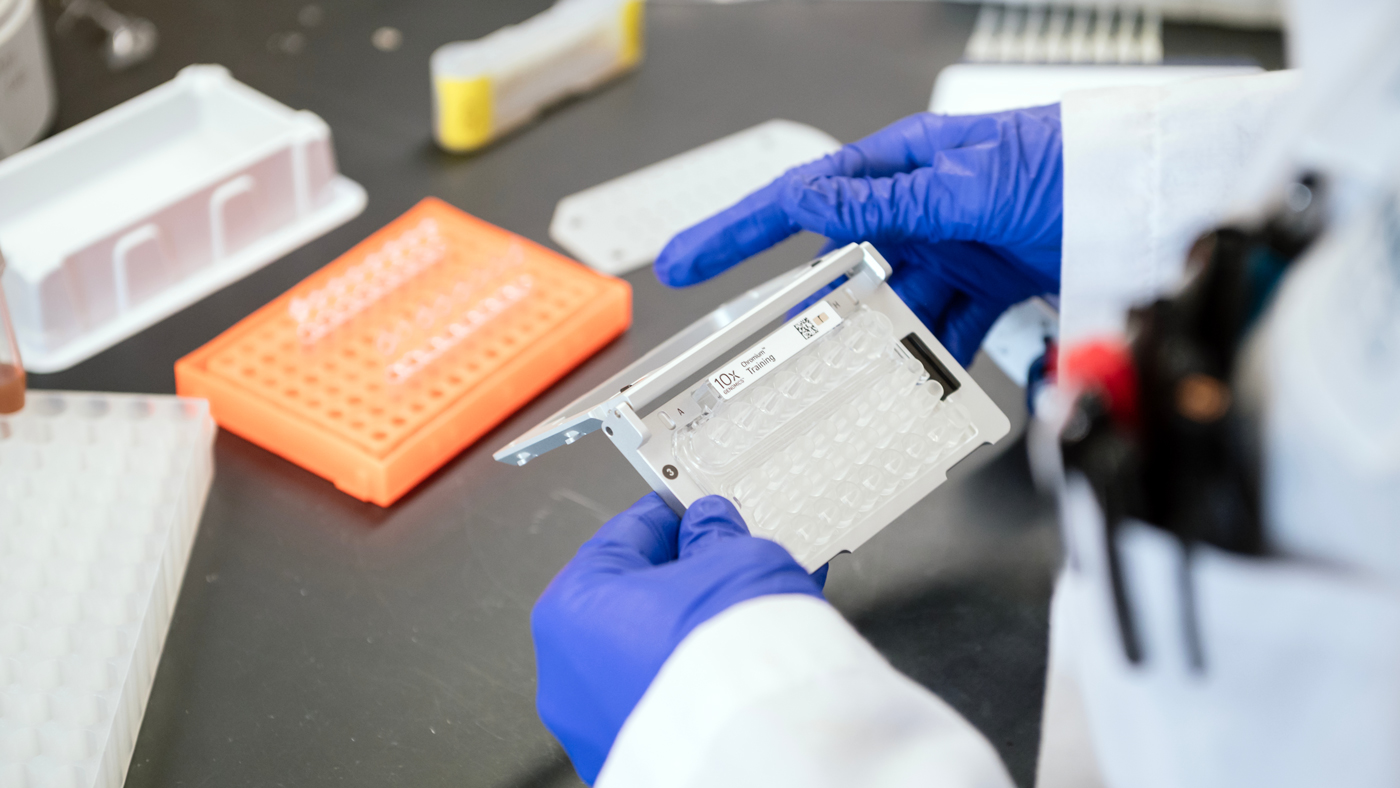
The new study helps explain why HIV reservoir cells have been able to hide for so long from the immune cells meant to recognize and eliminate them.
In contrast, HIV reservoir cells from people on therapy were quieter, with anti-inflammatory features and without cytotoxic features. They also exhibited higher levels of genes that help cells evade death and achieve long-term survival.
“This is noteworthy because there is an ongoing clinical trial testing a drug targeting a pathway that HIV may use to preferentially promote survival of its host cell,” says Yukl, who is also a professor of medicine at UCSF. “Our data provide further support for that research.”
In the cells from people on therapy, the scientists uncovered higher levels of other proteins, too. One protein is associated with the ability of cells to steadily multiply for long periods of time, while others are connected with suppressing both HIV production and the immune system. These discoveries could help explain how the active reservoir cells are able to fly under the radar for so long, when the immune system should be recognizing and eliminating them.
“We’re already building on some of our new findings by testing, in various laboratory models, whether we can stop HIV reservoir cells from multiplying by targeting these pro-survival pathways,” Roan says. “We hope this is just the beginning of all that could be discovered with HIV-seq.”
For Media
Julie Langelier
Associate Director, Communications
415.734.5000
Email
About the Study
The paper, “HIV-seq reveals gene expression differences between HIV-transcribing cells from viremic and suppressed people with HIV,” was published by the journal Nature Communications on March 3, 2026.
The authors are Julie Frouard, Xiaoyu Luo, Natalie Gill, Reuben Thomas, and Nadia Roan of Gladstone; Sushama Telwatte formerly of the San Francisco VA Medical Center and now of the University of Melbourne; Joseph K Wong and Steven Yukl of the San Francisco VA Medical Center; Douglas Arneson, Atul J Butte, Rebecca Hoh, and Steven Deeks of UCSF; Pavitra Roychoudhury of the University of Washington; and Sulggi Lee from the Zuckerberg San Francisco General Hospital.
The work was supported by the National Institutes of Health, the California HIV/AIDS Research Program, UCSF-Bay Area CFAR, and the James B. Pendleton Charitable Trust.
About Gladstone Institutes
Gladstone Institutes is an independent, nonprofit life science research organization that uses visionary science and technology to overcome disease. Established in 1979, it is located in the epicenter of biomedical and technological innovation, in the Mission Bay neighborhood of San Francisco. Gladstone has created a research model that disrupts how science is done, funds big ideas, and attracts the brightest minds.
Featured Experts
CSV file successfully filtered and rewritten.CSV file successfully filtered and rewritten.
Gladstone NOW: The Campaign
Join Us On The Journey
How a Single Viral Protein Hijacks Immune Cells to Supercharge COVID-19 Infection
Article
September 18, 2026
How a Single Viral Protein Hijacks Immune Cells to Supercharge COVID-19 Infection
A new discovery reveals how a SARS-CoV-2 protein reprograms immune cells to accelerate viral spread—and points to a new strategy for therapeutic intervention.
News Release Ott Lab COVID-19 Infectious DiseaseThe 2026 Ogawa-Yamanaka Stem Cell Prize Awarded to Jun Takahashi
Article
September 14, 2026
The 2026 Ogawa-Yamanaka Stem Cell Prize Awarded to Jun Takahashi
Takahashi is recognized for his pioneering work translating iPS cell technology into a clinically approved therapy for Parkinson’s disease.
Ogawa Stem Cell Prize Stem Cells/iPSCs Regenerative Medicine News Release AwardsScientists Decode Gene Circuits of Human Immunity, Fueling New Era of Disease Research
Article
August 28, 2026
Scientists Decode Gene Circuits of Human Immunity, Fueling New Era of Disease Research
An unprecedented map of 22 million immune cells provides the functional rulebook for virtual biology and next-generation immunotherapies.
Marson Lab Genomic Immunology Cancer Autoimmune Diseases News Release