Beyond Viruses: Expanding the Fight Against Infectious Diseases
Listen:
From influenza and COVID-19 to HIV, viruses continue to pose a serious danger to global health.
But just as pressing are threats from other disease-causing microorganisms such as bacteria—especially the deadly strains that are becoming resistant to antibiotic medicines. And increasingly, scientists are discovering how viruses and bacteria are closely interconnected, influencing health and disease in ways that we’re only beginning to understand.
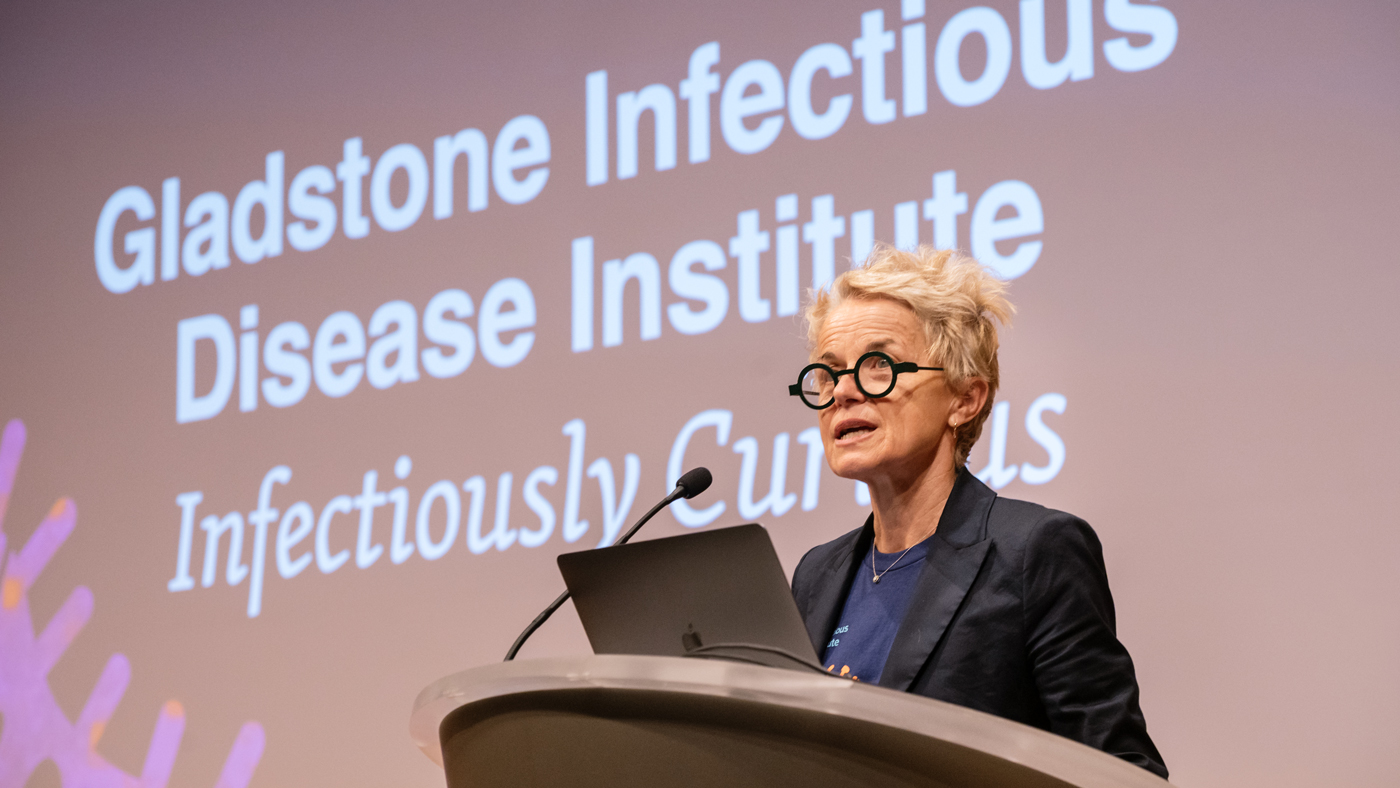
To reflect this reality, the Gladstone Institute of Virology has taken on a new name: the Gladstone Infectious Disease Institute. The new name aptly encompasses the expanded nature of the institute’s mission to understand and address a range of infectious threats.
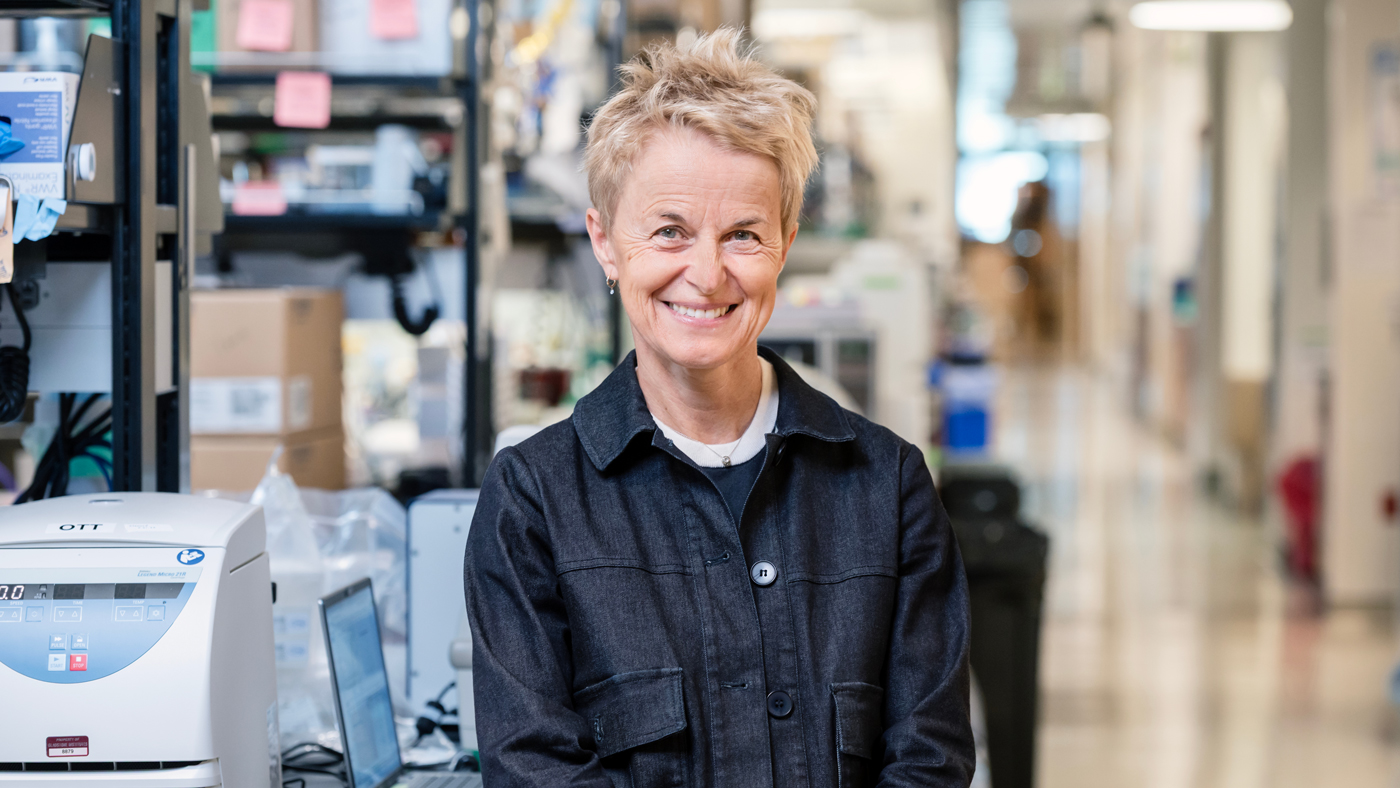
“We’re building on the institute’s deep expertise studying viruses to make new discoveries that can impact a greater number of the pressing health challenges we face,” says Melanie Ott, MD, PhD, director of the Gladstone Infectious Disease Institute and the Nick and Sue Hellmann Distinguished Professor at Gladstone Institutes. “The name change is emblematic of our broadened research scope and sets us on the right track for the next decades.”
The Gladstone Infectious Disease Institute is one of five institutes that make up Gladstone Institutes, a San Francisco–based biomedical research organization dedicated to finding cures for the world’s most devastating diseases, including heart disease, neurodegenerative disorders, and cancer.
“As science continuously evolves, we evolve with it,” says Gladstone President Deepak Srivastava, MD. “The expanded vision for our infectious disease research is a strategic decision that will empower us to tackle the global health challenges that lie ahead.”
Evolving to Meet Critical Research Needs
The Gladstone Institute of Virology was established in 1992, originally as the Gladstone Institute of Virology and Immunology. Over time, the institute made its mark across many disciplines, with HIV as an initial and continuing focus.
By discovering how HIV hijacks our immune cells, Gladstone discoveries helped lay the foundation for drugs that have converted AIDS from a universally fatal disease to a chronic condition. In addition, the institute’s scientists led a global study that resulted in FDA approval of the HIV pre-exposure prophylaxis (PReP) drug Truvada, establishing an efficient way to prevent new infections in high-risk populations—now the standard of care around the world.
They also made significant discoveries that led to a better understanding of long COVID, identified powerful drug candidates that could head off future coronavirus pandemics, and provided novel insights into the function of 70,000 lesser-known viral proteins that could help in the development of new antiviral therapies.
“With our new name, we’re taking on this bigger mission. We look forward to continuing to expand the bounds of scientific knowledge on infectious diseases to make breakthroughs that improve global health.”
“As the Gladstone Infectious Disease Institute, we remain dedicated to these important areas of virology research,” Ott says. “Not only are we still determined to find a cure for HIV, but we’re leveraging the lessons we’ve learned from studying that complex virus to develop new ways to detect and treat many other types of viral infections.”
While researchers in the institute will continue to study viruses including HIV, SARS-CoV-2 (especially in the context of long COVID), Zika, hepatitis C, and influenza, some will delve into new areas of biology.
One team, for instance, is developing novel approaches to make vaccines more effective, and even applying the knowledge to create therapeutic vaccines that can treat cancer.
When Viruses and Bacteria Collide
Across the globe, bacteria that infect humans are evolving mechanisms to evade the medicines designed to kill them. As antibiotics become less and less effective against many types of bacteria, infections like pneumonia and tuberculosis become harder—or, in some cases, impossible—to treat, and routine medical procedures become much riskier.
Within the Gladstone Infectious Disease Institute, scientists are looking at alternative ways to overcome this antibiotic resistance, particularly through harnessing the therapeutic power of bacteriophages—more commonly known as “phages.” Phages are viruses that naturally infect and often kill bacteria in our bodies, making them a promising alternative for treating infections.
One team is carrying out large-scale screens of tens of thousands of phages to identify those with the best potential to counter today’s top antibacterial threats. Another group developed a technology to edit the genomes of phages as a way of engineering them into efficient bacteria-killing machines.
Gladstone scientists are also developing tools to better diagnose viral infections and bacterial diseases such as tuberculosis. For instance, during the COVID-19 pandemic, a team outlined the technology for a rapid, one-step test to detect SARS-CoV-2 using a smartphone camera.
Delving Into the Microbiome
The institute’s researchers also are studying the human microbiome, the complex community of microorganisms—including bacteria, viruses, fungi, and protozoa—that live in and on the human body. In recent years, conditions ranging from autoimmune diseases to psychiatric conditions have been linked to an imbalance in the body’s microbial communities.
Gladstone scientists have developed computational tools to better predict diseases based on microbiome profiles and showed that even a mild SARS-CoV-2 infection can cause long-lasting instability in the gut microbiome.
“It’s nearly impossible today to study the human virome—or the collection of viruses in and on the human body—without also considering the influence of bacteria,” Ott says. “Bacteria not only cause disease, but they also carry viruses. And together, they influence our health in ways we have not yet fully understood.”
“With our new name, we’re taking on this bigger mission,” she adds. “We look forward to continuing to expand the bounds of scientific knowledge on infectious diseases to make breakthroughs that improve global health.”
Up Next
Rethinking ‘Exhausted’ T Cells: Gilbert Herrera Named Inaugural Ellen & Bernard Marson Fellow
The fellowship provides three years of funding for graduate students pursuing groundbreaking immunology research.

Scientists Decode Gene Circuits of Human Immunity, Fueling New Era of Disease Research
An unprecedented map of 22 million immune cells provides the functional rulebook for virtual biology and next-generation immunotherapies.
New Toolkit Turns Macrophages Into Better Cancer Fighters
Gladstone and UCSF scientists developed a method to genetically edit myeloid cells, immune cells that act as the body’s first responders.
New CRISPR Screening Platform Boosts Power of Immunotherapy Against Solid Tumors
A new screening platform uncovers gene edits that enhance CAR-T cells’ ability to infiltrate and eliminate solid tumors.

Get Involved
Join the Team
Our people are our most important asset. We offer a wide array of career opportunities both in our administrative offices and in our labs.
Open PositionsPartner With Us
Discoveries don’t stay in our labs. Gladstone facilitates spinout companies to advance promising therapies, shortening the path between scientific discovery and helping real patients.
Learn MoreGive
Your gift to Gladstone will allow our researchers to pursue high-quality science, focus on disease, and train the next generation of scientific thought leaders.
Donate Now