
Gladstone’s Melanie Ott and Alex Marson Elected to the National Academy of Medicine
Physician-scientists and directors at Gladstone Institutes, Ott and Marson are honored for their pioneering achievements in science and medicine.
Our core is equipped with state-of-the-art technologies and expertise in histology, high-resolution histological imaging, confocal microscopy, light sheet microscopy.
We strive to provide you with the knowledge and equipment you need to successfully perform your experiment. Our core also offers self service access for trained users.
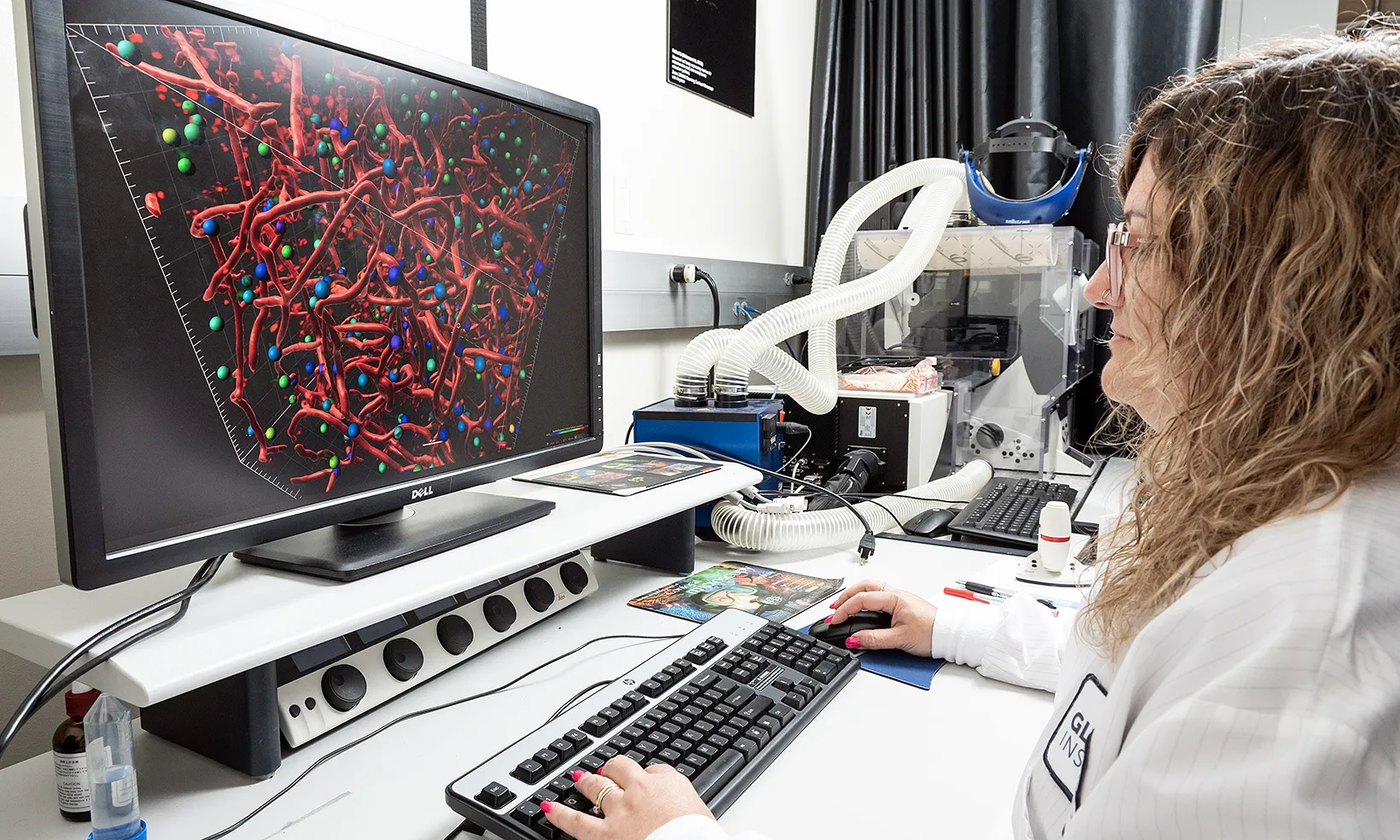
In addition to technical assistance and consultation on our services, we also provide training so that you can utilize the equipment on your own time.
On live and fixed samples
The Histology and Light Microscopy Core recharges researchers at an hourly rate for training and support with microscopes and sample preparation. Consult with our staff before preparing samples to ensure your reagents match the available equipment.
You are required to complete an initial training session before using any equipment in the core.
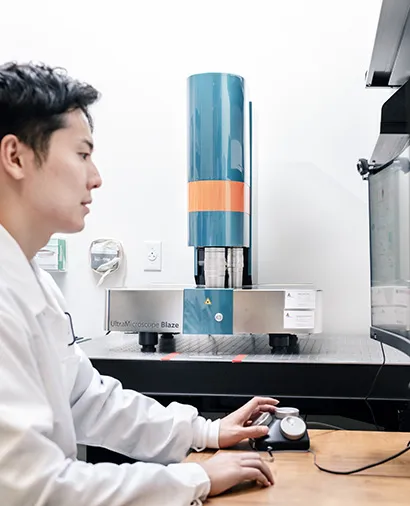
Light Sheet Microscope:
Sample types:
Application:
This machine is not optimized for live imaging or structures that need to be resolved with greater than 10X magnification.
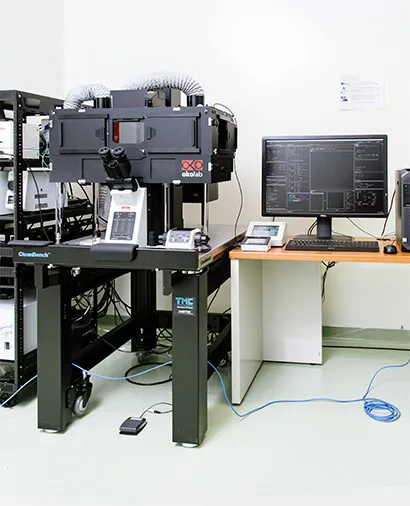
Specifications:
Sample types
Applications:
This machine is not optimal for very thick samples (>100µm) or very high-speed imaging (>10fps).
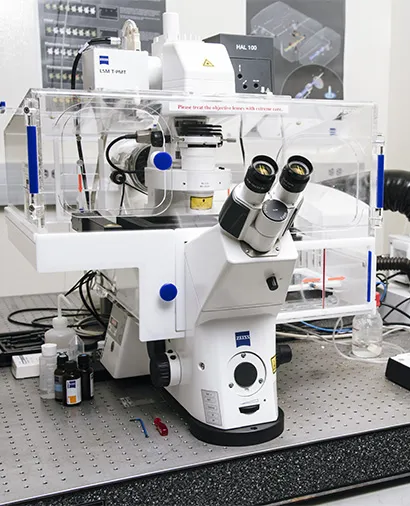
Specifications:
Sample types:
Applications:
This machine is not optimal for very thick samples (>100µm) or very high-speed imaging (>10fps).
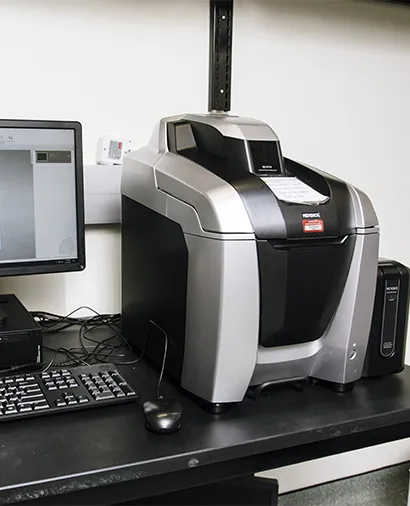
Specifications:
Sample types:
Applications:
This machine is not recommended for long term live-cell imaging or thick samples (>50um).
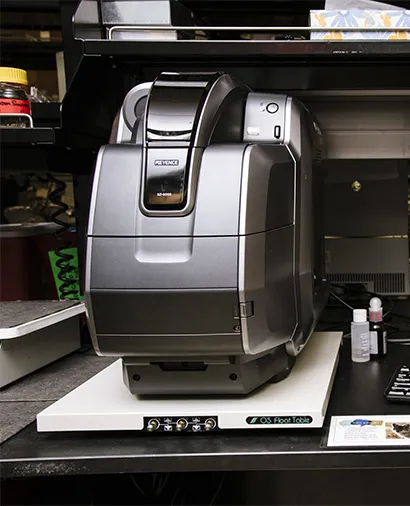
Specifications:
Sample types:
Applications:
This machine is not recommended for long term live-cell imaging, thick samples (>50um), or plastic tissue culture plates.
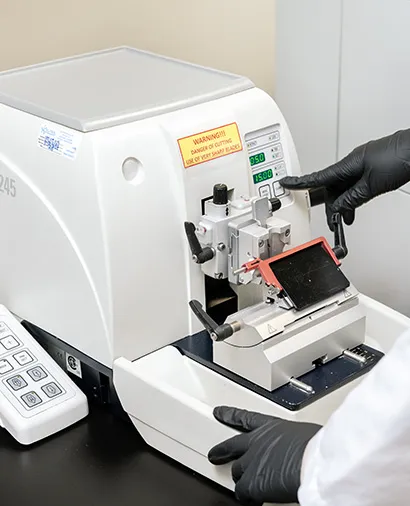
Specifications:
Application:
The core does provide training on this device.
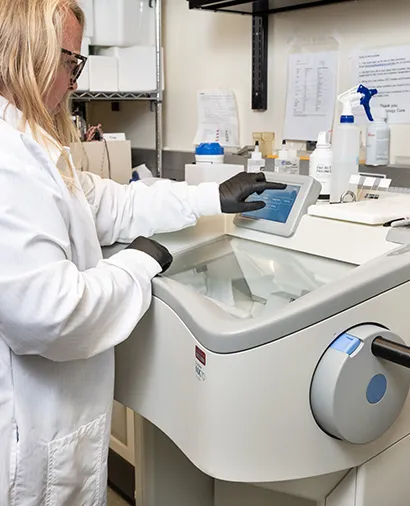
Specifications:
Applications:
The core provides training on this device.
If you’re a UC San Francisco user, learn how to create an account with iLab.
If you’re part of a nonprofit organization or a for-profit company, you’ll need to sign a legal service agreement (LSA). Once the LSA is signed by both organizations, you’ll receive instructions on how to set up an iLab account to request services. Contact the core to start the LSA process.
If you need help generating or submitting your PO, reach out to your lab’s grant or financial manager.
When you create an iLab account, you will provide a valid PO. We do not accept credit cards or cash.
The core’s services are available to both Gladstone and outside researchers.
Users can use some of the core equipment once they are trained and granted access by the core’s staff. Only formally trained users are allowed to use our core’s equipment.
To request training, submit an iLab request by clicking on the “request services” tab.
All samples must be dropped off in person. To drop off your samples, stop by the core located in room 367 at Gladstone Institutes, between 10am–3pm.
Contact the core for the 10x Genomics Visium sample preparation
Sample pick-up
The core will let you know when your samples are ready. When they are ready for pick-up, stop by room 367 at Gladstone Institutes, between 10am–3pm.
Standard turn-around time is typically 15–20 business days from the date the samples are dropped off and required request steps have been completed, not the project submission date via iLab.
Rush order turn-around is 4 business days
Note that these are estimates and turn-around times can be longer due to the complexity and size of the project and our current workload.
Yes, all tissue should be fixed prior to submission. Most tissues do well with fresh perfusion followed by 4 percent PFA or 10 percent formalin fixation overnight in the fridge. Common exceptions are brain and bone samples, which require extended fixation.
We support the Association of Biomolecular Resource Facilities’ (ABRF) Authorship Guidelines.
The existence of core facilities and their ability to obtain financial support depends in part on proper acknowledgment in publications. This is an important metric of the value of most core facilities.
Examples of when you should cite a core could include acknowledgement of:
L. Pous, S. S. Deshpande, S. Nath, S. Mezey, S. C. Malik, S. Schildge, C. Bohrer, K. Topp, D. Pfeifer, F. Fernandez-Klett, S. Doostkam, D. K. Galanakis, V. Taylor, K. Akassoglou and C. Schachtrup (2020). Nat Commun. 11(1), 630. doi:10.1038/s41467-020-14466-y
D. Isaacson, D. McCreedy, M. Calvert, J. Shen, A. Sinclair, M. Cao, Y. Li, T. McDevitt, G. Cunha and L. Baskin (2020). Differentiation. 111(12–21). doi:10.1016/j.diff.2019.09.006
L. Kodama, E. Guzman, J. I. Etchegaray, Y. Li, F. A. Sayed, L. Zhou, Y. Zhou, L. Zhan, D. Le, J. C. Udeochu, C. D. Clelland, Z. Cheng, G. Yu, Q. Li, K. S. Kosik and L. Gan (2020). Nat Neurosci. 23(2), 167–171. doi:10.1038/s41593-019-0560-7
D. Turaga, O. B. Matthys, T. A. Hookway, D. A. Joy, M. Calvert and T. C. McDevitt (2020). Tissue Eng Part C Methods. doi:10.1089/ten.TEC.2020.0020
C. Tai, C. W. Chang, G. Q. Yu, I. Lopez, X. Yu, X. Wang, W. Guo and L. Mucke (2020). Neuron. doi:10.1016/j.neuron.2020.01.038
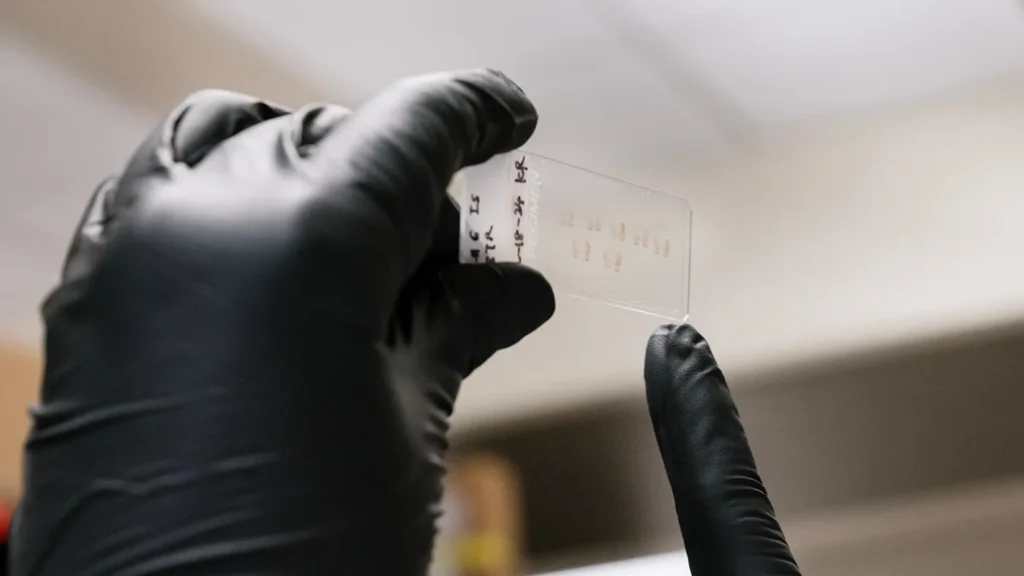
Research in mice reveals how critical brain cells misfire in Alzheimer’s and identifies a targeted strategy to restore healthy brain rhythms.
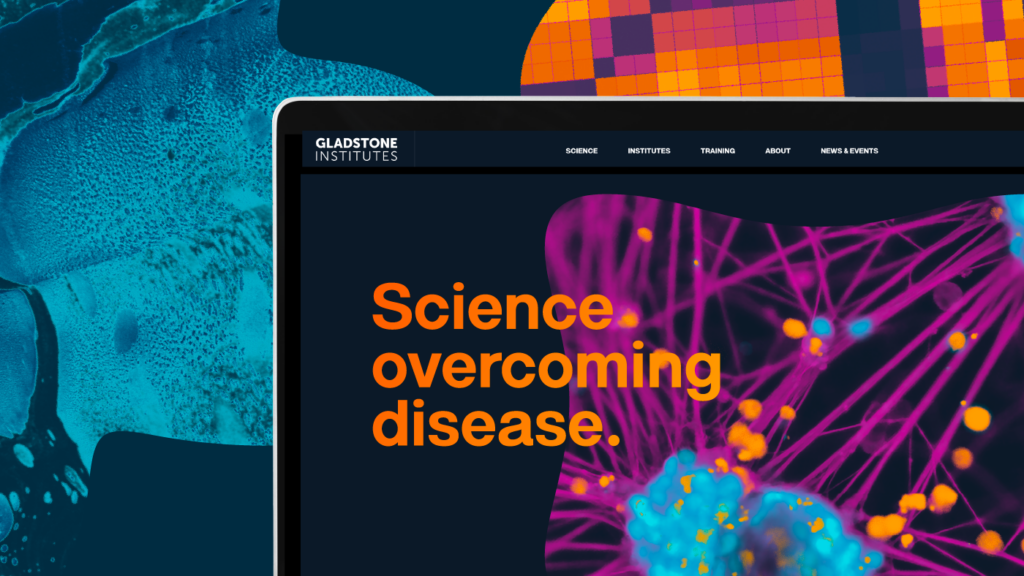
Discover disease research, explore the latest scientific news, and connect with experts through Gladstone’s enriched digital platform.
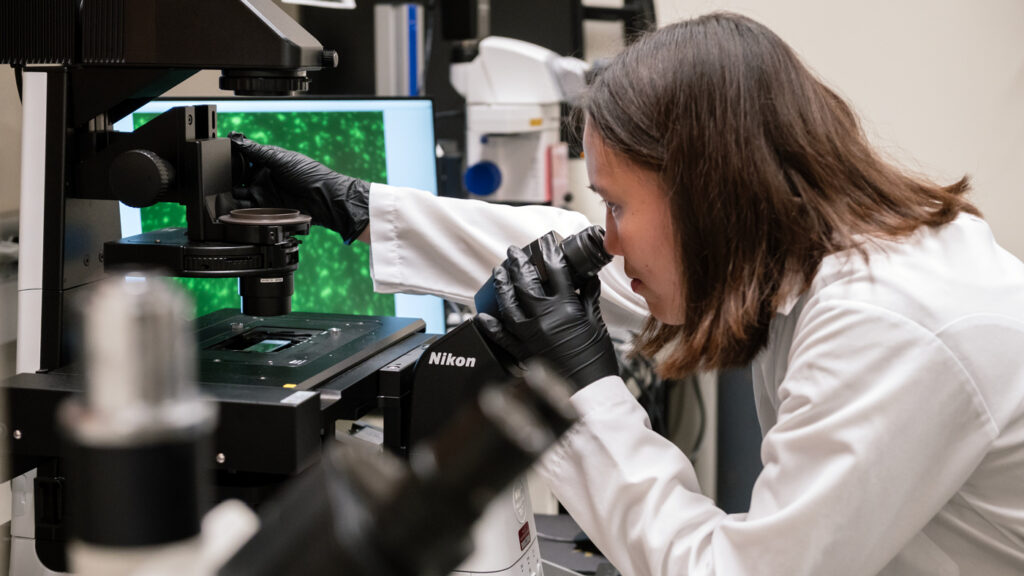
The complex Rube Goldberg-like molecular machinery could inspire novel technology to study and treat disease.
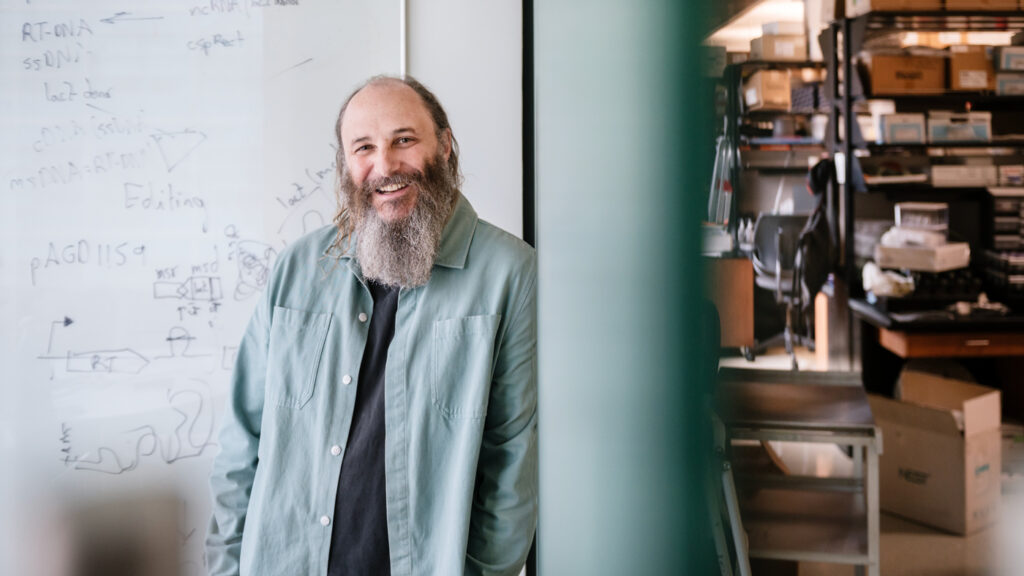
Shipman is recognized for pioneering molecular technologies that record cellular activity, expand genome editing, and target antibiotic-resistant superbugs.
Our people are our most important asset. We offer a wide array of career opportunities both in our administrative offices and in our labs.
Open PositionsDiscoveries don’t stay in our labs. Gladstone facilitates spinout companies to advance promising therapies, shortening the path between scientific discovery and helping real patients.
Learn MoreYour gift to Gladstone will allow our researchers to pursue high-quality science, focus on disease, and train the next generation of scientific thought leaders.
Donate Now