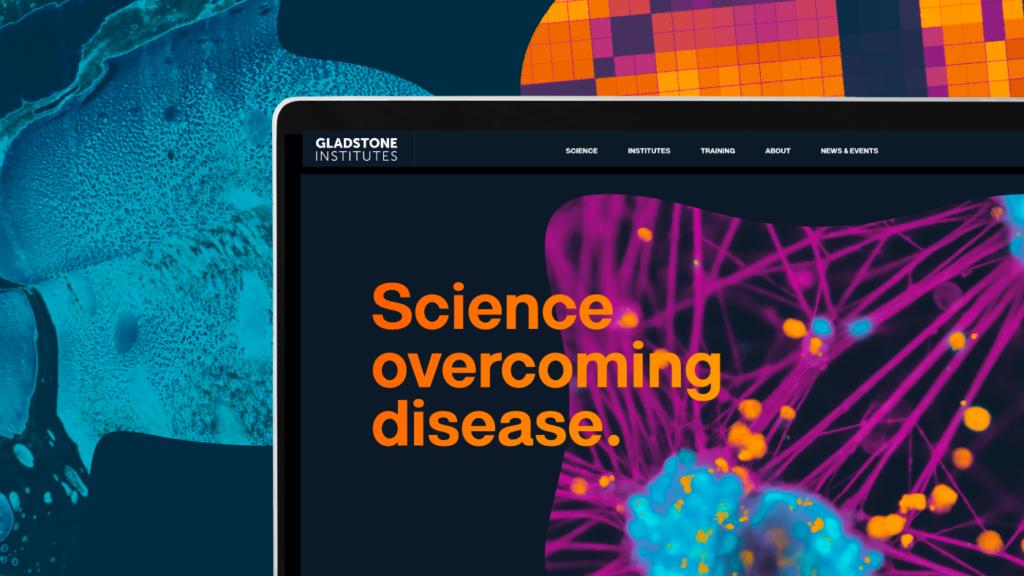
Gladstone Institutes Launches Redesigned Website, Bringing Cutting-Edge Biomedical Research Into Focus
Discover disease research, explore the latest scientific news, and connect with experts through Gladstone’s enriched digital platform.
Gladstone Institutes is honored to benefit from the collective intelligence, broad experience, and diverse perspectives of our scientific advisors.
Gladstone’s scientific advisory board is filled with visionary thinkers who are guiding our organization to push the boundaries of science so that we can have the greatest impact.”
Deepak Srivastava, MD,President, Gladstone Institutes
Edward Hood Taplin Professor of Medical Engineering and Computational Neuroscience
Massachusetts Institute of Technology
Warren M. Zapol Professor of Anesthesia
Harvard Medical School, Massachusetts General Hospital
Emery Brown is an anesthesiologist at Massachusetts General Hospital and a statistician at MIT. His experimental research has made important contributions towards understanding how anesthetics act in the brain to create the states of general anesthesia. His work in statistics has generated algorithms that solve important challenges in the analysis of neuroscience data.
Brown is a member of the National Academies of Science, Engineering, and Medicine.
Dean of the Faculty of Medicine
Caroline Shields Walker Professor of Medicine
Harvard Medical School
George Q. Daley is an internationally recognized leader in stem cell science and cancer biology and a long-time faculty member of Harvard Medical School. He has testified before Congress and spoken in forums worldwide on the scientific and ethical dimensions of stem cell research and its promise in treating disease.
Daley’s research uses mouse and human disease models to identify mechanisms that underlie blood disorders and cancer, and aims to understand how stem cells contribute to tissue regeneration and repair. Daley’s earlier work on the BCR/ABL protein in chronic myelogenous leukemia provided critical support for the development of the highly successful chemotherapeutic agent Gleevec (imatinib).
Daley is an elected member of the National Academy of Medicine.
Julie and Louis A. Beecherl, Jr., Distinguished Chair in Biomedical Research
Paul J. Thomas Chair in Medicine
Professor and Chair, Department of Molecular Genetics
UT Southwestern Medical Center
Regental Professor
University of Texas
Joe Goldstein and his colleague, Michael S. Brown, have been recognized with many awards for their work on cholesterol, including the Lasker Award in Basic Medical Research (1985), Nobel Prize in Physiology or Medicine (1985), and National Medal of Science (1988). Their discovery of the low-density lipoprotein (LDL) helped lay the groundwork for the development of statins, drugs that lower cholesterol in the blood and prevent heart attacks.
Goldstein is currently chair of the Albert Lasker Medical Research Awards Jury and is a member of the Boards of Trustees of the Howard Hughes Medical Institute and The Rockefeller University. He is also a member of the National Academy of Sciences, National Academy of Medicine, and a Foreign Member of the Royal Society.
Annie and Willie Nelson Professorship in Stem Cell Research
Pogue Distinguished Chair in Research on Cardiac Birth Defects
The Robert A. Welch Distinguished Chair in Science
Professor and Chair, Department of Molecular Biology
UT Southwestern Medical Center
Eric Olson and his trainees discovered many of the genes that control heart and muscle formation and disease. These discoveries have revealed fundamental principles of tissue formation and provided new concepts in the quest for treatments for muscle and cardiovascular diseases. Among his accomplishments, Olson has provided a new strategy for correcting Duchenne muscular dystrophy with CRISPR technology.
Olson has co-founded multiple biotechnology companies to develop therapies for heart and muscle disease, including Myogen, Miragen, Tenaya Therapeutics, and Exonics. He is also a member of the National Academy of Sciences, the National Academy of Medicine, and the American Academy of Arts and Sciences.
Maurice R. And Corinne P. Greenberg Professor in Virology
The Rockefeller University
Charles Rice co-discovered the hepatitis C virus (HCV), for which he shared the 2020 Nobel Prize in Physiology or Medicine. He also produced the first infectious molecular clone of the virus, and established cell culture systems and animal models for studying HCV replication and evaluating antivirals.
Rice is an elected member of the National Academy of Sciences and the National Academy of Medicine and is a fellow of the American Association for the Advancement of Science. He is a past president of the American Society for Virology.
Kolokotrones University Professor
Harvard University
George Fabyan Professor of Comparative Pathology
Chair, Department of Immunology
Harvard Medical School
Arlene Sharpe and her laboratory team discovered the immunoinhibitory functions of the CTLA-4 and PD-1 pathways, which have become exceptionally promising targets for cancer immunotherapy. Sharpe’s research currently focuses on translating fundamental understanding of T cell costimulation into new therapies for autoimmune diseases and cancer.
Sharpe is an elected member of the National Academy of Sciences, National Academy of Medicine, National Academy of Inventors, and the American Academy of Arts and Sciences. She is also a member and past president of the American Association of Immunologists.
Director, The Picower Institute for Learning and Memory at MIT
Picower Professor of Neuroscience, Department of Brain and Cognitive Sciences
Senior Associate Member, Broad Institute
Massachusetts Institute of Technology
Li-Huei Tsai’s laboratory takes a multidisciplinary approach to elucidate the molecular, cellular, and circuit basis of neurological disorders—especially Alzheimer’s—that impact learning and memory. She and her team have created numerous applications of iPS cells for in vitro modeling of neurological diseases.
At MIT, Tsai is co-director of the Alana Down Syndrome Center and co-founder of the Aging Brain Initiative. She was previously a faculty member in the Department of Pathology at Harvard Medical School and a Howard Hughes Medical Institute Investigator. Tsai is a member of the National Academy of Medicine, the National Academy of Inventors, and the American Association for the Advancement of Science.
Professor, Departments of Molecular and Human Genetics, Pediatrics—Neurology and Developmental
Neuroscience, and Neuroscience
Baylor College of Medicine
Director, Jan and Dan Duncan Neurological Research Institute
Texas Children’s Hospital
Huda Zoghbi’s laboratory uses genetic, cell biological, and biochemical approaches to explore the pathogenesis of polyglutamine neurodegenerative diseases and neurodevelopmental disorders. Her work has delivered new insights into other disorders, including Parkinson’s, Alzheimer’s and autism, and earned her the 2017 Breakthrough Prize in Life Sciences.
Zoghbi is an elected member of the National Academy of Sciences, the National Academy of Medicine, the American Association for the Advancement of Science, and the American Academy of Arts and Sciences. She is also a Howard Hughes Medical Institute Investigator.
Costantino Iadecola, MD
Feil Family Brain and Mind Research Institute, Weill Cornell Medical College Read BioFrances E. Jensen, MD
Perelman School of Medicine, University of Pennsylvania Read BioJeffery Kelly, PhD
The Scripps Research Institute Read BioEric M. Reiman, MD
Banner Alzheimer’s Institute Read BioHongkui Zeng, PhD
Allen Institute for Brain Science Read BioJennifer Chayes, PhD
University of California, Berkeley Read BioDavid Haussler, PhD
University of California, Santa Cruz Howard Hughes Medical Institute Read BioJay Shendure, MD, PhD
University of Washington Howard Hughes Medical Institute Read BioCaroline Uhler, PhD
Massachusetts Institute of Technology Read Bio
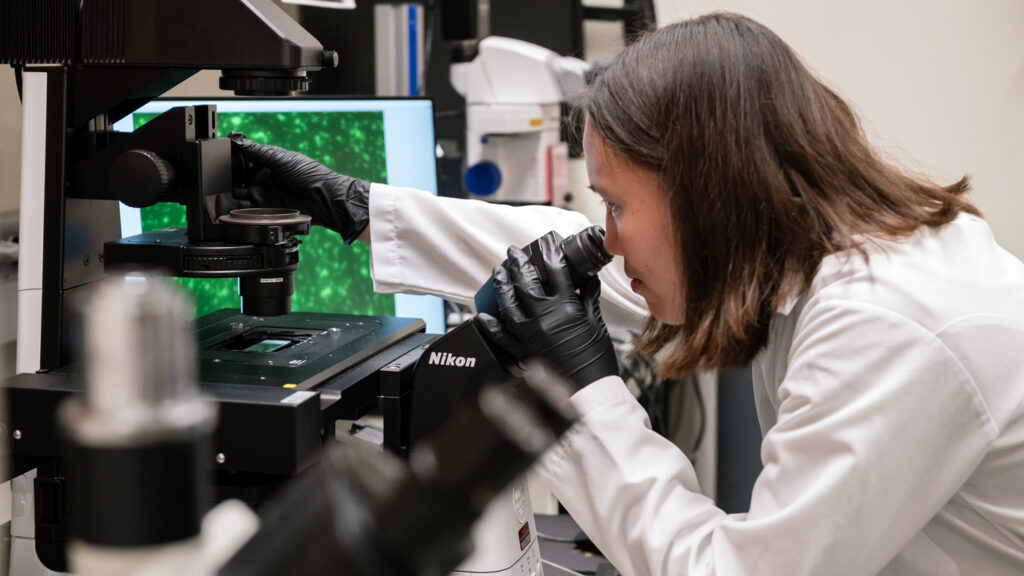
The complex Rube Goldberg-like molecular machinery could inspire novel technology to study and treat disease.
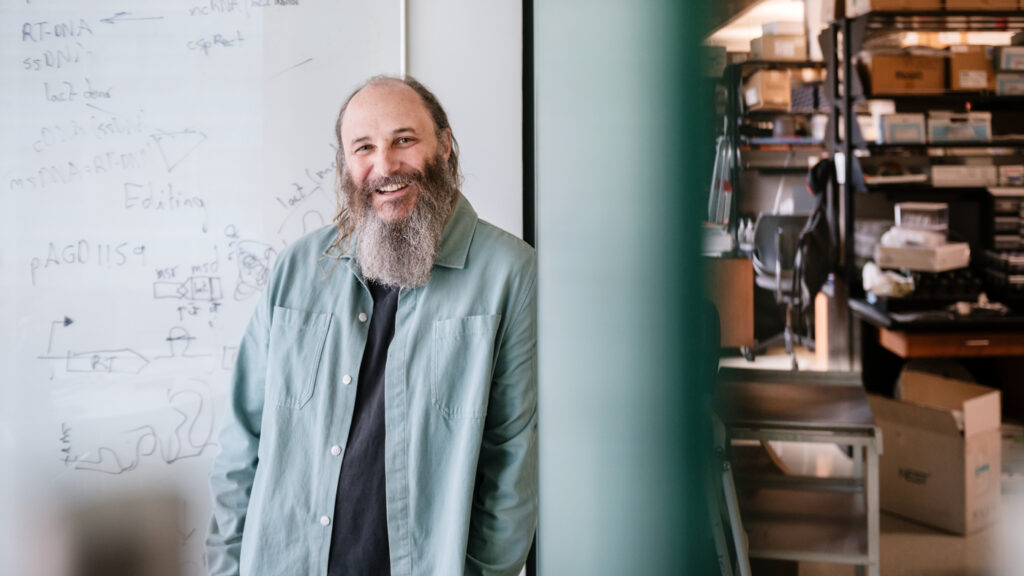
Shipman is recognized for pioneering molecular technologies that record cellular activity, expand genome editing, and target antibiotic-resistant superbugs.
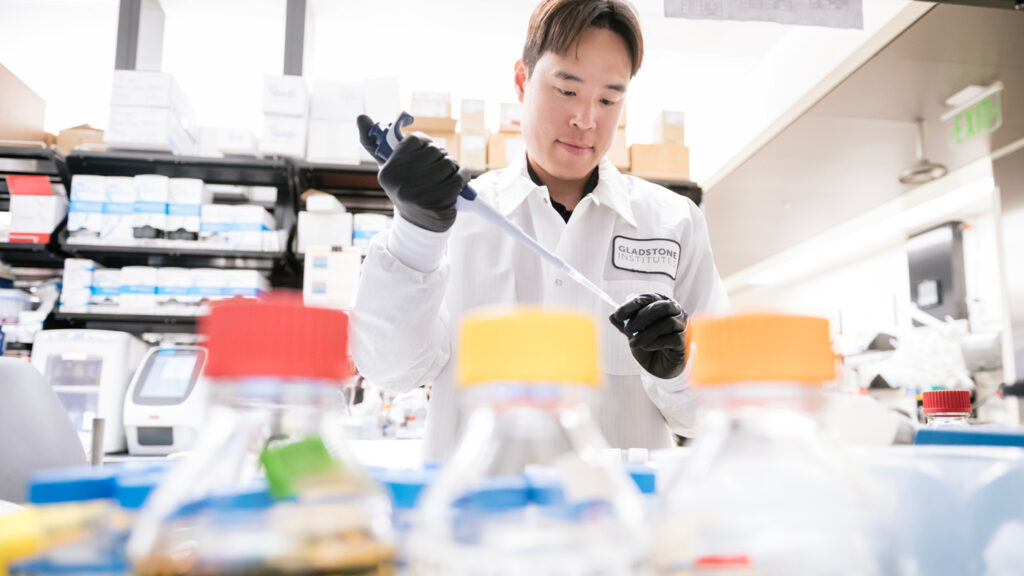
Inspired by bacterial biology, the Gladstone-developed “Detectron” opens up new possibilities for disease research and potentially treatments.
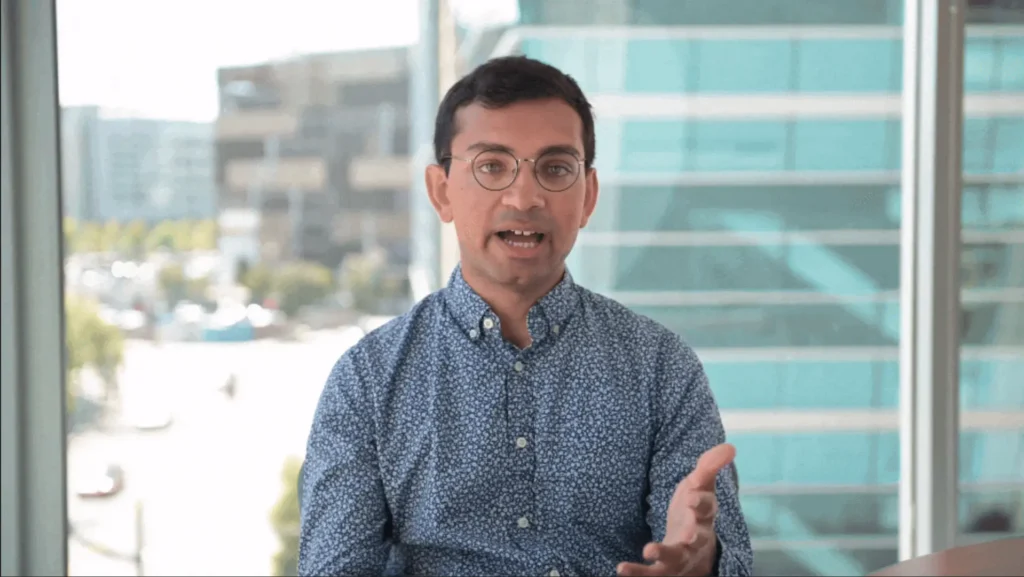
Ayush Midha, a graduate student in the Jain Lab, studies how the body's metabolism adapts to low oxygen—work that's uncovered backup energy pathways, potential fertility treatments, and a link between oxygen levels and tumor growth.
Our people are our most important asset. We offer a wide array of career opportunities both in our administrative offices and in our labs.
Open PositionsDiscoveries don’t stay in our labs. Gladstone facilitates spinout companies to advance promising therapies, shortening the path between scientific discovery and helping real patients.
Learn MoreYour gift to Gladstone will allow our researchers to pursue high-quality science, focus on disease, and train the next generation of scientific thought leaders.
Donate Now