
Gladstone’s Melanie Ott and Alex Marson Elected to the National Academy of Medicine
Physician-scientists and directors at Gladstone Institutes, Ott and Marson are honored for their pioneering achievements in science and medicine.
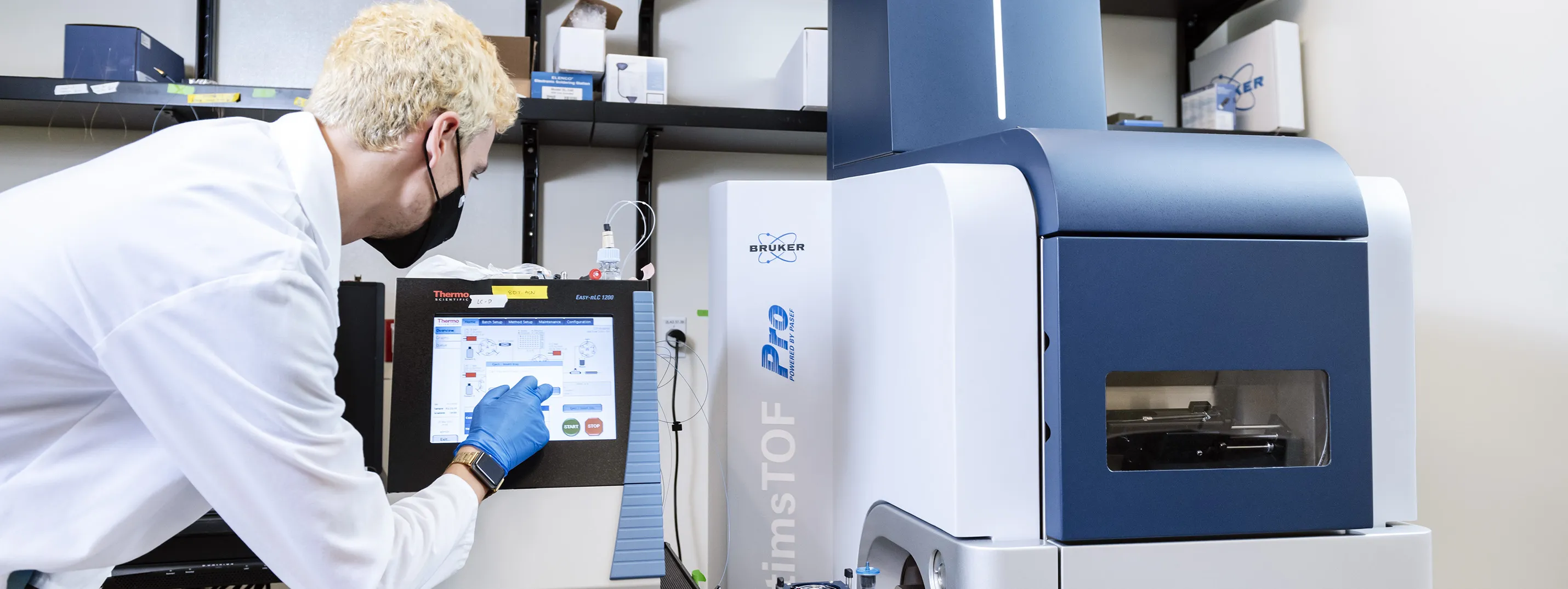
We have expertise in a number of proteomic approaches, including characterization of protein-protein interactions, quantitative analysis of protein abundance, and characterization of post-translational modifications such as phosphorylation and ubiquitylation.
When you’re interested in knowing how protein abundances are regulated between different conditions. This can be done with a whole cell lysate, biofluids (e.g. plasma), or after enrichment of different sub-proteomes (e.g. mitochondrial purification).
Our facility uses mass spectrometry-based proteomics approaches to study PTMs in a comprehensive, unbiased manner. We have developed platforms for proteome-wide quantification of changes in many PTMs. Phosphorylation and ubiquitylation are the most commonly characterized PTMs. Less common are lysine acetylation or phosphotyrosine.
We use a variety of different techniques to study PPIs including:
Affinity-Purification mass spectrometry (AP-MS). This requires an affinity tagged bait (3xFLAG, Strep, GFP, etc.).
Endogenous protein immunoprecipitation for when you’re only interested in identifying or quantifying interaction partners for a single protein and we have a good antibody for that protein.
Co-elution mass spectrometry in which native lysates are separated by size-exclusion chromatography and complexes deduced by co-elution.
Proximity-Labeling mass spectrometry, which relies on fusion of a labeling enzyme (APEX, BirA, etc.) to the protein of interest. This method labels everything in ~10-20nm proximity of your fusion protein, but direct binding proteins, as well as those only in spatial proximity. Can be better for identifying transient interaction partners, at the cost of decreased specificity.
Methods utilized here include cross-linking mass spectrometry (XL-MS) to support integrative structural modeling, hydrogen-deuterium exchange mass spectrometry (HDX-MS) to characterize solvent accessibility, and native mass spectrometry to deduce protein mass and/or protein complex stoichiometry.
We do not operate as a fee-for-service facility. Instead, we thrive on establishing collaborative relationships in which we can leverage initial experiments to apply for collaborative funding opportunities. We value the ability to become highly invested in a variety of projects and find this structure enables us to have the greatest scientific impact.
Collaborations are based upon shared interest in a biological or technological question and usually begin with a meeting to discuss your scientific question of interest and gauge the merit and feasibility of a project. It is common for us to have a high-level of commitments to currently funded projects and we may be unable to quickly take on additional collaborations.
Sure, contact us with a brief description of what you want to do, and we can help connect you to another facility.
Probably not as fast as you like. It’s a multi-step process of sample preparation, data acquisition and data analysis. Sometimes samples can get stuck in one or more steps of this process due to current commitments. Additionally, since we operate in a collaborative mode, we prioritize already funded projects over those not yet funded.
Ramage, HR, Kumar GR, Verschueren E, Johnson JR, Von Dollen J, Johnson T, Newton B, Shah P, Horner J, Krogan NJ, Ott M. (2015) Mol Cell. 57:329-40., Number 2
Davis, ZH, Verschueren E, Jang GM, Kleffman K, Johnson JR, Park J, Von Dollen J, Maher MC, Johnson T, Newton W, Jager S, Shales M, Horner J, Hernandez RD, Krogan NJ, Glaunsinger BA. (2015) Mol Cell. 57:349-60., Number 2
Martins, MM, Zhou AY, Corella A, Horiuchi D, Yau C, Rakshandehroo T, Gordan JD, Levin RS, Johnson J, Jascur J, Shales M, Sorrentino A, Cheah J, Clemons PA, Shamji AF, Schreiber SL, Krogan NJ, Shokat KM, McCormick F, Goga A, Bandyopadhyay S. (2015) Cancer Discov. 5:154-67., Number 2
Blakely, CM, Pazarentzos E, Olivas V, Asthana S, Yan JJ, Tan I, Hrustanovic G, Chan E, Lin L, Neel DS, Newton W, Bobb KL, Fouts TR, Meshulam J, Gubens MA, Jablons DM, Johnson JR, Bandyopadhyay S, Krogan NJ, Bivona TG. (2015) Cell Rep. 11:98-110., Number 1
Sidrauski, C, Tsai JC, Kampmann M, Hearn BR, Vedantham P, Jaishankar P, Sokabe M, Mendez AS, Newton BW, Tang EL, Verschueren E, Johnson JR, Krogan NJ, Fraser CS, Weissman JS, Renslo AR, Walter P. (2015) Elife. 4
Nevan Krogan
Facility Director
Danielle Swaney
Facility Manager
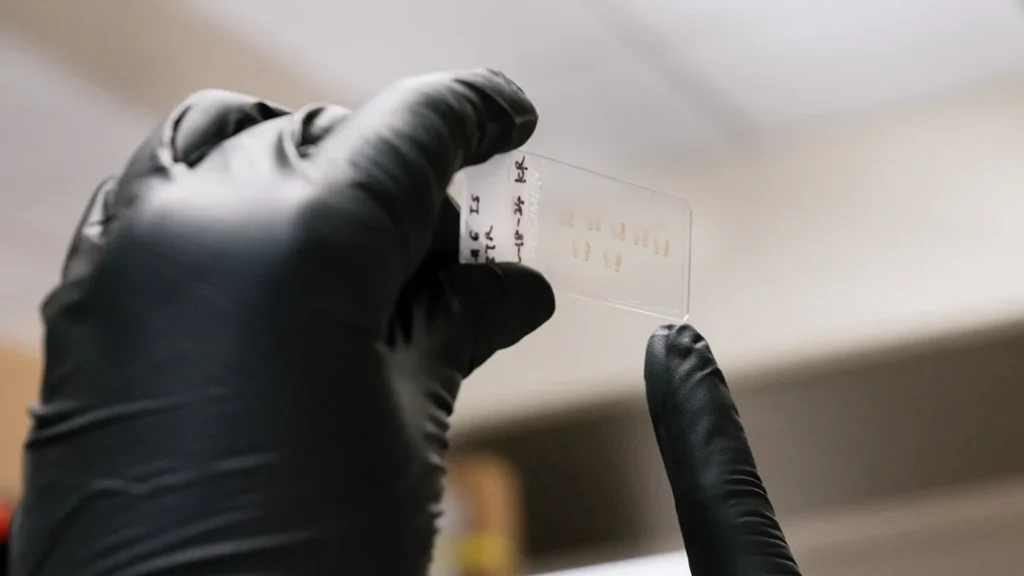
Research in mice reveals how critical brain cells misfire in Alzheimer’s and identifies a targeted strategy to restore healthy brain rhythms.
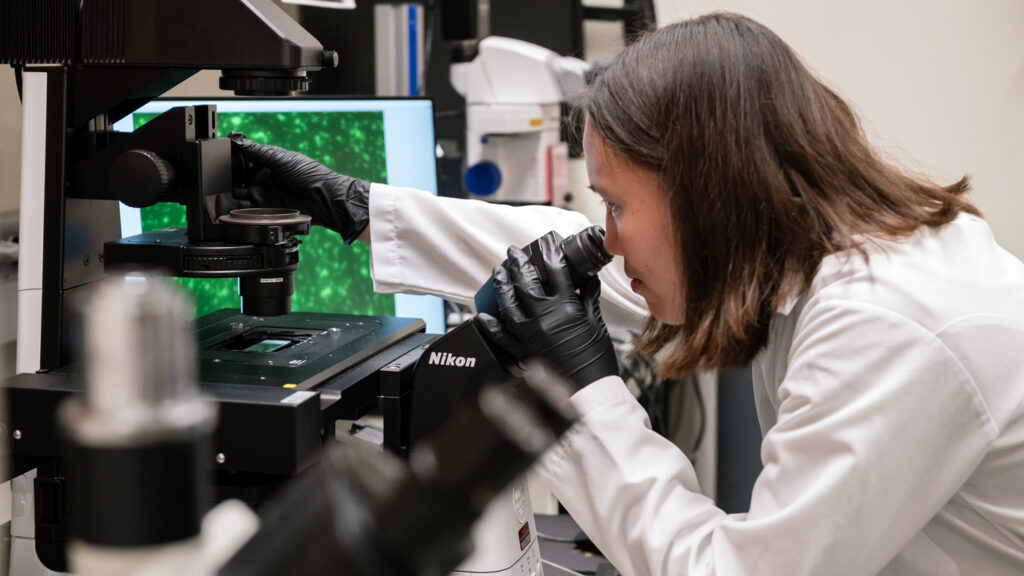
The complex Rube Goldberg-like molecular machinery could inspire novel technology to study and treat disease.
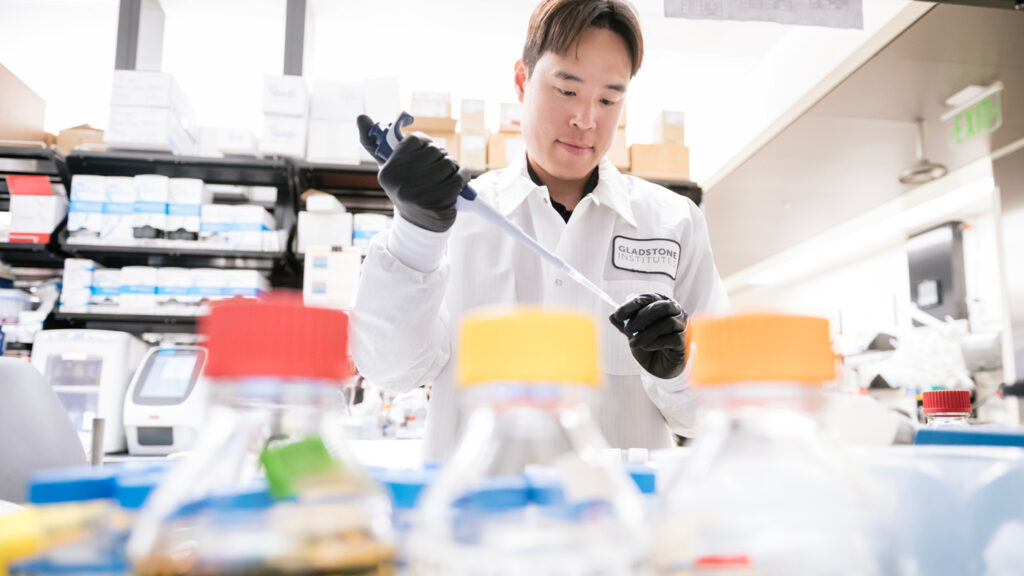
Inspired by bacterial biology, the Gladstone-developed “Detectron” opens up new possibilities for disease research and potentially treatments.
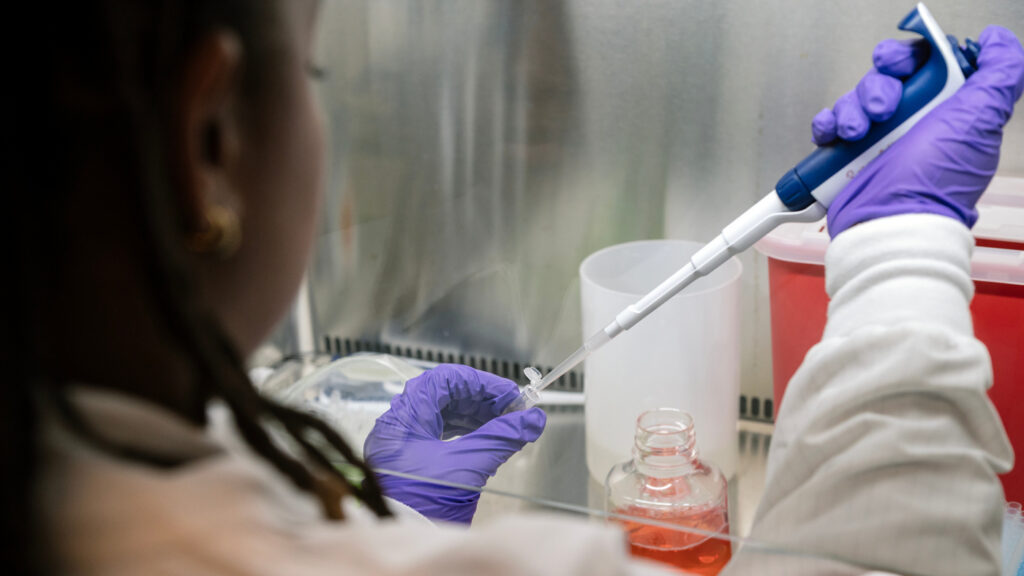
A new discovery reveals how a SARS-CoV-2 protein reprograms immune cells to accelerate viral spread—and points to a new strategy for therapeutic intervention.
Our people are our most important asset. We offer a wide array of career opportunities both in our administrative offices and in our labs.
Open PositionsDiscoveries don’t stay in our labs. Gladstone facilitates spinout companies to advance promising therapies, shortening the path between scientific discovery and helping real patients.
Learn MoreYour gift to Gladstone will allow our researchers to pursue high-quality science, focus on disease, and train the next generation of scientific thought leaders.
Donate Now