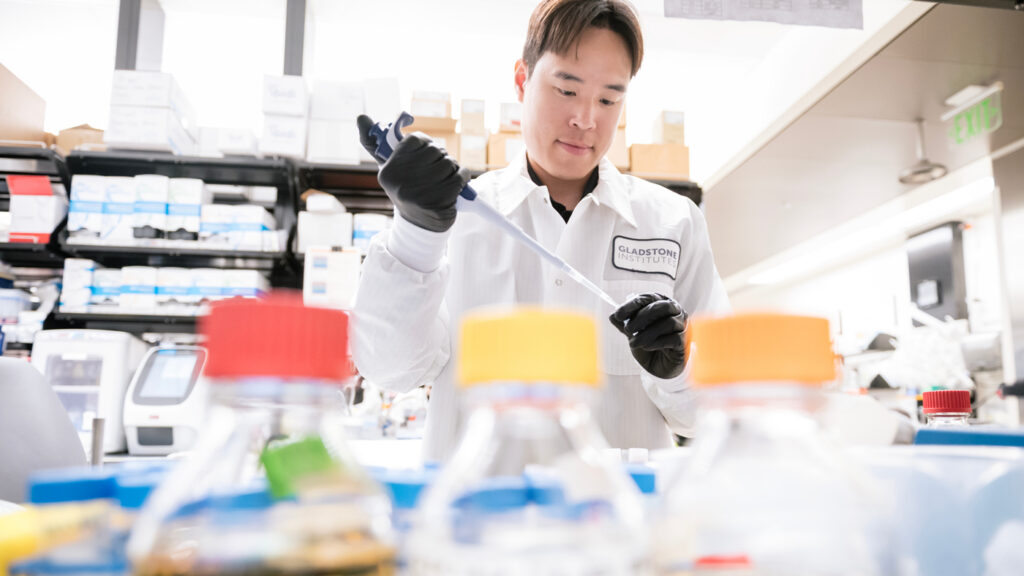
Novel Biosensor Uses DNA ‘Barcodes’ to Uncover Disease Signals in Cells
Inspired by bacterial biology, the Gladstone-developed “Detectron” opens up new possibilities for disease research and potentially treatments.
For example, consciousness is thought to be an emergent property of our brain but one we are unlikely to understand by simply studying single neurons in isolation. We think one reason that science has failed to discover the causes of many major human diseases is that biology and disease need to be approached and ultimately understood as a system. The Gladstone Center for Systems and Therapeutics uses cutting-edge technology to understand entire systems involved in complex biology.
To study systems, the center has invented and developed powerful tools—such as imaging, genomics, robotics, advanced statistical methods, and artificial intelligence (AI)—to be able to understand systems in their full complexity. The technologies in the center enable investigators to observe multiple variables in intact systems simultaneously, over time, often at a single cell level. In turn, mathematical approaches developed at the center, including AI, make it possible to glean key insights from these data and integrate them into dynamic, predictive models of biology and disease. These models then serve as blueprints for rational intervention, guiding which nodes in the system should be targeted and in what way in order to defeat disease.
In conjunction with the Industry and Ventures team, the center actively collaborates with pharmaceutical companies, tech companies, and nonprofit organizations, which enables the development of potential therapies for neurodegenerative diseases, gut disorders, and certain cancers.
Your gift to Gladstone will allow our researchers to pursue high-quality science, focus on disease, and train the next generation of scientific thought leaders.
DONATE NOW
Ayush Midha, a graduate student in the Jain Lab, studies how the body's metabolism adapts to low oxygen—work that's uncovered backup energy pathways, potential fertility treatments, and a link between oxygen levels and tumor growth.
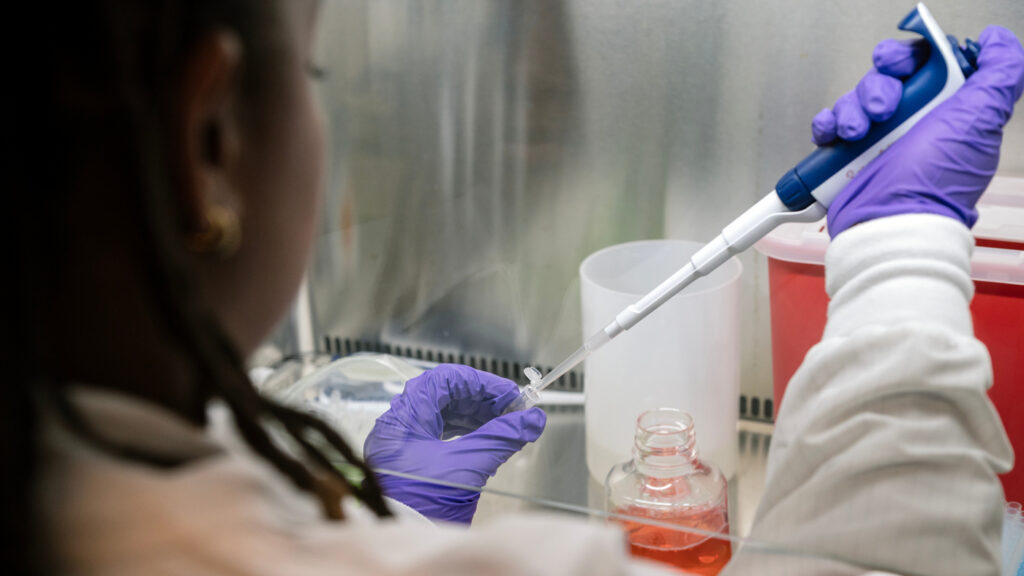
A new discovery reveals how a SARS-CoV-2 protein reprograms immune cells to accelerate viral spread—and points to a new strategy for therapeutic intervention.
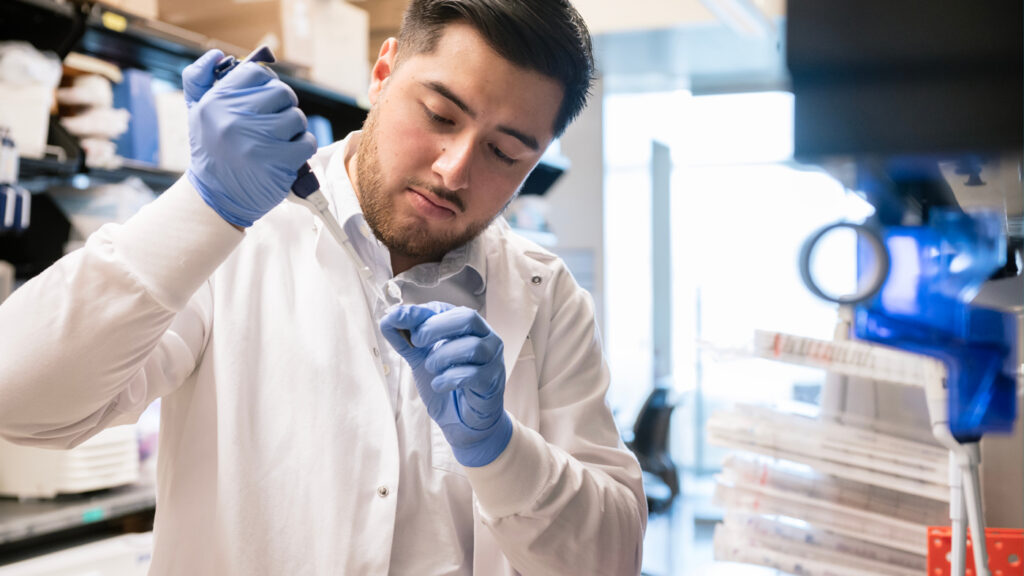
The fellowship provides three years of funding for graduate students pursuing groundbreaking immunology research.

Takahashi is recognized for his pioneering work translating iPS cell technology into a clinically approved therapy for Parkinson’s disease.
Our people are our most important asset. We offer a wide array of career opportunities both in our administrative offices and in our labs.
Open PositionsDiscoveries don’t stay in our labs. Gladstone facilitates spinout companies to advance promising therapies, shortening the path between scientific discovery and helping real patients.
Learn MoreYour gift to Gladstone will allow our researchers to pursue high-quality science, focus on disease, and train the next generation of scientific thought leaders.
Donate Now