Gladstone NOW: The Campaign Join Us on the Journey✕





By applying state-of-the-art technologies and experimental techniques to the field of vitamin biology, Isha Jain intends to discover and develop new targeted treatments for a range of diseases.
Listen to this article
Vitamins are ubiquitous in medicine cabinets everywhere, with more than half of all U.S. adults regularly taking vitamins or other dietary supplements to boost their health. But the science of vitamins and how they interact with the body—a field known as “vitamin biology”—is far behind the times.
Isha Jain, PhD, an investigator at Gladstone Institutes, is on the path to change that.
The National Institutes of Health (NIH) has just announced Jain as a 2025 recipient of its prestigious Transformative Research Award, which comes with a $6.6 million grant to fuel her work reviving the field of vitamin biology with modern science.
“Vitamin biology is uncharted territory by today’s scientific standards,” Jain says. “By leveraging modern tools and techniques, we intend to transform our understanding of the critical roles that vitamins play in health and disease.”
This may lead to personalized, vitamin-based treatments and possibly even cures for numerous genetic disorders, she says.
The Transformative Research Award, established in 2009, supports investigators whose research could potentially create new or challenge existing paradigms. It’s one of several NIH Director’s Awards given annually as part of its high-risk, high-reward program for scientists pursuing exceptionally creative research with broad impact for human health.
From Oxygen to Vitamins
Jain, who joined Gladstone in 2021, focuses on understanding the precise balance of oxygen levels used in biological processes—and how to fine-tune them to treat disease. Over the years, her lab has made many key discoveries, including identifying the mechanisms of why too much oxygen can damage tissues.
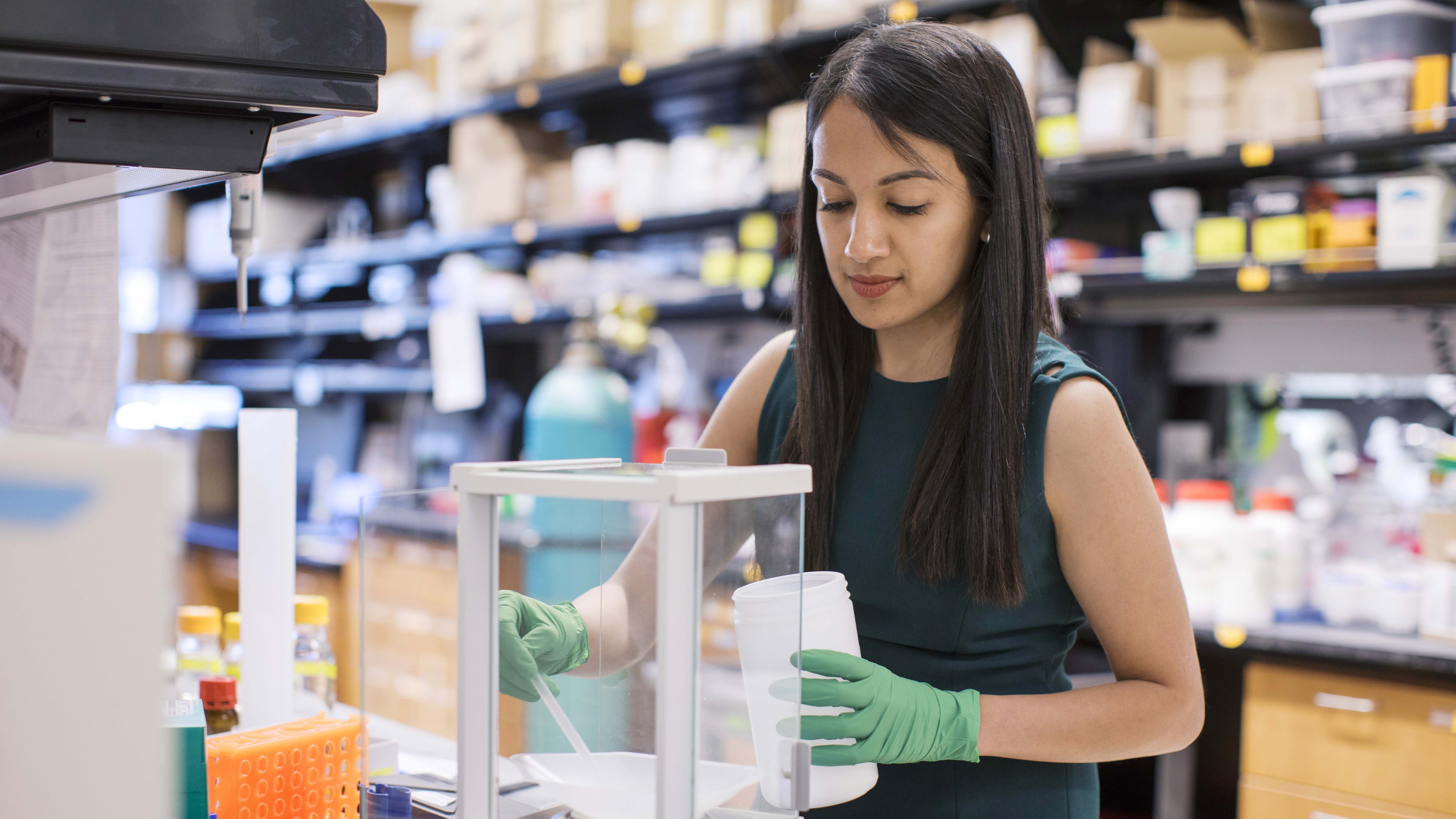
Isha Jain will use modern methodologies to revisit age-old questions about how vitamins interact with the body; she hopes this research will lead to new treatments for a wide range of diseases.
Most recently, Jain and her team developed a daily drug that delivers the same health benefits as living in a high-altitude, low-oxygen environment. Such a therapy would be life-changing for people with certain mitochondrial disorders, including Leigh syndrome, in which too much oxygen exacerbates disease.
But Jain’s focus on metabolism also led her into the study of vitamins and how they can influence biological processes. “Although vitamins are widely recognized for their practicality and safety, they’re often used without a strong scientific basis,” Jain says. “My goal is to identify all enzymes and metabolic pathways that depend on each vitamin. This will open the door to knowing which health conditions will respond favorably to certain vitamins, and allow us to create new targeted therapies.”
Ushering in a New Era
In her research, Jain plans to use modern methodologies to revisit age-old questions about vitamin biology.
“By applying systems biology approaches to vitamins, our work could lead to immediate and impactful therapies for a wide range of genetic disorders, offering a new era of personalized vitamin-based treatments,” she says.
While vitamin biology is largely untested using modern scientific methods, the field has a rich history of impactful work in the early 20th century, when many key vitamins we use today were discovered.
“Isha’s work to fundamentally transform this neglected field has the potential to completely change the way nutritional therapies are approached,” says Benoit Bruneau, PhD, director of the Gladstone Institute of Cardiovascular Disease. “The implications for treating diseases are immense. This is what we mean when we talk about high-risk, high-reward research. Bold ideas often yield groundbreaking results.”
For Media
Kelly Quigley
Director, Science Communications and Media Relations
415.734.2690
Email
About Gladstone Institutes
Gladstone Institutes is an independent, nonprofit life science research organization that uses visionary science and technology to overcome disease. Established in 1979, it is located in the epicenter of biomedical and technological innovation, in the Mission Bay neighborhood of San Francisco. Gladstone has created a research model that disrupts how science is done, funds big ideas, and attracts the brightest minds.
Featured Experts

The 2026 Ogawa-Yamanaka Stem Cell Prize Awarded to Jun Takahashi

Article
September 14, 2026
The 2026 Ogawa-Yamanaka Stem Cell Prize Awarded to Jun Takahashi
Takahashi is recognized for his pioneering work translating iPS cell technology into a clinically approved therapy for Parkinson’s disease.
Ogawa Stem Cell Prize Stem Cells/iPSCs Regenerative Medicine News Release AwardsAmerican Heart Association Honors Benoit Bruneau with 2026 Distinguished Scientist Award

Article
July 30, 2026
American Heart Association Honors Benoit Bruneau with 2026 Distinguished Scientist Award
Bruneau, director of the Gladstone Institute of Cardiovascular Disease, will receive the association’s highest scientific honor in November.
News Release Congenital Heart Disease Cardiovascular Disease AwardsGladstone Institutes Receives National Recognition for Excellence in Postdoc Programs
Article
July 6, 2026
Gladstone Institutes Receives National Recognition for Excellence in Postdoc Programs
Gladstone is one of only 12 institutions nationwide to receive the award for its postdoctoral programs.
News Release Postdoctoral and Graduate Student Education and Research Development Affairs Graduate Students and Postdocs Postdoc Advisory Committee Awards