Gladstone NOW: The Campaign Join Us on the Journey✕




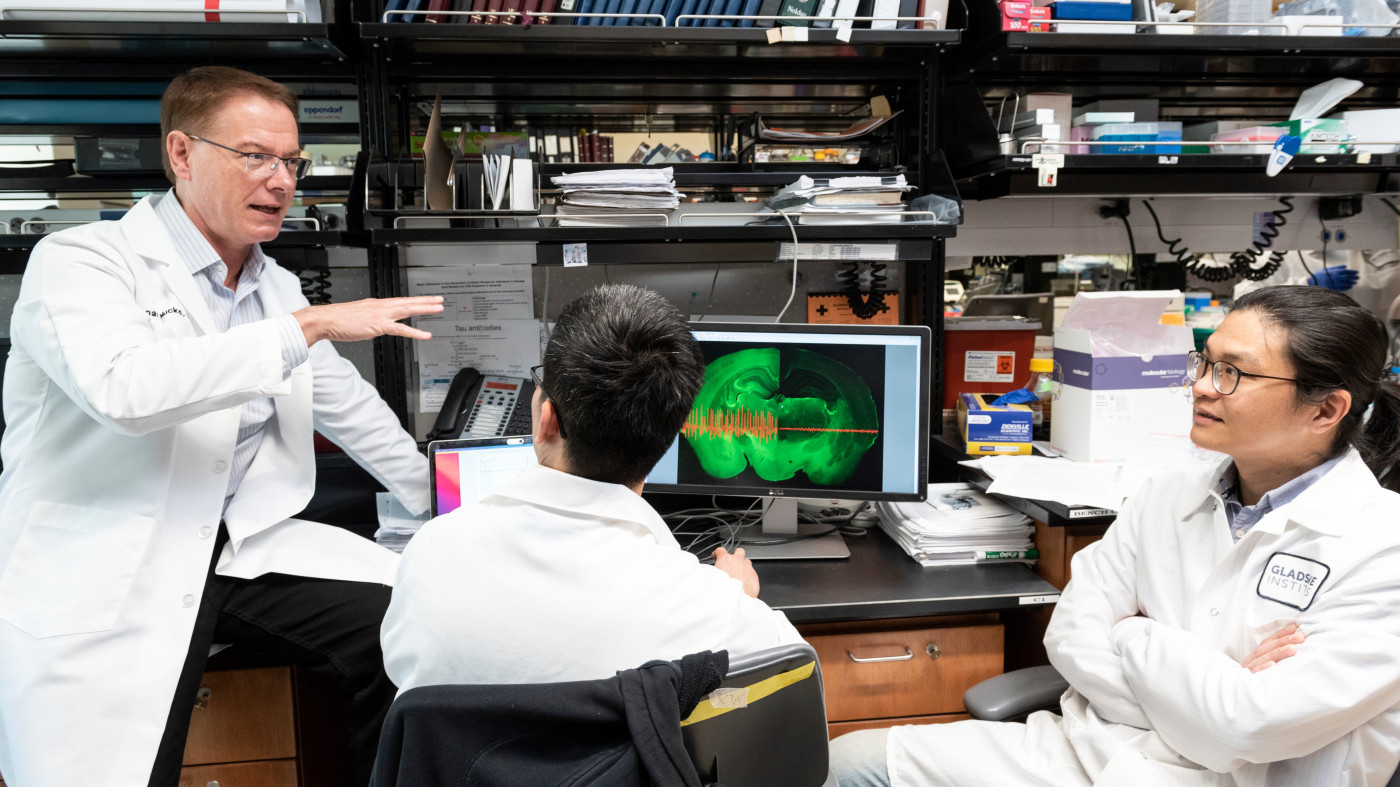
Neuroscientist Lennart Mucke, left, who nearly two decades ago uncovered novel roles of tau in Alzheimer's disease, shares his perspective on new clinical data that could transform the future of brain health.
Nearly two decades ago, a team of scientists at Gladstone Institutes led by Lennart Mucke, MD, published a landmark study in the journal Science.
They discovered that reducing levels of a brain protein called tau could prevent memory deficits and normalize the lifespan of mice genetically engineered to simulate key aspects of Alzheimer’s disease. At the time, the strategy was highly innovative, departing from the field's dominant focus on targeting amyloid plaques.
Fast forward to May 2026: The pharmaceutical company Biogen announced historic initial results from a phase 2 clinical trial testing a new drug called diranersen. The potential treatment acts like a brake on gene expression, stopping the production of tau at its source. The Alzheimer’s Association called it “important progress,” as it’s the first study in humans to successfully lower tau levels in brain, demonstrating the intervention is well tolerated and may slow memory loss and cognitive decline in early-stage Alzheimer's.
Even though the study didn't hit its strict technical target of proving that larger doses automatically work better, patients across the board seem to have experienced a meaningful slowing of mental decline. In fact, the lowest dose tested apparently showed some of the most promising results.
Ahead of the major international Alzheimer’s conference in mid-July, where the full data was unveiled, we sat down with Mucke, director of the Gladstone Institute of Neurological Disease, to discuss why this moment has been 20 years in the making.
First, for those who might not be familiar with the biology of the brain, what exactly is tau, and why has it become such a critical target in the fight against Alzheimer’s?
Tau is a protein that is normally produced in healthy brains by neurons and other brain cells. It interacts with the internal skeleton of these cells and seems to regulate a number of biochemical processes.
In Alzheimer’s disease, tau becomes structurally altered. It detaches from its normal positions, undergoes abnormal chemical changes, and begins sticking together to form aggregates known as tangles.
However, it remains unclear whether tau promotes cognitive decline through tangle formation or by allowing other factors—such as amyloid proteins or inflammation—to cause abnormal brain activity. These possibilities are not mutually exclusive and, importantly, can both be addressed by reducing overall tau levels in the brain.
In 2007, your lab discovered that reducing tau levels had a striking therapeutic effect in mouse models with amyloid plaques—a primary hallmark of Alzheimer’s disease. Now that strategy seems to be working in humans. What's it like to see your lab's discovery make the leap from mice to real patients?
Seeing a hypothesis you tested in the lab decades ago transition into a tangible clinical benefit for patients is incredibly rewarding. In 2007, we knew we had identified an extraordinarily powerful strategy, but advancing it from mouse models to human patients was a long and complicated process that was critically enabled by some of my dearest colleagues in academia and industry, particularly at Washington University and Ionis Pharmaceuticals.
Biogen's data confirms in humans the findings we originally made in mouse models, which predicted that tau reduction would be safe and well tolerated—something several other tau experts doubted.
The preliminary efficacy data are also in line with our studies in mouse models, which revealed that even partial reduction of tau could reduce Alzheimer’s disease-related brain dysfunction. This is exciting!
The phase 2 trial missed its primary endpoint regarding dose response, yet Biogen and the broader scientific community are treating these results as a massive win. Can you help explain why this trial is considered a success despite missing that primary marker?
In clinical trials, missing a technical goal can look discouraging at first glance, but you have to dig more deeply into the data. The trial was designed to look for a strict, predictable pattern where higher doses would lead to greater benefits than lower doses. What they actually observed were meaningful benefits across all tested doses—with the most pronounced cognitive benefits occurring at the lowest dose. The therapeutic effect seems to be real, even if it didn't follow the exact pattern the investigators expected.
The bottom line is that this is the first randomized study to successfully show both a reduction in tau pathology and a clinical, cognitive benefit in Alzheimer’s patients. In our field, proving that changing a specific biomarker is actually associated with a beneficial effect on patients’ memory and daily function is the ultimate "proof of concept" many have been searching for. Such results give drugmakers confidence to move forward with further testing and development.
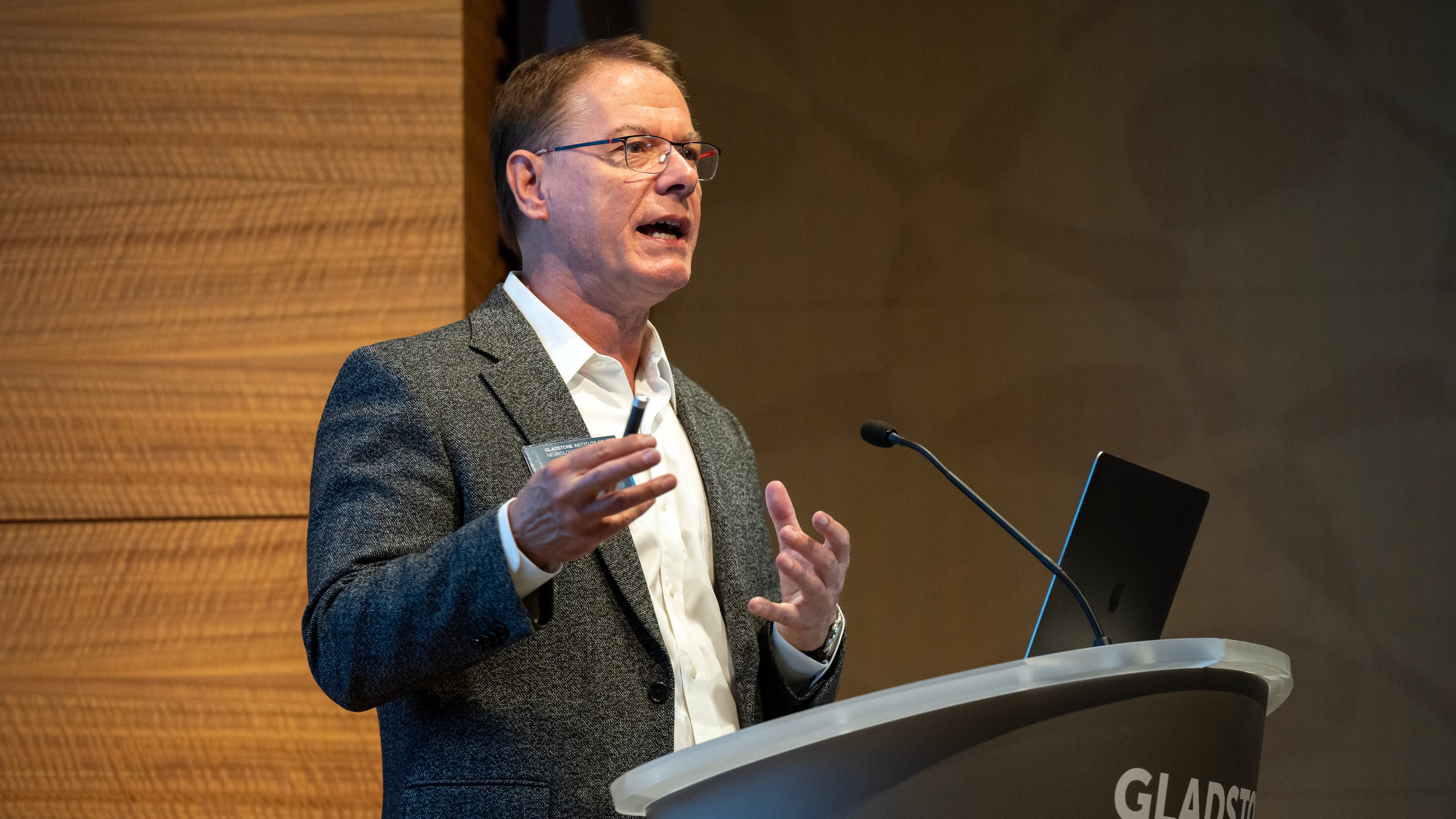
As tau-targeting therapies advance in clinical trials, Lennart Mucke shares optimism about the future of Alzheimer’s treatment.
For a long time, the public and the pharmaceutical industry have focused heavily on amyloid-targeting drugs. Why is targeting tau different, and why is it so vital to the future of treating Alzheimer's?
These strategies are very complementary and probably even interdependent. For example, several amyloid-related problems can be prevented by reducing tau. In other words, these factors “conspire” to impair brain cell functions and survival. And they don’t act alone. Other partners in crime include inflammatory factors, as well as the gene APOE4, the most important genetic risk factor for Alzheimer’s. But tau is clearly a central player in this story, forming enabling links among several of the causal factors that increase risk and promote the progression of Alzheimer’s. Therefore, targeting tau could disrupt this entire disease-promoting network.
What specific details of Biogen's clinical data are you eager to learn more about?
For this and all other treatment strategies, I’m much more interested in their impact on brain dysfunctions and overall disability—which matter the most to patients and their caretakers—than in their effects on biomarkers, which may or may not be able to reliably predict the most meaningful clinical outcomes.
I’m also eager to learn why the lower dose worked even better than the higher ones. Solving that puzzle could teach us important lessons about tau biology and about how to dose these types of therapies in the future.
Now that we have anti-amyloid therapies on the market and tau-targeting therapies proving their worth in phase 2 clinical trials, what does the future of Alzheimer’s treatment look like to you?
I’m incredibly optimistic. We’re about to enter an era of combination therapy. Alzheimer's is a complex, multi-faceted disease. Just as we treat cancer and prevent heart attacks and strokes with a cocktail of drugs that tackle the underlying processes from different angles, the future of Alzheimer’s medicine will likely involve targeting multiple causal drivers simultaneously.
Imagine a future where a patient is given an anti-amyloid drug to clear out plaques, a tau-lowering agent to protect their neurons from dysfunction and degeneration, and perhaps additional therapies to reduce neuroinflammation and block the detrimental effects of APOE4.
By combining these evidence-based strategies, we should move closer than ever to transforming Alzheimer's from a devastating diagnosis with an inevitably poor outcome into a manageable and, hopefully, even preventable condition.
(This article was updated on July 27.)
For Media
Kelly Quigley
Director, Science Communications and Media Relations
415.734.2690
Email
About Gladstone Institutes
Gladstone Institutes is an independent, nonprofit life science research organization that uses visionary science and technology to overcome disease. Established in 1979, it is located in the epicenter of biomedical and technological innovation, in the Mission Bay neighborhood of San Francisco. Gladstone has created a research model that disrupts how science is done, funds big ideas, and attracts the brightest minds.
More Resources
In addition to the 2007 Science paper, the Mucke Lab has published the following additional studies related to tau reduction as a therapeutic approach for Alzheimer's disease and other brain disorders.
Science
Tau: Enabler of Diverse Brain Disorders and Target of Rapidly Evolving Therapeutic Strategies
Chang C-W, Shao E, and Mucke L
Science Translational Medicine
Tau Ablation in Excitatory Neurons and Postnatal Tau Knockdown Reduce Epilepsy, SUDEP, and Autism Behaviors in a Dravet Syndrome Model
Shao E, Chang C-W, Li Z, Yu X, Ho K, Zhang M, Wang X, Simms J, Lo I, Speckart J, Holtzman J, Yu G-Q, Roberson ED, and Mucke L
Nature Neuroscience
Tau Post-Translational Modifications in Wild-Type and Human Amyloid Precursor Protein Transgenic Mice
Morris M, Knudsen GM, Maeda S, Trinidad JC, Ioanoviciu A, Burlingame AL, and Mucke L
Neuron
Tau Reduction Prevents Key Features of Autism in Mouse Models
Tai C, Chang C-W, Yu G-Q, Lopez I, Yu X, Wang X, Guo W, and Mucke L
Annals of Neurology
Tau Reduction Prevents Disease in a Mouse Model of Dravet Syndrome
Gheyara A, Ponnusamy R, Djukic B, Craft R, Finucane M, Sanchez P, and Mucke L
Journal of Cell Biology
Tau Reduction Prevents Aβ-Induced Axonal Transport Deficits by Blocking Activation of GSK3β
Vossel KA, Xu JC, Fomenko V, Miyamoto T, Suberbielle E, Knox JA, Ho K, Kim DH, Yu G-Q, and Mucke L
Journal of Neuroscience
Amyloid-β/Fyn-Induced Synaptic, Network, and Cognitive Impairments Depend on Tau Levels in Multiple Mouse Models of Alzheimer’s Disease
Roberson ED, Halabisky B, Yoo J, Yao J, Chin J, Yan F, Wu T, Hamto T, Devidze N, Yu G-Q, Palop JJ, Noebels JL, and Mucke L
Cell Reports
Tau Reduction Affects Excitatory and Inhibitory Neurons Differentially, Reducing Excitation/Inhibition Ratios and Counteracting Network Hypersynchrony
Chang C-W, Evans MD, Yu X, Yu G-Q, and Mucke L
iScience
Interdependence of Neural Network Dysfunction and Microglial Alterations in Alzheimer’s Disease-Related Models
Das M, May W, Shao E, Tamhankar S, Yu G-Q, Yu X, Ho K, Wang X, Wang J, and Mucke L
Neurobiology of Aging
Age-Appropriate Cognition and Subtle Dopamine-Independent Motor Deficits in Aged Tau Knockout Mice
Morris M, Hamto P, Adame A, Devidze N, Masliah E, and Mucke L
Neurobiology of Disease
Neuronal Levels and Sequence of Tau Modulate the Power of Brain Rhythms
Das M, Maeda S, Hu B, Yu G-Q, Guo W, Lopez I, Yu X, Tai C, Wang X, and Mucke L
PLoS One
Tau Reduction Diminishes Spatial Learning and Memory Deficits After Mild Repetitive Traumatic Brain Injury in Mice
Cheng JS, Craft R, Yu G-Q, Ho K, Wang X, Mohan G, Mangnitsky S, Ponnusamy R, and Mucke L

Support Discovery Science
Your gift to Gladstone will allow our researchers to pursue high-quality science, focus on disease, and train the next generation of scientific thought leaders.
NOMIS-Gladstone Fellows Forge Global Connections Through Bold Science
Article
August 10, 2026
NOMIS-Gladstone Fellows Forge Global Connections Through Bold Science
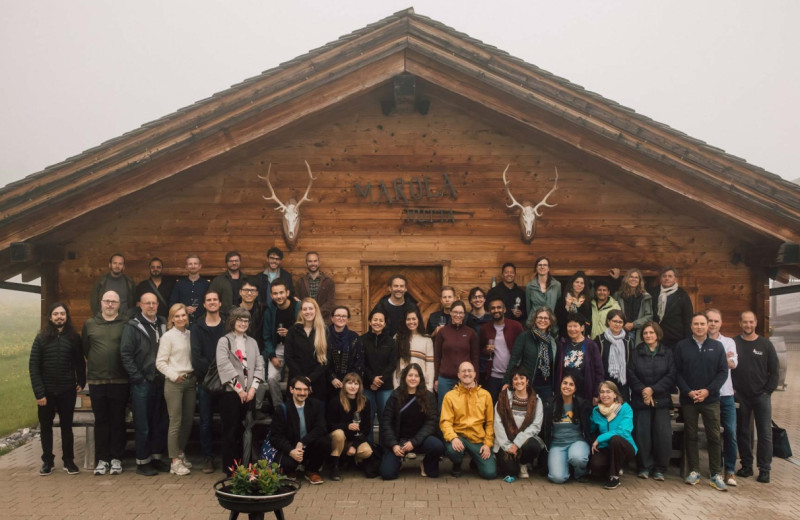
Scientists from across the NOMIS community gathered in Switzerland for the inaugural NOMIS Fellows Symposium.
NOMIS Neurological Disease Mucke LabFueling Discovery at the Frontiers of Neuroscience: The NOMIS-Gladstone Fellowship Program
Article
August 21, 2025
Fueling Discovery at the Frontiers of Neuroscience: The NOMIS-Gladstone Fellowship Program
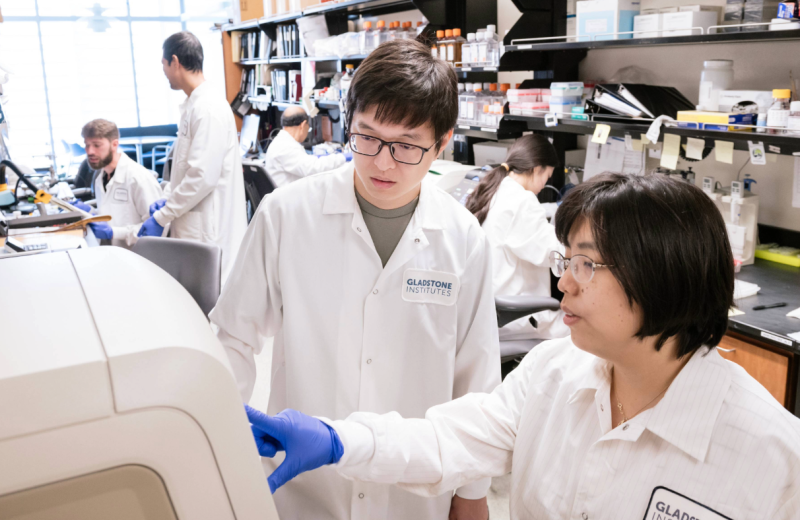
The NOMIS-Gladstone Fellowship Program empowers early-career scientists to push the boundaries of neuroscience and unlock the brain’s deepest mysteries.
Institutional News Neurological Disease Mucke Lab NOMISInside the Brain: Tackling Neurological Disease at Its Roots

Article
July 21, 2025
Inside the Brain: Tackling Neurological Disease at Its Roots
For World Brain Day, discover some of Gladstone’s latest breakthroughs in neurological research.
Gladstone Experts Research (Publication) Alzheimer’s Disease COVID-19 Parkinson’s Disease Neurological Disease Akassoglou Lab Corces Lab Huang Lab Mucke Lab