$5 Million Grant Bets on Computational Biology, AI to Change the Future of Cancer
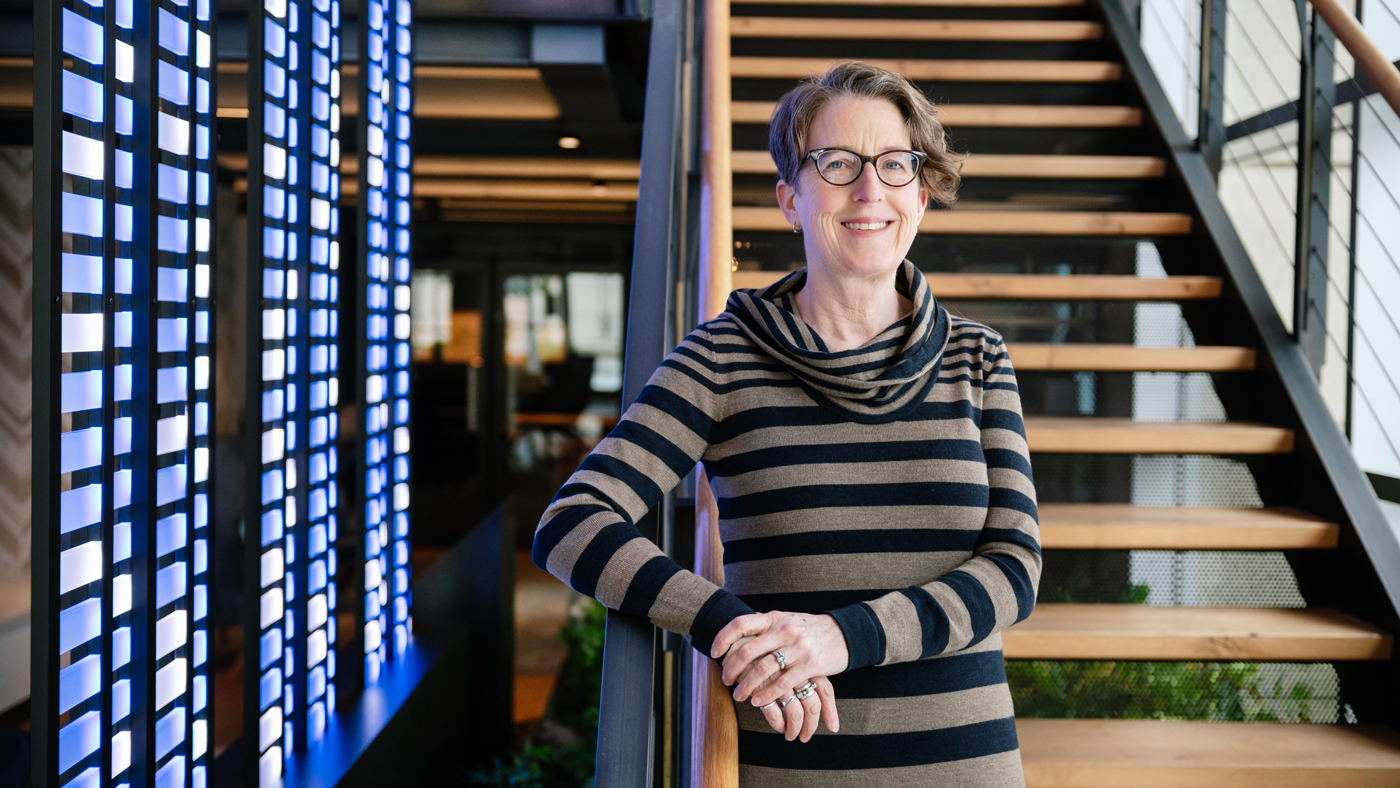
A multidisciplinary research team at Gladstone Institutes, led by Senior Investigator Katie Pollard, PhD, has received $5 million in funding through a newly launched grant program designed to ignite a fresh wave of cancer discoveries using computational biology and artificial intelligence.
The new Transformative Computational Biology Grant Program from the Biswas Family Foundation, in partnership with the nonpartisan think tank Milken Institute, is providing a total of nearly $14 million to five research groups.
At Gladstone, the grant establishes the Biswas Center for Transformative Computational Cancer Biology, where scientists will fuse powerful machine learning with cutting-edge experimental technologies to help identify and prioritize which research avenues are most likely to lead to success in the area of cancer diagnosis and treatment.
“Our tools and discoveries will be freely shared, fueling a global acceleration of cancer biology research and the development of therapies specialized to each type of cancer mechanism,” says Pollard, who also serves as director of the Gladstone Institute of Data Science and Biotechnology. “This should help patients and their doctors make well-informed decisions about cancer care.”
The new center’s suite of deep learning models is capable of performing trillions of editing experiments to generate and rank testable hypotheses about how changing a cell’s DNA will alter its function and interactions with other cells. Focused initially on colorectal and skin cancers, the group hopes to identify molecular mechanisms overlooked by other researchers and to develop a predictive understanding of how cancer immunotherapies work.
“Our tools and discoveries will be freely shared, fueling a global acceleration of cancer biology research.”
Notably, the Gladstone program is designed to apply equal research emphasis across rare cancer pathways and non-European genetic ancestries, which should generate much-needed information in these understudied areas.
And while the primary focus is cancer biology, the center has potential to advance medicine in many areas.
Sanjit Biswas, co-founder of the Biswas Family Foundation and CEO of Samsara, first crossed paths with Pollard last fall in Washington, D.C., when Pollard delivered an attention-getting presentation on computational biology at a workshop organized by the Milken Institute.
Biswas and his wife, Hope, an infectious disease epidemiologist, had recently established the Biswas Family Foundation and were looking to support scientific research and programs with the potential to improve lives on a global scale. Milken’s leadership thought Pollard’s data science programs meshed with the foundation’s priorities. And indeed, after studying Pollard’s proposal to accelerate cancer research with the aid of a computer framework and deep learning models, the Biswas team was more than intrigued.
“It’s cancer biology but it has the potential to advance medicine in many areas,” says Hope Biswas, PhD. “And, looking at it from a global health perspective, it’s really scalable and likely very cost effective.”
In addition to Pollard’s team at Gladstone, the Biswas Family Foundation awarded grants to research groups from Stanford University, Massachusetts Institute of Technology, and Harvard University.
“The research and health ecosystem has entered an era where vast amounts of data are continuously being generated,” Sanjit Biswas says. “The convergence of powerful computers, big data, and AI is already transforming human health in remarkable ways. And when you amass a lot of smart people in a place like Gladstone, really interesting things are bound to happen.”
The center’s co-Investigators at Gladstone include: Alex Marson, MD, PhD, Barbara Engelhardt, PhD, Catherine Tcheandjieu Gueliatcha, DVM, PhD, Christina Theodoris, MD, PhD, Karin Pelka, PhD, Ryan Corces, PhD, Seth Shipman, PhD, and Vijay Ramani, PhD.
Up Next
Scientists Decode Gene Circuits of Human Immunity, Fueling New Era of Disease Research
An unprecedented map of 22 million immune cells provides the functional rulebook for virtual biology and next-generation immunotherapies.
New Toolkit Turns Macrophages Into Better Cancer Fighters
Gladstone and UCSF scientists developed a method to genetically edit myeloid cells, immune cells that act as the body’s first responders.
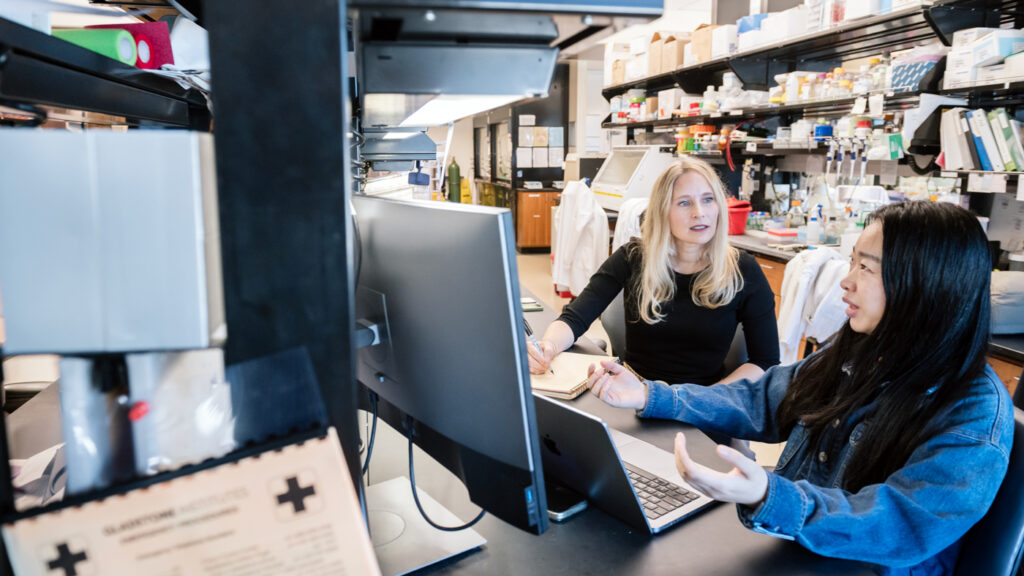
New CRISPR Screening Platform Boosts Power of Immunotherapy Against Solid Tumors
A new screening platform uncovers gene edits that enhance CAR-T cells’ ability to infiltrate and eliminate solid tumors.
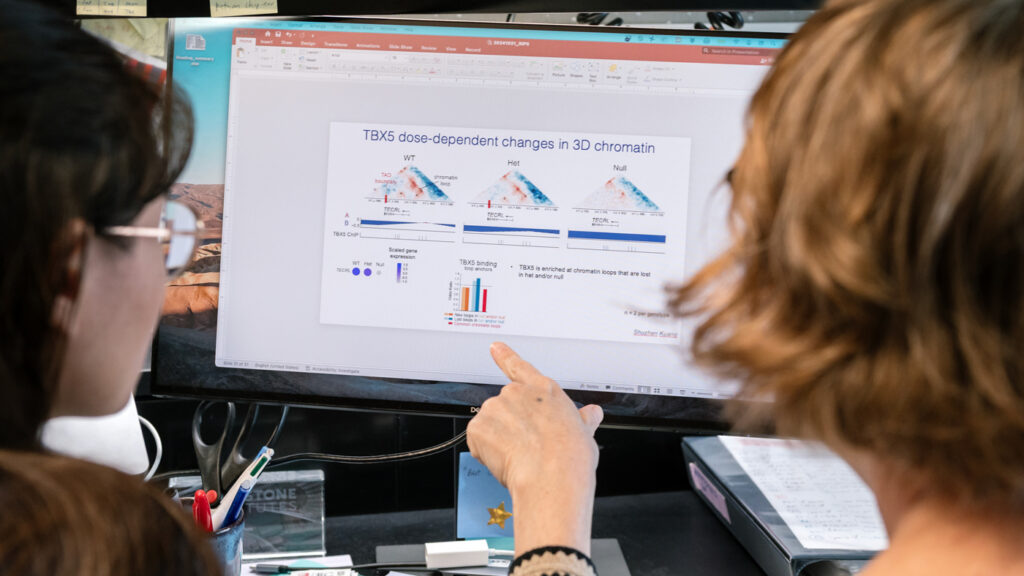
Misfolded DNA Blueprint: A New Origin for Genetic Disease
Gladstone researchers found losing just one copy a particular gene can disrupt heart development and lead to congenital heart disease.

Get Involved
Join the Team
Our people are our most important asset. We offer a wide array of career opportunities both in our administrative offices and in our labs.
Open PositionsPartner With Us
Discoveries don’t stay in our labs. Gladstone facilitates spinout companies to advance promising therapies, shortening the path between scientific discovery and helping real patients.
Learn MoreGive
Your gift to Gladstone will allow our researchers to pursue high-quality science, focus on disease, and train the next generation of scientific thought leaders.
Donate Now