ARTICLE
How AI Is Filling the Gaps in Women’s Health Research
Barbara Engelhardt is leading a Gladstone study to collect data from thousands of women wearing Oura Rings to make sense of what’s normal—and what could signal problems—when it comes to the menstrual cycle.
This article is part of a series about the many ways our scientists are using—and developing—AI tools for biomedical research. Sign up for our newsletter to have these stories delivered right to your inbox.
Midway through a woman’s menstrual cycle, her body undergoes a dramatic shift—one big enough to show up on a wearable fitness tracker. Her resting heart rate climbs, her body temperature rises half a degree, and her sleep becomes more restless. Hidden in those trends are important clues about her health.
But the data is often not clear cut; drinking a glass of wine, running a marathon, or coming down with a common cold can throw off the numbers. And some signals practically disappear when a woman changes her diet, is breastfeeding, or grows older. All that noise means finding concrete links between shifts during the menstrual cycle and health outcomes is incredibly difficult.
Most studies handle this challenge by excluding anyone whose data doesn’t fit a clean, predictable pattern—effectively erasing huge groups of people from menstrual health research.
“Out of 2 billion people around the globe who menstruate each month, only about 1 percent are represented in existing research,” says Barbara Engelhardt, PhD, senior investigator at Gladstone Institutes. “Most of the studies only include women of European ancestry who are healthy, naturally cycling, not on birth control, and don’t have reproductive diseases. That excludes a huge swath of the population.”
Engelhardt wants to do better. So, she’s collecting wearable-device data from thousands of women and using artificial intelligence (AI) to make sense of menstrual cycles in individuals of diverse backgrounds.
“Women’s health has been understudied globally for a long time, and that has to change,” says Gladstone President Deepak Srivastava, MD. “By developing our own AI models, we finally have an opportunity to find patterns in the data that shed light on the menstrual cycle.”
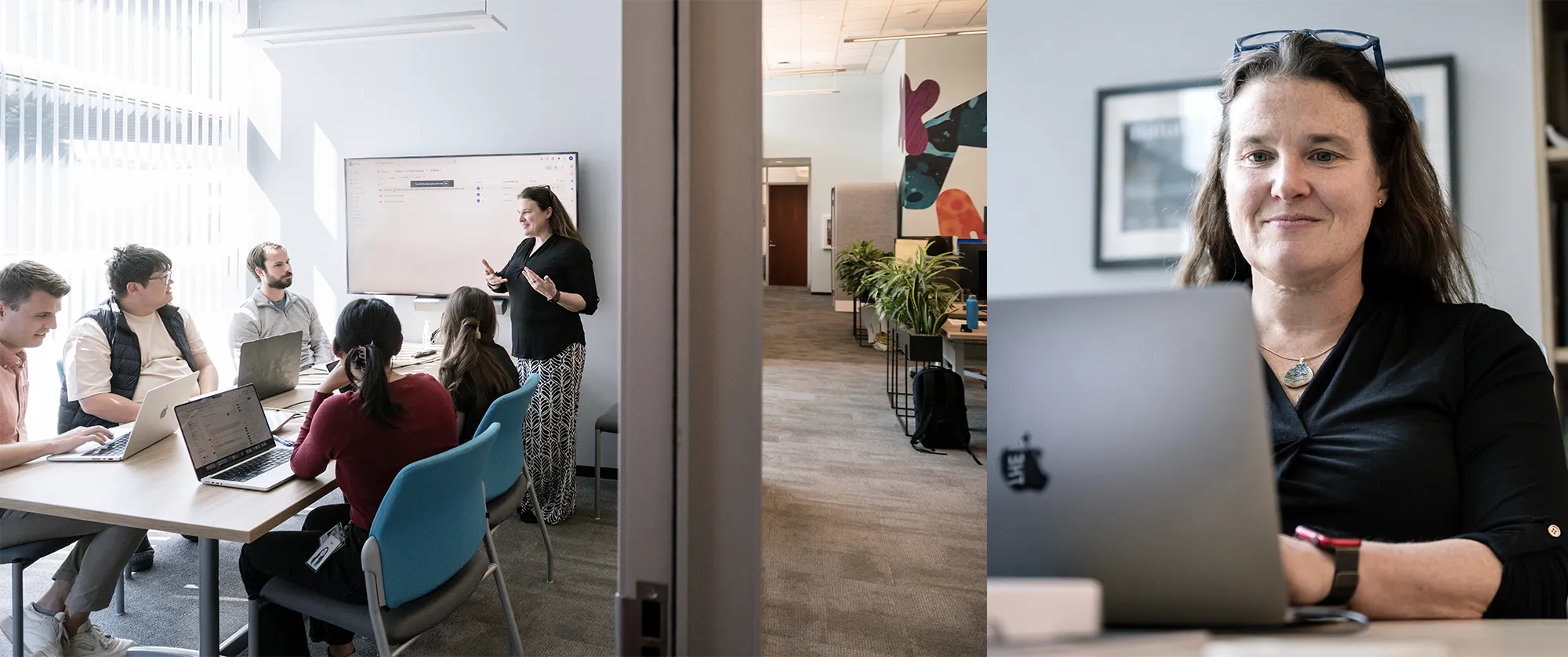
Engelhardt wants her findings to help people draw better health conclusions from their wearable fitness tracker data and menstrual cycle trends.
“We want to be able to say: ‘Don’t worry, you didn’t eat enough three days before you ovulated, so of course your period was a little late,” says Engelghardt, who is also a professor at Stanford University. “Or: ‘Yes, this change in your cycle is a sign you should go to the doctor.”
And her ultimate objective is even broader.
“We’re hoping to take what we learn and truly empower women anywhere in the world, even if they don’t have access to wearables, to understand how their periods reflect their health.”
An Influx of Data
For most of medical history, studying the menstrual cycle meant asking women to fill out paper diaries, take their temperature first thing each morning, and come into a clinic for periodic blood draws. Signing up for a study was a big commitment, so few women participated in studies. That meant data sets were small and limited, and tended to only include certain segments of the population.
“The existing research on menstrual health has focused overwhelmingly on a narrow slice of people who menstruate,” says Engelhardt. “Most of the variation—by age, race, health status, or life stage—has barely been studied at all.”
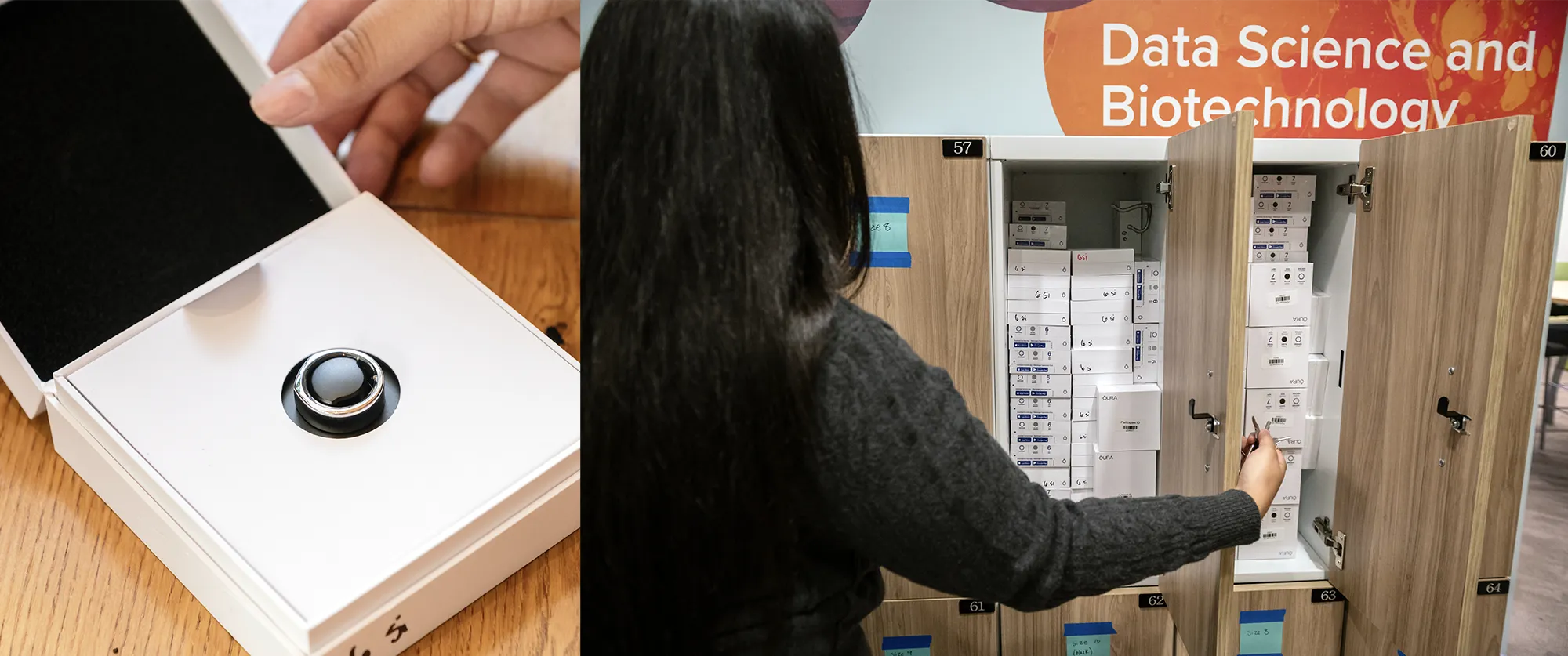
Now, with wearable devices, data that once was slow and tedious to collect can be recorded instantly from a ring or watch worn around the clock.
To ride this new wave of data, Engelhardt’s team has launched a study called STIGMA, for Study of Typically Ignored Groups of Menstruating Adults. The name reflects the goal: to deliberately recruit people that menstrual health research has left out in the past. Participants include athletes, women with endometriosis or polyendocrine metabolic ovarian syndrome (PMOS), breastfeeding mothers, women in perimenopause, people on a range of hormonal and non-hormonal contraceptives, and those from a variety of racial and ethnic backgrounds.
For the study, Engelhardt is collaborating with Oura to provide smart rings to each of the 300 participants, allowing her team to capture a continuous stream of heart rate, skin temperature, sleep quality, and movement data.
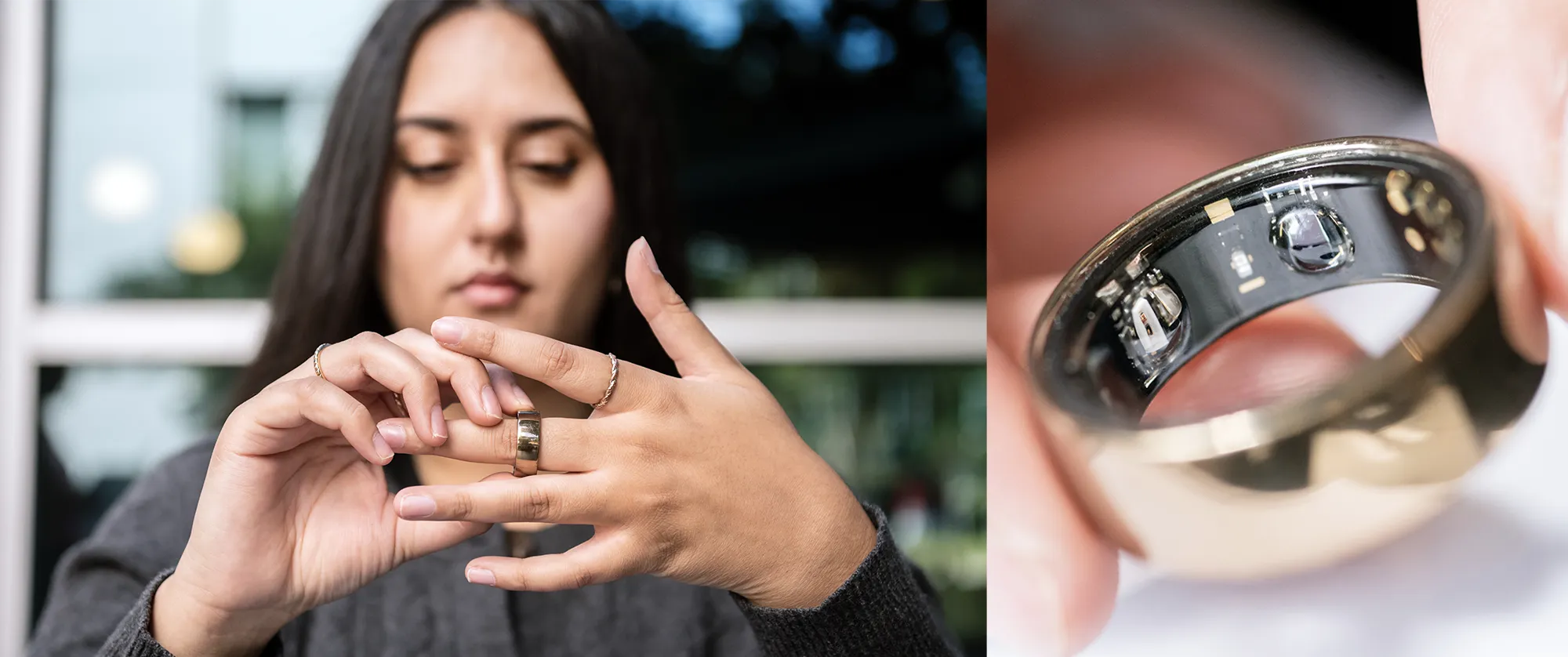
“With the Oura Ring, the sensor sits on the finger facing the palm of the hand, so we can capture much more reliable data from people with darker skin, because the palm is less myelinated than the back of the wrist where a watch would sit,” Engelhardt says.
Making Sense of the Noise
Wearables like Oura Ring make it far easier to collect data on women’s cycles, but don’t change the messiness of the biometric data.
“Anyone who’s ever worn a wearable knows the data can be all over the place,” Engelhardt says. “There are random outliers; you run up a set of stairs and all of a sudden, your heart rate’s way higher. Or, you might charge your device one night and not capture any information. The data are not smooth.”
That’s where emerging computational approaches and AI methods come in.
We develop AI models in my lab because the tools we need just don’t exist yet.
Barbara Engelhardt, PhD
“We develop AI models in my lab because the tools we need just don’t exist yet,” she says. “We tried every available algorithm that’s been published or presented, and found that they don’t work with the data we have in hand. So, we built a very simple AI method that’s completely different—and much more effective—than what’s been out there up until now.”
Engelhardt’s group is using a type of machine learning called a “Gaussian process” that can fit a smooth, flexible curve to noisy, irregular data—like daily heart rate patterns, which can have unexplained spikes and dips from daily living. Unlike the AI models that power tools such as ChatGPT, which require millions or billions of examples to learn from, a Gaussian process can find meaningful patterns from far less data. That makes it useful for analyzing just a few thousand menstrual cycles, when millions aren’t yet available.
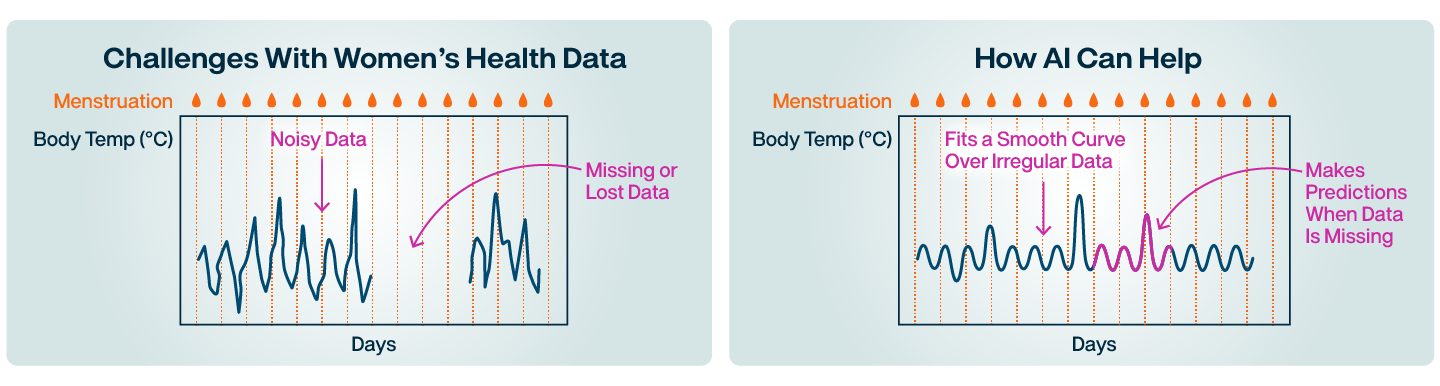
“What’s valuable about the Gaussian process is that you can clean up the data, and then use it to project outward in time,” explains Engelhardt. “You can predict what happens next or what happened between two time points where we’re missing data.”
Using this method, the researchers can keep and analyze complex data on how women’s biometric data change over the course of a menstrual cycle, rather than discard it like older studies. That means they can also keep participants whose cycles don’t fit a standard pattern—exactly who STIGMA is purposefully recruiting—rather than excluding them.
“Wearables have certain limitations, so we meet the data where it is,” Engelhardt says. “We’re saying, look, we missed three days of data when she traveled to Europe. What can we do about that?”
AI Reveals Hidden Trends
The data Engelhardt’s team has collected so far are already turning up patterns that conventional research approaches have missed. In some cases, those patterns only became visible once their AI model was applied to data that older methods would have discarded.
“By applying our model to this incredibly messy data, we’re starting to find really interesting signals of how your body adjusts and changes throughout your cycle,” Engelhardt says.
People should start to think about their menstrual cycle as the fifth vital sign.
Barbara Engelhardt, PhD
One long-held assumption, for instance, is that heavy exercise disrupts the menstrual cycle. What Engelhardt’s group has found—by following a group of professional athletes over the course of over a year—is that, quite to the contrary, athletes tend to have unusually regular cycles, with some of the most predictable data in the entire study. But only if they’re eating enough. It’s calorie deprivation, not exercise itself, that can throw things off.
For women who have recently given birth, the researchers uncovered something else with practical implications. Milk supply, they found, tends to drop sharply during a specific window as the menstrual cycle returns after pregnancy. This dip often leads women to assume their milk is gone for good. The data suggests it comes back within about a week.
The team also found that copper intrauterine devices (IUD), one type of birth control, shift the menstrual cycle by several days from what’s typically seen. This kind of knowledge could help women know what’s normal when they start a new contraceptive.
Engelhardt expects far more patterns to emerge over time. The first data out of STIGMA is expected to be formally published later this year, and Engelhardt’s team is still recruiting women to join the ongoing study. As it scales up to include thousands of participants, Engelhardt hopes it changes how the menstrual cycle is viewed.
“People should start to think about their menstrual cycle as the fifth vital sign,” she says. “We all look at our watches to figure out our heart rates these days; we want women to start doing the same with their cycle.”
Up Next
How AI Is Accelerating Life-Saving Discovery
Gladstone scientists are developing new AI tools that promise to revolutionize how science is done and lead to new treatments for the most devastating diseases.
Meet Gladstone: Sarah Nyquist
Sarah Nyquist is a bioinformatics fellow, researching human mammary gland milk production to address the gap in understanding how disease, lifestyle, and genetics impact breast milk.
Barbara Engelhardt Elected Fellow of the International Society for Computational Biology
The ISCB Fellows program is a prestigious recognition within the field of computational biology honoring those who have made outstanding contributions to the discipline. These distinguished scientists and professionals have demonstrated exceptional leadership, research, and service, advancing the frontiers of computational biology and bioinformatics.
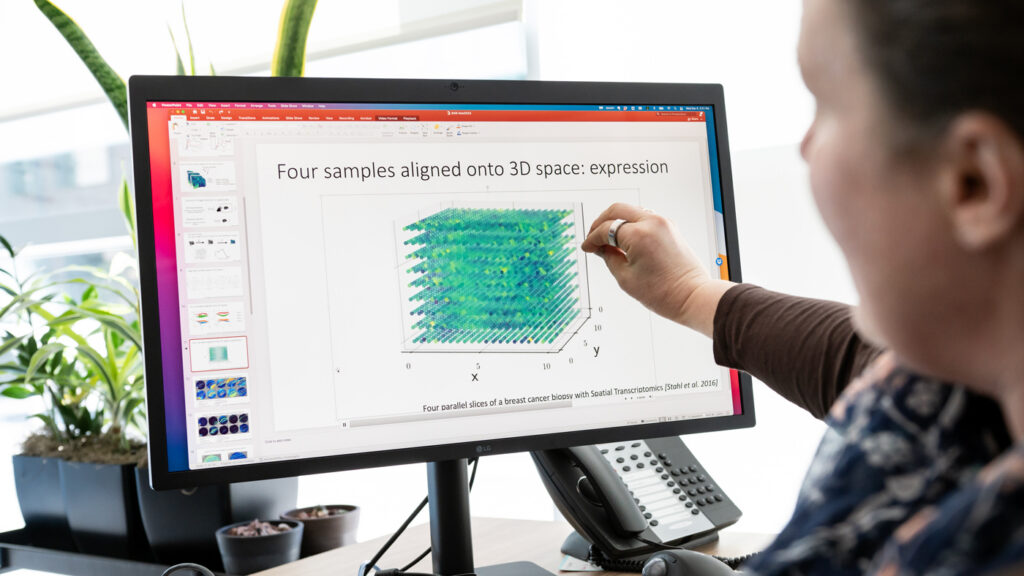
The Best Thing Since Sliced Tissue
A new tool created by Gladstone researchers aligns data from tissue slices virtually, expanding possibilities for 3D analysis

Get Involved
Join the Team
Our people are our most important asset. We offer a wide array of career opportunities both in our administrative offices and in our labs.
Open PositionsPartner With Us
Discoveries don’t stay in our labs. Gladstone facilitates spinout companies to advance promising therapies, shortening the path between scientific discovery and helping real patients.
Learn MoreGive
Your gift to Gladstone will allow our researchers to pursue high-quality science, focus on disease, and train the next generation of scientific thought leaders.
Donate Now