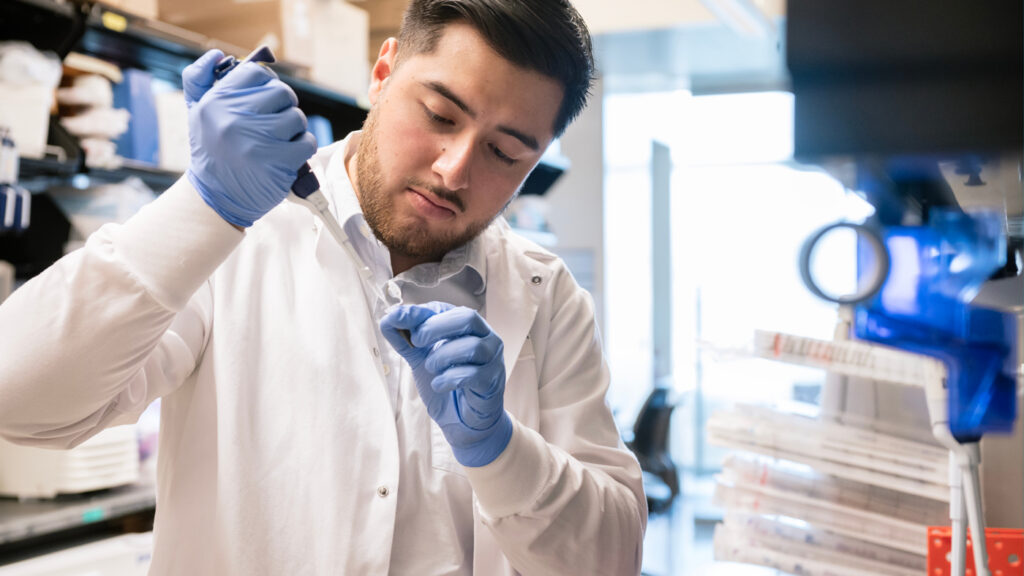
Ryan Corces studies the contributions of genetic and non-genetic factors to neurodegenerative diseases. While genetic mutations modify genes directly, non-genetic factors, such as previous illnesses, exposure to environmental chemicals, or aging, can leave lasting imprints on the epigenome, the DNA sequences and associated proteins that control gene activation.
Using computational biology, large-scale screens, and single-cell technologies, Corces probes the epigenome of cells derived from patients, with the aim to understand how it impacts disease risk and to develop novel avenues for therapeutic interventions.
Disease Areas
- Alzheimer’s Disease
- Parkinson’s Disease
- Neurodegenerative Diseases
Areas of Expertise
- Epigenomics
- Genomics
- Single-cell Analysis
- ATAC-seq
Lab Focus
- Understanding how inherited genetic variation interfaces with lived experiences and environmental factors to produce durable and functional epigenetic alterations that lead to neurodegeneration.
- Identifying mechanisms of disease susceptibility and resilience in Alzheimer’s disease and Parkinson’s disease.
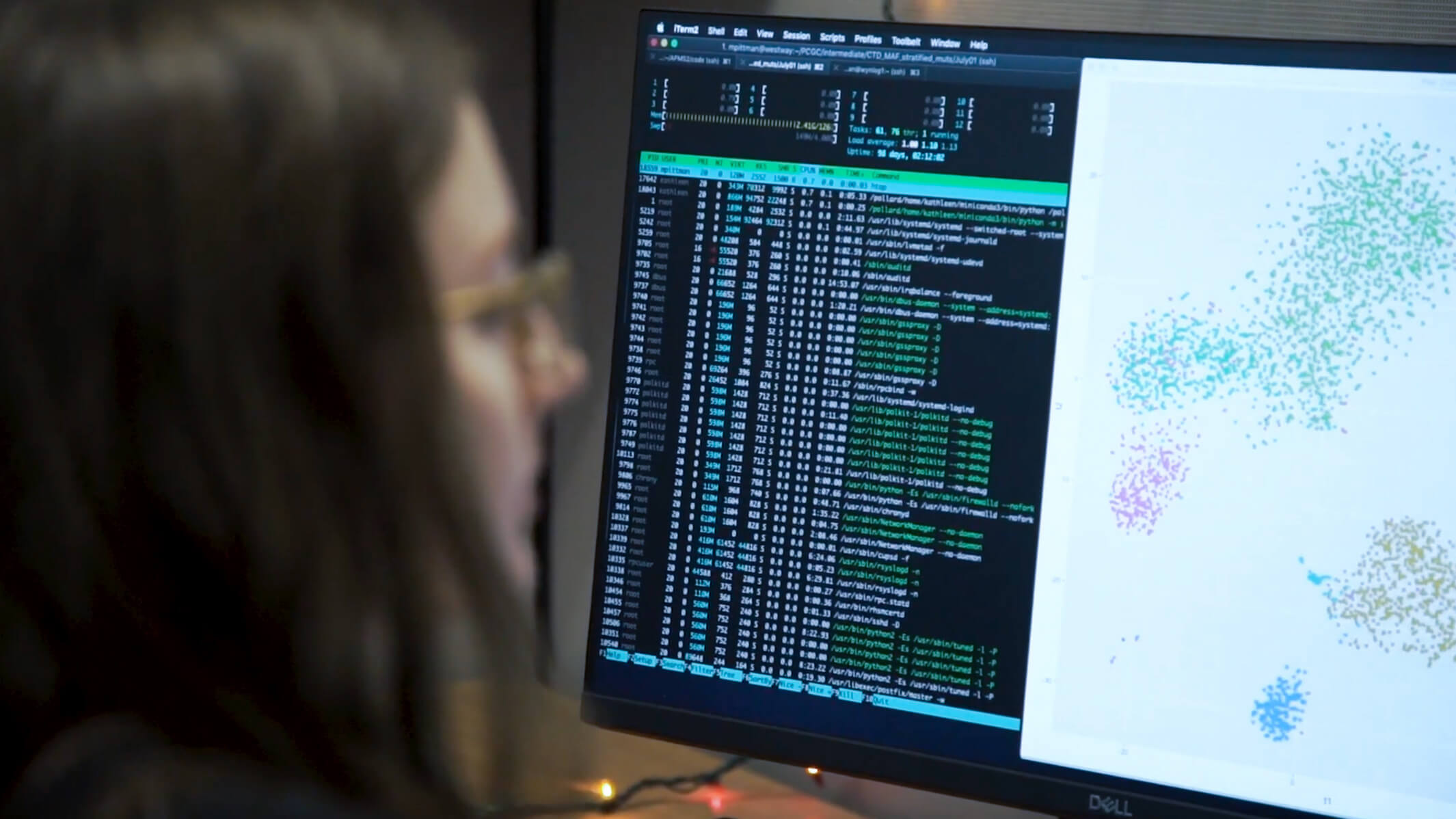
- Developing technology for high-resolution, high-throughput exploration of the epigenome of human cells.
Research Impact
Corces uses cutting-edge technologies such as ATAC-seq or RNA-seq, on bulk tissue or single cells, to generate large epigenomic datasets from healthy or diseased human cells and identify novel therapeutic approaches.
His atlas of the epigenome of human blood cells has revealed the landscape of gene regulation in leukemia in unprecedented detail, and uncovered novel biology that can be harnessed toward prevention and cure. Similar large-scale collaborative partnerships with industry led to the discovery of a regulatory region at the retinoic acid receptor alpha (RARA) gene locus that is unique to a subgroup of leukemia patients, sparking a phase-two clinical trial (#NCT02807558) with great promise to improve outcomes in these patients. He has also collaborated with The Cancer Genome Atlas to lead a characterization of the epigenetic landscapes of 23 primary solid tissue cancers.
More recently, Corces has turned his focus to neurodegenerative diseases, and generated an epigenomic atlas of seven adult human brain regions involved in diverse cognitive functions. This work led to the identification of dozens of epigenetically distinct neuronal cell classes and over 350,000 genomic sequences that regulate gene function in the human brain. Corces then applied machine learning on this atlas and previous large-scale genetic studies to predict sequence variations in epigenetic regions likely to lead to Parkinson’s or Alzheimer’s disease.