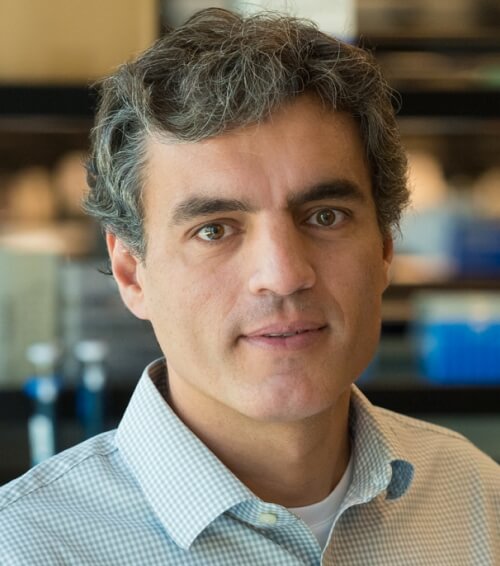
Barbara Engelhardt works to improve human health by analyzing the enormous reams of data generated by research labs, doctors, and hospitals.
Combining mathematical, statistical, and artificial intelligence approaches, her team seeks to understand the cellular mechanisms of disease, the impact of traumatic life events on health, and the clinical treatments that best correlate with positive health outcomes. The team anchors their work in a large network of collaborations, and generates computational and statistical tools aimed at increasing the impact of both medical research and healthcare practice.
Disease Areas
- Cancer
- Heart Disease
- Mental Health
- Obesity
Areas of Expertise
- Machine Learning
- Computational Biology
- Statistical Models

Lab Focus
- Integrating cell biology, microscopy, and genetic data to model intercellular communications in both healthy tissues and diseased tissues such as cancer tumors.
- Understanding the epigenetic marks left by trauma and downstream risk of mental health problems, obesity, or heart disease.
- Developing algorithms that predict the best type of care or course of treatment in the clinical setting, with an emphasis on quantifying how doctors might treat patients differently based on race, sex, or comorbidities.
Research Impact
Medical research has seen an explosion of genomic, single-cell, and imaging data that can only be mined productively with structured and robust statistical and computational approaches. Similarly, modern clinical practice is generating vast troves of electronic records on patients, interventions, and health outcomes that could be used to predict the best course of treatment or to correct health inequities.
Barbara Engelhardt has been tackling these challenges with a combination of statistics and machine learning approaches. Her analysis of electronic health care data has led to a policy for weaning patients from a mechanical ventilator, and another that reduced the number of blood draws for hospital tests by 40 percent and accelerated the diagnosis of sepsis by approximately four hours.
Her work in genomics seeks to understand the genetic basis for complex traits and the cellular mechanisms underlying this relationship. Complex traits, including many diseases, manifest as a continuum of symptoms that reflect dysregulation among cell types, genes, and other factors. Engelhardt has developed tools to explore, identify, and quantify these interactions in large genomic datasets, and to predict the impact of specific interventions. In particular, she is pursuing approaches to incorporate the quantitative output of genes (how much RNA they produce) into her analysis of complex traits, which has led her to identify a gene that protects from muscular myopathy in the context of statin treatment. She is also developing tools to extract biological or disease-relevant information from time series gene expression data, and to identify optimal gene markers to improve the analysis of omic data from single cells.