Gladstone Scientists Team Up to Attack Calcification in the Heart
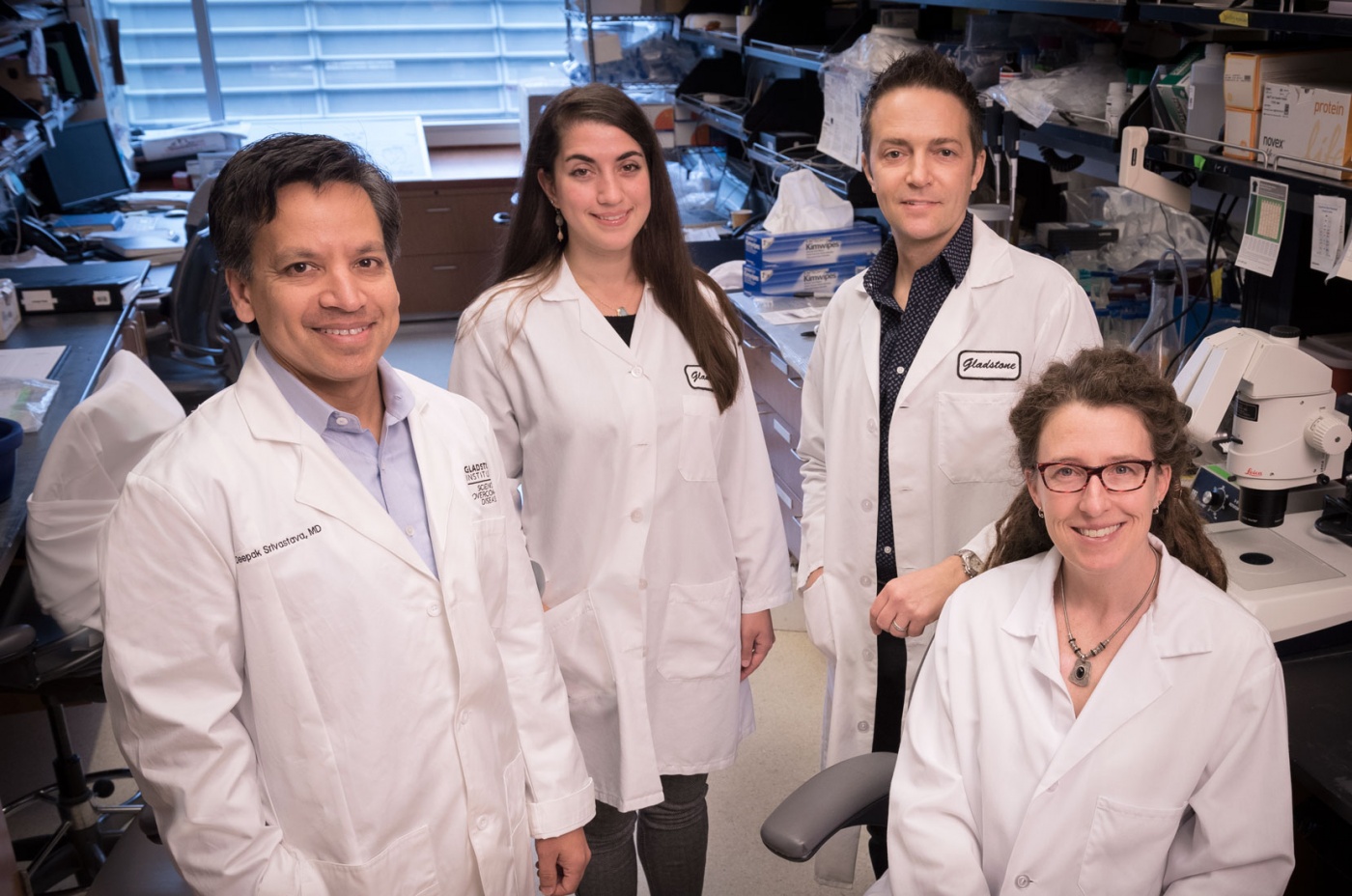
Collaborations have been key to Gladstone’s scientific success since its founding, and its community believes that the biggest challenges in science are better met by bringing together researchers with diverse backgrounds. Gladstone comprises a group of scientists whose concern for patients and curiosity about the fundamentals of biology converge in a distinctive and unique approach that goes beyond interdisciplinary research.
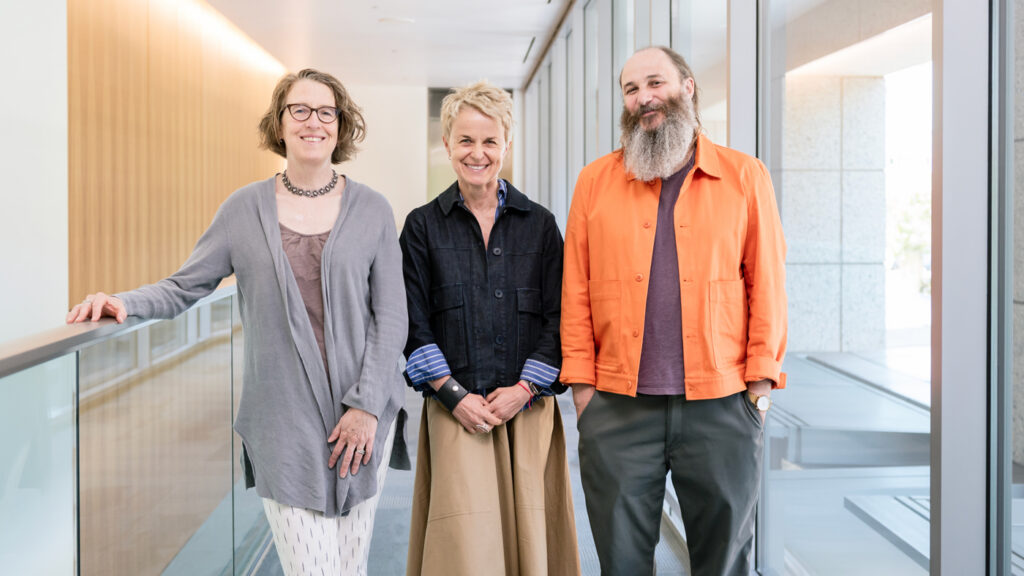
“Gladstone thrives because of its engaging environment of world-renowned researchers who bring different perspectives to critical problems,” stated Benoit Bruneau, PhD, a senior investigator at Gladstone. “It is at the intersection of disciplines that significant progress is made.”
In addition to Bruneau’s lab, the labs of Deepak Srivastava, MD, and Katherine Pollard, PhD, combined their expertise to expand the capabilities of an individual lab and work together as a fully integrated team. The study was published in the journal Cell on March 12, 2015.
“These discoveries were enabled by the team approach to science at Gladstone, with three labs contributing diverse expertise and working side by side,” stated Dr. Pollard, whose lab brought computational modeling expertise to understand the vast data that was collected. “I look forward to building upon this collaboration in the future.”
The team included first author Christina Theodoris, an MD/PhD student who was co-mentored by Drs. Srivastava, Bruneau, and Pollard, and second author Molong Li, a student working closely with both the Srivastava and Pollard labs. This deeply integrated team worked seamlessly to unravel the basis for calcific aortic valve disease. CAVD, the third leading cause of heart disease, affects nearly 1.5 million people and results in 100,000 surgeries for heart-valve replacements in the United States every year. For unknown reasons, CAVD occurs even more commonly in people born with an abnormality of the aortic valve in which there are only two leaflets instead of three—a cardiac birth defect in 1% of the population worldwide.
CAVD is a slowly progressive disorder. In some cases, the heart valve is just thickened, but in others, it can harden by a process called calcification that is similar to that when bone is made. When the valve hardens, blood flow is impeded over time. As we age, the calcification can also occur in our arteries and lead to diminished blood flow. Scientists and physicians have long recognized this as a major problem, but they do not yet understand why and how to prevent it.
In previous studies, The Srivastava lab showed that mutations in the gene, NOTCH1, cause birth defects that affect the heart valve and cause the calcification to take place sooner. Interestingly, even if only one of the two copies of the gene was mutated, NOTCH1 levels decreased and led to disease.
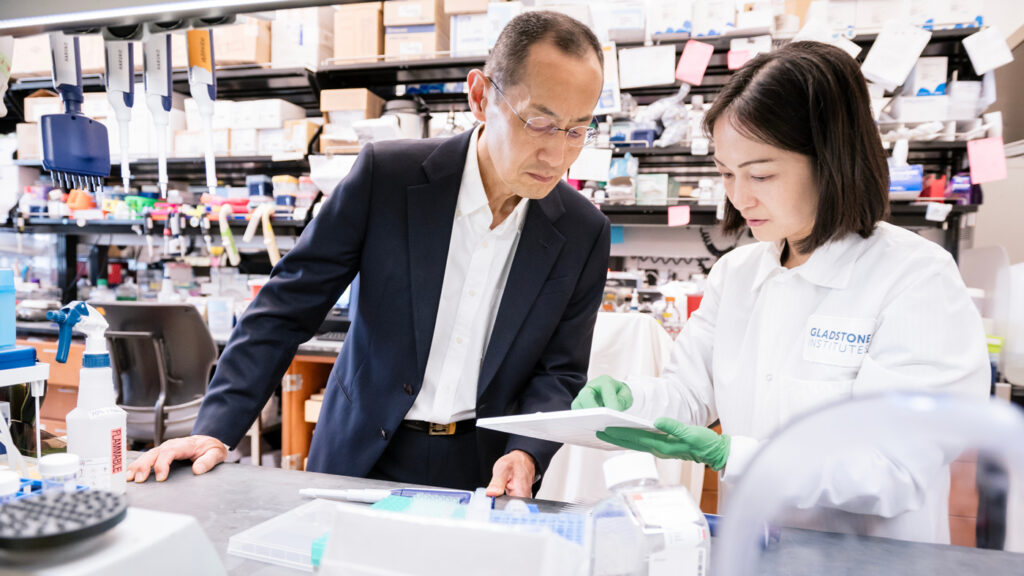
To understand how and why, the team used the technology developed by Dr. Shinya Yamanaka. They reprogrammed adult skin cells from patients with NOTCH1 mutations into a kind of stem cell called induced pluripotent stem cells (iPSCs). They then transformed these iPSCs into endothelial cells, which line heart valves and blood vessels. They compared healthy cells to those that came from the CAVD patients and mapped the changes as the endothelial cells developed. They found that blood flow puts a shear stress on the valve tissue that normally protects the valve from calcification by triggering NOTCH1 to turn on in the cells that line the valve. When cells had mutations in NOTCH1, however, shear stress failed to protect the valve and, instead, the cells activated a detrimental gene program that drives bone formation. Remarkably, the team was able to map the gene networks involved in this disease to pinpoint targets that could reverse the effect.
“We identified two master regulators within the gene network that are disrupted in CAVD,” said Ms. Theodoris. “When we manipulated these master regulators, the gene network returned back towards normal, suggesting that we might be able to therapeutically target these regulators to delay or prevent the progression of CAVD.”
“Identifying these master regulators is a big step in treating CAVD, not just in people with the NOTCH1 mutation at birth, but also in other patients who experience calcification in their valves and arteries,” said Dr. Srivastava. “Now that we understand how calcification occurs, we hope to learn how to prevent it and then extend this knowledge to other forms of cardiovascular disease, such as atherosclerosis. We are now collaborating with Sheng Ding, PhD, a chemist at Gladstone, to find a drug-like compound that could correct the abnormality in patient cells.”
Up Next
Engineered Human Neurons Rebuild Damaged Spinal Cord Circuits
Gladstone scientists show that stem cell-derived spinal neurons can integrate into damaged neural networks in rats and improve breathing-related motor function after a traumatic spinal cord injury.
Misfolded DNA Blueprint: A New Origin for Genetic Disease
Gladstone researchers found losing just one copy a particular gene can disrupt heart development and lead to congenital heart disease.
Gladstone Launches Center for PhAIge Therapy to Harness AI in the Fight Against Drug-Resistant Infections
The center, funded by an NIH grant, will become one of three national centers dedicated to accelerating the development of phage therapy.
A Gene That Keeps Stem Cells From Losing Their Way
Scientists find a gene essential for keeping intestinal stem cells stable, offering insight into how tissues repair themselves.
Get Involved
Join the Team
Our people are our most important asset. We offer a wide array of career opportunities both in our administrative offices and in our labs.
Open PositionsPartner With Us
Discoveries don’t stay in our labs. Gladstone facilitates spinout companies to advance promising therapies, shortening the path between scientific discovery and helping real patients.
Learn MoreGive
Your gift to Gladstone will allow our researchers to pursue high-quality science, focus on disease, and train the next generation of scientific thought leaders.
Donate Now