The Brain’s Hidden Clean-Up Crew: NOMIS-Gladstone Fellow Myung Jin Yang’s Quest to Unlock the Mystery
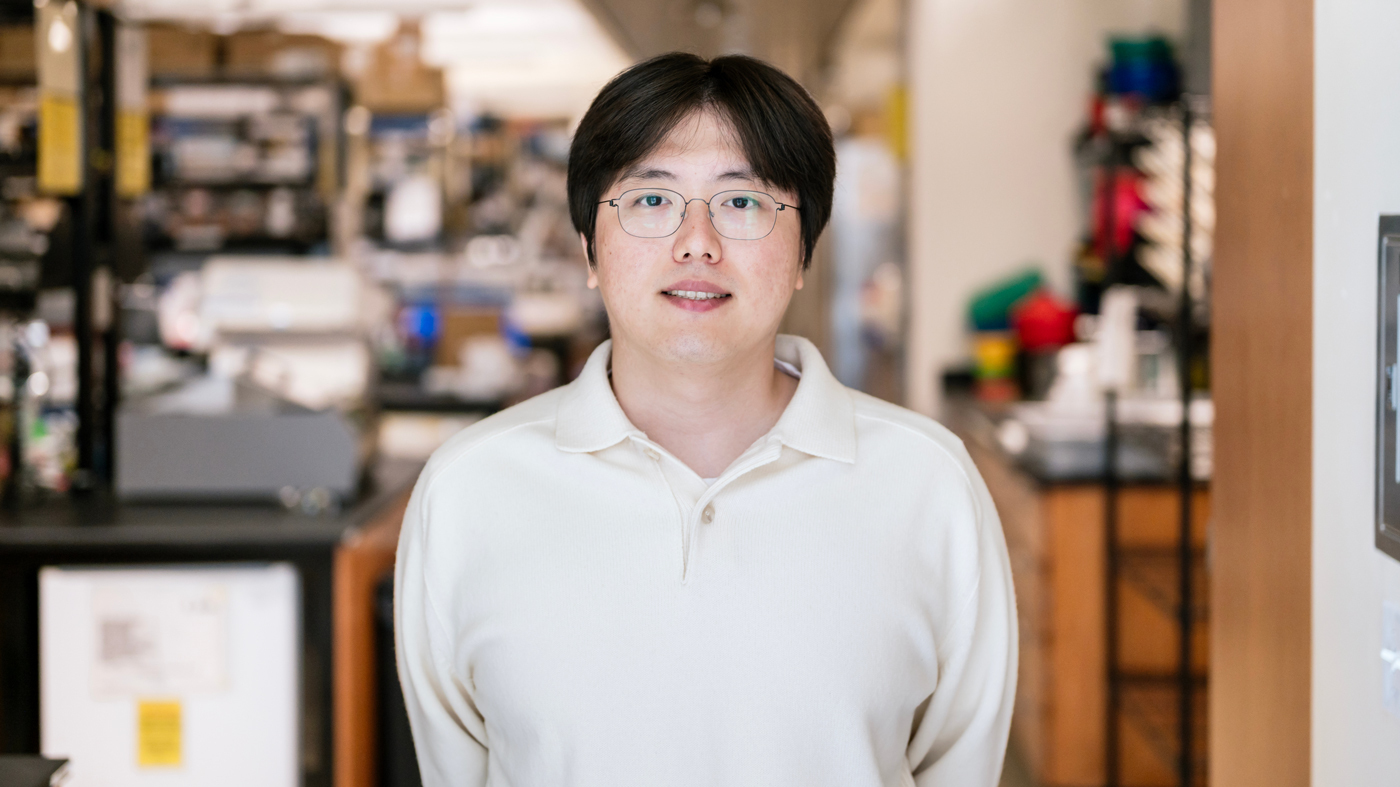
How does the brain clear waste without the traditional lymphatic vessels found in the rest of the body? It’s a puzzle that could unlock new insights into aging and neurodegenerative diseases. As a NOMIS–Gladstone Fellow, Myung Jin Yang, PhD, is tackling this mystery head-on. With the fellowship’s support for bold, cross-disciplinary research, Yang is exploring how the brain sorts and clears waste—a process that could reveal why some people’s brains age more successfully than others.
In this first-person account, Yang shares a bit about his past experiences, his research as part of the NOMIS-Gladstone Fellowship Program, and the future of his research.
When I first learned about the circulatory system, it was compared to a road traffic system. The analogy stayed with me—blood, serving as the courier, connects every part of our body to sustain life. Blood vessels are the roads, with large highways like arteries and veins narrowing into capillaries that reach every corner of the body.
My fascination with this intricate network led to me earning my PhD at the Korea Advanced Institute of Science and Technology in South Korea, in the lab of Gou Young Koh, MD, PhD. There, I studied how blood vessels communicate with different organs and how they adapt to their environment. I discovered that the brain is unique in this regard, protected by the blood-brain barrier—a selective gatekeeper that blocks harmful substances while allowing essential nutrients and other beneficial factors through.
The Brain’s Missing Lymphatic Puzzle
Blood isn’t the only fluid coursing through our bodies. Lymph, carried by another network of vessels, plays a central role in clearing waste and maintaining fluid balance across our organs. While most of our organs are supported by both blood and lymphatic vessels, the brain is a notable exception. Despite using about 20 percent of the body’s energy, the brain lacks traditional lymphatic vessels. This raises a fundamental question: how does it clear the substantial amount of waste it produces?
This question is critical because impaired brain clearance can lead to the accumulation of abnormal protein aggregates, inflammation, and neuronal dysfunction—hallmarks of aging and neurodegenerative diseases. Recent research has implicated the meninges, the protective gift wrap surrounding the brain, in this process. Their outermost layer, the dura mater, contains a complex network of blood and lymphatic vessels. However, the precise mechanisms by which these systems work together to clear the brain’s waste remain unclear.
A Fellowship Built for Bold Questions
As a NOMIS–Gladstone Fellow, my research focuses on unraveling the brain’s clearance mechanisms. Just like we have recycling, compost, and regular trash bins at home, I’m investigating how the brain sorts and disposes of different types of waste. Some proteins might go through the blood vessel “trash chute,” whereas others might take the lymphatic “recycling route.” Understanding these distinct pathways—and what happens when they break down—could revolutionize how we prevent brain aging and neurodegenerative diseases.
At the molecular level, I discovered that both blood and lymphatic vessels in the dura mater express apolipoprotein E (APOE), a key determinant of Alzheimer’s disease risk and longevity. APOE exists in different forms, with the E4 variant increasing Alzheimer’s risk, whereas others offer protection. While the overall significance of APOE for brain health is well-established, its roles in the brain vasculature remain unclear.
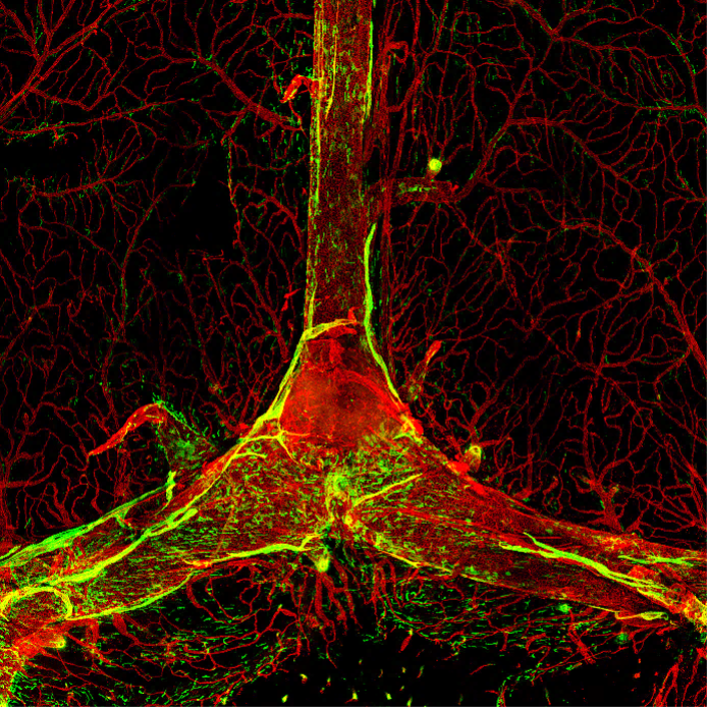
Yang is investigating how the brain clears waste without traditional lymphatic vessels, aiming to uncover mechanisms that could explain differences in brain aging. In this image, blood vessels (red) and lymphatic vessels (green) in dura mater. Photo: Simon Kang and Myung Jin Yang.
With my background as a vascular biologist and the opportunities offered by the NOMIS–Gladstone Fellowship Program, I’m well positioned to integrate vascular biology, neuroscience, and genetics to explore how APOE influences brain clearance.
I’m co-mentored by Andrew Yang, PhD, who has developed innovative methods for tracking proteins produced by the brain, and Yadong Huang, MD, PhD, a leading Alzheimer’s researcher and expert in APOE biology. Their combined mentorship creates a unique synergy, encouraging me to think across disciplines, ask bold questions, and collaborate with other scientists to tackle some of the most challenging unanswered questions in neurodegenerative disease research. At Gladstone, I’m gaining both technical skills and conceptual insights for my growth into an independent researcher.
Peering Into the Future of Brain Health
The brain’s clearance systems are a mystery we’re only beginning to unravel, and I’m excited to contribute to this evolving field. By unraveling this mystery, I hope to advance our fundamental understanding of how the brain maintains its tidiness, health and function—and uncover clues about why the brain ages more or less successfully in different people.
Up Next
Gladstone Institutes Launches Redesigned Website, Bringing Cutting-Edge Biomedical Research Into Focus
Discover disease research, explore the latest scientific news, and connect with experts through Gladstone’s enriched digital platform.
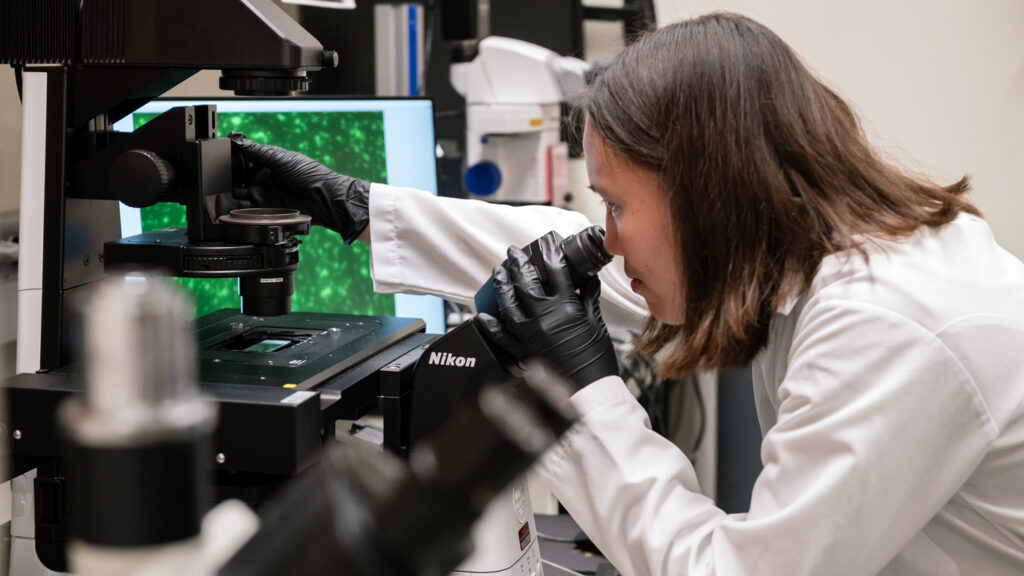
Newly Discovered Antiviral System in Bacteria Is ‘Strangest of Its Kind’
The complex Rube Goldberg-like molecular machinery could inspire novel technology to study and treat disease.
Gladstone’s Seth Shipman Named Fellow of the California Academy of Sciences
Shipman is recognized for pioneering molecular technologies that record cellular activity, expand genome editing, and target antibiotic-resistant superbugs.
Novel Biosensor Uses DNA ‘Barcodes’ to Uncover Disease Signals in Cells
Inspired by bacterial biology, the Gladstone-developed “Detectron” opens up new possibilities for disease research and potentially treatments.

Get Involved
Join the Team
Our people are our most important asset. We offer a wide array of career opportunities both in our administrative offices and in our labs.
Open PositionsPartner With Us
Discoveries don’t stay in our labs. Gladstone facilitates spinout companies to advance promising therapies, shortening the path between scientific discovery and helping real patients.
Learn MoreGive
Your gift to Gladstone will allow our researchers to pursue high-quality science, focus on disease, and train the next generation of scientific thought leaders.
Donate Now