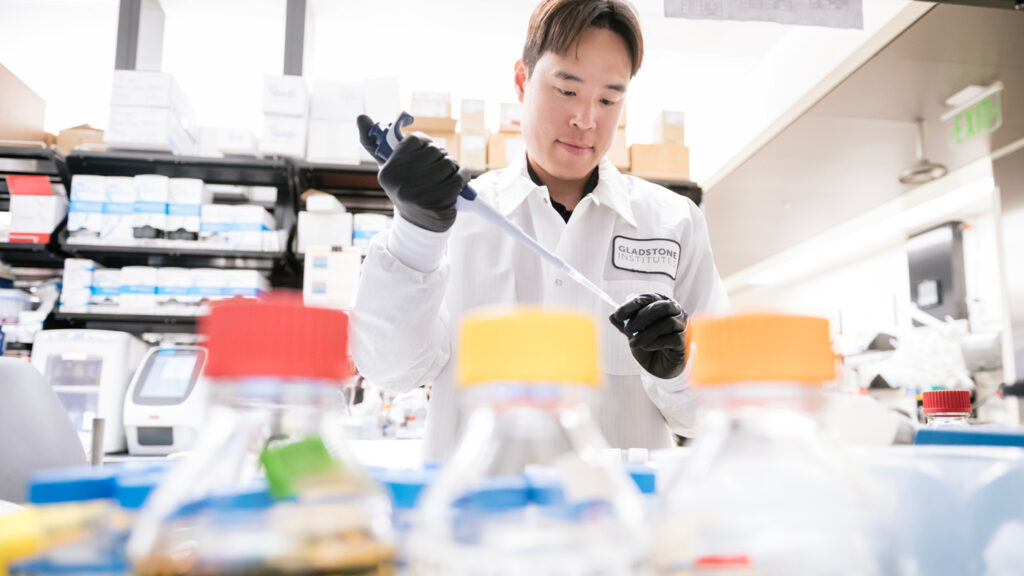
Katie Pollard and her team develop models that enable them to decode how genomes work, evolve, and break in disease.
Their analyses of massive sets of genomic and epigenomic data include investigating human genetic variation, understanding what makes humans unique compared to other species, and characterizing the genomic diversity of the human microbiome, the group of bacteria that populate our digestive system and other body sites. An evolutionary focus, coupled with rigorous statistical methods and bioinformatics tool development, gives the lab a unique perspective on human biology and disease.
Disease Areas
- Cancer
- Congenital Heart Defects
- Genetic Diseases
- Infectious Diseases
- Inflammatory Bowel Disease and Other Microbiome-Related Diseases
- Neurodegenerative Diseases
- Psychiatric Diseases
Areas of Expertise
- Bioinformatics
- Data Science
- Developmental Biology
- Epigenetics
- Genome Evolution
- Genomics
- Machine Learning/AI
- Microbiome
- Statistics
- Technology Development
Lab Focus
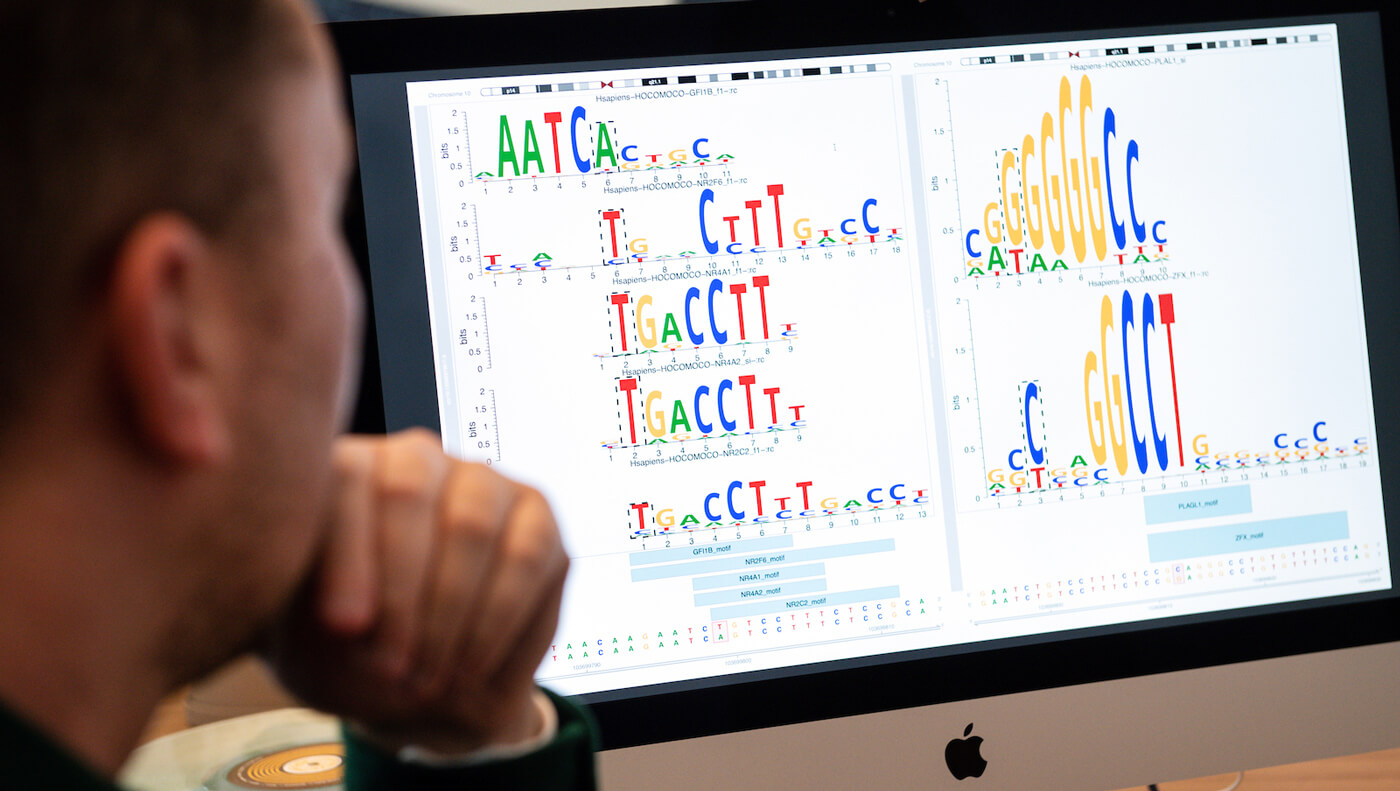
- Creating tools for genomic data analysis that combine statistical rigor, an evolutionary perspective, and massive integration of public data.
- Using AI and other predictive computational models to gain a mechanistic understanding of human biology.
- Identifying the genetic basis for human traits and diseases.
- Characterizing the human microbiome through metagenomic data analysis.
- Designing biomedical research technologies to optimize what we can learn from them.
- Science communication and education.
Research Impact
Pollard pioneered a statistical approach to identify the fastest-evolving regions of the human genome, known as Human Accelerated Regions (HARs). Her team showed that many of these correspond to non-coding sequences controlling the expression of genes important for development and associated with psychiatric disorders. The lab also used machine learning to reveal the importance of DNA shape and folding in gene regulation. These studies have generated research tools for studying human disease that are yielding novel therapeutic targets.
Pollard has also designed metagenomic-based methods to study the human microbiome at the resolution of individual genes and genetic mutations. From these studies, novel insight will arise into the relationship of the microbiome to health and disease, setting the stage for using metagenomics in precision medicine.
The Pollard Lab’s open-source code for gene expression analysis, detecting evolutionary conservation and acceleration, and quantifying genetic changes in the human microbiome is used in thousands of labs and classrooms.