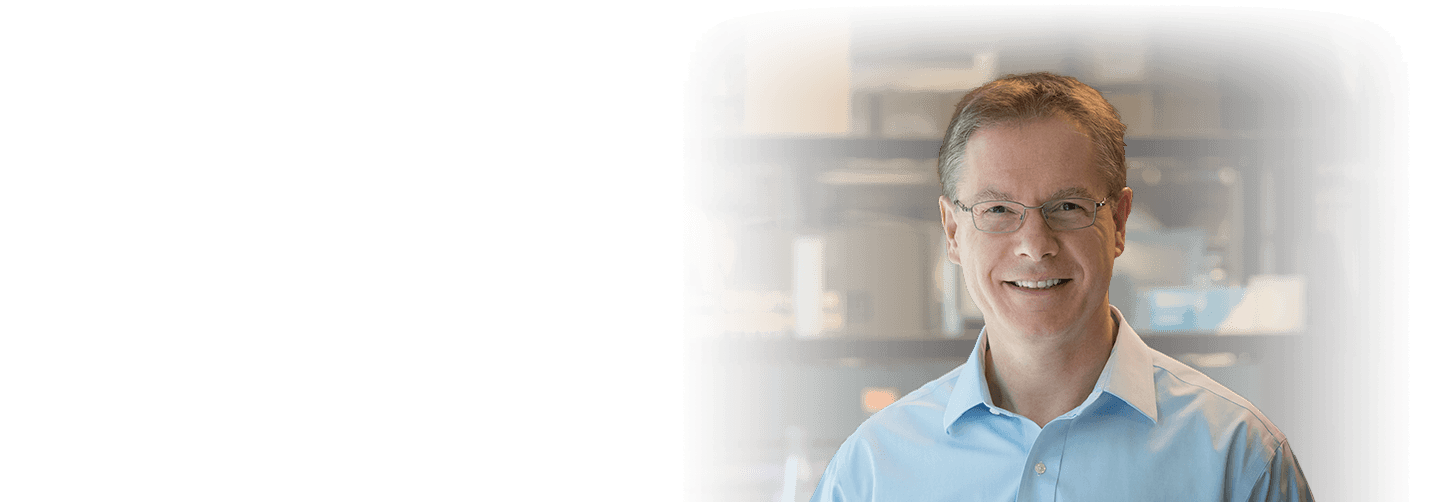
Lennart Mucke’s lab focuses on how major neurological and psychiatric conditions cause cognitive deficits, behavioral abnormalities, and other disabling symptoms, with an emphasis on dementias, epilepsy, and autism.
The group uses mouse models and brain cell cultures to study disease-causing factors and pathways at molecular, cellular, network, and behavioral levels. Such models are also used to identify and validate novel entry points for therapeutic interventions. The clinical relevance of discoveries made is assessed through collaborative studies of human patients and brain tissues. The most informative experimental models have been used to identify novel strategies to counteract the development of brain dysfunctions and neurological decline.
Disease Areas
- Epilepsy
- Alzheimer’s Disease
- Other Dementias
- Autism Spectrum Disorders
Areas of Expertise
- Development of Interdisciplinary Research Programs
- Identification and Preclinical Assessment of Novel Therapeutic Strategies
- Dissection of Complex Pathogenic Pathways in Experimental Models
- Pathobiology of Amyloid Proteins and Tau
- Roles of Glial Cells in Health and Disease
- Training and Mentorship of Leaders in Disease-Focused Neuroscience

Lab Focus
- Important brain functions and conditions that impair them.
- Unraveling disease mechanisms at molecular, cellular, network, and behavioral levels.
- Identifying novel therapeutic strategies and advancing them toward the clinic.
Research Impact
Genetic variants of the amyloid precursor protein (APP), microtubule-associated protein tau, and apolipoprotein E (apoE) can cause or increase the risk of Alzheimer’s disease. Abnormal accumulations of APP-derived amyloid-β (Aβ) peptides and of tau form amyloid plaques and neurofibrillary tangles, respectively, two pathological hallmarks of the disease. Findings by the Mucke Lab revealed that APP/Aβ, tau, and apoE4 can cause neuronal deficits independent of plaques and tangles and that they can promote not only synaptic depression, but also neural network hyperexcitability. The group further showed that reducing neuronal tau levels prevents network hyperexcitability of diverse causes and is well tolerated, revealing a novel role for tau in the regulation of neuronal activity and challenging the long-standing notion that tau aggregation causes neurodegeneration through loss of tau functions.
These discoveries also identified unexpected links among Alzheimer’s disease, epilepsy, and autism, and paved the path toward the development of tau-lowering therapeutics, which is now pursued in academic laboratories and pharmaceutical companies around the world.
In animal models of Alzheimer’s disease, Mucke and his team showed that suppression of nonconvulsive epileptiform activity reverses synaptic and cognitive deficits. Follow-on studies with clinical collaborators led to the discoveries that a substantial proportion of Alzheimer’s patients have such abnormal brain activity and that its presence predicts faster cognitive decline. These insights provided critical guidance for the design of clinical trials aimed at reversing network dysfunction in Alzheimer’s disease.
Mucke’s long-standing research efforts in neuroimmunology have highlighted the importance of differentiating between beneficial and detrimental activities of non-neuronal brain cells such as astrocytes and microglia, particularly in the design of immune-modulatory treatments. Recent findings from his lab revealed that neural network and immune cell dysfunctions can engage in a vicious disease-promoting cycle that can be disrupted by therapeutic interventions.
Overall, Mucke’s contributions have advanced the field from its traditional focus on morphological changes toward an understanding of Alzheimer’s disease at the synaptic and neural network level. He also established novel models and strategies to expedite the translation of scientific discoveries into better treatments for brain diseases that are frequent, devastating, and costly to populations around the world.