Gladstone NOW: The Campaign Join Us on the Journey✕




A team of scientists at Gladstone and UCSF—including Hunter Thornton (left), Ujjwal Rathore (center), and Eli Dugan (right)— created a new genetic roadmap that reveals hundreds of hidden players in HIV infection, including two proteins that stop HIV in its tracks.
Listen to this article
The human immunodeficiency virus (HIV), which is the cause of AIDS, is a master of deception, using just nine genes to hijack the complex cellular machinery of the human body. Yet, even after decades of research on how the virus replicates and persists, researchers still haven’t solved the mystery of exactly which human genes influence HIV infection.
Now, scientists at Gladstone Institutes and UC San Francisco (UCSF) have opened a new door to understanding HIV by creating the first comprehensive genetic roadmap of how the virus interacts with real human cells. In a study published in the journal Cell, the team identified a multitude of human proteins that either help the virus thrive or work to stop it.
“HIV has been a global crisis for over 40 years,” says Alex Marson, MD, PhD, Connie and Bob Lurie Director of the Gladstone-UCSF Institute of Genomic Immunology, who led the study. “By studying human T cells, which are the primary target of the virus, we’ve finally mapped the genes—many of which were previously unknown—that influence whether or not they can be infected by HIV.”
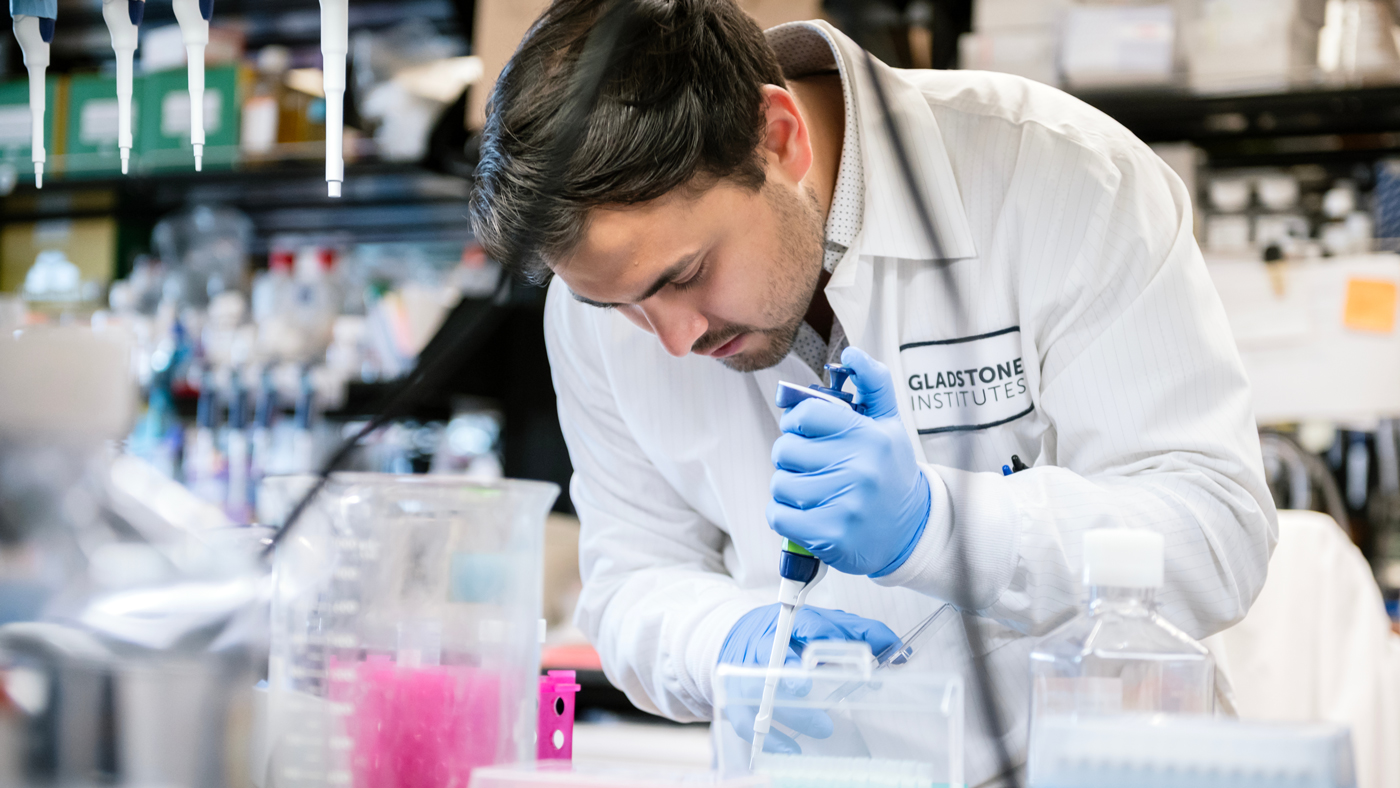
The scientists overcame a major limitation in HIV research to finally provide a clear picture of how human cells respond to HIV attack. Seen here is Eli Dugan.
Marson trained as an infectious disease doctor and used to work in an HIV clinic in San Francisco. For this study, he collaborated closely with Nevan Krogan, PhD, director of the HIV Accessory and Regulatory Complexes (HARC) Center, a multidisciplinary program aiming to better understand the interactions between HIV and human cells.
“This was the first genome-wide effort to show how human genes affect HIV infection in cells taken directly from human blood samples.” says Krogan, a senior investigator at Gladstone and director of the Quantitative Biosciences Institute at UCSF. “Our findings could eventually lead to new treatments that help the body’s immune system resist the virus.”
Studying HIV in Real Human Cells
HIV mainly infects CD4+ T cells, which orchestrate the body’s immune response. Yet, historically, most HIV research has been conducted in so-called “immortalized” cell lines—essentially, cancer cells that are easy to study in the lab. But because these cells don’t come directly from human donors, they’re not as relevant to what actually happens in the human body.
As a result, scientists have had an incomplete picture of how cells respond to HIV attack.
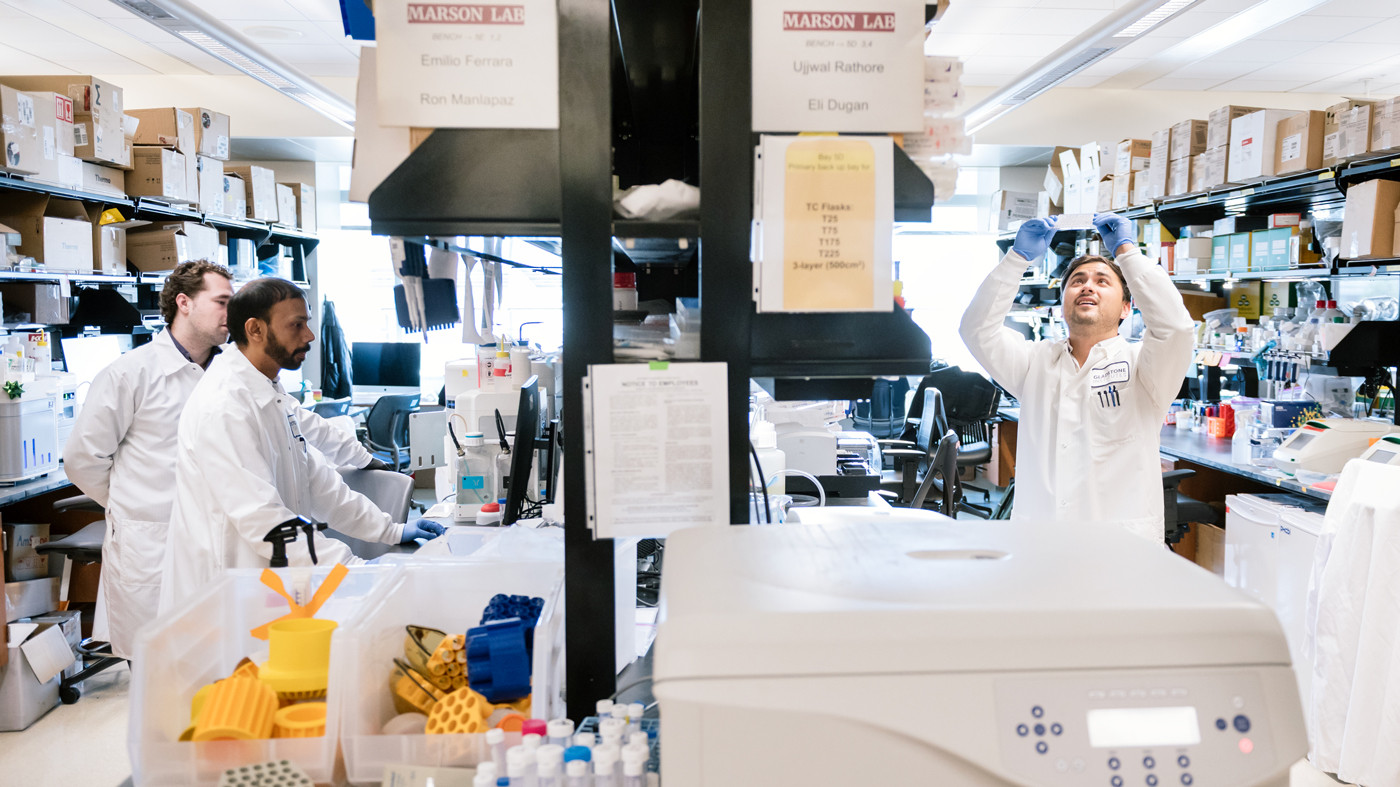
A team of scientists in Marson’s lab, including Ujjwal Rathore, PhD, has been working to overcome this limitation for the past decade. They have chipped away at unleashing the power of CRISPR gene editing in actual human T cells to study every gene in the genome and identify which ones are important for HIV.
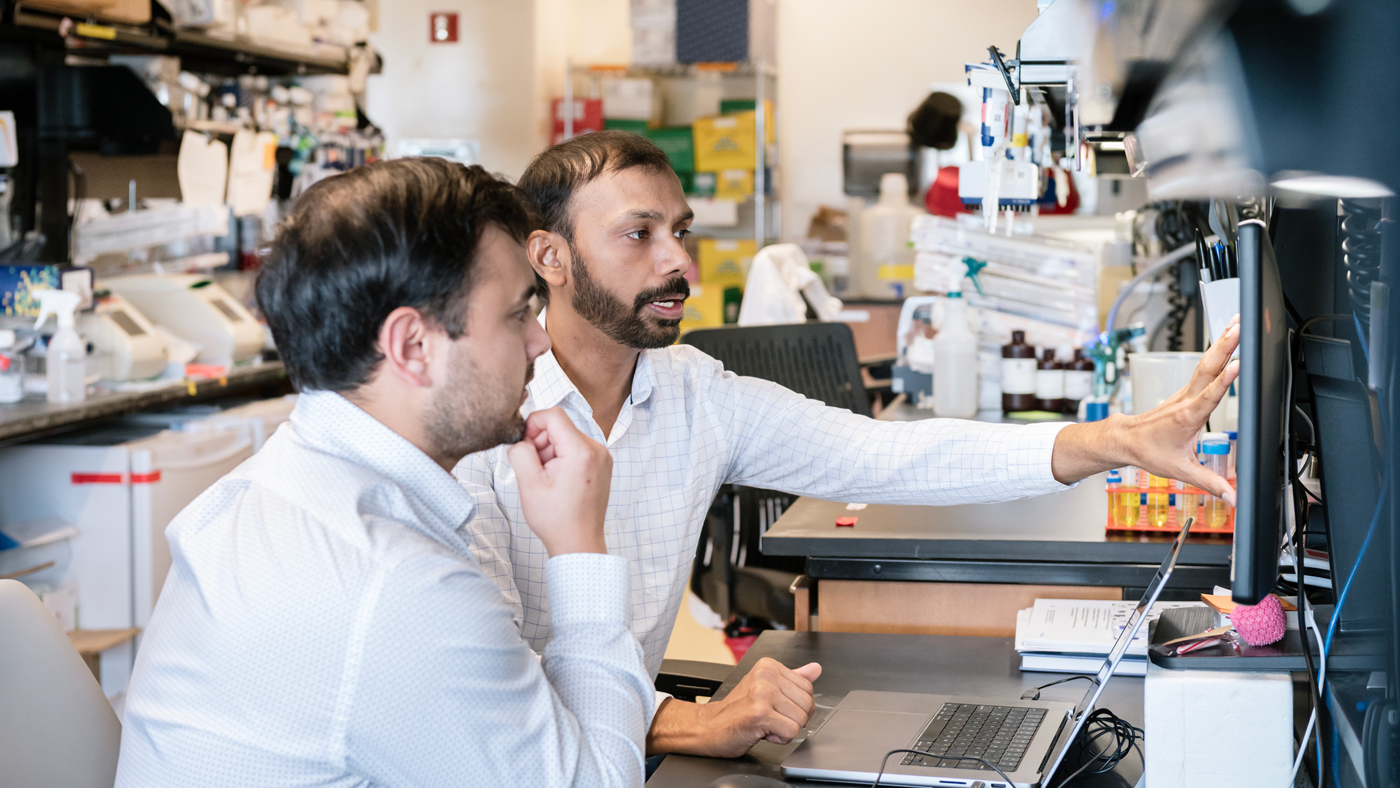
Working with their colleagues, Dugan (left) and Rathore (right) used CRISPR genome editing technology to test all human genes at once to determine which ones get hijacked by HIV and which ones fight back.
“One challenge of using real human T cells for research is they’re very difficult to infect with HIV; out of a whole dish of cells, typically only one or two percent would get infected,” says Rathore, a staff research scientist in Marson’s lab who is both a first author and a corresponding author of the study. “We spent years figuring out how to optimize HIV infection in these cells, and we can now infect up to 70 percent of them with the virus.”
Once that was accomplished, the scientists found a way to test all 20,000 human genes at once to determine which ones get hijacked by the virus and which ones fight back.
They leveraged CRISPR gene editing in a two-part strategy: First, they disrupted every human gene to identify the ones HIV needs to survive. Then, they separately boosted each gene activity to over-produce proteins, which allowed the scientists to spot the proteins skilled at defending against the virus.
“Over-activating the genes gave us a wealth of information,” says Eli Dugan, PhD, a postdoctoral scholar in Marson’s lab and a first author of the study. “We discovered natural antiviral proteins that were previously invisible because the virus could effectively silence them. By ramping up the levels of these genes in T cells, we could finally see them win the fight against HIV.”
Two New Cell Defenders
Through these efforts, the scientists identified hundreds of proteins that play some role in boosting or repressing HIV infection in human T cells.
Then they dove into understanding how the proteins function. Two of them stood out for their potent antiviral properties. Known as “PI16” and “PPID,” these proteins had never before been linked to HIV infection.
The team discovered that increased levels of PI16 can block HIV from fusing with T cells, which could stop infection before it even starts. PPID, on the other hand, acts on the virus after it enters the cell, limiting HIV’s ability to reach the nucleus and start making copies of itself.
“We found ways to tweak PPID in the lab and make it 10 times more effective at stopping HIV,” Dugan says.
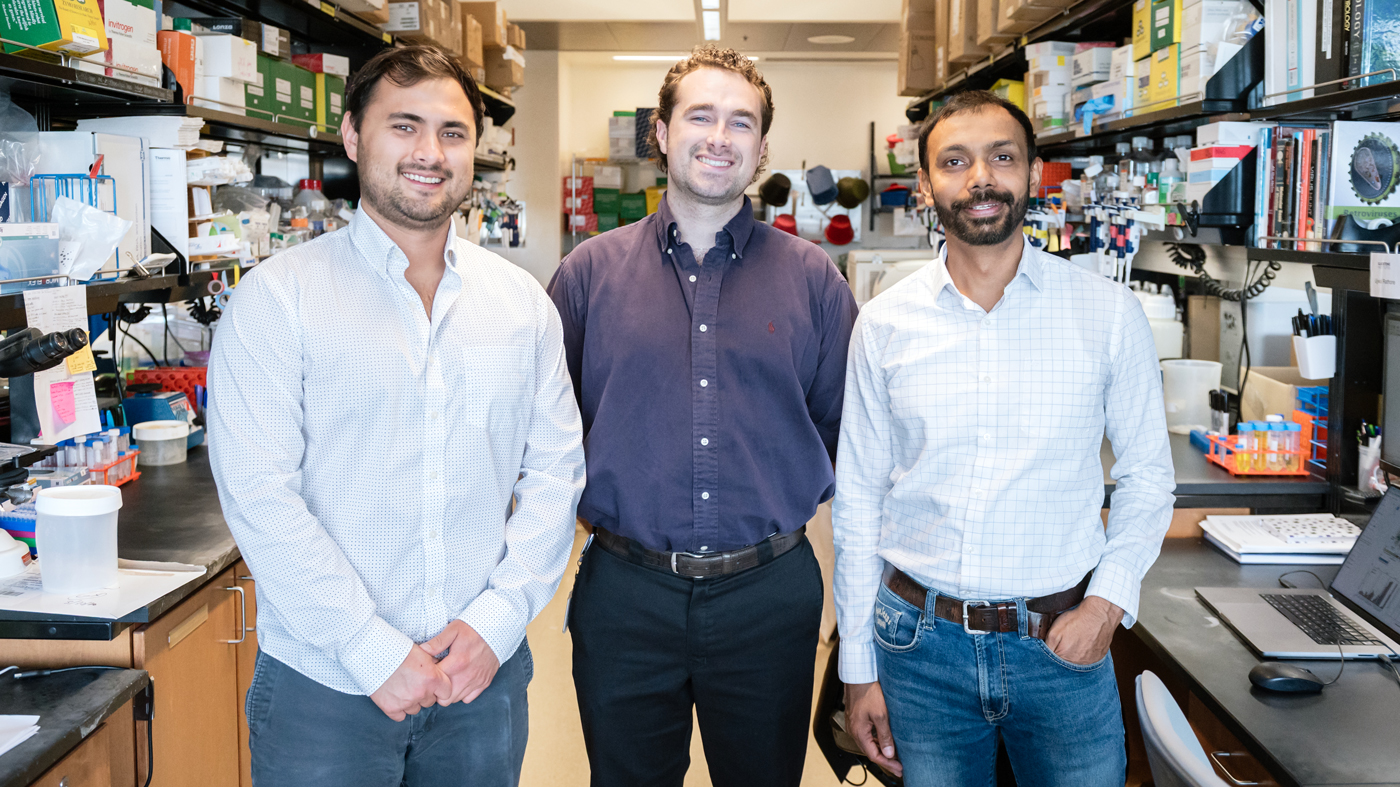
The research group—including Eli Dugan (left), Hunter Thornton (center), and Ujjwal Rathore (right)—found two new proteins that could reduce HIV infection, even in the most aggressive strains of the virus.
The team reached out to Jay Levy, MD, professor emeritus at UCSF, who helped identify the HIV virus in 1983. He shared rare samples of the virus isolated from patients early in the AIDS crisis.
“We found that increased levels of PPID or PI16 could reduce HIV infection in these human T cells, proving that the new proteins could stop even the most aggressive, natural strains of HIV,” Rathore says.
A New Way to Study HIV
While HIV is now generally manageable through antiretroviral therapy, the virus roars back if treatment ever stops. That’s because even when HIV is undetectable in people on therapy, the virus is never really gone; it hides in pockets throughout the body.
The team’s advanced screening methods in human T cells could provide new data to better tackle this critical, yet poorly understood, issue.
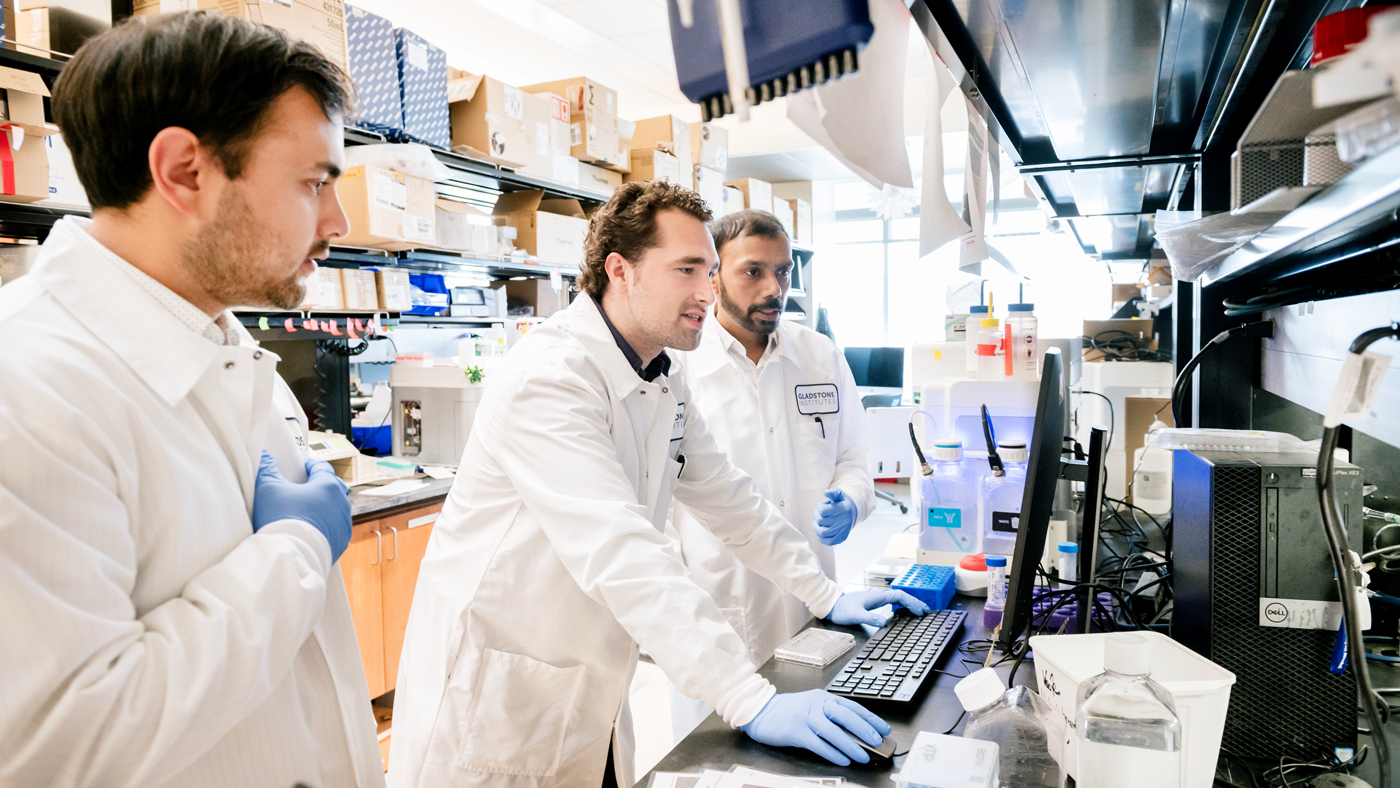
The new study provides a deeper understanding of how human genes influence HIV infection and will finally allow scientists to ask the biggest questions in the field. Seen here are Eli Dugan (left), Hunter Thornton (center), and Ujjwal Rathore (right).
“We haven’t had a good model to identify the important players in HIV latency,” Rathore says. “Now, we have the platform to ask the biggest questions in the field and hopefully learn how to eliminate hidden HIV that current drugs can’t reach.”
The new study also gives scientists a powerful new resource to study the disease, opening up vast research possibilities.
“This study provides a new view of how human genes shape HIV infection,” Marson says. “We hope this will be a foundational resource for the HIV research community and also serve as a prototype for understanding infectious diseases in other human cell types.”
For Media
Julie Langelier
Associate Director, Communications
415.734.5000
Email
About the Study
The paper, “Systematic Discovery of Pro- and Anti-HIV Host Factors in Primary Human CD4+ T Cells,” was published in the journal Cell on April 20, 2026. The authors are Ujjwal Rathore, Eli Dugan, Hunter Thornton, Vigneshwari Easwar Kumar, Rama Dajani, Zachary Steinhart, Reanna Lao, Emma Dann, Ishaan Dureja, Nandini Pathak, Maya M. Arce, Justin McKetney, Jennifer M. Umhoefer, Simrun Parulekar, Ralf Schmidt, Benjamin Polacco, Jason Neidleman, Mauricio Montano, Vinh Q. Nguyen, Nadia Roan, Danielle L. Swaney, Robyn M. Kaake, Stacie E. Dodgson, Joseph Hiatt, Nevan Krogan, and Alex Marson of Gladstone; Ryan C. Burdick, Krista A. Delviks-Frankenberry, and Vinay K. Pathak of the National Cancer Institute; Janet M. Young and Harmit S. Malik of Fred Hutchinson Cancer Center; and Wooyoung Choi, William S. Henriques, Ignacia Echeverria, Andrej Sali, Jay A. Levy, Jeannette L. Tenthorey, and Yifan Cheng of UCSF.
The work was supported by the National Institutes of Health (5T32GM139786, R35GM151256, U54 AI170856, R01 AI183286, R01 DK131526, R01 AI147777, U54 AI170792, DP2 DA042423-01), amfAR (1110189-69-RKRL), the California HIV/AIDS Research Program (H22BD4486), the Howard Hughes Medical Institute (GT11096/GT16732), the Cancer Research Institute, the Parker Institute for Cancer Immunotherapy, the James B. Pendleton Charitable Trust, Simons Foundation, the Arc Institute, the CRISPR Cures for Cancer Initiative, and Gilead Sciences.
About Gladstone Institutes
Gladstone Institutes is an independent, nonprofit life science research organization that uses visionary science and technology to overcome disease. Established in 1979, it is located in the epicenter of biomedical and technological innovation, in the Mission Bay neighborhood of San Francisco. Gladstone has created a research model that disrupts how science is done, funds big ideas, and attracts the brightest minds.

Gladstone NOW: The Campaign
Join Us On The Journey
Scientists Decode Gene Circuits of Human Immunity, Fueling New Era of Disease Research

Article
August 28, 2026
Scientists Decode Gene Circuits of Human Immunity, Fueling New Era of Disease Research
An unprecedented map of 22 million immune cells provides the functional rulebook for virtual biology and next-generation immunotherapies.
Marson Lab Genomic Immunology Cancer Autoimmune Diseases News ReleaseNew Toolkit Turns Macrophages Into Better Cancer Fighters
Article
August 17, 2026
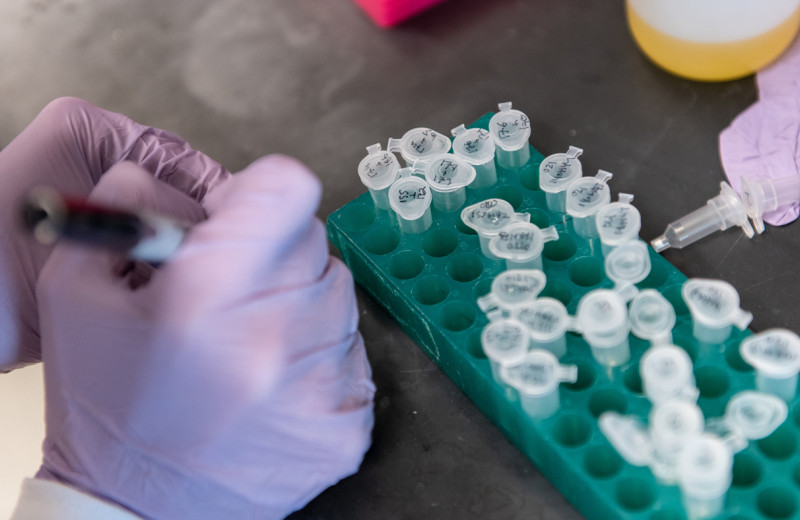
New Toolkit Turns Macrophages Into Better Cancer Fighters
Gladstone and UCSF scientists developed a method to genetically edit myeloid cells, immune cells that act as the body’s first responders.
News Release Marson Lab Carnevale Lab Cancer Genomic Immunology CRISPR/Gene EditingNew CRISPR Screening Platform Boosts Power of Immunotherapy Against Solid Tumors
Article
August 12, 2026
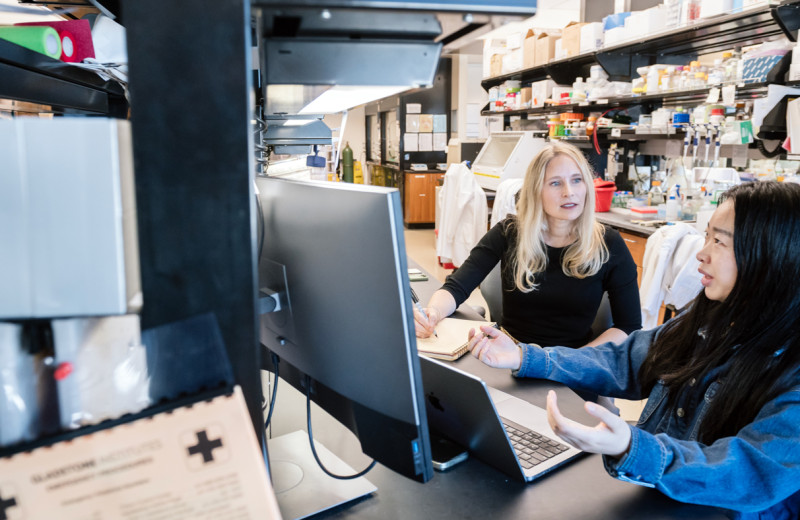
New CRISPR Screening Platform Boosts Power of Immunotherapy Against Solid Tumors
A new screening platform uncovers gene edits that enhance CAR-T cells’ ability to infiltrate and eliminate solid tumors.
News Release Carnevale Lab Cancer Genomic Immunology CRISPR/Gene Editing