Mapping How the Brain Takes Out Its Trash
Listen:
Think of the brain as if it were a house. Insulated from its environment, a house relies on complex networks—pipes, drains, and disposal systems—that interface with the outside world to keep the home functional on the inside. But when this infrastructure breaks down, trash accumulates and the resulting damage can be difficult to reverse.
Similarly, the brain is largely isolated from the rest of the body, sealed off by barriers that carefully control what gets in and out. And as one of the body’s most active organs, it constantly produces waste as a byproduct of its work. As a result, the brain has developed dedicated networks for waste disposal and drainage. When those networks fail, toxic proteins can build up and trigger devastating diseases like Alzheimer’s.
Traditionally, to investigate these networks, scientists injected tracers into the cerebrospinal fluid, which acts as a vehicle for removing brain waste. But akin to flooding a house, this method revealed all possible points of leakage without indicating which exits are normally used.
This left a fundamental question unanswered: how do the waste proteins made inside the brain find their way out?
Now, researchers at Gladstone Institutes have devised a way to track the exact routes that debris uses when exiting the brain. Their approach, described in Cell, has revealed new details about how the brain clears waste, including how bordering immune cells interact with waste products and how Alzheimer’s disease disrupts this carefully orchestrated system.
“We finally have a way to study how the brain cleans itself, and we used it to discover a lot of unexpected biology,” says Gladstone Investigator Andrew Yang, PhD, who led the study.
Tracking Brain Waste From the Source
Previous studies involved injecting dyes into the cerebrospinal fluid to see how it exited the brain—but this also meant disrupting the brain.
“These injected tracers disturb the very system we’re attempting to measure,” says Yang. “We wanted to find a better way.”
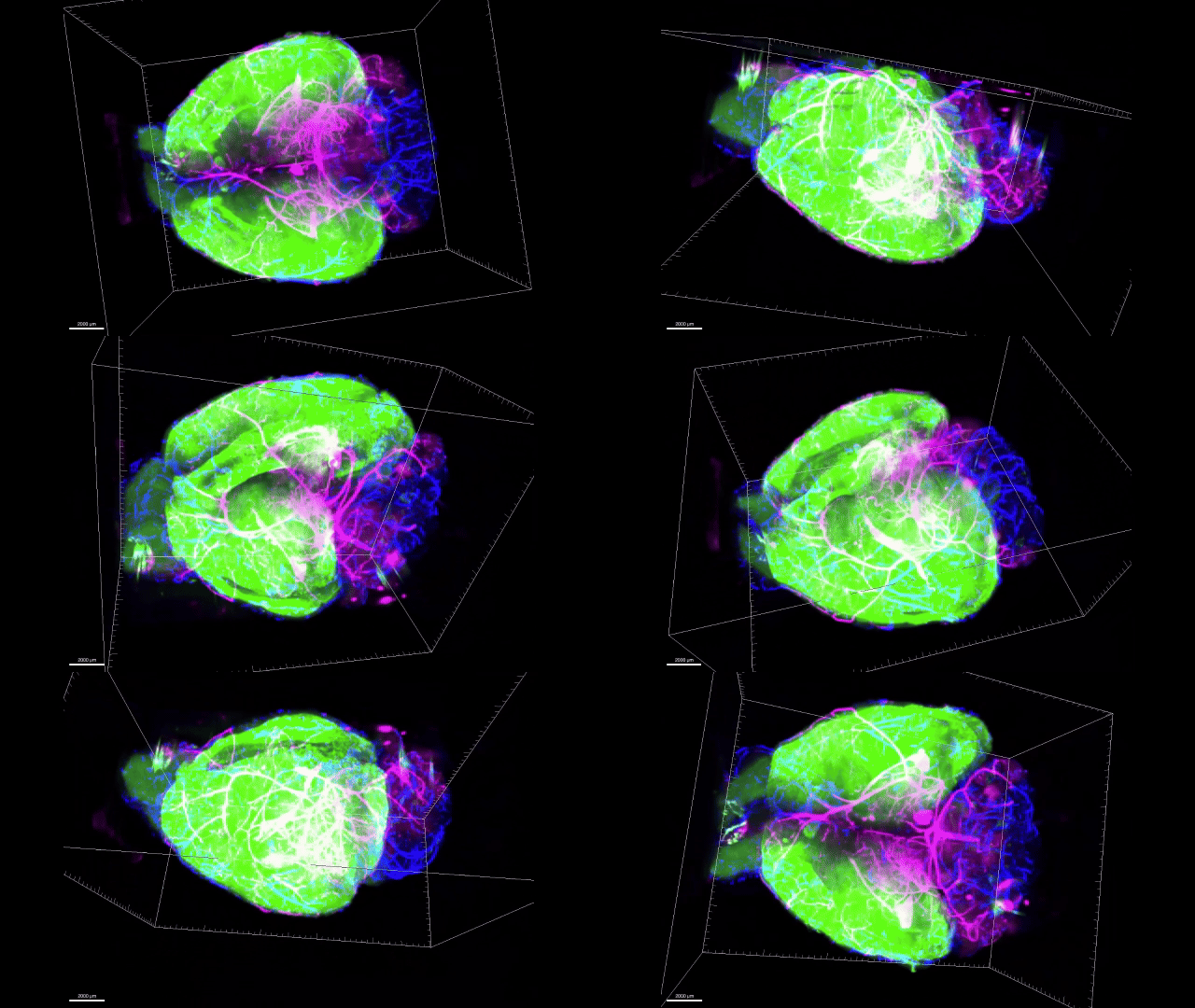
In their new study, Yang’s team—including Postdoctoral Fellow Nalini Rao, PhD, and Visiting Fellow Yuichi Chayama, PhD—engineered neurons in mice to produce a fluorescent protein called ZsGreen that could be easily traced as it exited the brain. The scientists could track it as it moved into brain-adjacent borders such as the dura, skull, nasal cavity, and lymph nodes, which are home to highly specialized immune cells.
The team’s new method identified, for the first time, cells interacting with brain-derived waste at each exit site. The results diverged strikingly from traditional tracer studies, where injected dyes had pointed to the neck’s lymph nodes as a drainage path.
“We were surprised to find that very little ZsGreen drained to the cervical lymph nodes,” Yang says. “Instead, waste drained through the dura, skull, and nasal cavity. Our findings underscore why tracking waste proteins themselves, rather than movement of the cerebrospinal fluid, provides a more accurate understanding of waste clearance dynamics.”
Finding the Nearest Exit
Among the study’s key findings, the scientists discovered that where a protein is made in the brain determines where it drains. Proteins from the upper regions of the forebrain mainly drained through upper exit routes, while those originating from deeper structures like the striatum exited through routes closer to the base.
Yang’s team calls this the “nearest exit” model of waste clearance.
“It’s like each brain region has a biological ZIP code system to ensure waste will be sent to the correct drainage site,” Rao says. “We think that in aging or disease, these ZIP codes may get scrambled, leading to waste ending up in the wrong places. This could explain why certain brain regions are more vulnerable to diseases like Alzheimer’s.”
The team also showed that brain waste doesn’t exit at the same pace across all routes. While some borders cleared waste quickly, others did so much more slowly. The slower pace at some borders may give specialized immune cells more time to interact with the brain-derived proteins, helping train the immune system to recognize them as “self” and avoid attacking the brain.
“Yes, we can call these proteins ‘waste,’ but that doesn’t tell the whole story,” Rao says. “Neurons are constantly pumping out proteins and as those proteins leave the brain, some may help educate our immune system.”
Insight Into Disease
Using their new methods, the scientists discovered that the clearance of brain waste breaks down during disease. In mice with short-term inflammation—mimicking what might occur during a severe infection—ZsGreen leaked directly into the bloodstream rather than following the expected clearance routes. In a mouse model of Alzheimer’s, the opposite occurred; ZsGreen became trapped inside the brain, unable to drain effectively.
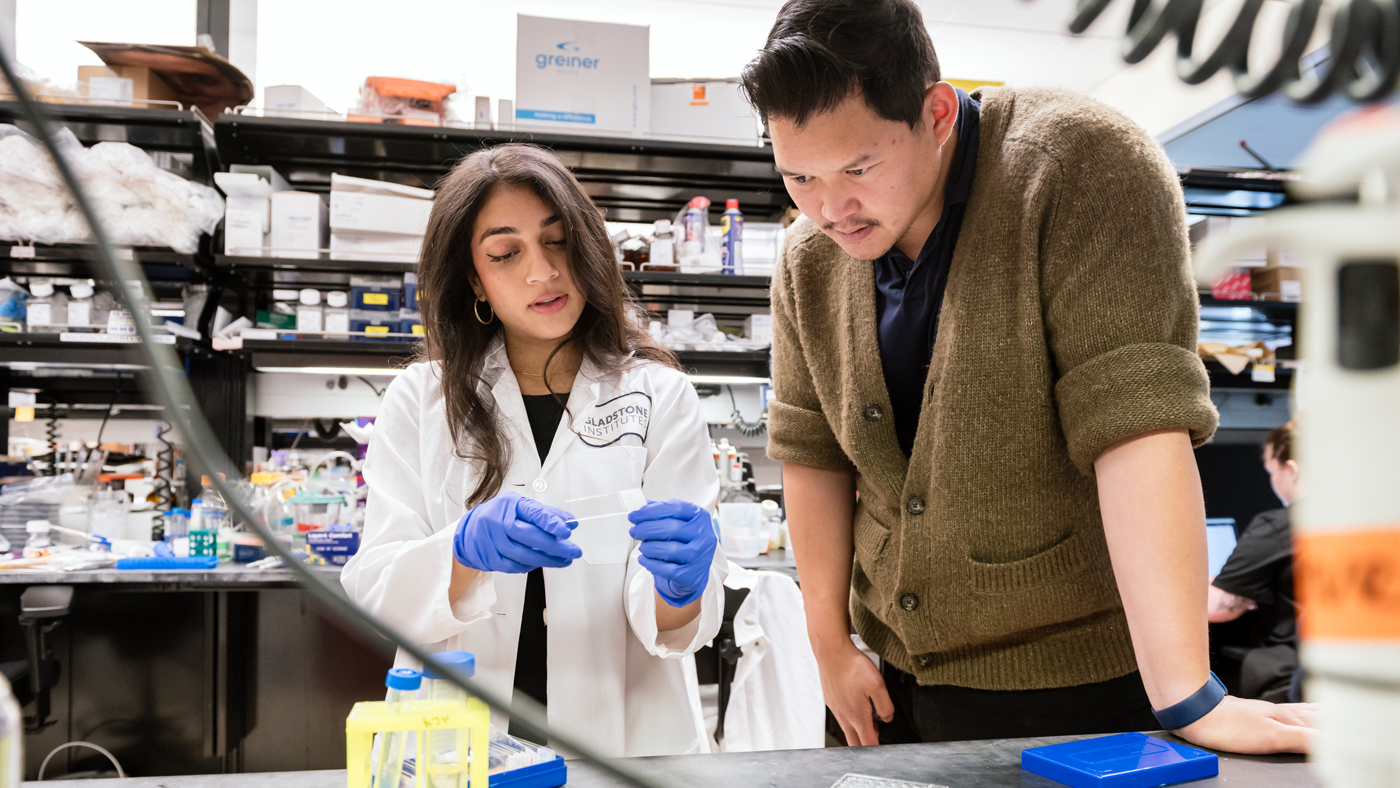
“Understanding how diseases disrupt brain clearance could help us design therapeutics to target the brain border compartments and enhance waste removal,” says Rao.
Looking ahead, Yang’s group plans to study how waste clearance changes across diseases, how it may be altered during normal aging, and whether sleep is important for promoting the clearance of waste. They also want to investigate if brain tumors hijack the normal interaction between brain waste and immune cells to evade detection.
“With these new methods, we’ll be able to start addressing some really long-standing questions about the biology of brain waste clearance,” says Yang.
Up Next

Meet Gladstone: Lexi Schneider
Meet Lexi Schneider, a PhD student using innovative technology to better understand the blood brain barrier.
Turning the Tide on Tau: Q&A With Gladstone’s Lennart Mucke
Nearly 20 years after his landmark study uncovered novel roles of tau in Alzheimer’s disease, Gladstone's Lennart Mucke shares his perspective on new clinical data that could transform the future of brain health.

How an AI Microscope Is Learning to Do Science
Gladstone scientists have developed a thinking microscope that can conduct its own experiments, with the ultimate goal of treating neurodegenerative diseases.

Gladstone Investigator Andrew Yang Receives 2026 Sobrato Prize in Neuroscience
The prize honors scientists whose breakthroughs in brain research have high potential for patient impact.

Get Involved
Join the Team
Our people are our most important asset. We offer a wide array of career opportunities both in our administrative offices and in our labs.
Open PositionsPartner With Us
Discoveries don’t stay in our labs. Gladstone facilitates spinout companies to advance promising therapies, shortening the path between scientific discovery and helping real patients.
Learn MoreGive
Your gift to Gladstone will allow our researchers to pursue high-quality science, focus on disease, and train the next generation of scientific thought leaders.
Donate Now