Gladstone NOW: The Campaign Join Us on the Journey✕




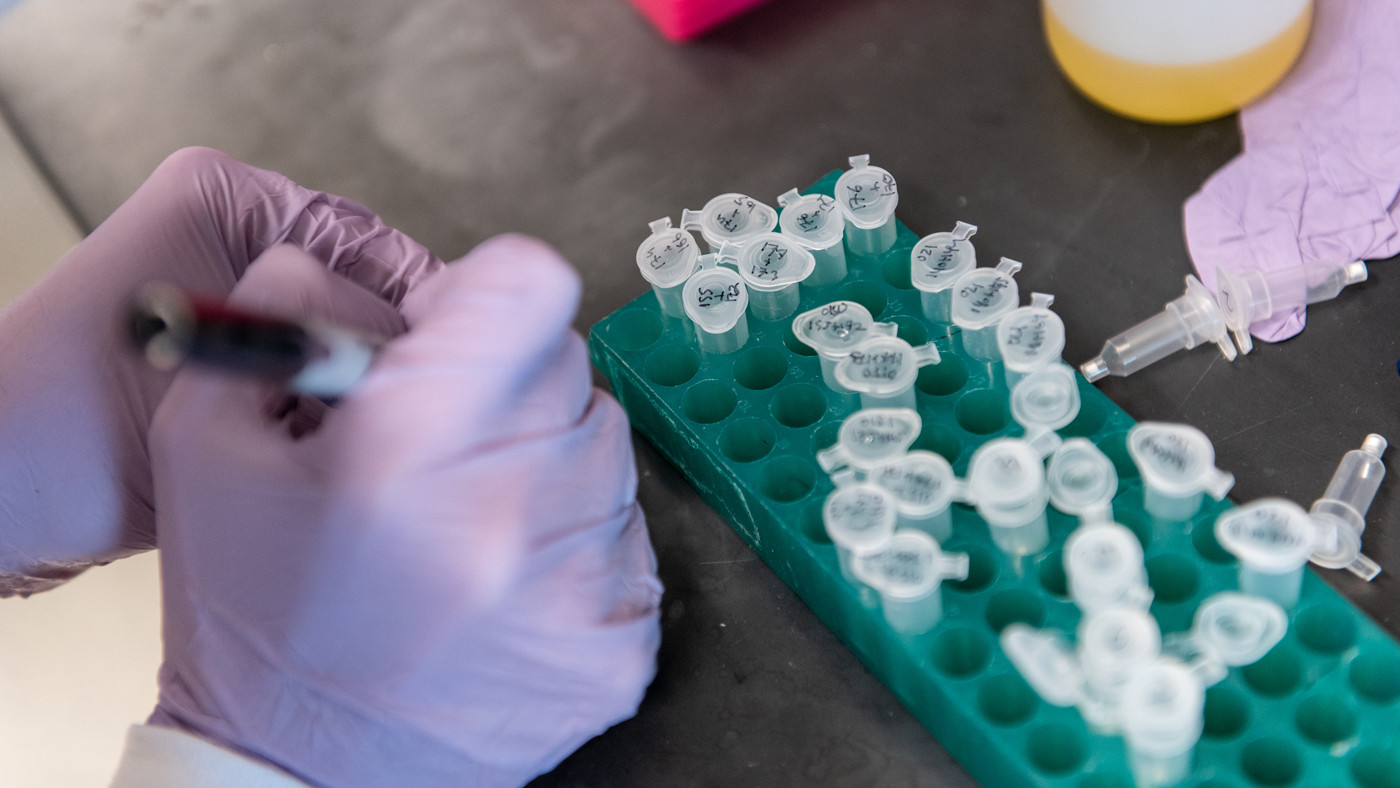
A team of scientists from Gladstone and UCSF developed a new method to genetically edit myeloid cells, immune cells that act as the body’s first responders.
Listen to this article
For more than a decade, scientists have used CRISPR gene editing to study the DNA sequences that control human T cells and to reprogram their functions, including massive efforts to develop improved living cancer drugs known as CAR-T therapies.
But T cells are only one branch of the human immune system. Myeloid cells—a group of immune cells that include monocytes, macrophages, and dendritic cells—have remained largely off-limits to this kind of engineering, even though these cells are often the first responders to infection, injury, and tumors.
Now, researchers at Gladstone Institutes and UC San Francisco (UCSF), along with collaborators at several other institutions, have developed a toolkit to deploy CRISPR in myeloid cells. Their approach, described in Nature Biotechnology, uses virus-like particles—empty viral shells repurposed as delivery vehicles—to carry gene-editing machinery into the immune cells.
“We had a realization that we weren’t really tapping into this whole other arm of the immune system to help fight some of the most difficult diseases out there,” says Julia Carnevale, MD, an affiliate investigator at Gladstone, an assistant professor of hematology and oncology at UCSF, and co-senior author of the study. “We wanted to unlock the power of these other cells.”
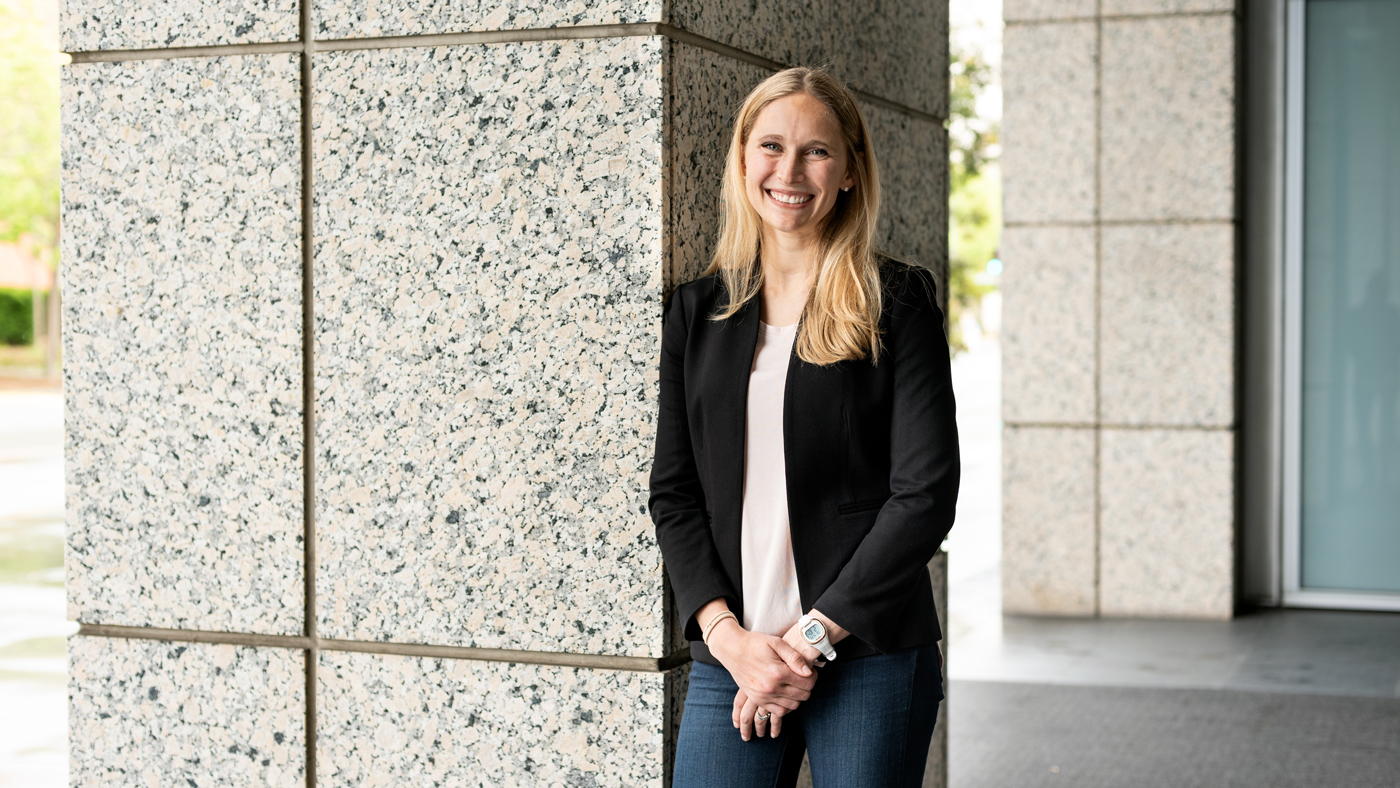
Carnevale and her colleagues identified a gene that acts as a brake on inflammation—removing this gene could help cells be better at fighting cancer cells.
Using the new toolkit, the team screened thousands of genes inside living human macrophages and identified a gene that acts as a brake on inflammation. Removing that brake from re-engineered macrophages made the cells dramatically better at fighting cancer cells.
“We now have a whole toolbox of CRISPR perturbations we can make in myeloid cells, which took us a decade to build up in T cells,” adds Alex Marson, MD, PhD, director of the Gladstone-UCSF Institute of Genomic Immunology and co-senior author of the study. “Beyond our initial observations with these tools in macrophages, this is an important technology resource for the field.”
A Better Delivery System
Myeloid cells have been notoriously difficult to engineer. The standard method for getting CRISPR gene editing machinery into cells, called electroporation, uses a jolt of electricity to poke temporary holes in a cell’s outer membrane. It works well in T cells, but in monocytes, macrophages, and dendritic cells, it renders them unresponsive—likely because the cells are so sensitive to stress as a function of their job.
“The old way of editing works well to edit genes, but the surprise was that, for myeloid cells, it left the cells dysfunctional,” Marson says.
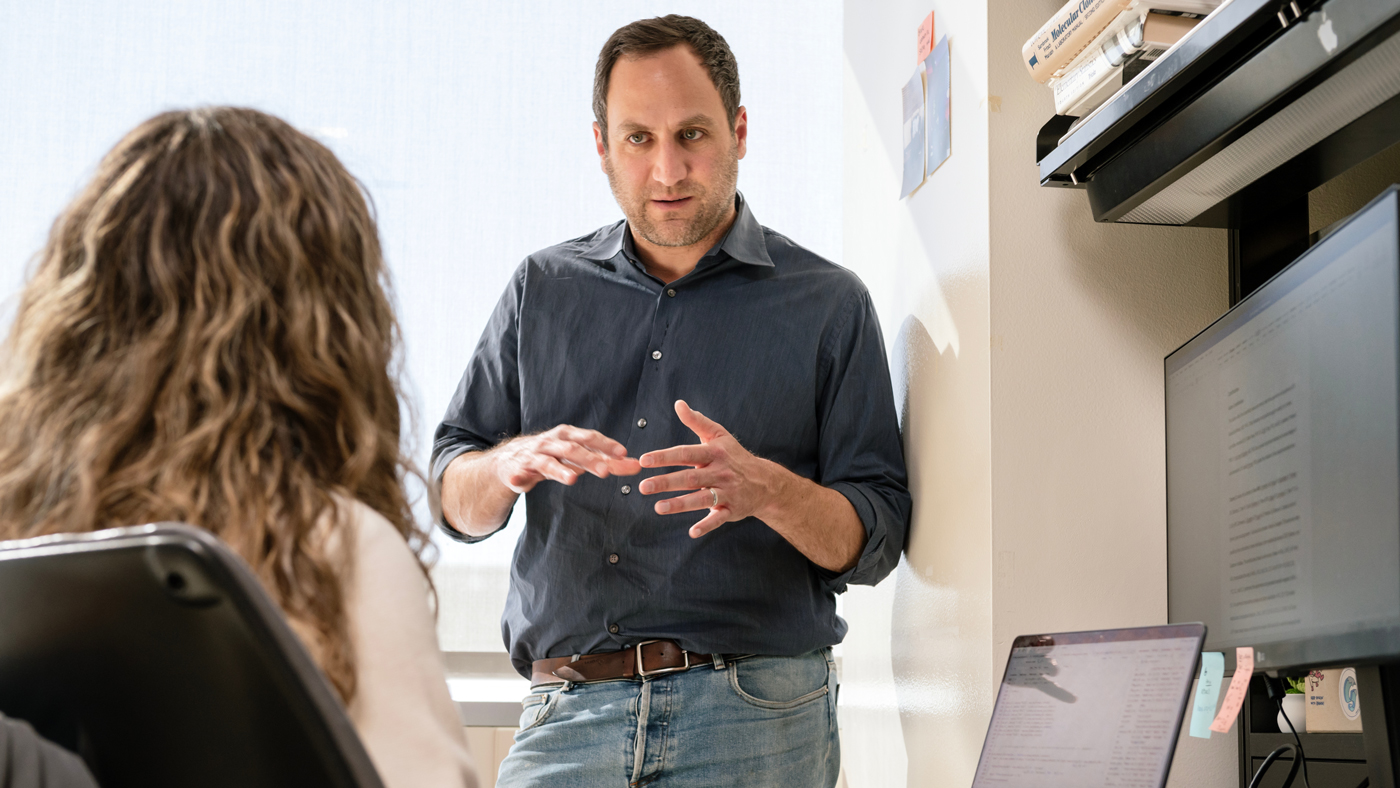
As they searched for genes that control inflammation in myeloid cells, the research team co-led by Marson combined different technologies to create a new system that allowed them to test thousands of genes at once.
In the new work, Marson and Carnevale’s labs turned to virus-like particles that can carry proteins, including gene editing machinery, into a cell through their infection mechanism. Beyond simply deleting genes, the team showed they could use the new system to make targeted single-letter DNA changes (called base editing), silence genes without deleting their sequences, and even insert large new stretches of DNA.
“This system can allow us achieve high editing efficiency, and also use the same platform for base editing and epigenetic silencing,” says Hyuncheol Jung, PhD, co-first author of the study and a postdoctoral scholar in the Carnevale and Marson labs. “So instead of building a new delivery method for every kind of edit we want to make, we have one flexible toolkit that can do all of them in these cells.”
An Inflammatory Brake
To search in an unbiased way for genes that control inflammation in myeloid cells, the team needed to be able to test thousands of genes at once and trace which gene had been disabled in which cell. That required a second delivery tool: a modified virus that could both carry genetic instructions into each cell and permanently record which instruction it had received.
That’s where the researchers hit a new obstacle. Myeloid cells carry a built-in defense that normally blocks viruses from writing anything into their DNA. To overcome this, the team borrowed a trick from HIV; they used a protein that disables the immune defense. Paired with their virus-like-particle delivery, this combined system, called SLICeVLP, let them test the effect of removing thousands of different genes, one at a time, from living macrophages.

The two first authors of the study, Hyuncheol Jung (left) and Pascal Devant (right), helped develop a toolkit that can now be used by many scientists studying myeloid cell biology in the lab.
Running multiple separate screens, the researchers looked for genes that control different facets of immune activation in macrophages. The same gene rose to the top across multiple screens: TNFAIP3, which encodes a protein called A20.
A20 was already known from mouse studies to act as a brake that keeps macrophages from becoming overly inflammatory, but there had been no way to target that brake directly in human macrophages.
Now, for the first time, the researchers had an easy way to test whether disabling A20 could be useful therapeutically. They began with CAR-macrophages—macrophages that have been engineered with cancer-targeting receptors, similar in concept to the CAR-T cells. Then, they used their system to remove the TNFAIP3 gene encoding A20. The edited cells became more inflammatory, significantly better at killing cancer cells, and more resistant to the immune-suppressing signals that tumors produce to shut down the immune system.
“Our screens helped us prioritize certain genes over others as potential targets,” says Pascal Devant, PhD, co-first author of the study and a postdoctoral scholar in Marson’s lab. “The question is always: what’s a gene you’d actually want to target in a therapy?”
Toward the Future
The new myeloid gene editing system isn’t yet ready to test in human therapeutics—the scientists found some small unintended genetic changes in cells edited with the base editing machinery, for instance. But they see the tool as the beginning of a new era of exploring myeloid cell biology in the lab.
“We’ve had a lot of interest from people studying anything from neurobiology to atherosclerosis of the cardiovascular system,” Marson says. “This toolset can help a lot of scientists probe these cells in whole new ways, in the context of whatever disease they’re studying, from cancer to autoinflammatory and infectious diseases.”
The researchers are continuing to fine-tune the editing toolset, as well as scale it up to make more genetic edits and in more myeloid cell types. “We’re excited to see what people do with this technology,” Carnevale says.
For Media
Julie Langelier
Associate Director, Communications
415.734.5000
Email
About the Study
The paper, “Virus-like particles enable targeted gene engineering and pooled CRISPR screening in primary human myeloid cells,” was published in the journal Nature Biotechnology on August 17, 2026. In addition to Carnevale, Marson, Devant, and Jung, authors are Mineto Ota, Emma Dann, Ronghui Zhu, Chandrima Modak, Ana Vasquez-Ibarra, Zachary Steinhart, Jae Hyun J. Lee, Vincent Allain, Brian R. Shy, Justin Eyquem, and Jennifer A. Doudna of Gladstone; Carter Ching, Luis Sandoval, Jae Hyung Jung, Esha Urs, Peixin Amy Chen, and Luke A. Gilbert of UC San Francisco; Jonathan K. Pritchard of Stanford University; Jennifer R. Hamilton (now at Azalea Therapeutics), Wayne Ngo, Da Xu, and James K. Nuñez of UC Berkeley; Meirui An and David R. Liu of the Broad Institute of MIT and Harvard; and Takuya Tada and Nathaniel R. Landau of NYU Grossman School of Medicine.
The work was supported by the National Institutes of Health (grants DA046100, AI122390, R35GM155044, K08CA252605, DP2CA311215, U54AI170792, P01AI55393, R01DK129364, and R01CA276368), the Laboratory for Genomics Research, the Bakar Fellows Program, the Weill Neurohub Fellows Program, the Astellas Foundation for Research on Metabolic Disorder, the Chugai Foundation for Innovative Drug Discovery Science, the Parker Institute for Cancer Immunotherapy, the Burroughs Wellcome Fund, the Damon Runyon Cancer Research Foundation, the CRISPR Cures for Cancer Initiative; the Lydia Preisler Shorenstein Donor Advised Fund, the Pascarella Scholars Fund, the Simons Foundation, K. Jordan, the Jane Coffin Childs Fund for Medical Research, the National Research Foundation of Korea Postdoctoral Overseas Training Program (RS-2023-00242661), the Chan Zuckerberg Initiative Foundation (CZIF2025-011112), the Silicon Valley Community Foundation, and the Weill Cancer Hub West.
About Gladstone Institutes
Gladstone Institutes is an independent, nonprofit life science research organization that uses visionary science and technology to overcome disease. Established in 1979, it is located in the epicenter of biomedical and technological innovation, in the Mission Bay neighborhood of San Francisco. Gladstone has created a research model that disrupts how science is done, funds big ideas, and attracts the brightest minds.

Gladstone NOW: The Campaign
Join Us On The Journey
How a Single Viral Protein Hijacks Immune Cells to Supercharge COVID-19 Infection
Article
September 18, 2026
How a Single Viral Protein Hijacks Immune Cells to Supercharge COVID-19 Infection
A new discovery reveals how a SARS-CoV-2 protein reprograms immune cells to accelerate viral spread—and points to a new strategy for therapeutic intervention.
News Release Ott Lab COVID-19 Infectious DiseaseThe 2026 Ogawa-Yamanaka Stem Cell Prize Awarded to Jun Takahashi

Article
September 14, 2026
The 2026 Ogawa-Yamanaka Stem Cell Prize Awarded to Jun Takahashi
Takahashi is recognized for his pioneering work translating iPS cell technology into a clinically approved therapy for Parkinson’s disease.
Ogawa Stem Cell Prize Stem Cells/iPSCs Regenerative Medicine News Release AwardsScientists Decode Gene Circuits of Human Immunity, Fueling New Era of Disease Research
Article
August 28, 2026
Scientists Decode Gene Circuits of Human Immunity, Fueling New Era of Disease Research
An unprecedented map of 22 million immune cells provides the functional rulebook for virtual biology and next-generation immunotherapies.
Marson Lab Genomic Immunology Cancer Autoimmune Diseases News Release