Meet Gladstone: Sarah Nyquist
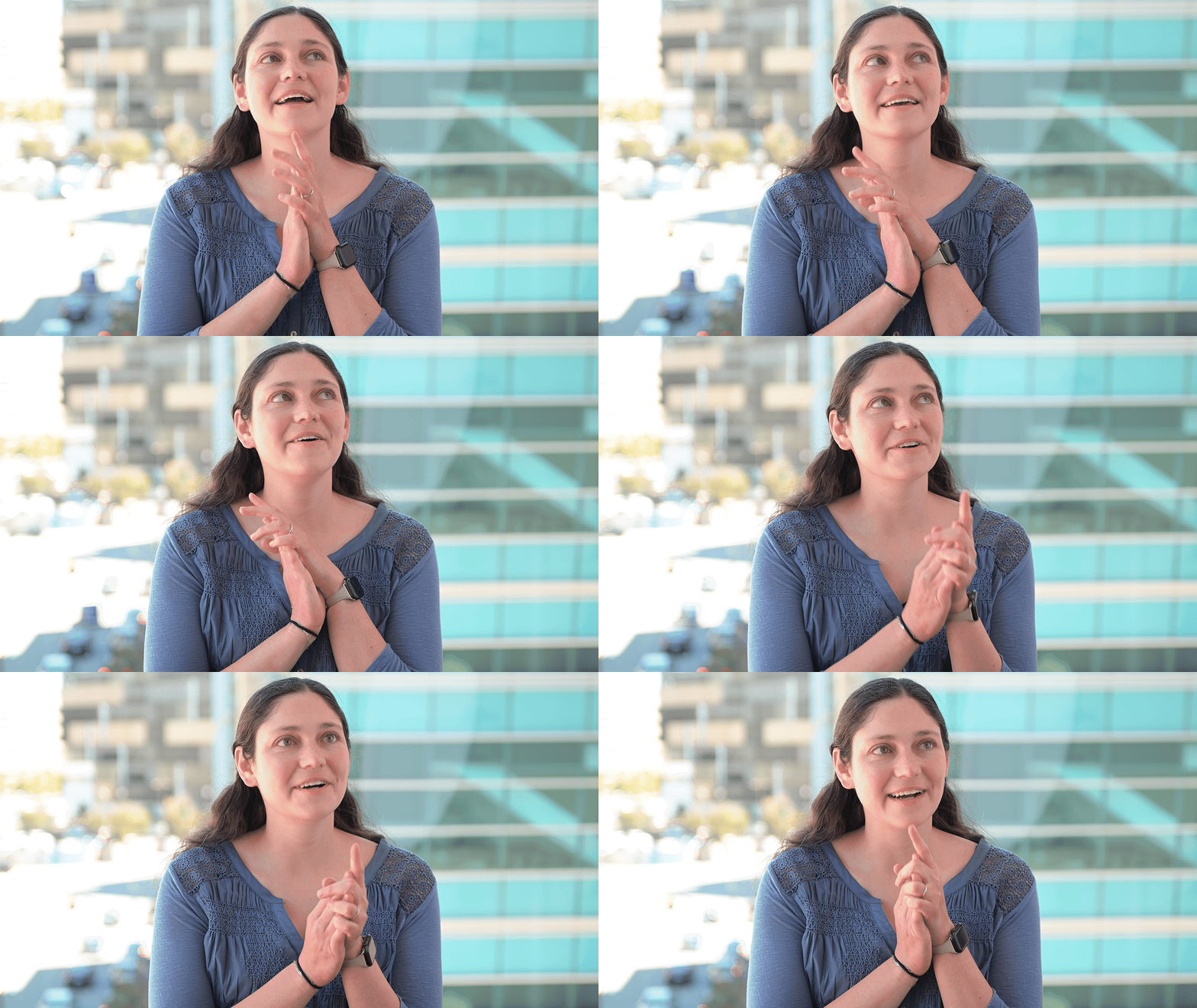
Sarah Nyquist, PhD, is a bioinformatics fellow working in the lab of Barbara Engelhardt. She studied computer science at Rice University and then received her PhD in computational and systems biology at the Massachusetts Institute of Technology (MIT).
What brought you to Gladstone?
I met Barbara while I was applying to graduate school and really enjoyed our conversations. When I was looking for a postdoc, I reached out to her to see if we still had shared research interests. When I heard she was considering moving to Gladstone, I was excited to join her in that move.
What do you like about Gladstone?
It’s such a privilege to be a part of a world-class research institution that feels like a small community. Everyone is so willing to help and support each other—it’s so refreshing.
What do you do when you’re not working?
Right now, I spend all my free time taking care of my 8-month-old daughter, Jane. Before she was born, I spent a lot of time running, hiking, skiing, sewing, and gardening. I’m excited to share these passions with her once she’s old enough to join me, but for now I’m trying to savor every moment of her childhood and enjoy what she likes (which right now, is mostly just putting everything in her mouth!).
What are the key areas of research you’re focused on?
I study how the human mammary gland produces milk. Despite its importance as the primary food source for the first 6 months of life, so much is unknown about the processes underlying milk production and how disease, lifestyle, and genetics impact the milk lactating people feed to their babies. I work on studies that aim to understand this fascinating fluid and how it’s made.
What drives you in your research, especially when facing challenges or setbacks?
Conversations with study participants, other lactating parents, and my own experiences providing milk to my baby remind me how immediately applicable this work is to so many people. Moms are advised to provide milk to their babies for at least the first year of their lives, but there is so little guidance on how to maintain milk production in light of our complex modern lives.
Any time I speak to a person who is currently breastfeeding or has in the past, they bring up questions and struggles they faced in reaching their goals. I’m then reminded how my research could help provide more information and support to people in this critical time of their lives—the first year of parenthood.
How does interdisciplinary collaboration enhance the quality and impact of your research?
Interdisciplinary collaboration is essential to lactation research. As a computational biologist, I collaborate with many experimental biologists to collect data and perform experiments. In addition, we collaborate with clinicians and lactation consultants to inform our research questions and recruit participants to the studies.
Since human milk is such a complex fluid—containing sugars, lipids, small molecules, and cells—I collaborate with experimental biologists with expertise in each of these areas to describe the many properties of human milk and how they change in health and disease.
Who or what has been your biggest influence in your scientific career?
I’ve been so lucky to have incredible mentors at every step of my career. I’m grateful to have been in the labs of supportive scientists who have made it possible for me to explore my research interests. But the people who have kept me excited and engaged in my work day-to-day have been the graduate student and postdoc mentors I learned from along the way.
What is your hidden talent?
I can sleep from wheels up to wheels down on any redeye flight.
What advice would you give to young scientists or students interested in your field?
Find mentors who are invested in your success!
Up Next
Christina Theodoris Honored in Inaugural Cohort of Young American Scientists
Scientific American recognizes Theodoris for her pioneering work developing artificial intelligence models to find treatments for an array of diseases.

How an AI Microscope Is Learning to Do Science
Gladstone scientists have developed a thinking microscope that can conduct its own experiments, with the ultimate goal of treating neurodegenerative diseases.
Gladstone Launches Center for PhAIge Therapy to Harness AI in the Fight Against Drug-Resistant Infections
The center, funded by an NIH grant, will become one of three national centers dedicated to accelerating the development of phage therapy.
AI Discovery Reveals DNA Isn’t Locked Away in Cells After All
A new study upends long-held view about how DNA is stored, explaining how subtle shifts in gene activity contribute to cancer, aging, and other complex diseases.

Get Involved
Join the Team
Our people are our most important asset. We offer a wide array of career opportunities both in our administrative offices and in our labs.
Open PositionsPartner With Us
Discoveries don’t stay in our labs. Gladstone facilitates spinout companies to advance promising therapies, shortening the path between scientific discovery and helping real patients.
Learn MoreGive
Your gift to Gladstone will allow our researchers to pursue high-quality science, focus on disease, and train the next generation of scientific thought leaders.
Donate Now