Gladstone NOW: The Campaign Join Us on the Journey✕




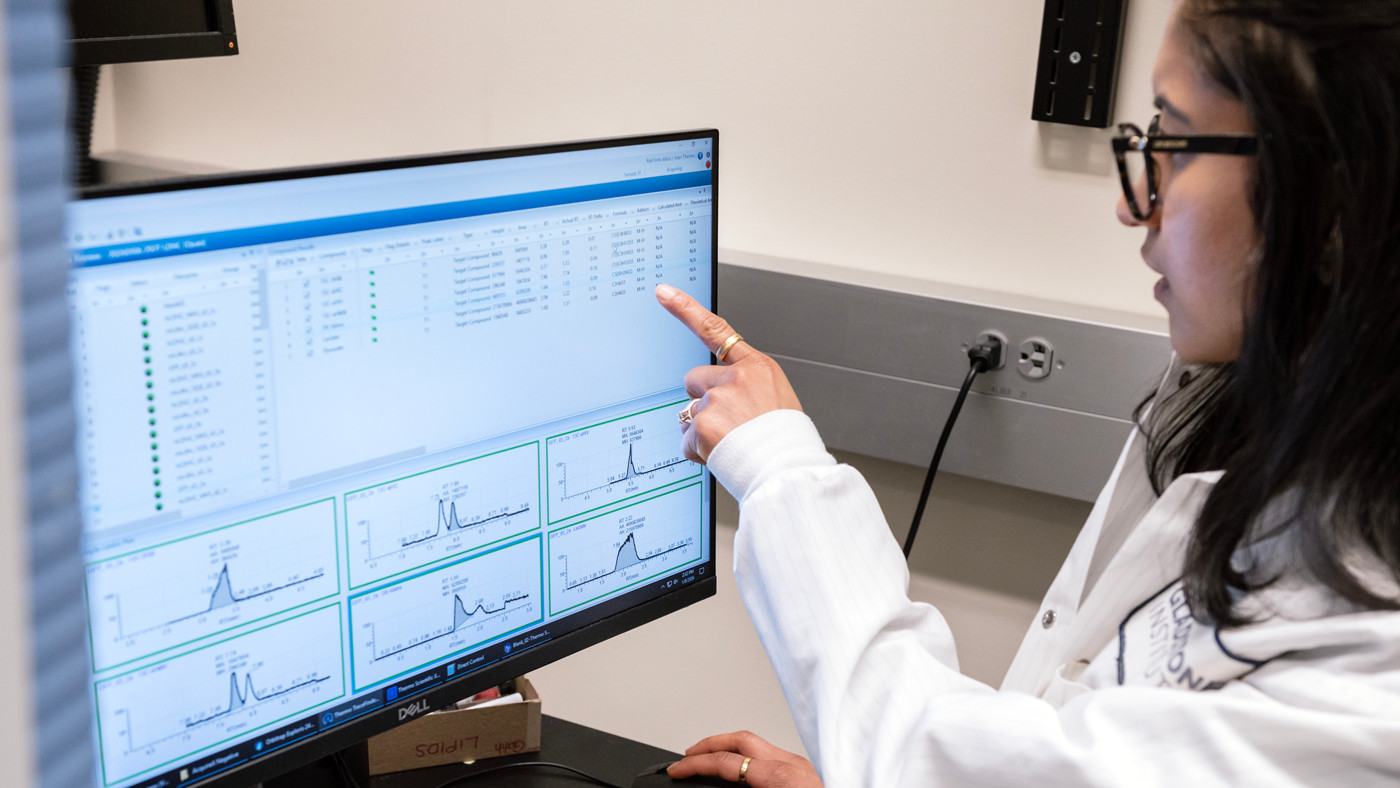
A team of Gladstone scientists—including Ankur Garg, seen here—show low oxygen can help alleviate disease caused by defects in a mitochondrial quality control machinery.
Listen to this article
Oxygen isn’t always a good thing. Of course, people—and most organisms—cannot live without it. But oxygen can also be quite toxic and lead to profound health consequences.
In the brain, toxic levels of oxygen are tied to a rare and often fatal childhood condition known as 3-MGA, as well as Leigh syndrome (the most common pediatric mitochondrial disease), Parkinson’s disease, and premature aging. Now, scientists at Gladstone Institutes are zeroing in on an approach that could help treat all of them: hypoxia therapy.
Hypoxia therapy, which involves reducing the oxygen available in the body, has been an ongoing line of inquiry for Gladstone Investigator Isha Jain, PhD. Over the past decade, she has explored how the low oxygen seen at high altitudes can have beneficial effects, including for Leigh syndrome, diabetes, and solid tumors.
A key question has been whether this therapeutic approach will extend to other rare and common forms of mitochondrial dysfunction and neurological conditions. So, Jain’s lab set out to expand the scope of hypoxia therapy.

The study led by Jain (center) and her team, including Garg (left), shows that when a protein called HTRA2 malfunctions, it leads to a dangerous buildup of excess oxygen in the tissues, which can be counteracted with hypoxia therapy.
To this end, they collaborated with James Shorter, PhD, professor of biochemistry and biophysics at the University of Pennsylvania, and Daniel Southworth, PhD, professor of biochemistry and biophysics at UC San Francisco, on a study published in Nature Metabolism.
They showed that when a protein called HTRA2 malfunctions, it leads to a dangerous buildup of excess oxygen in the tissues. And, they found that breathing air with reduced oxygen levels dramatically extends lifespan and improves brain function in mice with motor neuron degeneration, a disorder caused by defective HTRA2.
“This protein is linked to many other conditions, so our findings suggest that hypoxia therapy could be transformative for treating many neurological diseases,” says Jain, who is also a core investigator at Arc Institute.
When Oxygen Turns Toxic
In the center of all cells are tiny power plants called mitochondria, which consume oxygen to produce the energy needed for the body to function. And the largest cellular machine inside mitochondria is called Complex 1.
“Every time we breathe, 90 percent of the oxygen we consume goes to our mitochondria,” says Ankur Garg, PhD, postdoctoral fellow in Jain’s lab and first author of the study. “But if Complex 1 malfunctions, the mitochondria can no longer burn off oxygen at normal rates.”
When this happens, excess oxygen builds up in tissues until it becomes toxic, which can cause the brain damage linked to certain mitochondrial and neurological diseases. The scientists wanted to see if hypoxia therapy could be used to counteract that effect.

Garg (right), Jain (left), and their collaborators examined 75 genes that are directly linked to diseases where patients might benefit from hypoxia therapy.
The team reanalyzed a previous large experiment to find genes that, when missing, caused cells to struggle in normal air but grew perfectly well in low-oxygen air. Then, they cross-referenced their findings with a directory of known genetic disorders. This led them to evaluate 75 genes that are directly linked to diseases where patients might benefit from hypoxia therapy.
One of the top hits was a protein called HTRA2. They showed that it works closely with another protein (CLPB) to keep Complex 1 intact.
“Together, these two proteins act like a clean-up crew inside mitochondria, preventing the machinery from becoming clogged with clumps of misfolded proteins,” says Jain.
Jain and her team showed that when HTRA2 and CLPB are missing or defective, the clean-up crew fails to do its job properly, causing a key part of the Complex 1 machinery to fail.
Testing Hypoxia Therapy
To investigate if hypoxia therapy could be beneficial in a living organism, the scientists studied mice with a deficiency of HTRA2 protein.
By lowering the amount of oxygen the mice were breathing, the mice lived three times longer as compared to the regular atmospheric oxygen that’s around 21 percent. The team also found that hypoxia therapy helped reduce inflammation in a part of the brain called the striatum.
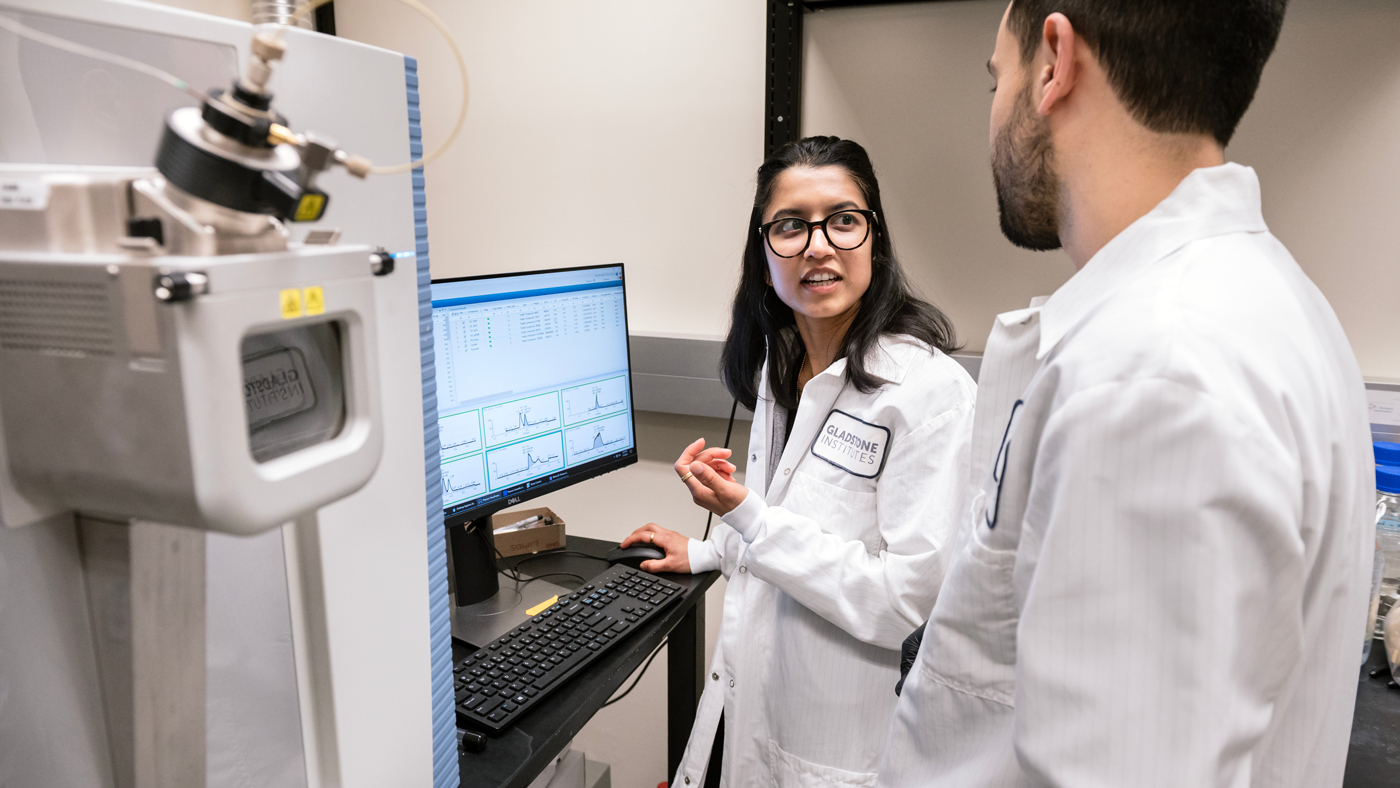
The findings expand the potential of hypoxia therapy for treating a wide range of conditions, ranging from rare genetic diseases to common neurological conditions. Seen here is Garg (left) with her colleague Skyler Blume (right) from Jain's lab.
“By showing these mice could be successfully treated with low oxygen, our study expands the potential of hypoxia therapy to a wide range of conditions that affect mitochondrial Complex 1, either directly or indirectly as in the case of HTRA2 deficiency,” Garg says. “This will motivate a broader application of ‘turning the oxygen dial’ to conditions ranging from rare genetic diseases to common neurological conditions and beyond.”
While the current study had mice inhale low oxygen, Jain and colleagues are currently developing a drug called HypoxyStat, which could provide the same benefits through a pill or injection.
“Right now, no treatments are uniformly available for mitochondrial diseases, and hypoxia therapy offers the hope that we could treat not just one, but many of these genetic conditions,” Jain says. “We’re working hard to make it a practical treatment for human patients in the clinic.”
For Media
Julie Langelier
Associate Director, Communications
415.734.5000
Email
About the Study
The paper, “Hypoxia Rescues Complex 1-Associated Disease Caused by Defects in the HTRA2-CLPB Proteostasis System,” was published by the journal Nature Metabolism on July 8, 2026. The authors are Ankur Garg, Brandon Desousa, Skyler Blume, and Isha Jain of Gladstone; Raju Roy and James Shorter of the University of Pennsylvania; Amy Flis, Arthur A. Melo, and Daniel R. Southworth of UC San Francisco; Yohei Abe of Arc Institute; Ryan R. Cupo of Thomas Jefferson University; and Gabriela Grigorean of UC Davis.
The work was supported by the National Institutes of Health (DP5 DP5OD026398, R01GM099836), Congressionally Directed Medical Research Programs (PR230499-HT94252410163), the Klingenstein-Simons Fellowship, the California Institute for Regenerative Medicine, the HD@Penn Initiative, Dave Wentz, and the W.M. Keck Foundation.
About Gladstone Institutes
Gladstone Institutes is an independent, nonprofit life science research organization that uses visionary science and technology to overcome disease. Established in 1979, it is located in the epicenter of biomedical and technological innovation, in the Mission Bay neighborhood of San Francisco. Gladstone has created a research model that disrupts how science is done, funds big ideas, and attracts the brightest minds.
Featured Experts

Gladstone NOW: The Campaign
Join Us On The Journey
Scientists Decode Gene Circuits of Human Immunity, Fueling New Era of Disease Research

Article
August 28, 2026
Scientists Decode Gene Circuits of Human Immunity, Fueling New Era of Disease Research
An unprecedented map of 22 million immune cells provides the functional rulebook for virtual biology and next-generation immunotherapies.
Marson Lab Genomic Immunology Cancer Autoimmune Diseases News ReleaseNew Toolkit Turns Macrophages Into Better Cancer Fighters
Article
August 17, 2026
New Toolkit Turns Macrophages Into Better Cancer Fighters
Gladstone and UCSF scientists developed a method to genetically edit myeloid cells, immune cells that act as the body’s first responders.
News Release Marson Lab Carnevale Lab Cancer Genomic Immunology CRISPR/Gene EditingNew CRISPR Screening Platform Boosts Power of Immunotherapy Against Solid Tumors

Article
August 12, 2026
New CRISPR Screening Platform Boosts Power of Immunotherapy Against Solid Tumors
A new screening platform uncovers gene edits that enhance CAR-T cells’ ability to infiltrate and eliminate solid tumors.
News Release Carnevale Lab Cancer Genomic Immunology CRISPR/Gene Editing