Gladstone NOW: The Campaign Join Us on the Journey✕




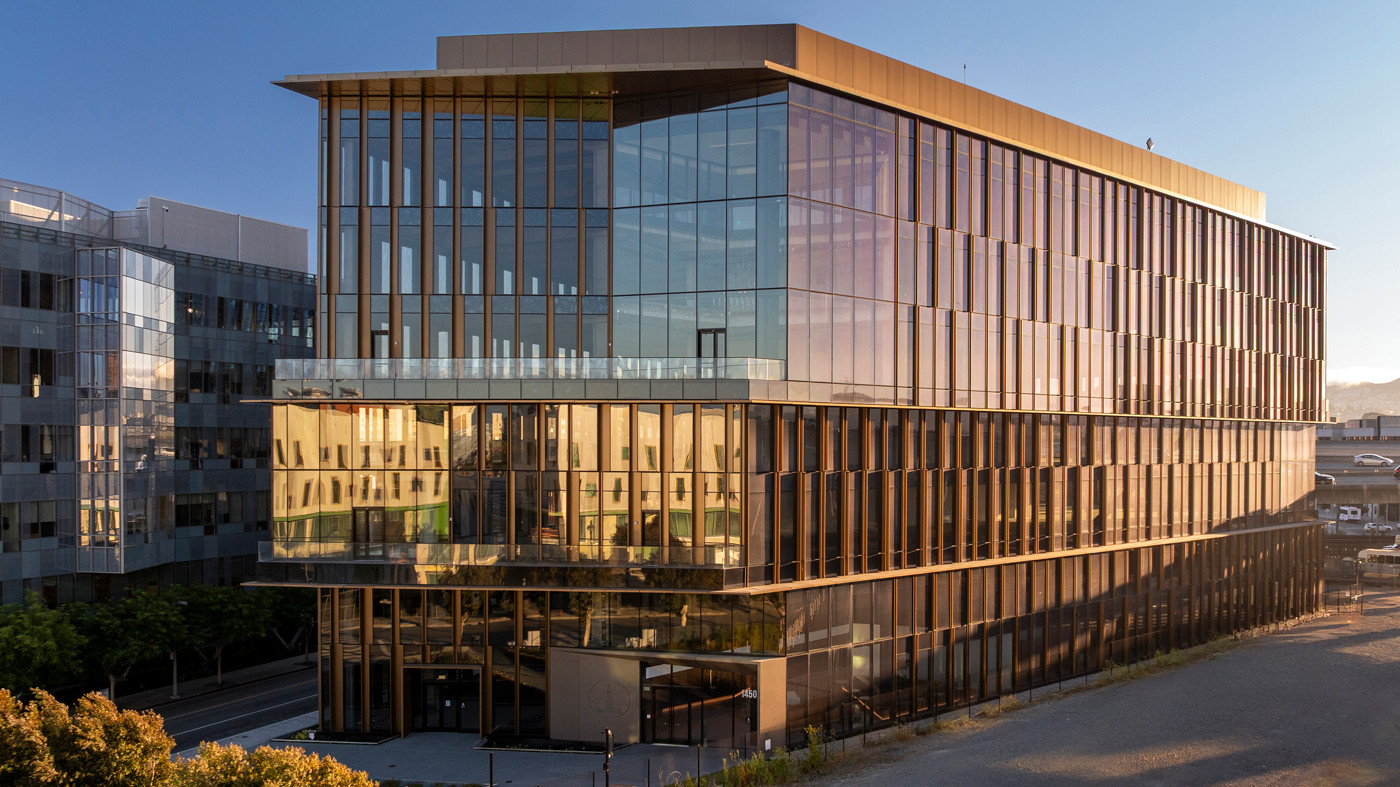
Gladstone Institutes will open approximately 20 new laboratories in early 2027 at 1450 Owens Street. The building is part of the Alexandria Center® for Science and Technology – Mission Bay Megacampus™. (Image courtesy of Alexandria Real Estate Equities, Inc.)
Listen to this article
Gladstone Institutes has secured more than 105,000 square feet of future laboratory space in a newly constructed building at 1450 Owens Street, empowering its scientists with the tools and environment to create medicines of the future.
Located a block from Gladstone’s headquarters in San Francisco’s Mission Bay neighborhood, the new space will be home to approximately 300 scientists across 20 labs, with state-of-the-art equipment and computational abilities, starting in early 2027.
“We’re at a revolutionary moment in science and medicine,” says Deepak Srivastava, MD, president of Gladstone. “Driven by transformational technologies pioneered by our researchers and the explosive growth of computational power, we no longer have to accept disease—we can now envision prevention and cures. With an expansion into 1450 Owens Street, we will be writing the next chapter of medicine.”
Gladstone executed a long-term lease with the building’s owner, operator, and developer, Alexandria Real Estate Equities, Inc., with an option to purchase the leased premises within the building in the future.
“Gladstone is a prolific innovation engine at the forefront of developing new therapies to address some of the more than 10,000 diseases known to humankind that remain unsolved,” says Joel S. Marcus, executive chairman and founder of Alexandria Real Estate Equities, Inc. (NYSE: ARE). “We deeply value our nearly two-decade strategic relationship with Gladstone and are honored to welcome them as the anchor tenant at 1450 Owens Street in our Mission Bay cluster.”
The expansion is funded through Gladstone’s five-year, $350 million capital campaign, Gladstone NOW. Launched in September 2024, the campaign is harnessing philanthropic power to scale wisely by adding lab space and multidisciplinary scientists; catalyze breakthroughs with high-risk, high-reward research; create a computational powerhouse to unlock the potential of artificial intelligence x biomedicine; and close the gap between the moment of discovery and the minute that cures and new therapies reach patients around the world.
Major donors include the Connie and Bob Lurie Foundation, Susan and John Sobrato, the Younger Family Fund, Sakurako and William Fisher, Diksha and Divesh Makan, and the Dolby family.
An Environment for Innovation
Gladstone moved into its current Mission Bay headquarters in 2004, pioneering the development of what is now one of the nation’s leading life sciences hubs. The nearly 200,000-square-foot building at 1650 Owens Street has served as a launchpad for Gladstone’s exceptional growth over the past two decades.
This growth included the creation of two new institutes: the Gladstone Institute of Data Science and Biotechnology in 2018, led by Katie Pollard, PhD, and the Gladstone-UCSF Institute of Genomic Immunology in 2020, led by Alex Marson, MD, PhD. These will be the first to occupy the new space.
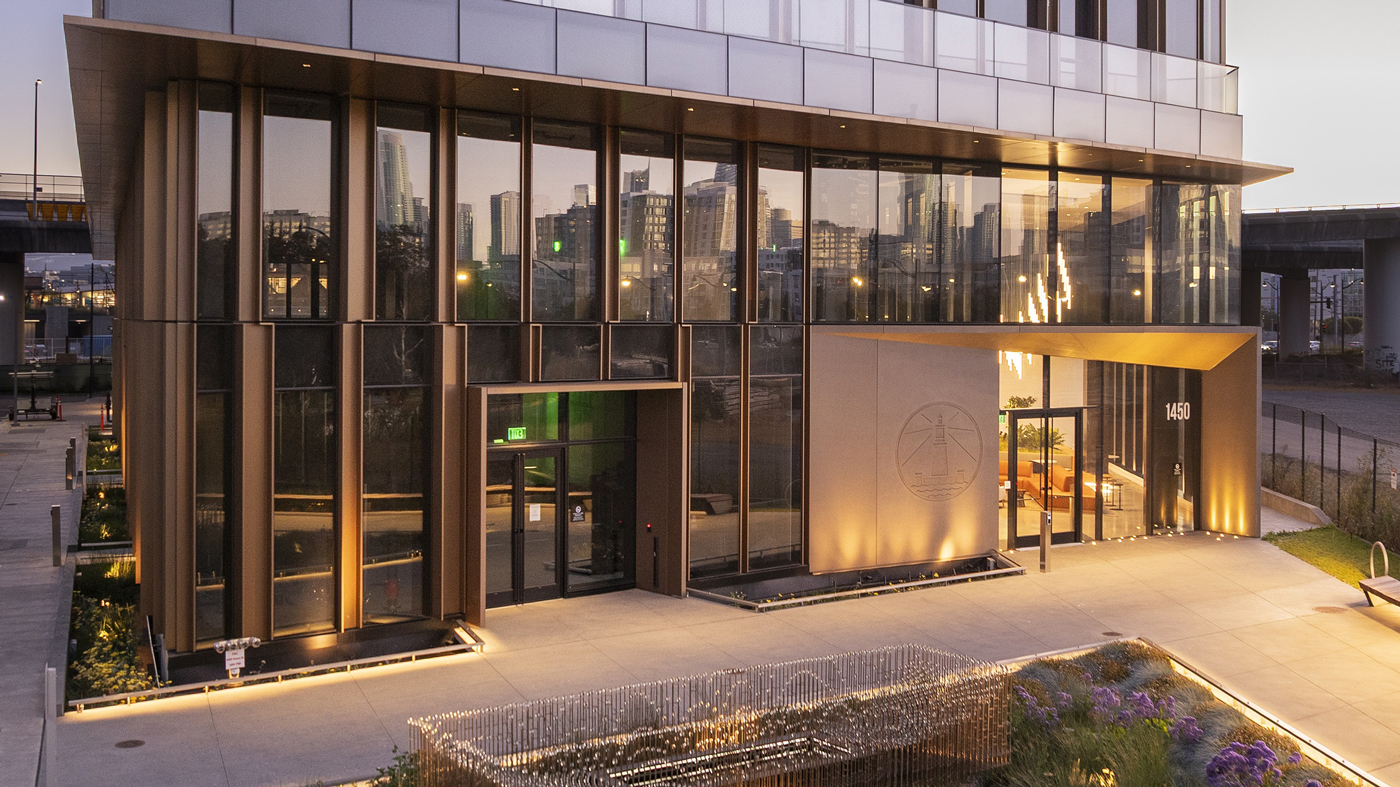
Two of Gladstone's fast-growing institutes—one focused on AI and data science, and the other on immunotherapy development—will be co-located in the new building at 1450 Owens Street, just down the block from Gladstone's headquarters. (Image courtesy of Alexandria Real Estate Equities, Inc.)
“Gladstone is at the forefront of leveraging artificial intelligence for scientific progress,” Pollard says. “AI has completely reshaped research, the drug discovery process, and clinical trials, with the potential to dramatically lower the cost of care. We’re excited to pioneer the next generation of biotechnologies in our new space to solve disease.”
The field of immunology is also at an inflection point, as scientists begin to understand how specific DNA sequences control the behavior of specialized cells comprising the human immune system. Along with this, extraordinary advances in DNA sequencing, CRISPR engineering, and synthetic biology are expanding knowledge about genetic regulation of immune cells and how to alter them to improve health.
“In our new laboratories, we will design and produce tailored immunotherapies to treat cancer, autoimmune diseases, and infections,” Marson says. “Already, we’re marching toward progress. But with this new building, we can sprint toward it.”
A Plan for the Future
When Gladstone’s data science and genomic immunology institutes move into 1450 Owens Street, valuable space will become available in the existing building at 1650 Owens Street, which is now exceeding capacity. Gladstone’s three other institutes—focused on cardiovascular disease, neurological disease, and infectious disease—will have critical room for expansion to bring curative therapies to bear.
Gladstone also maintains the possibility of expanding its existing building in the future to accommodate further growth while remaining fully in the Mission Bay district.
“Our new facility will be among the crown jewels of the Bay Area biotech ecosystem when it comes online in early 2027,” Srivastava says. “We look forward to co-locating our fast-growing immunotherapy and computational biology operations in the new space, and seizing the opportunity to recruit trailblazing scientists in each of our disease areas from around the world.”
For Media
Kelly Quigley
Director, Science Communications and Media Relations
415.734.2690
Email
About Gladstone Institutes
Gladstone Institutes is an independent, nonprofit life science research organization that uses visionary science and technology to overcome disease. Established in 1979, it is located in the epicenter of biomedical and technological innovation, in the Mission Bay neighborhood of San Francisco. Gladstone has created a research model that disrupts how science is done, funds big ideas, and attracts the brightest minds.

From Mentorship to Legacy: Creating Opportunity for Early Career Scientists
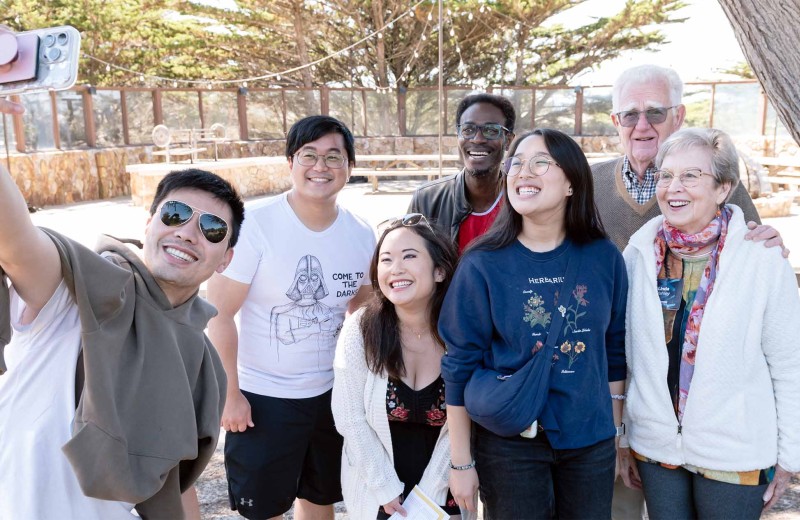
Article
August 22, 2025
From Mentorship to Legacy: Creating Opportunity for Early Career Scientists
Robert and Linda Mahley’s commitment to trainee development continues through Gladstone’s annual Career Advancement Awards.
Graduate Students and Postdocs HistoryGladstone Mourns the Loss of Founding Trustee Richard D. Jones

Article
August 12, 2025
Gladstone Mourns the Loss of Founding Trustee Richard D. Jones
Jones lent Gladstone his time and expertise for nearly 50 years.
History Institutional NewsRemembering Bill Rutter, a Biotech Visionary and Champion of Gladstone

Article
July 16, 2025
Remembering Bill Rutter, a Biotech Visionary and Champion of Gladstone
William J. Rutter, PhD, was a pioneering force in biomedicine whose vision shaped San Francisco’s Mission Bay neighborhood into a hub for innovation and discovery.
History Profile