Gladstone NOW: The Campaign Join Us on the Journey✕




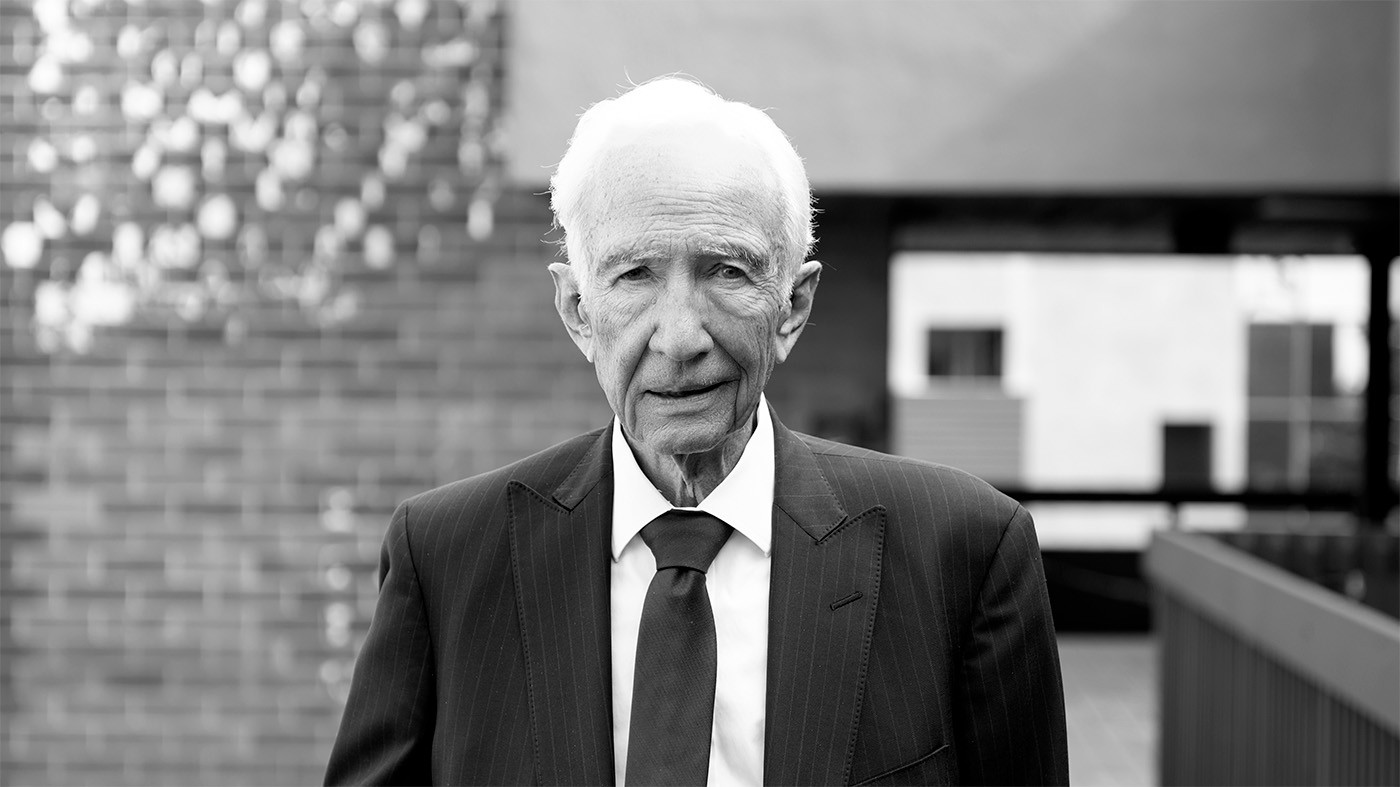
Jones was a Gladstone founding trustee and served until 2017.
Listen to this article
Richard “Dick” D. Jones, a California real estate attorney whose exceptional business instincts and willingness to take on risk played a key role in establishing Gladstone Institutes, passed away on August 2. For nearly 50 years, he lent the organization his time and expertise, helping Gladstone grow from a fledgling institute with seven researchers to a globally recognized organization with more than 600 scientists and staff. Jones was 92.
It was in 1971 that one of Jones’ legal clients, J. David Gladstone, a pioneering developer of indoor shopping centers, passed away unexpectedly, leaving an estate valued at $8 million. Gladstone’s trust designated that the funds provide scholarships for medical students interested in blood and vascular disease research.
But fulfilling that bequest presented a problem: much of the assets were tied up in an unfinished shopping mall and none of the designated trustees, including Jones, had experience in construction. Of additional concern was the fact that California had just emerged from a recession and inflation was on the rise across the country.
Nevertheless, Jones saw an opportunity to grow the value of the trust and expand on Gladstone’s vision. In consultation with fellow trustees Richard Brawerman, an attorney, and David Orgell, a jeweler, he advised that they attempt to finish construction of the mall: the landmark Northridge Fashion Center in Southern California. They agreed.
“Dick’s financial stewardship made it possible for us to support ambitious research programs and expand into new scientific frontiers. His foresight and discipline gave us the freedom to grow.”
Growing Funds to Impact Human Health
Jones assumed leadership of the trust’s real estate operations, which also included a shopping center in Bakersfield. In addition to maintaining his legal practice, he devoted countless hours to completing the financing, construction, and leasing of the Northridge project. Then, for the next 10 years, the trustees managed the mall as well.
The gamble paid off. Following a dramatic appreciation in real estate values, the trustees sold both shopping centers and increased Gladstone’s $8 million estate to more than $120 million. With that financial basis, they had the ability to impact human health beyond student scholarships: They could create a world-class biomedical research organization.
“When David Gladstone named Dick Jones to be one of the trustees to administer his estate, he could not possibly have known the extent of the commitment and devotion Dick would bring to the task of maximizing its value and creating the possibility of a world-class medical research institute,” says Andrew Garb, one of Gladstone’s current trustees. “It’s not an overstatement to say that without his efforts, Gladstone as we know it today would not exist.”
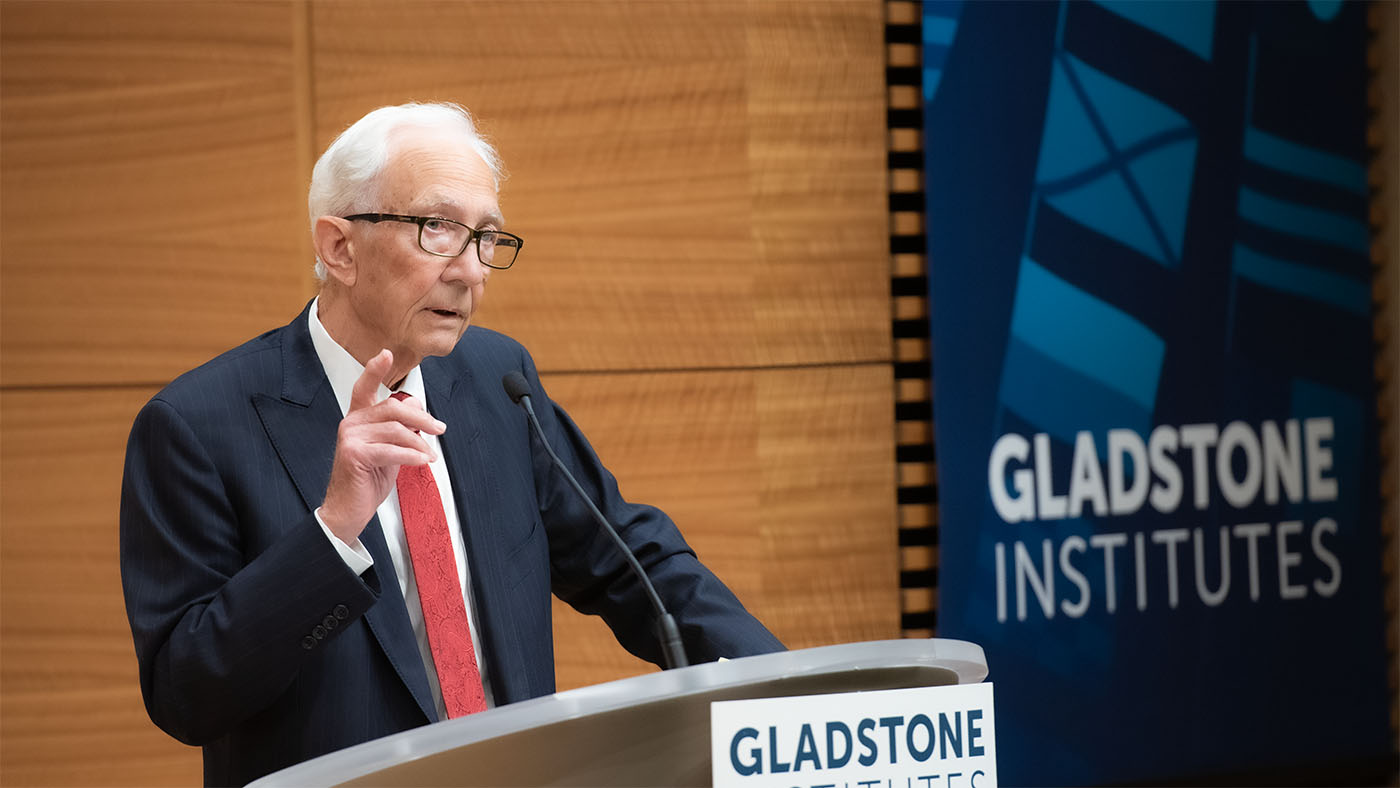
Jones, along with the other founding trustees, made strategic business decisions that allowed Gladstone to grow into the pioneering research organization it is today.
Visionary Leadership for Gladstone
Jones’s strategic leadership didn’t end with real estate. Over decades, he helped guide countless financial decisions that enabled Gladstone’s long-term success.
“Without the initial infusion of dollars generated by the actions of Dick Jones and the continual management of Gladstone’s investments, the trust would be much, much smaller today,” says Robert Mahley, MD, PhD, Gladstone’s founding president and senior investigator. “Dick’s financial stewardship made it possible for us to support ambitious research programs and expand into new scientific frontiers. His foresight and discipline gave us the freedom to grow.”
In accordance with Gladstone’s wishes, the new nonprofit organization set its focus on cardiovascular disease research. Here, the three trustees gambled again by inviting Mahley, a 37-year-old biochemist at the National Institutes of Health studying the role of cholesterol in heart disease, to lead it.
“The early years were not always easy,” Mahley recalls. “We were all learning how to create and operate a research institute. But Dick was always there with sound advice and encouragement. He had a way of putting his arm around my shoulder and letting me know he believed in me.”
Discoveries Beget More Discoveries
The team comprising the original Gladstone Institute of Cardiovascular Disease delivered significant scientific discoveries. Mahley’s lab determined the structure and function of a protein, Apoliprotein E, involved in the transport of cholesterol and other fats, and contributed to understanding its critical role in coronary heart disease and neurodegenerative disorders.
Jones reflects on how Gladstone’s three founding trustees transformed one man’s estate into a leading research institution, and how their willingness to take calculated risks remains central to Gladstone’s DNA.
During Jones’ tenure, Gladstone expanded its research focus, establishing the Gladstone Institute of Virology and Immunology in 1991 to battle the AIDS epidemic, and then the Gladstone Institute of Neurological Disease in 1998. Today, the organization encompasses a total of five institutes, including ones specializing in data science and immunotherapy.
Jones was born in Whittier, California, in 1933. After earning his bachelor’s degree from Whittier College, he earned a law degree from the University of Southern California, then went on to practice real estate law in Irvine and Los Angeles. He was an active outdoorsman throughout his life with a passion for sailing and fishing. In 1968, Jones joined the Balboa Yacht Club in Newport Beach where he and his family had settled. Jones served as Commodore of the club in 1984 and remained a member until his passing. He was selected to oversee several sailing events during the 1984 Olympics and had the honor to oversee pretrial sailing practices in advance of the 1992 Olympics.
Dick set us up to succeed by making bold business decisions and equipping our researchers to make remarkable scientific breakthroughs.
His Legacy Lives On
For 46 years, Jones served as trustee to Gladstone Institutes, stepping down in 2017 as the last surviving member of the original three trustees. At the time, thanks to his keen business instincts and willingness to take a risk, Gladstone’s endowment was valued at approximately $173 million, with total assets of $348 million.
“Taking risks has been part of Gladstone’s DNA from the start,” says Deepak Srivastava, MD, president of the organization. “Dick set us up to succeed by making bold business decisions and equipping our researchers to make remarkable scientific breakthroughs. In his own way, Dick made a huge impact on human health. We could not have had a better ‘founding trustee’ guiding us through the years.”
Jones was known not just for his sharp business acumen, but for his quiet presence, steady hand, and deep commitment to people. Whether guiding financial decisions or offering a word of encouragement, he brought heart and humanity to every aspect of his role.
His legacy is woven into the fabric of Gladstone—in the laboratories he helped build, in the discoveries he made possible, and in the lives touched by the science he helped sustain.
Jones was predeceased by his wife, Phyllis (2021), and survived by his son, James; his daughter, Linda, seven grandchildren and nine great-grandchildren.
Gladstone Expands Research Footprint With 105,000 Square Feet of New Laboratory Space
Article
March 25, 2026
Gladstone Expands Research Footprint With 105,000 Square Feet of New Laboratory Space
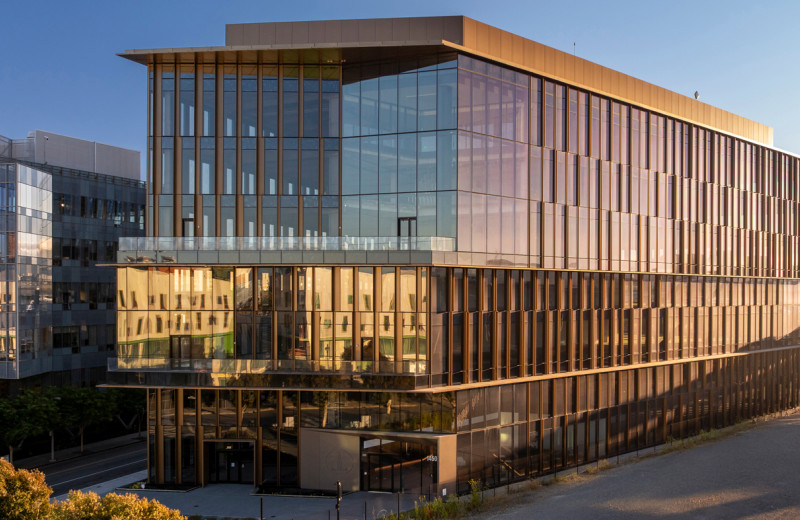
Gladstone Institutes is adding state-of-the-art laboratories in a newly constructed Mission Bay building.
History Institutional News News Release Genomic Immunology Data Science and Biotechnology Marson Lab Pollard Lab AI CRISPR/Gene Editing GenomicsFrom Mentorship to Legacy: Creating Opportunity for Early Career Scientists
Article
August 22, 2025
From Mentorship to Legacy: Creating Opportunity for Early Career Scientists
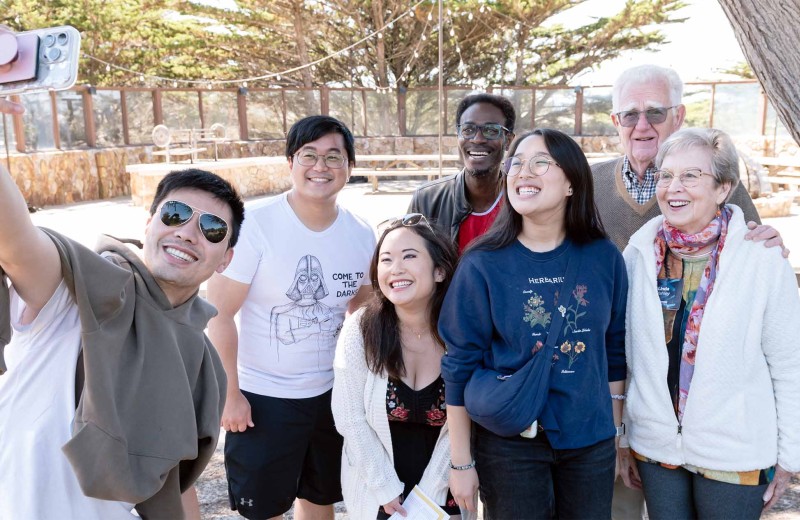
Robert and Linda Mahley’s commitment to trainee development continues through Gladstone’s annual Career Advancement Awards.
Graduate Students and Postdocs HistoryRemembering Bill Rutter, a Biotech Visionary and Champion of Gladstone

Article
July 16, 2025
Remembering Bill Rutter, a Biotech Visionary and Champion of Gladstone
William J. Rutter, PhD, was a pioneering force in biomedicine whose vision shaped San Francisco’s Mission Bay neighborhood into a hub for innovation and discovery.
History Profile