Gladstone NOW: The Campaign Join Us on the Journey✕





Trained on data spanning the human lifespan, the tool developed at Gladstone can predict genes associated with aging and age-related diseases. Details appear in new study led by Christina Theodoris, MD, PhD, whose team developed the model.
Listen to this article
Every part of your body is aging every day. Over decades, the cells in your heart, brain, and lungs gradually change in ways that can boost your risk of heart disease, dementia, and other age-related conditions.
Scientists have long tried to map those changes, but most studies examine cells one snapshot at a time, missing the bigger picture of how aging actively unfolds.
Now, researchers at Gladstone Institutes, working with NVIDIA, have built an artificial intelligence (AI) model that tracks the molecular details of exactly how cells throughout the body change over time.
Ultimately, that could let them identify drugs or other interventions to slow or reverse the cellular changes driving age-related diseases, including heart disease and dementia.
“Aging progresses across very long timelapses that are essentially impossible to model in the lab in human cells,” says Gladstone Investigator Christina Theodoris, MD, PhD, whose team developed the model. “What makes this model exciting is that we can use it to identify the most promising anti-aging targets before committing to the kind of costly, long-term studies that aging research requires.”
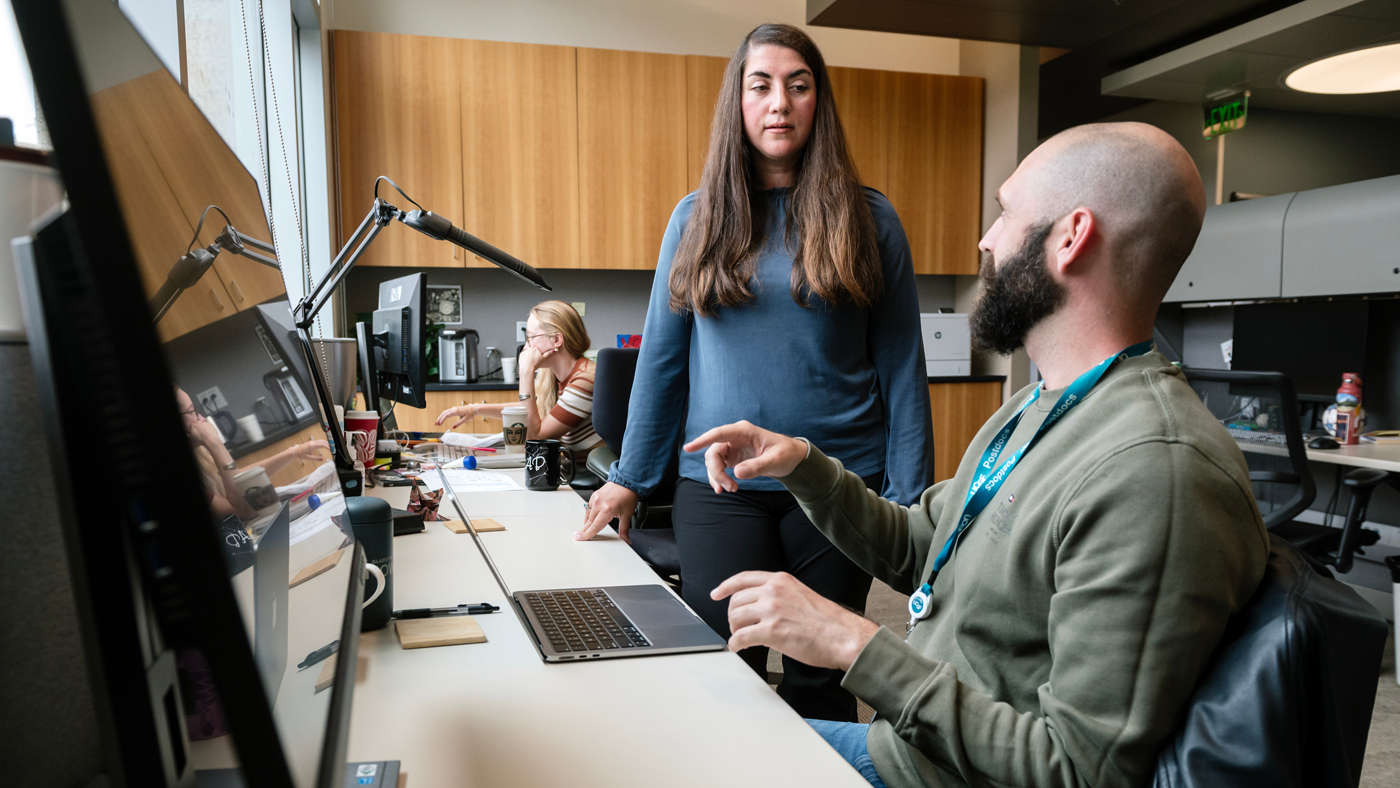
Christina Theodoris consults with Javier Gόmez Ortega, first author of the study and a bioinformatics fellow in her lab.
To assess its performance, Theodoris and her collaborators used the AI model to analyze heart cells and tasked it with predicting genes that either accelerated or slowed normal aging. When the researchers tested the effects of those genes in human cells, the predictions held true: activating the pro-aging genes caused the cells to display hallmarks of aging, such as irregular beating and gene activity associated with inflammation.
Building a Model to Span Decades
Previously, Theodoris’s lab developed Geneformer, a foundational AI model that learned how genes work together by studying millions of human cells across health and disease. The tool helps predict how individual cells respond to genetic changes, but only at a single point in time.
The new temporal AI model, called MaxToki—named after a Japanese bullet train whose name is a homonym for “time” in Japanese—builds off that approach, adding the new element of following tissues throughout aging.
Theodoris’s team trained MaxToki using detailed data on nearly 170 million cells from healthy humans ranging in age from birth to over 90 years old. Rather than treating each cell as an isolated snapshot, the model learned to predict how the gene activity of any given cell type changed with aging.
A major challenge in building MaxToki was sheer computational scale. Training the model required processing the equivalent of nearly one trillion pieces of genetic data—an amount approaching what it takes to train the large language models that power tools like ChatGPT.
To make this feasible for an academic lab, Gladstone collaborated with NVIDIA to accelerate key parts of the underlying code to run more efficiently on specialized NVIDIA AI infrastructure and accelerated computing. Gladstone leveraged NVIDIA BioNeMo and CUDA-X libraries to optimize training throughput and efficiency.
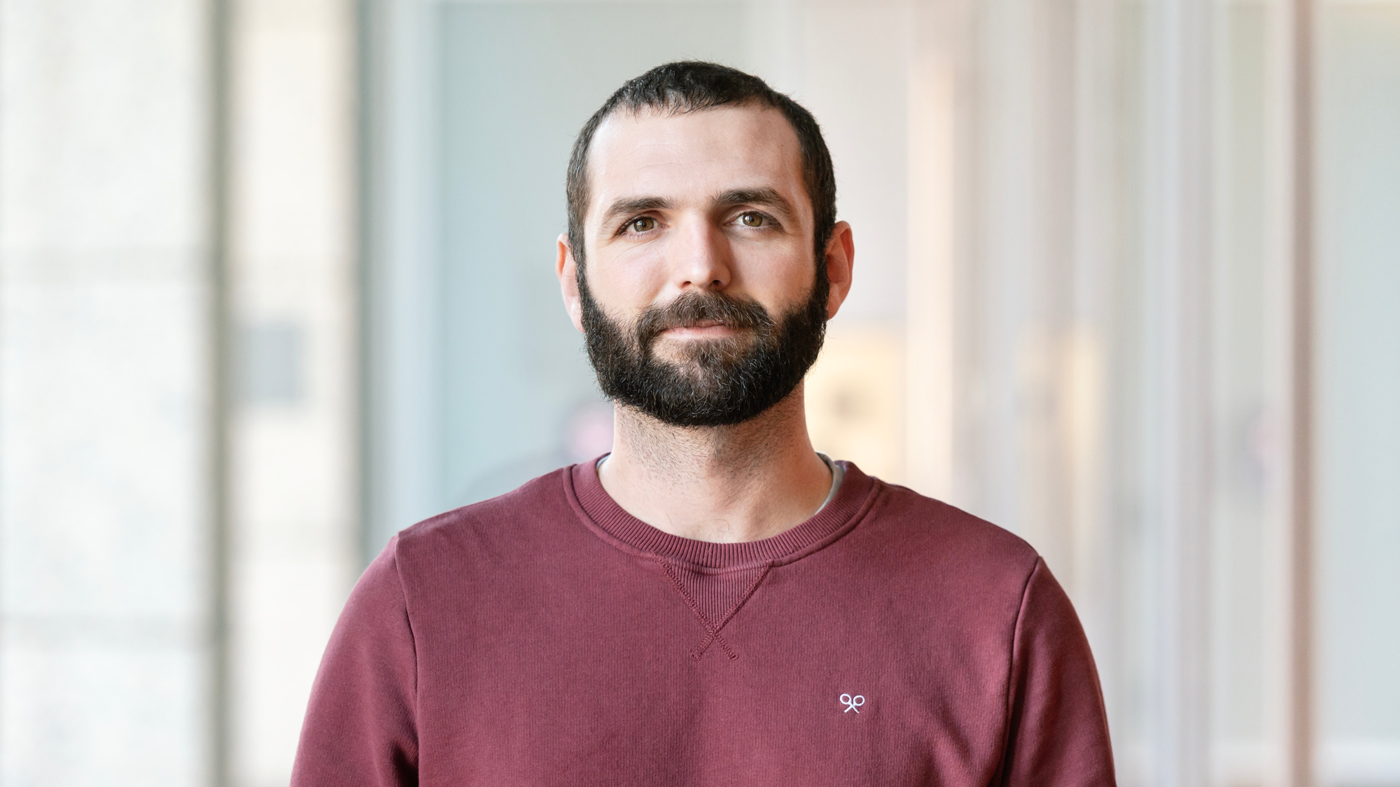
Javier Gόmez Ortega is first author of the study that tested whether the MaxToki AI model would recognize something it had never been taught: the accelerated aging that accompanies some diseases.
“The sheer computational scale of training models on nearly a trillion genetic tokens is a major hurdle for even the most advanced labs, and there is an urgent need for accelerated computing to handle these massive temporal datasets,” says Anthony Costa, director of Digital Biology at NVIDIA. “By leveraging NVIDIA BioNeMo and NVIDIA CUDA-X libraries, we provided the Gladstone team with the arithmetic throughput and memory efficiency needed to train a billion-parameter model in a fraction of the time. This collaboration will enable researchers worldwide to use MaxToki to rapidly identify anti-aging targets and discover new ways to slow or prevent age-related diseases like dementia and heart disease over 400 times faster.”
Aging With Disease
Because MaxToki was trained exclusively on data from healthy individuals, the team could test whether it would recognize something it had never been taught: the accelerated aging that accompanies some diseases. When presented with lung cells from patients with pulmonary fibrosis, the model calculated a 15-year acceleration in aging in those cells compared to healthy controls. Cells from heavy smokers showed a five-year acceleration in aging.
In data from a group of patients with Alzheimer’s disease, MaxToki detected about a three-year aging acceleration in microglia, a type of brain immune cell. This aging acceleration was also seen in a second dataset provided by Gladstone Investigator Andrew Yang, PhD. However, the same aging acceleration was not seen in the microglia of patients in the second dataset who had signs of Alzheimer’s in the brain but no symptoms of dementia—a phenomenon called Alzheimer’s resilience.
“The AI was only trained on normal aging, yet it correctly perceived accelerated aging in disease cells,” says Javier Gόmez Ortega, PhD, first author of the study and a bioinformatics fellow in Theodoris’s lab. “Using the model could help us identify the specific changes in gene activity that cause age-related diseases and point to potential ways of slowing or preventing them.”
With this goal in mind, the team used MaxToki to screen for aging-related genes in ventricular cardiomyocytes—the heart’s primary pumping cells. The AI model flagged dozens of candidate genes and the scientists selected five to test in the lab in collaboration with Gladstone Investigator Michael Alexanian, PhD.
When each of the five genes was activated in human heart cells, the resulting gene activity showed patterns seen in older cells, such as increased inflammation and disrupted mitochondrial function. With further experiments, the scientists found additional hallmarks of aging in the cells, including slowed calcium cycling and irregular beating.

Senior author Christina Theodoris and her team used MaxToki to analyze heart cells and tasked it with predicting genes that either accelerated or slowed normal aging. When the researchers tested the effects of those genes in human cells, the predictions held true.
“These were targets we would not have tested otherwise,” Theodoris says. “Seeing them cause functional decline in heart cells, with exactly the kinds of changes we associate with cardiac aging in humans, confirms the model is capturing something real about the biology.”
The team conducted early tests in young mice and found that activating the top two pro-aging genes led to signs of heart dysfunction within a month, suggesting the genes play a functional role in aging. The researchers are now testing whether blocking the same genes could protect against age-related heart decline.
The pre-trained MaxToki model and code are publicly available so researchers around the world can apply them to their own questions about aging and disease.
For Media
Kelly Quigley
Director, Science Communications and Media Relations
415.734.2690
Email
About the Study
Details of the MaxToki model are published as a preprint on bioRxiv in a study entitled “Temporal AI model predicts drivers of cell state trajectories across human aging.” The authors are: Javier Gómez Ortega, Rangarajan D. Nadadur, Akira Kunitomi, Sarp D. Kurtoglu, Bumjoon Kim, Madigan M. Reid, Thomas Lu, Han Chen, Yujie Zhang, Sarah Ancheta, Sara Lichtarge, William A. Johnson, Chris Thompson, Andrew C. Yang, Shinya Yamanaka, Michael Alexanian, and Christina V. Theodoris of Gladstone; Alexis Combes of UC San Francisco, Julian U.G. Wagner, Lukas Zanders, and Stefanie Dimmeler of Goethe University Frankfurt; and Neha Tadimeti and Steven Kothen-Hill of NVIDIA.
The work was supported by Impetus Longevity Grants, the Searle Scholars Program, Dana and Robert Hamwee, the National Institutes of Health (DP5OD036170), and the Burroughs Wellcome Fund (1022136.01).
About Gladstone Institutes
Gladstone Institutes is an independent, nonprofit life science research organization that uses visionary science and technology to overcome disease. Established in 1979, it is located in the epicenter of biomedical and technological innovation, in the Mission Bay neighborhood of San Francisco. Gladstone has created a research model that disrupts how science is done, funds big ideas, and attracts the brightest minds.
Featured Experts

Scientists Decode Gene Circuits of Human Immunity, Fueling New Era of Disease Research
Article
August 28, 2026
Scientists Decode Gene Circuits of Human Immunity, Fueling New Era of Disease Research
An unprecedented map of 22 million immune cells provides the functional rulebook for virtual biology and next-generation immunotherapies.
Marson Lab Genomic Immunology Cancer Autoimmune Diseases News ReleaseNew Toolkit Turns Macrophages Into Better Cancer Fighters
Article
August 17, 2026
New Toolkit Turns Macrophages Into Better Cancer Fighters
Gladstone and UCSF scientists developed a method to genetically edit myeloid cells, immune cells that act as the body’s first responders.
News Release Marson Lab Carnevale Lab Cancer Genomic Immunology CRISPR/Gene EditingNew CRISPR Screening Platform Boosts Power of Immunotherapy Against Solid Tumors
Article
August 12, 2026
New CRISPR Screening Platform Boosts Power of Immunotherapy Against Solid Tumors
A new screening platform uncovers gene edits that enhance CAR-T cells’ ability to infiltrate and eliminate solid tumors.
News Release Carnevale Lab Cancer Genomic Immunology CRISPR/Gene Editing