In Alzheimer’s Disease, the Brain’s Pacemaker Cells Lose Their Beat
Research in mice reveals how critical brain cells misfire in Alzheimer’s and identifies a targeted strategy to restore healthy brain rhythms.
The core closely collaborates with other Gladstone core facilities, UC San Francisco Center for Advanced Technology, UC San Francisco Core Immunology Lab, and 10x Genomics. Our approach of providing consultation prior to experiment design as well as incorporating the latest techniques, makes our services a crucial resource for all researchers.
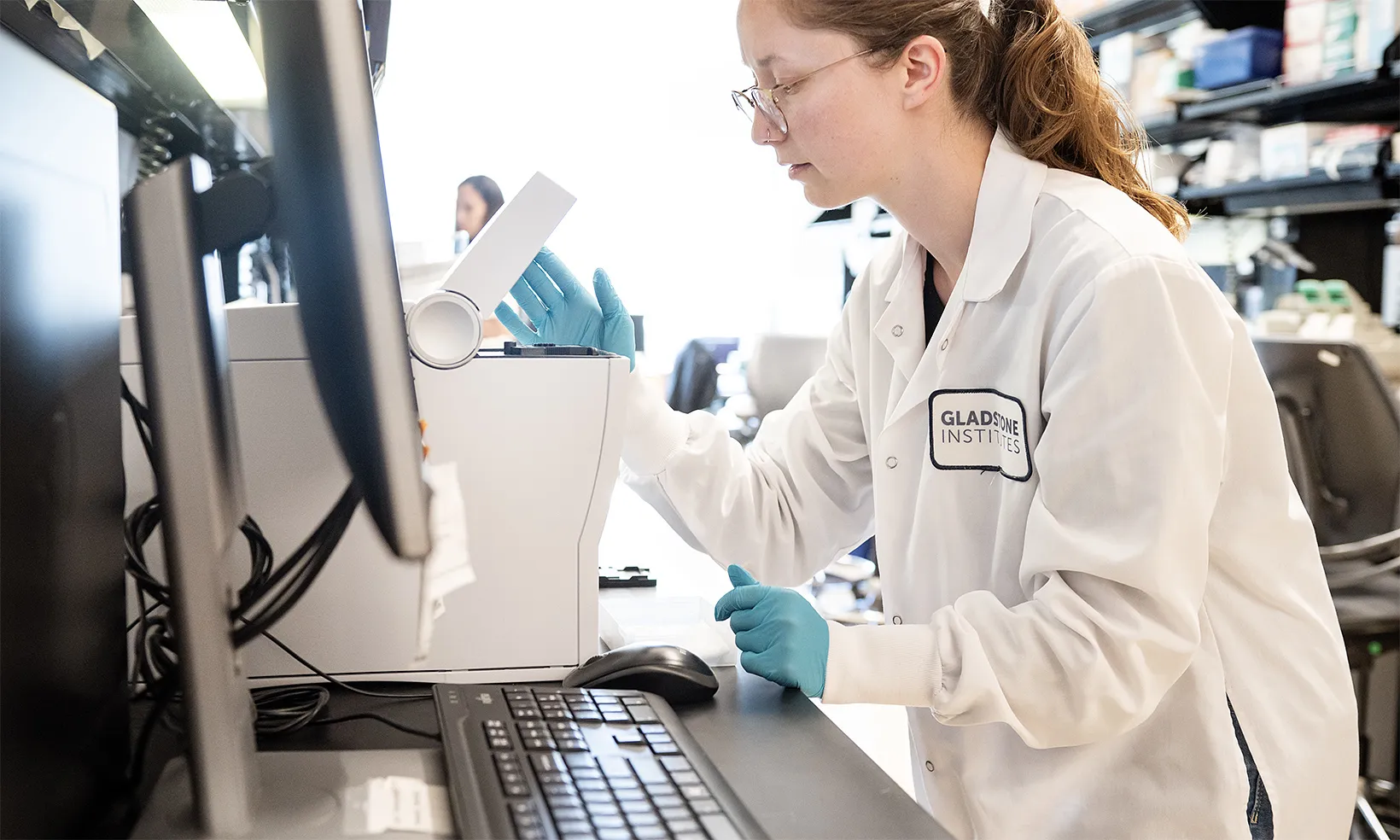
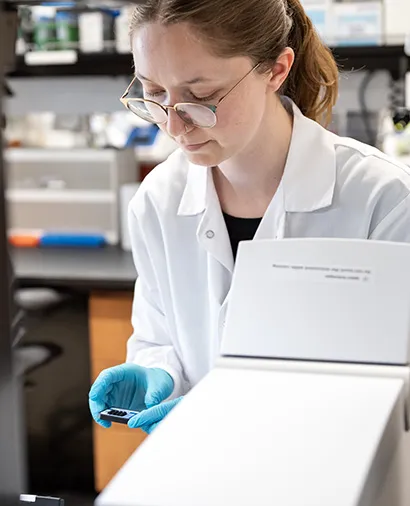
We provide consultations on experiment design, sample preparation, experimentation, and data interpretation. We involve 10X Genomics and the Bioinformatics Core in project discussions if necessary.
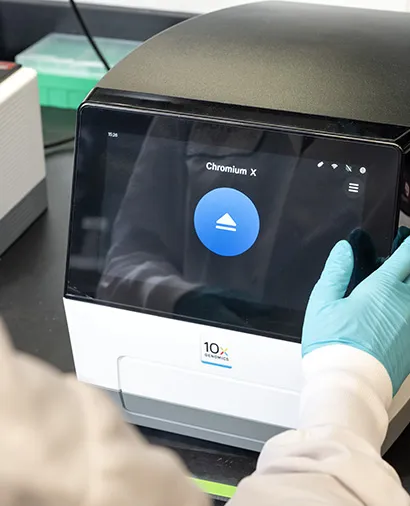
We provide assays to profile gene expression and open chromatin regions at the single cell level. Our services include cell/nucleus partitioning through library construction to sequencing with all necessary QC checks.
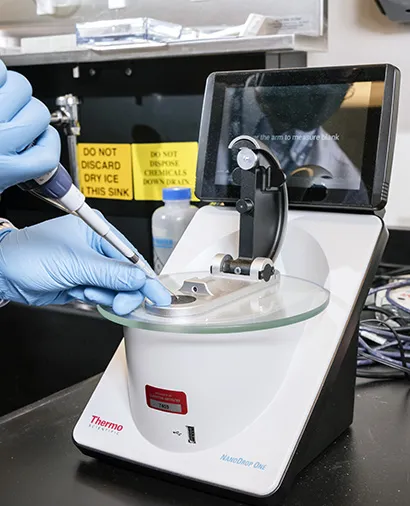
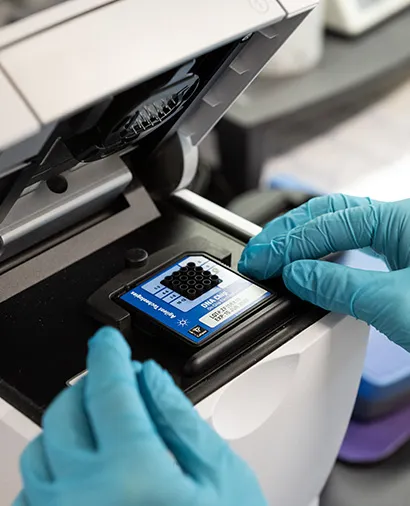
Our core is experienced in constructing libraries from a diverse set of biological systems using varied methods. We offer customized library preparation based on your project goals. Sequencing on the Illumina platforms is carried out at Gladstone and UC San Francisco CAT.
Visium CytAssist
Countess 3 FL Automated Cell Counter
2100 Bioanalyzer
NanoDrop One Spectrophotometer
Qubit 2.0 Fluorometer
S2 Focused-Ultrasonicator
Illumina NextSeq2000
You can view our services and fees in iLab.
You can access these instruments with prior training from Genomics Core staff.
To schedule time with one of these instruments, visit the iLab Equipment Calendar.
Contact us to schedule equipment training, schedule a consultation, or to arrange sample drop offs.
To submit samples, register and submit a request in our online system, iLab. Once we receive and approve your request, we will contact you to coordinate sample drop off.
You can find our sample submission requirements in iLab.
Turnaround times may vary, depending on the queue at the time of submission but this is our general timeline.
In publications, we ask that you include an acknowledgment to the Gladstone Genomics Core, e.g., We thank [NAME] of the Gladstone Genomics Core for their assistance with [ASSAY/PROJECT].
In addition, send us an email to let us know when your Gladstone-supported work is published
Xin Sun, Swetansu K. Hota, Yu-Qing Zhou, Stefanie Novak, Dario Miguel-Perez, Danos Christodoulou, Christine E. Seidman, J. G. Seidman, Carol C. Gregorio, R. Mark Henkelman, Janet Rossant, and Benoit G. Bruneau.
Luis Luna-Zurita, Christian U. Stirnimann, Sebastian Glatt, Bogac L. Kaynak, Sean Thomas, Florence Baudin, Md Abul Hassan Samee, Daniel He, Eric M. Small, Maria Mileikovsky, Andras Nagy, Alisha K. Holloway, Katherine S. Pollard, Christoph W. Müller, and Benoit G. Bruneau.
Ibraheem Ali, Diego Garrido Ruiz, Zuyao Ni, Jeffrey R. Johnson, Heng Zhang, PaoChen Li, Mir M. Khalid, Ryan J. Conrad, Xinghua Guo, Jinrong Min, Jack Greenblatt, Matthew Jacobson, Nevan J. Krogan, and Melanie Ott.
Yen-Sin Ang, Renee N. Rivas, Alexandre J. S. Ribeiro, Rohith Srivas, Janell Rivera, Nicole R. Stone, Karishma Pratt, Tamer M. A. Mohamed, Ji-Dong Fu, C. Ian Spencer, Nathaniel D. Tippens, Molong Li, Anil Narasimha, Ethan Radzinsky, Anita MoonGrady, Haiyuan Yu, Beth L. Pruitt, Michael Snyder, and Deepak Srivastava.
Swetansu K. Hota, Jeffrey R. Johnson, Erik Verschueren, Reuben Thomas, Aaron M. Blotnick, Yiwen Zhu, Xin Sun, Len A. Pennacchio, Nevan J. Krogan, and Benoit G. Bruneau.
Mylinh Bernardi
Assistant Core Director
Email
Felicia Miller, MS
Research Technologist III
Jane Srivastava
Scientific Resource Director
The Genomics Core hosts a number of events from training to product demos.
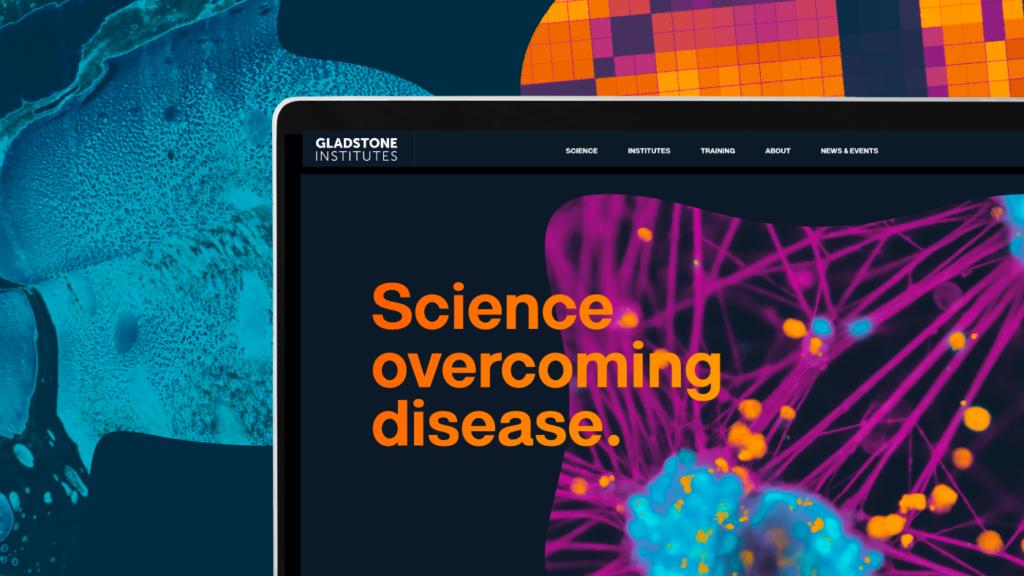
Discover disease research, explore the latest scientific news, and connect with experts through Gladstone’s enriched digital platform.
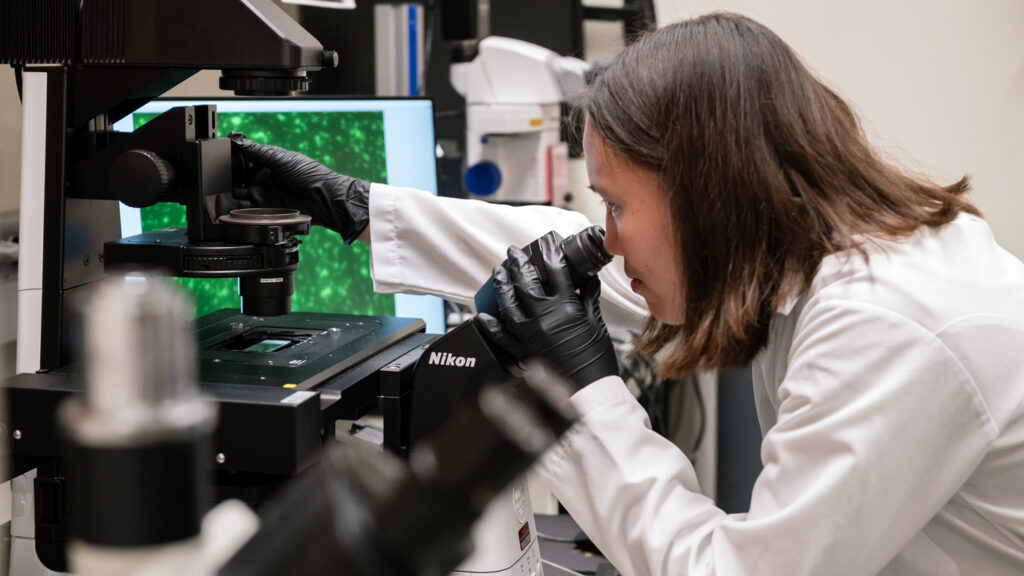
The complex Rube Goldberg-like molecular machinery could inspire novel technology to study and treat disease.
Shipman is recognized for pioneering molecular technologies that record cellular activity, expand genome editing, and target antibiotic-resistant superbugs.
Inspired by bacterial biology, the Gladstone-developed “Detectron” opens up new possibilities for disease research and potentially treatments.
Our people are our most important asset. We offer a wide array of career opportunities both in our administrative offices and in our labs.
Open PositionsDiscoveries don’t stay in our labs. Gladstone facilitates spinout companies to advance promising therapies, shortening the path between scientific discovery and helping real patients.
Learn MoreYour gift to Gladstone will allow our researchers to pursue high-quality science, focus on disease, and train the next generation of scientific thought leaders.
Donate Now