Gladstone NOW: The Campaign Join Us on the Journey✕




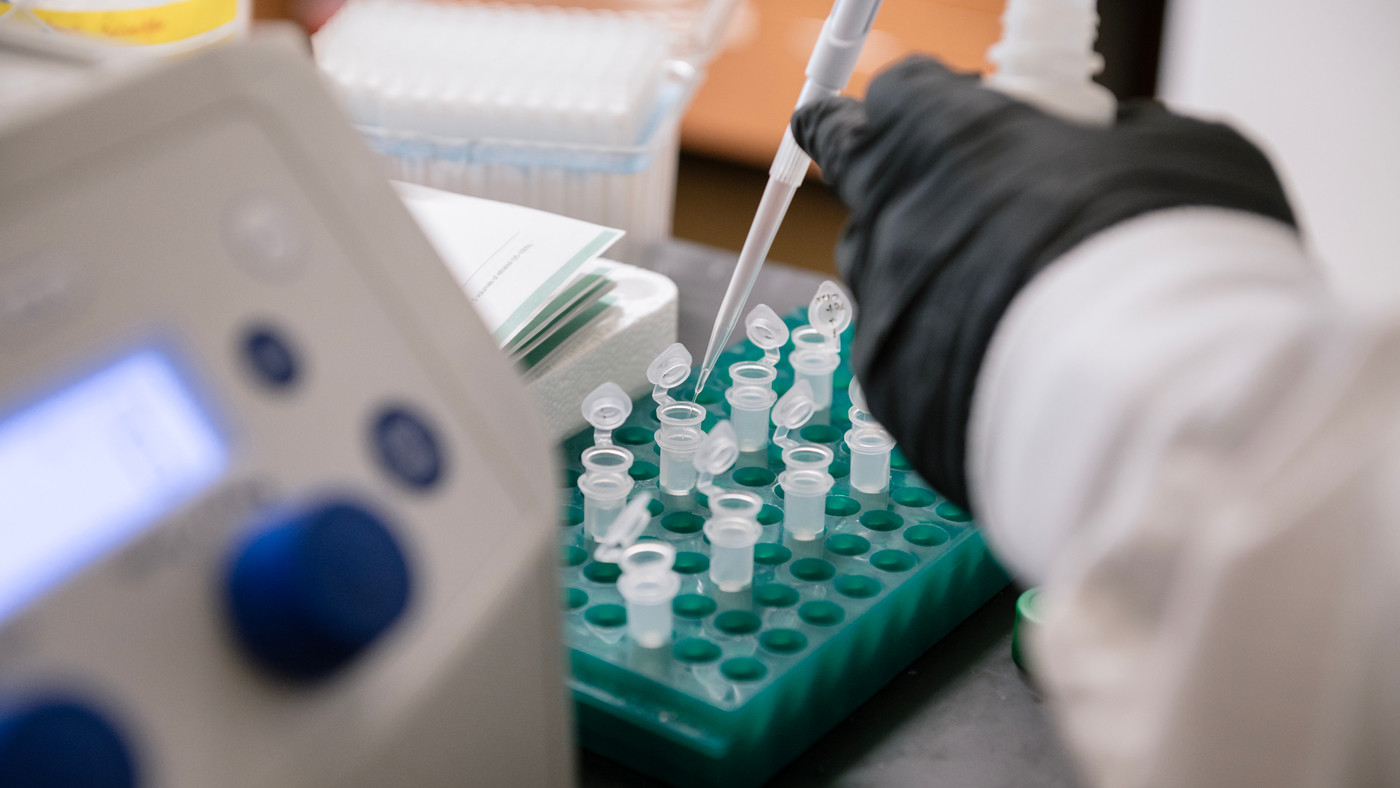
Scientists at Gladstone expanded their retron-based genome editing technology beyond E. coli, showing it works in 15 diverse bacterial species.
Listen to this article
The ability to precisely edit the genomes of bacteria has long been a goal of microbiologists. Such technology would enable scientists to make new inroads into studying disease, developing sustainable materials, and fighting drug-resistant infections. But for years, the most powerful tools for bacterial genome editing have only been available in Escherichia coli (E. coli), the most common laboratory bacteria.
Now, a major collaboration involving nine labs, led by scientists at Gladstone Institutes, has transferred a particularly useful DNA editing system from E. coli into 14 new species of bacteria, spanning three major branches of the bacterial family tree.
Their approach, described in Nature Biotechnology, takes advantage of retrons, an immune system from bacteria that produces DNA that can be repurposed for editing genomes.

Shipman (left) and González-Delgado (right) repurpose retrons, a bacterial defense system, to produce the DNA needed for genome editing.
“We’ve been easily editing E. coli genomes using retrons for years now, which has substantially increased the pace of our fundamental biology and our molecular technology development,” says Gladstone Investigator Seth Shipman, PhD, senior author of the new study. “But we kept hearing from the broader field, asking when there would be a version of this technology that could be put to work in other bacterial species that matter for the environment, industrial processes, or human health.”
Retrons Tour the Globe
Retrons are part of bacteria’s defense system. They act as a kind of viral alarm system, continuously producing small strands of DNA.
Shipman’s lab has repurposed retrons for a totally different purpose: using their highly-efficient DNA-making machinery as cellular factories to produce the new strands of DNA needed for genome editing. Using retrons, his team created a tool that can efficiently modify DNA in bacteria, yeast, and human cells. In bacteria, the transformed retron-derived editor is called a recombitron.
However, they had only built functional recombitrons in E. coli.
In the new study, the scientists wanted to probe whether the retrons could be engineered to work more broadly. They developed a diverse panel of 10 retron-based editing systems and then collaborated with labs that specialized in working with a variety of bacteria.
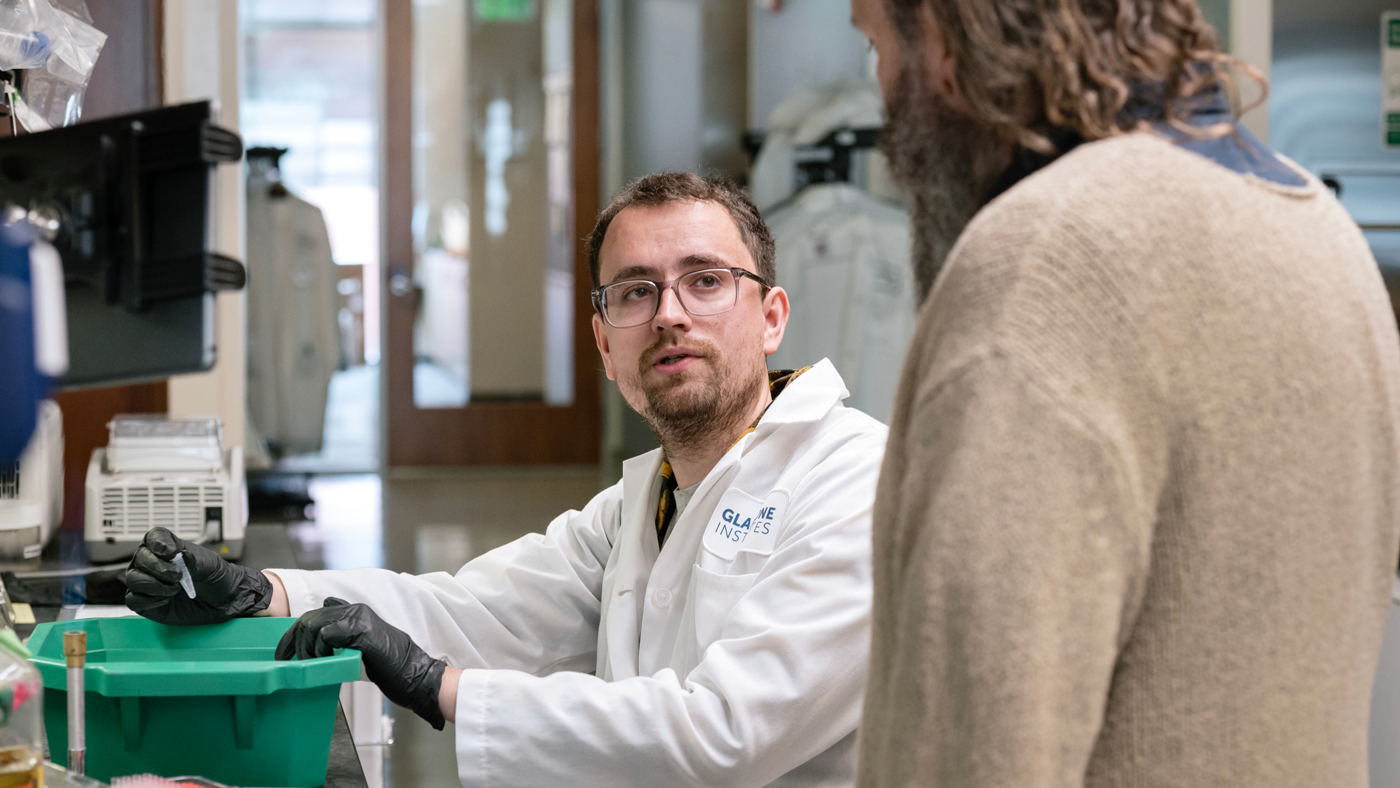
A team of Gladstone scientists, including González-Delgado (left) and Shipman (right), partnered with labs around the world to test their new editing systems in a wide range of bacteria—and they worked in all 15 species tested.
“We partnered with nine different labs from all over the world to test the editing systems in their favorite bacterial species,” says Alejandro González-Delgado, PhD, a postdoctoral scholar in Shipman’s lab and first author of the study. “We designed all the molecular parts at Gladstone, then sent them to the collaborators where they ran the experiment in their labs.”
Each collaborator sent the samples back to Gladstone, where González-Delgado performed a centralized, in-depth analysis of the results.
Success Across Bacterial Species
The team collected full data on how well the retrons worked in 15 different bacterial species with relevance across fields.
Several, including Klebsiella pneumoniae and Pseudomonas aeruginosa, are human pathogens that often develop antibiotic resistance, underscoring the need for new research into how to fight these bacteria. Others, like Vibrio natriegens and Pseudomonas putida, are especially fast-growing species, making them commonly used in biotechnology to produce desired compounds from medicines to fuels.
The retrons, packaged together with other proteins into genome editing systems the team calls recombitrons, worked in all 15 species tested. However, different retrons excelled in different species.
“Each retron worked differently in different bacteria,” González-Delgado says. “This reinforces why it’s important to have lots of different retrons, so scientists can choose the ones best suited to their favorite bacterial species.”
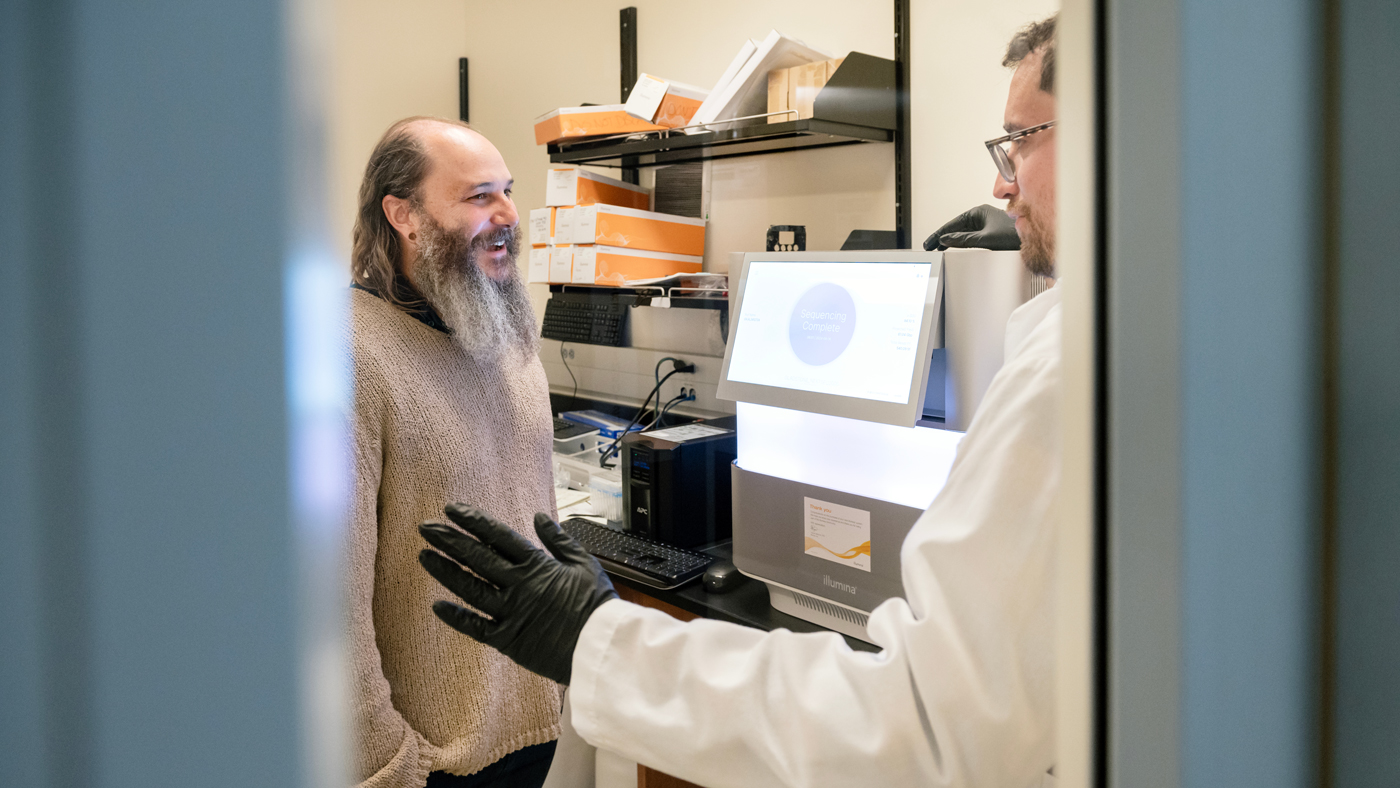
The retron-based editing systems developed by Shipman (left), González-Delgado (right), and their colleagues can be used to address a slew of biological problems, from engineering bacteria to developing new antibiotics.
In fact, despite their potential, only a small number of retrons had ever been studied in the lab. That’s why, in 2024, González-Delgado was part of a group that tested 163 previously uncharacterized retrons and identified many that could edit DNA more quickly and efficiently than those typically used in the lab.
In the latest study, the editing rates—what percentage of bacterial cells end up carrying an intended genetic change—also varied, ranging from a fraction of a percent in some species to more than 90 percent in others. For species with lower editing rates, the team showed that altering the retron’s structure or changing other components of the editing system could boost editing rates.
Opening New Doors
The ability to precisely edit bacterial genomes across a wide range of species has broad implications. Researchers engineering bacteria for manufacturing, studying how gut microbes interact, or developing new antibiotics can use the new data to choose an appropriate retron-based editing system for whatever species they work with.
“My lab builds molecular technology, and we want these technologies to be used as broadly as possible to uncover new biology and intervene in disease,” says Shipman, who is also an associate professor in the Department of Bioengineering and Therapeutic Sciences at UC San Francisco and a Biohub Investigator. “Through Alejandro’s efforts and an enthusiastic group of collaborators, we were able to get one of our favorite editing technologies into the hands of researchers focused on a slew of new biological problems. We hope it will continue to spread from here.”
For Media
Julie Langelier
Associate Director, Communications
415.734.5000
Email
About the Study
The paper, “Genome editing of phylogenetically distinct bacteria using cross-species retron-mediated recombineering,” was published in the journal Nature Biotechnology on April 23, 2026. The authors are Alejandro González-Delgado and Seth Shipman of Gladstone; Laura Bonillo-Lopez and Virginia Aragón of Universitat Autònoma de Barcelona; Milo S. Johnson and Britt Koskella of UC Berkeley; Hemaa Selvakumar and Vivek K. Mutalik of Lawrence Berkeley National Laboratory; Nastassia Knödlseder and Marc Güell of Universitat Pompeu Fabra; Ching-Chung Ko and Graham F. Hatfull of University of Pittsburgh; Yassir Lekbach, Zihan Yu, and Benjamin K. Keitz of University of Texas at Austin; Jee-Hwan Oh and Jan-Peter van Pijkeren of University of Wisconsin–Madison; and Michael C. Wold and Jeffrey A. Gralnick of University of Minnesota–Twin Cities.
The work at Gladstone was supported by the National Science Foundation (MCB 2137692), the Gary and Eileen Morgenthaler Fund, the Gordon and Betty Moore Foundation, and the Robert J. Kleberg, Jr. and Helen C. Kleberg Foundation.
About Gladstone Institutes
Gladstone Institutes is an independent, nonprofit life science research organization that uses visionary science and technology to overcome disease. Established in 1979, it is located in the epicenter of biomedical and technological innovation, in the Mission Bay neighborhood of San Francisco. Gladstone has created a research model that disrupts how science is done, funds big ideas, and attracts the brightest minds.
Featured Experts
Gladstone NOW: The Campaign
Join Us On The Journey
Scientists Decode Gene Circuits of Human Immunity, Fueling New Era of Disease Research
Article
August 28, 2026
Scientists Decode Gene Circuits of Human Immunity, Fueling New Era of Disease Research
An unprecedented map of 22 million immune cells provides the functional rulebook for virtual biology and next-generation immunotherapies.
Marson Lab Genomic Immunology Cancer Autoimmune Diseases News ReleaseNew Toolkit Turns Macrophages Into Better Cancer Fighters
Article
August 17, 2026
New Toolkit Turns Macrophages Into Better Cancer Fighters
Gladstone and UCSF scientists developed a method to genetically edit myeloid cells, immune cells that act as the body’s first responders.
News Release Marson Lab Carnevale Lab Cancer Genomic Immunology CRISPR/Gene EditingNew CRISPR Screening Platform Boosts Power of Immunotherapy Against Solid Tumors
Article
August 12, 2026
New CRISPR Screening Platform Boosts Power of Immunotherapy Against Solid Tumors
A new screening platform uncovers gene edits that enhance CAR-T cells’ ability to infiltrate and eliminate solid tumors.
News Release Carnevale Lab Cancer Genomic Immunology CRISPR/Gene Editing