Micro Heart Muscle Created from Stem Cells
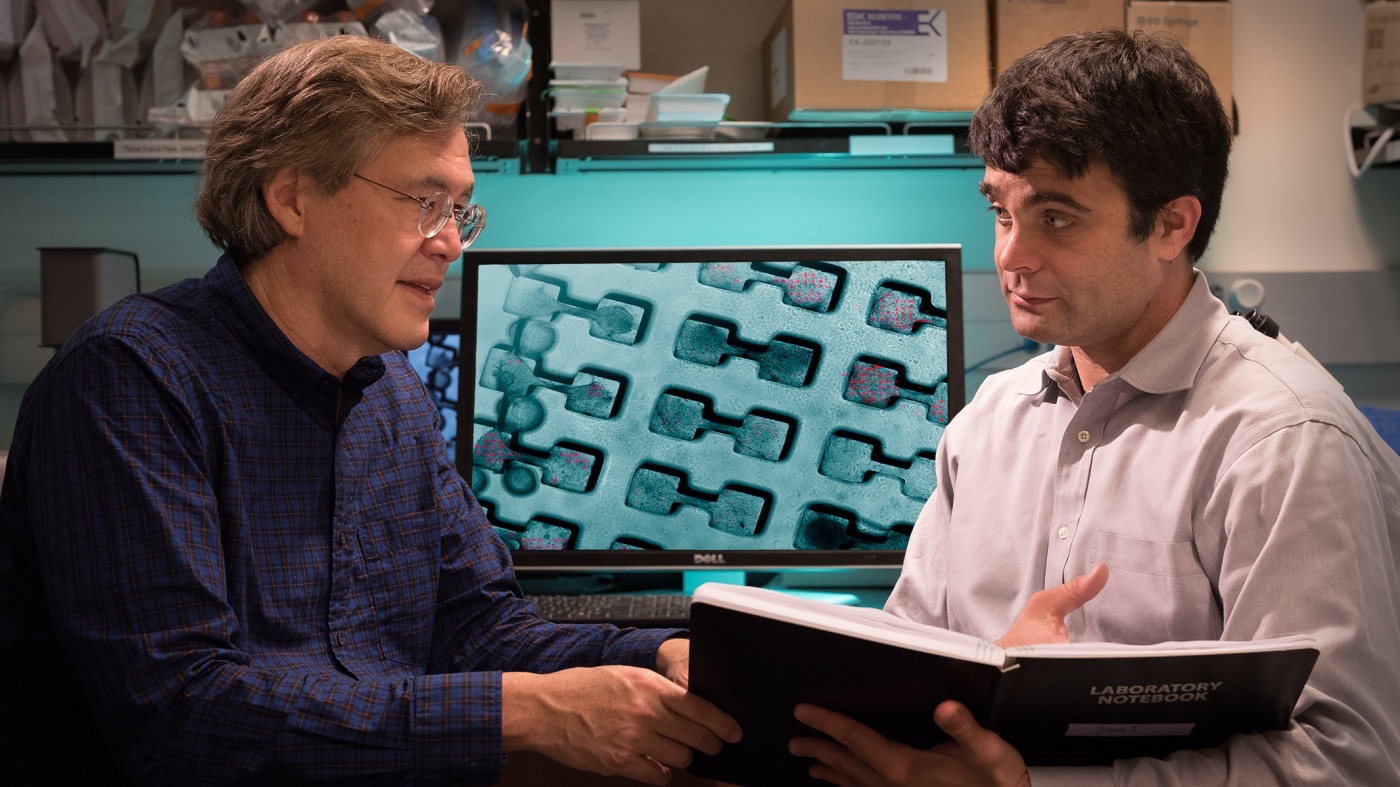
Scientists at the Gladstone Institutes have invented a new way to create three-dimensional human heart tissue from stem cells. The tissue can be used to model disease and test drugs, and it opens the door for a precision medicine approach to treating heart disease. Although there are existing techniques to make three-dimensional tissues from heart cells, the new method dramatically reduces the number of cells needed, making it an easier, cheaper, and more efficient system.
“We have bioengineered micro-scale heart tissues with a method that can easily be reproduced, which will enable scientists in stem cell biology and the drug industry to study heart cells in their proper context,” said first author Nathaniel Huebsch, PhD, a postdoctoral fellow in the Conklin lab at Gladstone. “In turn, this will enhance our ability to discover treatments for heart disease.”
A unique dog bone-shaped dish helped heart cells created from iPSCs self-organize into three-dimensional, beating micro heart muscle. [Video: Nathaniel Huebsch]
Creating heart cells from induced pluripotent stem cells (iPSCs) that are derived from a patient’s skin cells enables scientists to study and test drugs on that patient’s specific disease. However, cells made from iPSCs are relatively immature, resembling heart cells in an embryo more than cells in an adult. As such, these cells are inadequate for drug testing because they do not properly predict how a drug will affect adult heart cells. Additionally, heart cells created from iPSCs are challenging to make and work with, so creating large quantities can be difficult. Therefore, the fewer cells needed, the better.
The micro heart muscle addresses both of these concerns. Forcing the cells to organize and stretch into three-dimensional tissue helps spur development and coaxes them into resembling more mature cells that can better predict how a drug will affect adult heart cells. Also, the new method—published in the journal Scientific Reports—requires a thousand-fold fewer cells to grow the tissue than other tissue engineering techniques. Using fewer cells allows the scientists to do many more experiments with the same amount of resources.
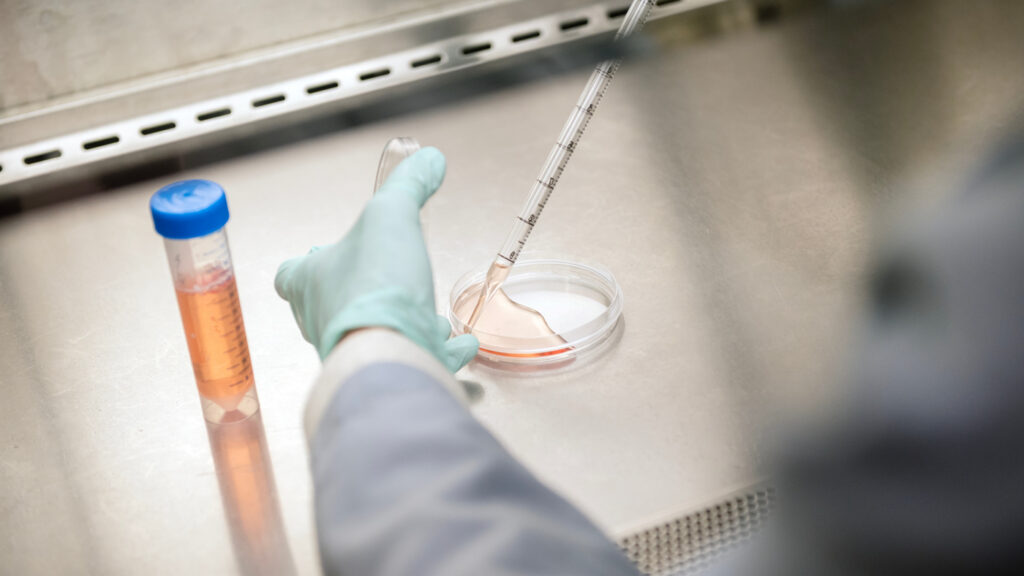
Working in collaboration with Kevin Healy, PhD, at the University of California, Berkeley, the researchers first generated heart muscle cells and connective tissue cells from iPSCs. They then combined these cells in a special dish shaped like a tiny dog bone. This unique shape encouraged the cells to self-organize into elongated muscle fibers. Within a couple of days, the micro tissues resembled heart muscle both structurally and functionally. For example, when the researchers tested how the tissue responded to certain drugs that impair fetal heart cells but not adult heart cells, the micro heart muscle performed more like adult heart tissue.
“The beauty of this technique is that it is very easy and robust, but it still allows you to create three-dimensional miniature tissues that function like normal tissues,” said senior author Bruce Conklin, MD, a senior investigator at Gladstone. “Our research shows that you can create these complex tissues with a simple template that exploits the inherent properties of these cells to self-organize. We think that the micro heart muscle will provide a superior resource for conducting research and developing therapies for heart disease.”
Up Next

Engineered Human Neurons Rebuild Damaged Spinal Cord Circuits
Gladstone scientists show that stem cell-derived spinal neurons can integrate into damaged neural networks in rats and improve breathing-related motor function after a traumatic spinal cord injury.
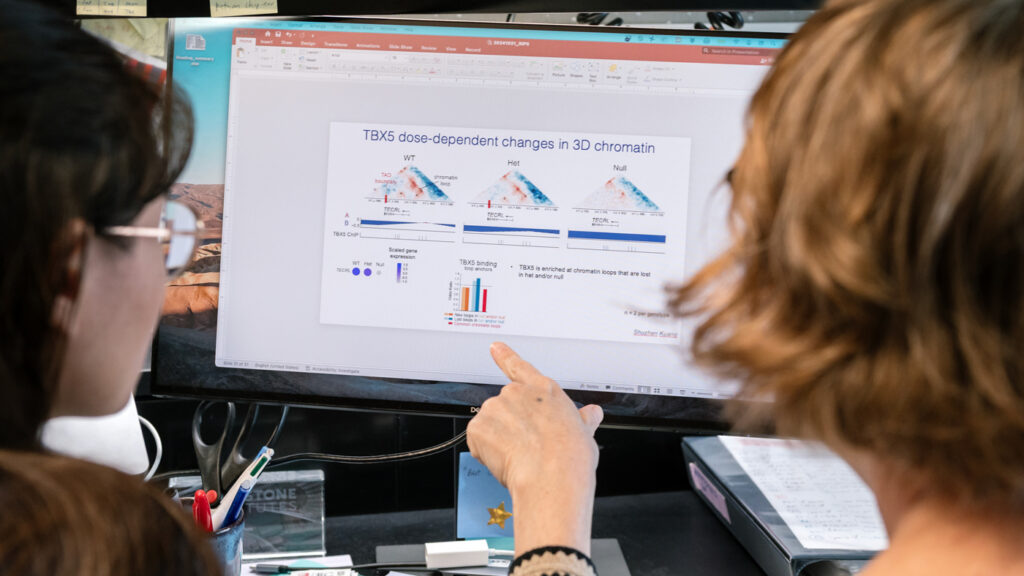
Misfolded DNA Blueprint: A New Origin for Genetic Disease
Gladstone researchers found losing just one copy a particular gene can disrupt heart development and lead to congenital heart disease.
A Gene That Keeps Stem Cells From Losing Their Way
Scientists find a gene essential for keeping intestinal stem cells stable, offering insight into how tissues repair themselves.
Gene Editing Strategy Could Treat Hundreds of Inherited Diseases More Effectively
Scientists at Gladstone show the new method could treat the majority of patients with Charcot-Marie-Tooth disease.
Get Involved
Join the Team
Our people are our most important asset. We offer a wide array of career opportunities both in our administrative offices and in our labs.
Open PositionsPartner With Us
Discoveries don’t stay in our labs. Gladstone facilitates spinout companies to advance promising therapies, shortening the path between scientific discovery and helping real patients.
Learn MoreGive
Your gift to Gladstone will allow our researchers to pursue high-quality science, focus on disease, and train the next generation of scientific thought leaders.
Donate Now