Gladstone NOW: The Campaign Join Us on the Journey✕




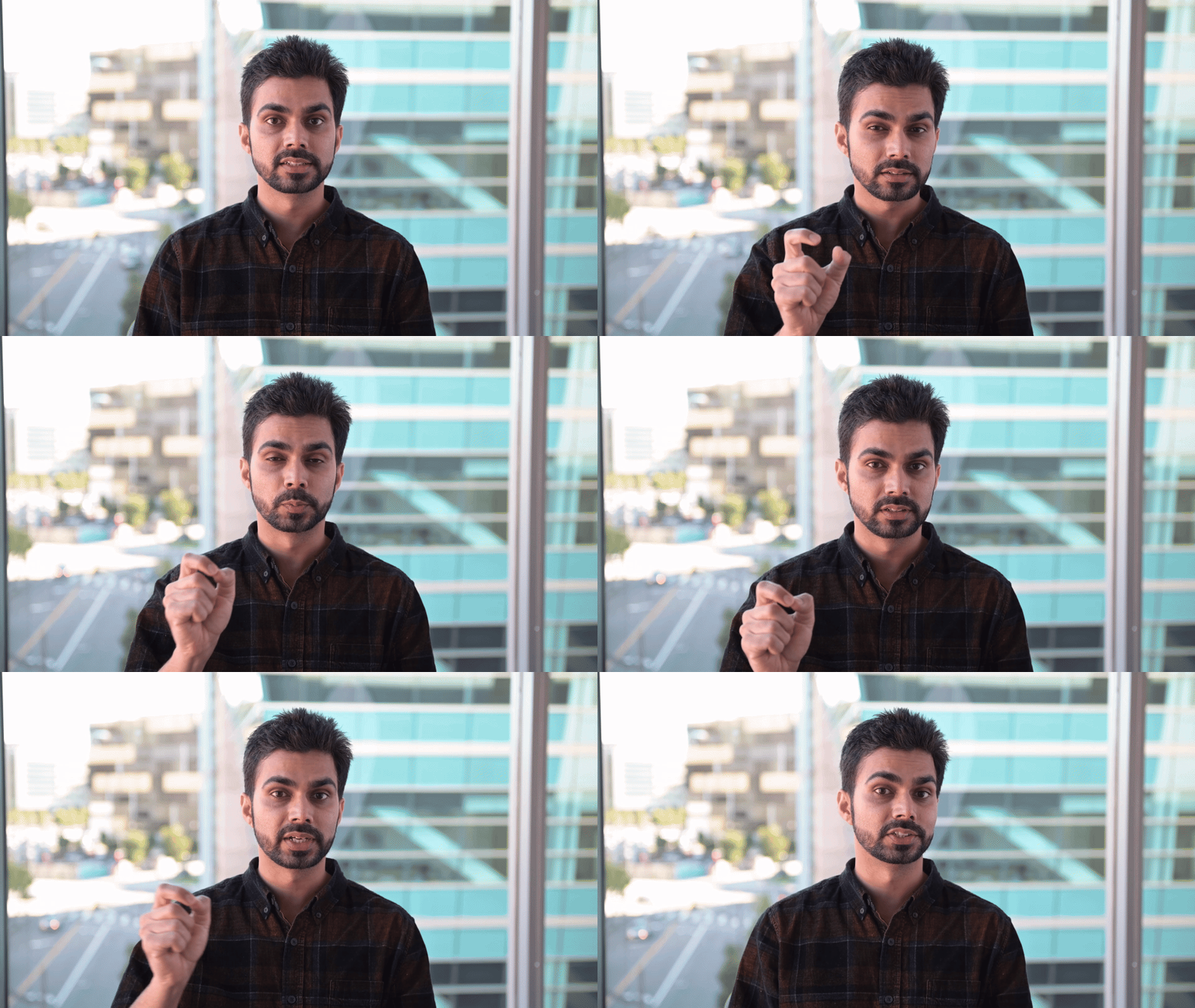
Inspired by the power of early guidance, Shyam Jinagal has volunteered as a mentor for the PUMAS program, creating a supportive, curiosity-driven environment that builds confidence for young scientists.
Shyam Jinagal, PhD, is a postdoctoral researcher in Deepak Srivastava’s lab. He grew up in Haryana, in the northern part of India. This area is well known for its sports culture and vibrant traditions. At Gladstone, Jinagal studies how genetic and age-related changes drive aortic valve disease, seeks to uncover why the adult heart loses its ability to regenerate, and ultimately aims to uncover how these processes might be reversed to restore heart function after injury.
What brought you to Gladstone?
My academic journey began as an undergraduate at Kurukshetra University in Haryana, where I studied biotechnology. I later moved to Bangalore to pursue my master’s and PhD at the Indian Institute of Science. Both of these experiences played an important role in shaping my interest in science and helping me think more clearly about the kind of research I wanted to pursue.
Toward the end of my PhD, when I began looking for postdoctoral training in the U.S.; I wanted to find a place where I could continue exploring fundamental biological questions while also working on problems that are directly relevant to human disease. During that process, I learned about Gladstone Institutes, which felt like a strong fit for the direction I wanted to take next.
What do you like about Gladstone?
There are two main things I really like when it comes to Gladstone.
First, Gladstone feels very community-oriented. There’s a genuine sense of belonging, which makes it much easier to settle in and focus on doing good science. People here are very open and collaborative, and you feel comfortable sharing ideas, asking questions, and even taking intellectual risks.
Second, I’m constantly amazed by the science we do here. The cutting-edge research environment really pushes you to ask better questions, think deeper, and do your best science.
What are the key areas of research you’re focused on?
In a broad sense, my research focuses on understanding how the heart works when it’s healthy, and what goes wrong when disease develops.
One major area of my work is aortic valve disease. The aortic valve controls how blood flows out of the heart to the rest of the body. Over time, due to genetic changes and aging, the valve can become stiff and narrow, making it harder for the heart to pump blood. I study how these changes affect a healthy aortic valve and how we could reverse it.
In parallel, I also study cardiac regeneration—something that’s very close to my heart. Unlike organs such as the skin or liver, which can repair themselves after injury, the adult heart has a very limited ability to regenerate. In my research, I try to understand why heart cells stop repairing themselves as we age, and how we could introduce cardiac regeneration after injury.
What inspired you to become a mentor for the PUMAS program, and how has that experience shaped your approach to supporting trainees?
I was inspired to become a mentor for the PUMAS program at Gladstone because I believe early guidance can have a lasting impact on a student’s scientific journey. Coming from a background where access to research opportunities was sometimes limited, I understand how important it is for students to feel supported and confident early on.
In terms of my mentorship style during the PUMAS program, rather than just teaching techniques, I focus on creating an environment where a trainee feels comfortable asking questions, making mistakes, and exploring their curiosity.
This experience has been very rewarding for me. It has further motivated me to do good science and help spread education awareness within the broader community.
What do you do when you’re not working?
Outside of work, I like keeping things simple. I go to the gym, spend time in nature, follow sports—especially cricket—and spend time with family and friends. All of this helps me stay balanced and connected to my roots.
Want to Join the Team?
Our people are our most important asset. We offer a wide array of career opportunities both in our administrative offices and in our labs.
Explore CareersMeet Gladstone: Ayush Midha
Article
September 21, 2026
Meet Gladstone: Ayush Midha
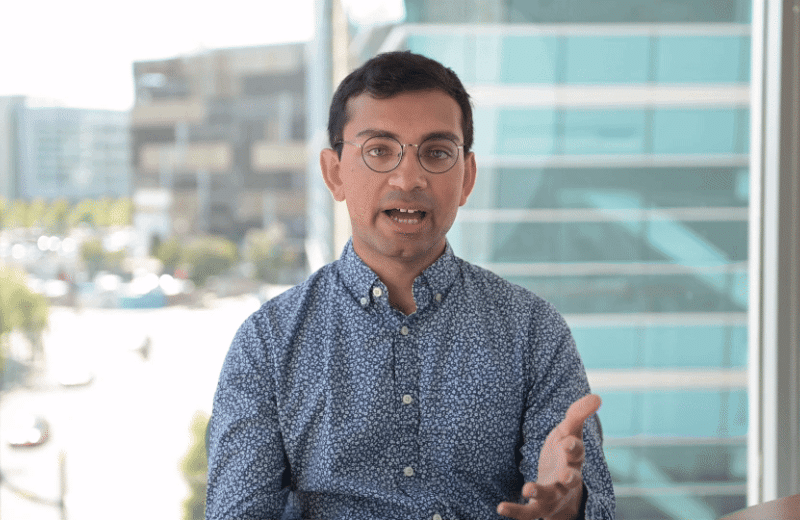
Ayush Midha, a graduate student in the Jain Lab, studies how the body's metabolism adapts to low oxygen—work that's uncovered backup energy pathways, potential fertility treatments, and a link between oxygen levels and tumor growth.
Profile Jain Lab Graduate Students and Postdocs MetabolismMeet Gladstone: Lexi Schneider
Article
August 24, 2026
Meet Gladstone: Lexi Schneider
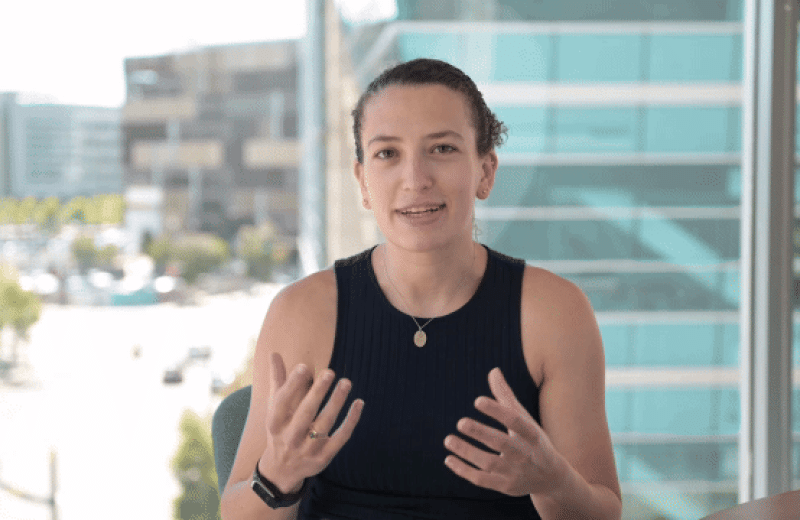
Meet Lexi Schneider, a PhD student using innovative technology to better understand the blood brain barrier.
Profile Graduate Students and Postdocs Yang LabAn Ancient Genetic Twist and Its Modern Impact on Brain Disease
Article
July 14, 2026
An Ancient Genetic Twist and Its Modern Impact on Brain Disease
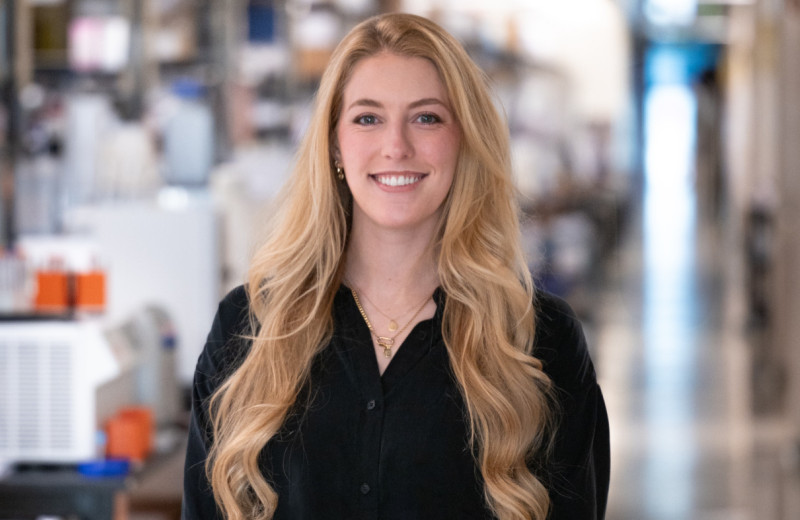
NOMIS–Gladstone Fellow Cathrine Sant is studying an enigmatic region of the human genome linked to neurodegenerative disease risk.
Neurological Disease NOMIS Graduate Students and Postdocs Profile