Gladstone NOW: The Campaign Join Us on the Journey✕




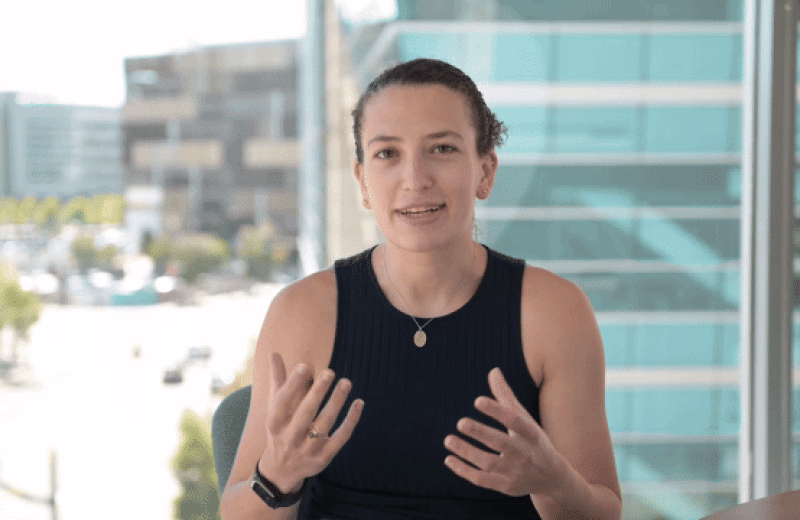
Shijie Wang, a postdoctoral scholar in Steve Finkbeiner’s lab, uses artificial intelligence, robotics, and stem cell technologies to uncover how brain cells die in neurodegenerative diseases like Alzheimer’s and Parkinson’s.
Shijie Wang, PhD, began her scientific journey 7,000 miles away from San Francisco, in Shenzhen, a coastal city in southern China often referred to as “the Bay Area of China” for its focus on innovation and technology.
After earning an undergraduate degree from Shenzhen University, Wang moved to the U.S. to continue pursuing science. She started her PhD at the University of Alabama, Birmingham, and later continued her work at Duke University when her research lab relocated there. During this time, Wang focused on identifying biomarkers—essentially early “warning signs”—of Parkinson’s disease by measuring the activity of genes associated with an increased risk for the disease.
Now, Wang is a postdoc in the lab of Steve Finkbeiner, MD, PhD, and uses artificial intelligence and robotics to better understand neurodegenerative diseases.
What brought you to Gladstone?
Toward the end of my PhD, I wanted to use more powerful tools to study neurodegenerative diseases. That’s when I discovered deep learning, a type of artificial intelligence. This was before ChatGPT became popular! I thought, what if we could use AI to find patterns in disease that humans might miss?
That ambition brought me to Gladstone, which was the perfect fit. Gladstone does exceptional research on neurodegenerative diseases and is a leader in induced pluripotent stem (iPS) cell and CRISPR gene editing technologies, both of which are powerful tools for studying how diseases develop.
Gladstone also embraces innovative and interdisciplinary approaches using big data, AI, and automation—exactly what I wanted to work on. Coming here was a no-brainer!
What do you like about Gladstone?
Gladstone genuinely cares about both the research and the people doing it. If you bring up a challenge, whether it’s in your research or in your daily life, people actually step up to help.
I’ve received tremendous support transitioning to life in the San Francisco Bay Area, from finding housing to connecting with the community, as well as in my journey from starting as a postdoc to becoming increasingly independent in my research. There’s a real sense of belonging here, and that’s something truly special.
What are the key areas of research you’re focused on?
I study brain diseases like Alzheimer’s and Parkinson’s, where neurons slowly die as people age. My interest is to figure out why these brain cells die.
The basic problem is that inside every cell are proteins, which act like tiny molecular machines that keep cells healthy and working. Sometimes these proteins have mutations or, under certain unknown circumstances, they can fold into the wrong shape, kind of like a nicely folded origami that went wrong and became a pile of paper trash.
When proteins misfold, they might stop working properly or could even poison the cell. Using AI, robotic microscopes, and other biology tools, I watch thousands of brain cells over time to catch these problems early. If we can understand exactly what goes wrong, we can hopefully find ways to stop them before they cause too much damage and stop the diseases.
How do advancements in technology impact the way you conduct your research?
The rise of AI and deep learning has completely transformed how I approach research. For example, when studying disease in cells, AI can analyze images and detect early changes that signal something is going wrong, sometimes even before we know what to look for.
Our robotic microscope can track thousands of cells over time and spot subtle warning signs that we would miss in such large datasets. This not only helps us discover things we might have overlooked, but it also dramatically speeds up our understanding of complex biology. We can ask bigger questions and test more ideas. It’s opening up entirely new ways to study disease that simply weren’t possible before.
How does interdisciplinary collaboration enhance the quality and impact of your research?
Interdisciplinary collaboration is absolutely essential to what I do. Studying neurodegenerative diseases using robotic microscopes and AI requires bringing together people with very different expertise. Our lab has a computational team who helps build the tools we need, and engineers who maintain and optimize the robotic microscopes and imaging systems that capture our data.
What’s exciting is that these collaborations often lead to unexpected insights. Sometimes a question from someone in a completely different field makes you see your data in an entirely new way, or a technique or tool developed in computational science turns out to be perfect for solving a problem you’re working on but didn’t realize existed.
At Gladstone, this kind of collaboration happens naturally because people from different disciplines are working side by side, and there’s a genuine culture of curiosity and helping each other solve problems.
Who or what has been your biggest influence in your scientific career?
Honestly, I’ve been guided more by curiosity than by any single person. Throughout my career, I could have taken many paths, but I’ve always followed what genuinely interested me rather than what seemed most practical financially or prestigious at the time.
This approach has led me to work on something I’m truly passionate about, and I think that’s made all the difference.
What do you do when you’re not working?
I love exploring the Bay Area’s coffee shops and restaurants, reading, and most importantly, spending time with my daughter who’s turning 6 soon. We go rock climbing together, I sit in on her piano classes and practice with her, and we even take ballet—in separate classes, of course! Watching her grow and learning alongside her has been one of life’s greatest joys.
What is your hidden talent?
At the beginning of this year, I started co-hosting a science-focused podcast in Mandarin called “Biodecoder” with friends from Gladstone and UC San Francisco. It all started because we like to discuss science, we love chatting about the newest scientific discoveries, trendy industry “gossip,” clinical trial failures and successes, and we enjoy sharing our different perspectives with each other.
Since we come from different research backgrounds, each of us brings a unique viewpoint. We thought, why not share these conversations with others who are curious about these topics? Now, we’ve reached over 20,000 streams in just 12 episodes!
We cover everything from AI to neurodegenerative diseases, from the latest treatments to how groundbreaking new medicines work at the molecular level. What makes it especially fun and challenging is explaining cutting-edge research in lay language and doing it in our native language.
What advice would you give to young scientists or students interested in your field?
Science is a journey, and everyone’s path is different. But one thing that’s carried me through all the ups and downs is staying focused on the big questions I want to answer and following my curiosity, even when it leads off the conventional path. Some of the most exciting discoveries happen when you combine different fields, so don’t be afraid to learn new skills or explore unfamiliar areas.
Also, build your community. Science is collaborative, and the relationships you develop will be just as important as your technical expertise.
Finally, be patient with yourself. Research is full of failures and setbacks, but each one teaches you something valuable. Stay curious, stay persistent, and remember why you fell in love with science in the first place.
Want to Join the Team?
Our people are our most important asset. We offer a wide array of career opportunities both in our administrative offices and in our labs.
Explore CareersMeet Gladstone: Lexi Schneider
Article
August 24, 2026
Meet Gladstone: Lexi Schneider
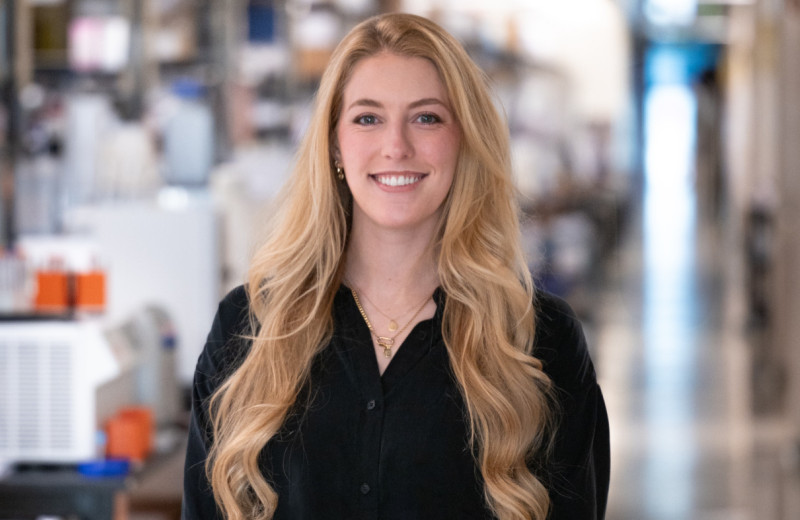
Meet Lexi Schneider, a PhD student using innovative technology to better understand the blood brain barrier.
Profile Graduate Students and Postdocs Yang LabAn Ancient Genetic Twist and Its Modern Impact on Brain Disease
Article
July 14, 2026
An Ancient Genetic Twist and Its Modern Impact on Brain Disease
NOMIS–Gladstone Fellow Cathrine Sant is studying an enigmatic region of the human genome linked to neurodegenerative disease risk.
Neurological Disease NOMIS Graduate Students and Postdocs ProfileMeet Gladstone: Kevin Pastores
Article
June 23, 2026
Meet Gladstone: Kevin Pastores
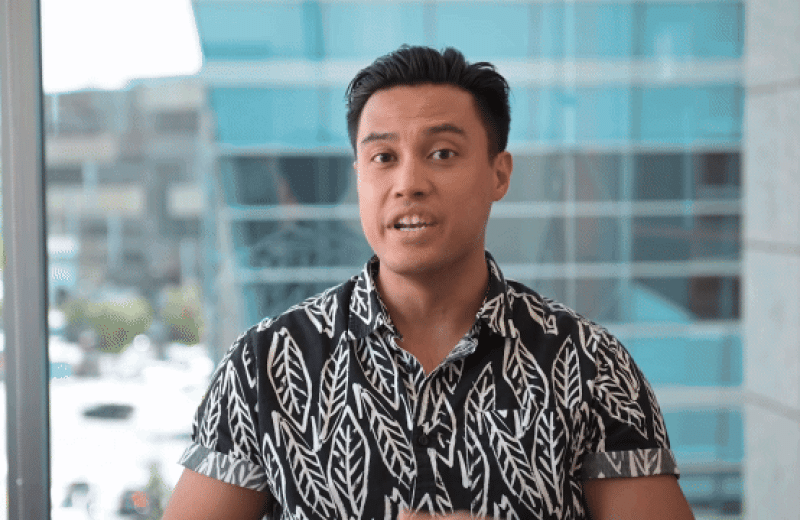
Kevin Pastores, assistant core director of Gladstone’s Flow Cytometry Core, helps researchers across disciplines design experiments, analyze complex cellular data, and harness emerging technologies like AI to accelerate discovery.
Profile Flow Cytometry Core