Karin Pelka Wins Grant to Advance Immunotherapy for Colorectal Cancer
Listen:
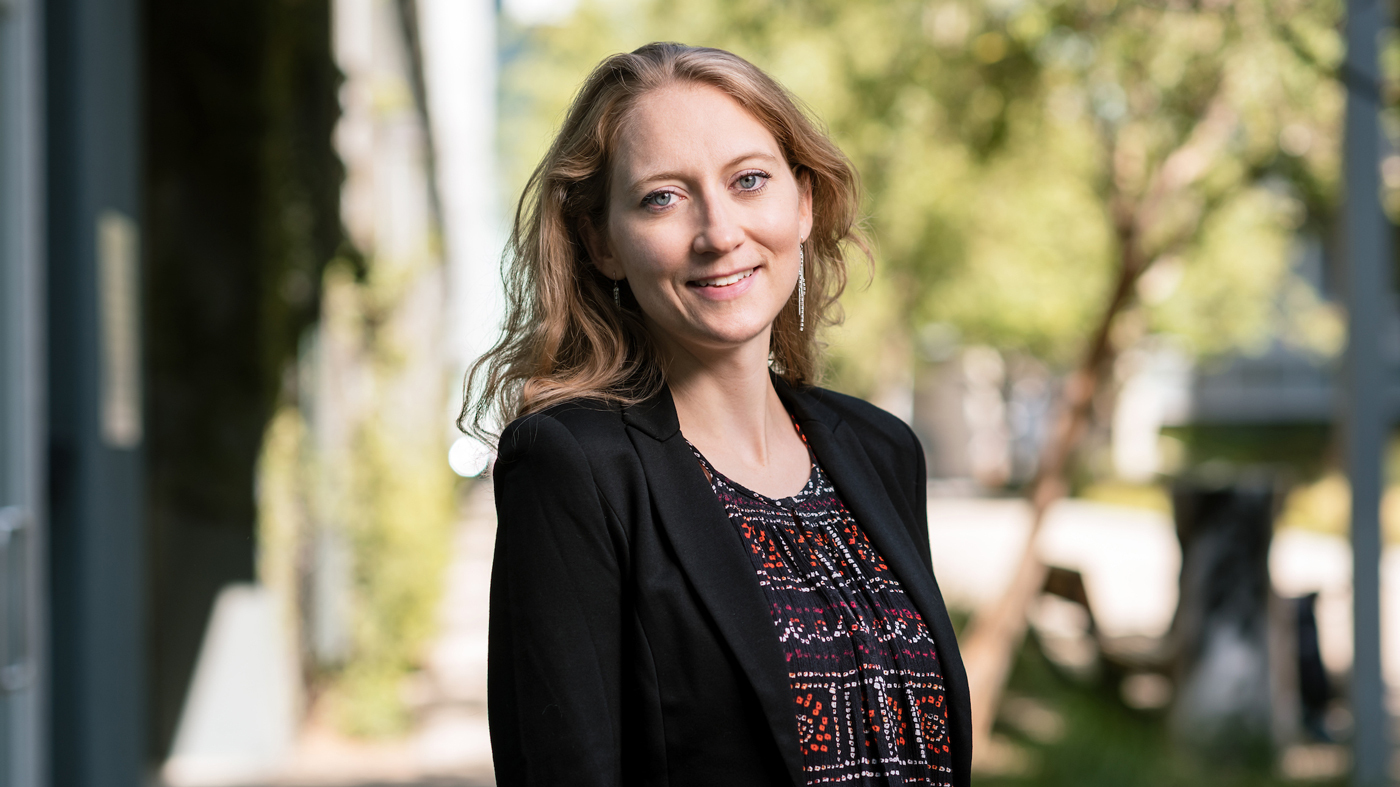
The Colorectal Cancer Alliance has awarded Gladstone Investigator Karin Pelka, PhD, a $500,000 grant to advance research focused on developing immunotherapies that overcome the most common form of colorectal cancer.
For this project, Pelka has partnered with Stanford Medicine oncologist Chris Chen, MD, who brings valuable clinical insights to the research. The two are determined to shatter what Pelka calls the “immunotherapy ceiling” in colorectal cancer so more patients can benefit.
“Without research, there is no progress,” says Michael Sapienza, CEO of the Colorectal Cancer Alliance, in an announcement. The organization’s newly awarded grants come out of its Project Cure CRC initiative, which is making available tens of millions of dollars to researchers whose work aims to find a cure for colorectal cancer, the second-leading cause of cancer death in the nation.
Bringing Immunotherapy to More Patients
Pelka, a cancer immunologist, studies the cellular interactions that shape how the immune system responds to tumors. A graduate of the University of Bonn with a doctorate in innate immunity, Pelka joined the Gladstone-UCSF Institute of Genomic Immunology in 2021 after serving as a postdoctoral fellow at the Broad Institute of MIT and Harvard.
“Despite the prevalence of colorectal cancer, chemotherapy drugs developed more than 30 years ago remain the backbone of treatment for the vast majority of patients,” says Pelka, who is also an assistant professor in the Department of Microbiology and Immunology at UC San Francisco. “This support from the Colorectal Cancer Alliance will allow us to open a new door to potential treatments and cures for all.”

Immunotherapy uses a person’s own immune system to fight cancer, by either boosting or changing how the immune system works. Among patients with a less-common form of colorectal cancer known as “mismatch repair-deficient” or MMRd, immunotherapy has revolutionized treatment—in some cases sparing patients from invasive surgeries and eliminating the cancer altogether.
Yet, such benefits have not extended to the approximately 85 percent of patients whose tumors are classified as “mismatch repair-proficient,” or MMRp.
“Immunotherapy represents the best hope of long-term response or even cure for patients with advanced solid tumors that are no longer responding to standard treatments,” says Chen, who is leading several immunotherapy clinical trials in colorectal cancer at Stanford Medicine. “However, only a small percentage of colorectal cancer patients respond favorably to current immunotherapies. That’s why we so urgently need new options.”
Pelka and Chen believe a fundamentally different method is needed to develop drugs for this type of cancer. Based on preliminary computational and clinical data from Pelka’s team, they hypothesize that an effective immunotherapy will need to reduce certain cells in MMRp tumors that dampen the immune response.
Chen’s ongoing clinical trials, which test this approach, provide first hints towards this hypothesis. His preliminary results are consistent with recent clinical studies conducted elsewhere, which have shown that depleting regulatory T cells using a new approach can lead to remarkable response rates in gastric cancer that didn’t respond to previous immunotherapies.
A More Systematic Approach
“Immunotherapy can be incredibly powerful when it works,” Pelka says. “But to get there for all colorectal cancer patients, we need to take a more systematic and comprehensive approach to understanding which immune and non-immune cells need to function together to orchestrate effective anti-tumor responses.”
Pelka’s team plans to leverage artificial intelligence and other tools to more intricately map out the cellular networks at play so they can build on their clinical progress to develop effective therapies.
“New immunotherapies are clearly needed for colorectal cancer, which unfortunately affects way too many people, including young people,” says Alex Marson, MD, PhD, director of the Gladstone-UCSF Institute of Genomic Immunology. “Karin’s research presents a promising new path towards eventually transforming colon cancer into a curable condition.”
The Colorectal Cancer Alliance is the largest national nonprofit organization dedicated to colorectal cancer. Its goal is to end the disease within our lifetime by advocating for prevention, magnifying support, and accelerating research.
Up Next

Scientists Decode Gene Circuits of Human Immunity, Fueling New Era of Disease Research
An unprecedented map of 22 million immune cells provides the functional rulebook for virtual biology and next-generation immunotherapies.
New Toolkit Turns Macrophages Into Better Cancer Fighters
Gladstone and UCSF scientists developed a method to genetically edit myeloid cells, immune cells that act as the body’s first responders.

New CRISPR Screening Platform Boosts Power of Immunotherapy Against Solid Tumors
A new screening platform uncovers gene edits that enhance CAR-T cells’ ability to infiltrate and eliminate solid tumors.
New CRISPR Technique Selectively Shreds Cancer Cells, Including Those of ‘Undruggable’ Cancers
An innovative chromatin-shredding technique shown to destroy cancer cells carrying a prevalent mutation while keeping healthy cells intact.

Get Involved
Join the Team
Our people are our most important asset. We offer a wide array of career opportunities both in our administrative offices and in our labs.
Open PositionsPartner With Us
Discoveries don’t stay in our labs. Gladstone facilitates spinout companies to advance promising therapies, shortening the path between scientific discovery and helping real patients.
Learn MoreGive
Your gift to Gladstone will allow our researchers to pursue high-quality science, focus on disease, and train the next generation of scientific thought leaders.
Donate Now