Gladstone Senior Investigator Katie Pollard Named 2020 ISCB Fellow
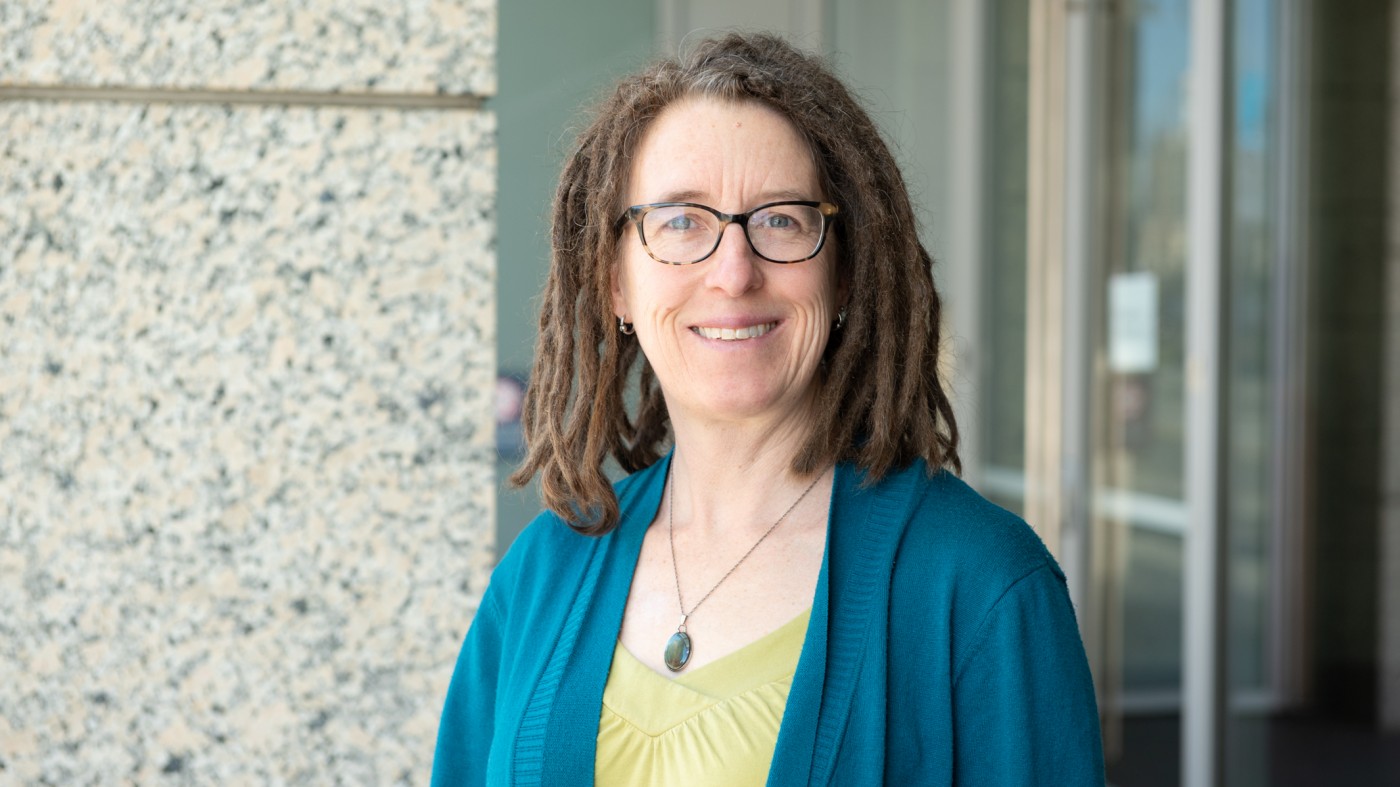
The International Society for Computational Biology (ISCB) has named Katie Pollard, PhD, a 2020 ISCB Fellow. She was selected for being a “world leader in developing statistical models and open-source bioinformatics software for biological big data, with an emphasis on genomics.” Pollard was one of 12 nominees who were elected this year as fellows.
Pollard is the director of the Gladstone Institute of Data Science and Biotechnology, which was launched in 2018 in response to the changing landscape of biomedical research. New technologies have dramatically increased the pace of scientific discovery, and in the process generated mass amounts of data. As a result, a common bottleneck in modern research is the analysis of the immense amounts of information.
To fully reap the benefits of new technologies, Pollard is an advocate for involving data scientists early into the conversation. “New technologies fundamentally change the kinds of questions biomedical researchers can ask, in ways they may not even fathom,” says Pollard, who is also a professor of epidemiology and biostatistics at UC San Francisco. “When researchers involve us as they are planning experiments, we are able to help design their experiments to take full advantage of computational methods and ensure that we collect the most informative data.”
Ultimately, Pollard aims to create a central hub where mathematicians, engineers, and biologists work together to develop powerful solutions to help scientists gather and analyze data more effectively to find new ways to treat disease.
“New technologies fundamentally change the kinds of questions biomedical researchers can ask, in ways they may not even fathom.”
“Without this kind of interdisciplinary collaboration, we’re leaving a lot of knowledge on the table,” says Pollard.
The ICSB also lauded Pollard for her commitment to open science. For example, Pollard’s lab developed an open-source code for gene expression analysis, evolutionary conservation and acceleration, and quantifying genetic changes in the human microbiome. These software tools are used in thousands of labs and classrooms around the world.
The ISCB Fellows program was started in 2009 to honor those who have distinguished themselves through outstanding contributions to the fields of computational biology and bioinformatics. Fellows are nominated each December by ISCB members and are selected based on the significance of their scientific contributions.
Pollard, along with the other 2020 fellows, will be honored at the 2020 conference on Intelligent Systems in Molecular Biology in Montreal, Canada, in July 2020.
Up Next
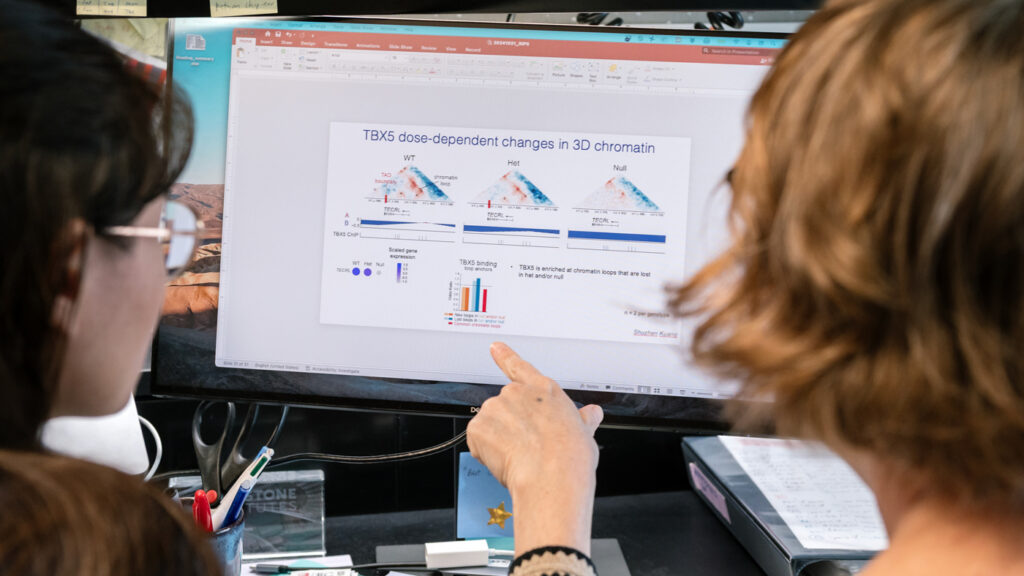
Gladstone Scientists Are Awarded $2 Million to Map How HIV Affects the Immune System
By uniting the power of single-cell sequencing, organoids, and artificial intelligence, scientists are entering a new era of HIV research.
Christina Theodoris Honored in Inaugural Cohort of Young American Scientists
Scientific American recognizes Theodoris for her pioneering work developing artificial intelligence models to find treatments for an array of diseases.
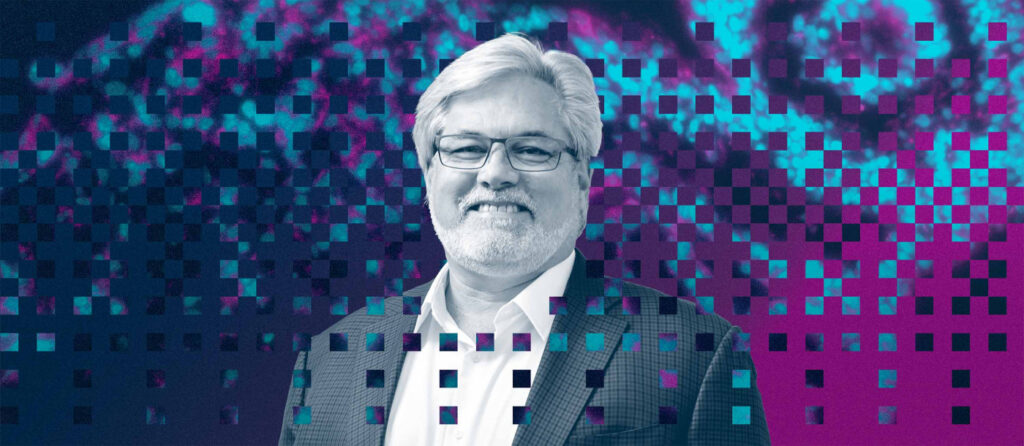
How an AI Microscope Is Learning to Do Science
Gladstone scientists have developed a thinking microscope that can conduct its own experiments, with the ultimate goal of treating neurodegenerative diseases.
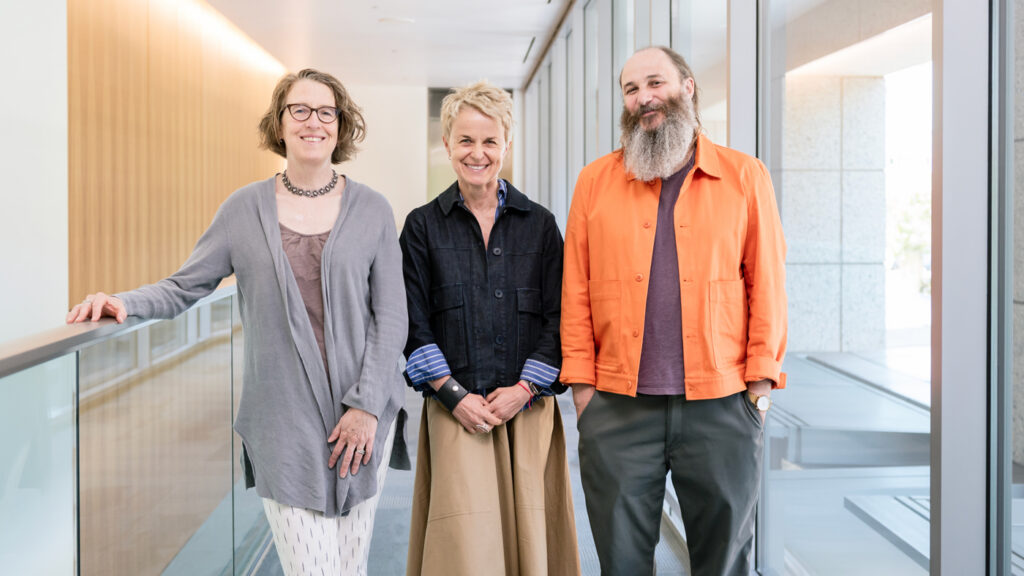
Gladstone Launches Center for PhAIge Therapy to Harness AI in the Fight Against Drug-Resistant Infections
The center, funded by an NIH grant, will become one of three national centers dedicated to accelerating the development of phage therapy.

Get Involved
Join the Team
Our people are our most important asset. We offer a wide array of career opportunities both in our administrative offices and in our labs.
Open PositionsPartner With Us
Discoveries don’t stay in our labs. Gladstone facilitates spinout companies to advance promising therapies, shortening the path between scientific discovery and helping real patients.
Learn MoreGive
Your gift to Gladstone will allow our researchers to pursue high-quality science, focus on disease, and train the next generation of scientific thought leaders.
Donate Now