Gladstone NOW: The Campaign Join Us on the Journey✕




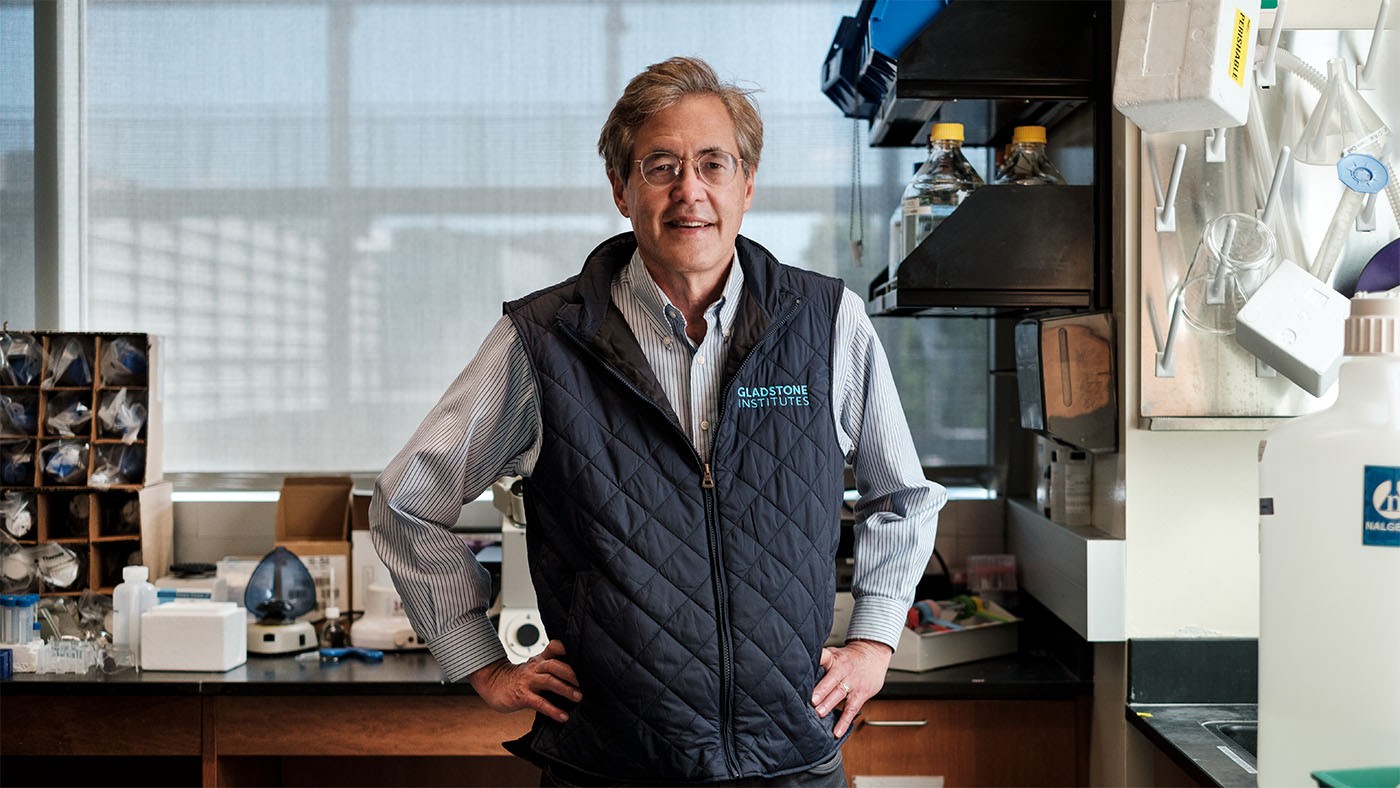
Projects funded by the California Institute for Regenerative Medicine have the potential to address gaps in current knowledge, advance our understanding of the origins and mechanisms of disease, and expand existing applications of stem cell and gene therapy-based treatments.
Listen to this article
The California Institute for Regenerative Medicine (CIRM) has awarded more than $7.5 million to Gladstone scientists for two projects that may lead to breakthrough discoveries in regenerative medicine.
The awards—among a total of 23 grants totaling $73 million that CIRM will be funding throughout the state of California—fuel early-stage research that sparks new ideas and tools that may lead to novel therapies.
Known as “DISC0 Foundation Awards,” the grants are part of CIRM’s Discovery Stage Research programs.
“Discovery research is critical for uncovering novel disease targets and biomarkers that we can translate into therapies for clinical use,” Kelly Shepard, PhD, director of Discovery & Education programs at CIRM, says in a statement.
The funded projects “have the potential to address gaps in our current knowledge, advance our understanding of the origins and mechanisms of disease, and expand existing applications of stem cell and gene therapy-based treatments,” Shepard says.
Eliminating the Gene Therapy Bottleneck
The largest of CIRM’s new round of grants, at $5.1 million, goes to a collaborative team led by Gladstone Senior Investigator Bruce Conklin, MD. He seeks to develop a technology platform that will allow for therapeutic gene editing on a broader scale so more patients can benefit.
“Genome editing has enormous potential to cure genetic diseases. But today, it’s prohibitively costly to pursue clinical trials and FDA approval for individualized therapies that might only treat less than a dozen patients each,” Conklin says. “Our goal is to develop a platform that accounts for genetic diversity so we can remove that bottleneck and treat a majority of the patient population.”
Conklin’s research project hopes to address more than 700 genetic diseases, with a focus on those that are “haplosufficient,” in which only one functioning copy of a gene is sufficient for health. Such diseases include muscular dystrophies, motor neuron diseases, cardiomyopathies, retinitis pigmentosa, and more.
The team has strong ties to patient communities all over the world, providing access to diverse cell lines for research. Proof-of-concept studies have focused on Charcot-Marie-Tooth disease, a genetic neuropathy with no current treatment.
Building Tomorrow’s Heart Therapies
CIRM also awarded $2.4 million to Benoit Bruneau, PhD, director of the Gladstone Institute of Cardiovascular Disease, for a project that leverages stem cells to pinpoint the genetic causes of congenital heart disease and other conditions.
“Our goal is to finally understand how a broad class of genetic mutations affect fundamental cellular processes that guide the formation of organs such as the heart, the brain, and the eye,” Bruneau says. “We believe this knowledge can guide innovative strategies for organ regeneration, gene therapy, and other treatments.”
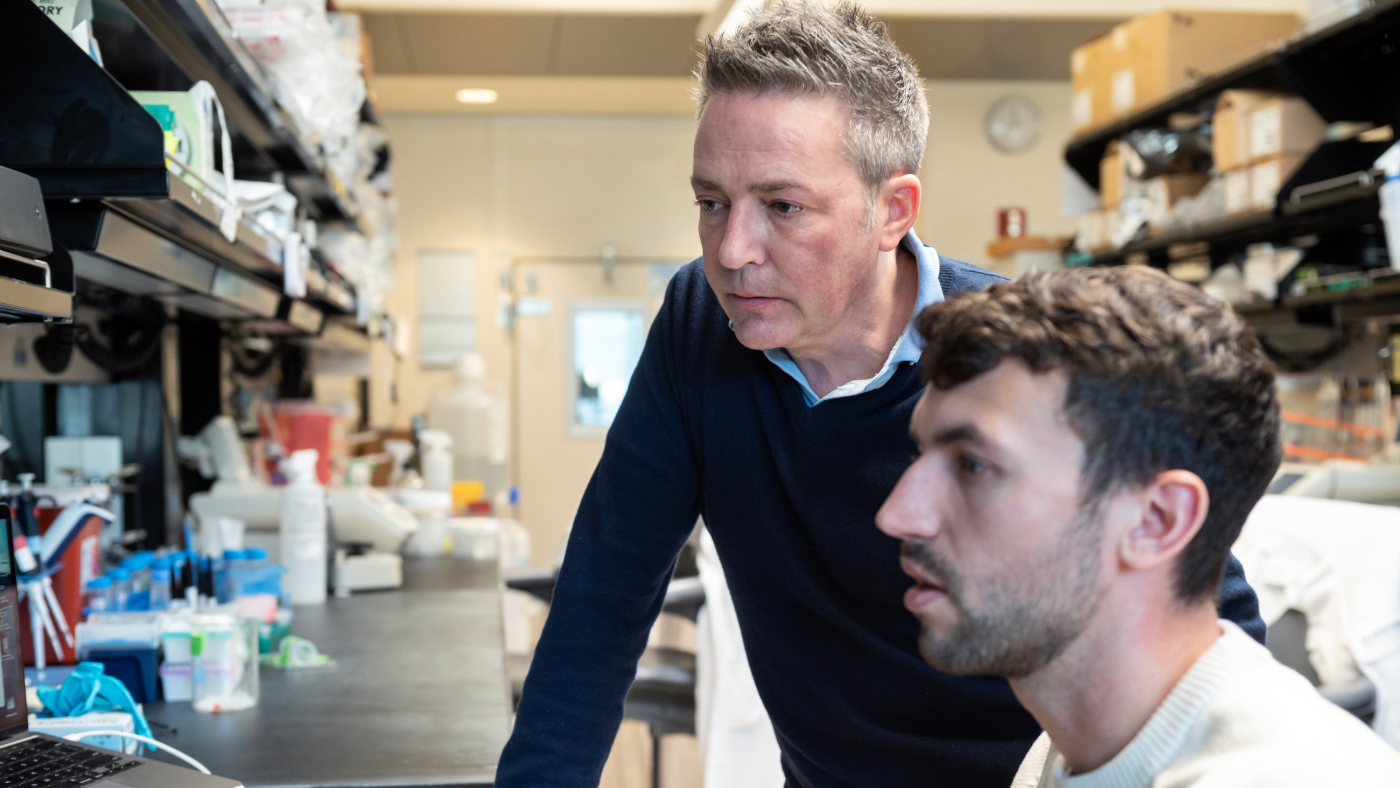
Benoit Bruneau (left) received a grant from CIRM toto use stem cells to uncover the genetic causes of congenital heart disease and other conditions.
Using genetically engineered human stem cells that model congenital heart disease, Bruneau and his team plan to map out how genes are abnormally turned on or off in disease. With the help of artificial intelligence, they’ll mine that data to reveal genetic networks that show, for the first time, how disease-related regulators function in normal and diseased heart cells.
“We aim to solve a 30-year-old question of why certain genetic mutations cause human disease,” Bruneau says.
Within three years, all of the latest CIRM-funded projects are expected to advance the field’s understanding of stem cells and genetics in human biology and disease, develop stem cell-based tools for biomedical innovation, or unlock new applications in regenerative medicine.
CIRM was created by voters in 2004 through California’s Proposition 71, and extended in 2020 through Proposition 14, to accelerate therapies for unmet medical needs. The agency funds stem cell and gene therapy research (collectively called regenerative medicine) from the earliest stages through clinical trials with the goal of advancing therapies for people in California and the world.
For Media
Kelly Quigley
Director, Science Communications and Media Relations
415.734.2690
Email
About Gladstone Institutes
Gladstone Institutes is an independent, nonprofit life science research organization that uses visionary science and technology to overcome disease. Established in 1979, it is located in the epicenter of biomedical and technological innovation, in the Mission Bay neighborhood of San Francisco. Gladstone has created a research model that disrupts how science is done, funds big ideas, and attracts the brightest minds.
Featured Experts

Ask a Scientist: Can We Turn Off the Molecular Switches That Cause Heart Failure?

Article
August 25, 2026
Ask a Scientist: Can We Turn Off the Molecular Switches That Cause Heart Failure?
Michael Alexanian is studying two promising genetic avenues for addressing heart failure, a massive global health burden in need of innovative treatments.
Alexanian Lab Cardiovascular Disease Human Genetics Grants Congenital Heart Disease
Gladstone Launches Center for PhAIge Therapy to Harness AI in the Fight Against Drug-Resistant Infections
Article
June 2, 2026
Gladstone Launches Center for PhAIge Therapy to Harness AI in the Fight Against Drug-Resistant Infections
The center, funded by an NIH grant, will become one of three national centers dedicated to accelerating the development of phage therapy.
News Release Grants Data Science and Biotechnology Infectious Disease Shipman Lab Pollard Lab Ott Lab Silas Lab AI