Five Gladstone Scientists Ranked Among Most Highly Cited Researchers in the World
Five scientists from Gladstone Institutes have been named to the 2024 list of Highly Cited Researchers by Clarivate. The list includes researchers from around the world who have demonstrated “significant and broad influence in their fields of research,” as reflected by their quantity of research in the past decade that ranks in the top 1 percent in citations for their field.
“We celebrate these Highly Cited Researchers, whose exceptional and community-wide influence shapes the future of science, technology, and academia globally,” says Bar Veinstein, president of academia and government at Clarivate, in announcing the annual list. “We honor not just their scientific achievement, but their impact on driving innovation and addressing wider societal challenges to help transform our world.”
Of the world’s population of scientists, those who land on the Highly Cited Researchers list are 1 in 1,000, according to Clarivate. Each researcher on the list has authored multiple “Highly Cited Papers” that rank in the top 1 percent by citations for their field and publication year over the past decade. The list is also refined using qualitative analysis and evidence of community-wide recognition from an international and wide-ranging network of citing authors.
The scientists from Gladstone who are named on the 2024 list are:
Jennifer Doudna, PhD
Doudna is a global innovator in gene editing, and was awarded the 2020 Nobel Prize in Chemistry—along with her collaborator Emmanuelle Charpentier—for the development of a precise and versatile method for editing the genome called CRISPR-Cas9. CRISPR has opened the floodgates of possibility for human and non-human applications of gene editing, including for the treatment or cure sickle cell disease, muscular dystrophy, and HIV. In addition to her scientific achievements, Doudna is a leader in public discussion around the ethical implications of gene editing and an advocate for thoughtful approaches to policies around the technology’s use. Doudna is a senior investigator at Gladstone, a professor at UC Berkeley, and investigator at Howard Hughes Medical Institute. She is also president of the Innovative Genomics Institute at UC Berkeley.
Nevan Krogan, PhD
Krogan is known for his unbiased, quantitative approaches to studying a wide range of diseases—from infectious diseases such as COVID-19, to cancer and heart disease. Combining bench work with computer science, he and his team identify molecular networks acting inside cells and show how these networks respond to disease-causing mutations or infection by pathogens. With the ability to survey a cell’s complete set of genes and proteins, Krogan has generated novel mechanistic insights into cell biology and identified potential targets for novel therapies. He is a senior investigator at Gladstone, a professor at UC San Francisco (UCSF), director of the Quantitative Biosciences Institute at UCSF, and the president and co-founder of Rezo Therapeutics.
Alex Marson, MD, PhD
Marson and his cross-disciplinary team have expanded our understanding of the genetic circuits that control how the human immune system functions. He has pioneered new gene-editing technologies that offer faster, cheaper, and more precise ways to re-write DNA in immune cells so they can be engineered to treat a wide range of diseases. For example, his group is working to develop cells that can recognize and eliminate cancer, fend off infections such as HIV, and reduce inflammation in autoimmune diseases such as multiple sclerosis and rheumatoid arthritis. Marson is director of the Gladstone-UCSF Institute of Genomic Immunology and center director of the Parker Institute for Cancer Immunotherapy at Gladstone Institutes. He is also a professor at UCSF and director of the CRISPR Cures for Cancer Initiative—a joint effort between Gladstone, UCSF, and the Innovative Genomics Institute.
Katie Pollard, PhD
Pollard and her team leverage data science and AI to decode how genomes work, evolve, and break in disease. Their analyses of massive sets of genomic and epigenomic data include investigating human genetic variation, understanding what makes humans unique compared with other species, and characterizing the genomic diversity of the human microbiome. An evolutionary focus, coupled with rigorous statistical methods and bioinformatics tool development, gives her lab a unique perspective on human biology and disease. Pollard is director of the Gladstone Institute of Data Science and Biotechnology. She is also a UCSF professor and an investigator at Chan Zuckerberg Biohub San Francisco.
Jimmie Ye, PhD
Ye studies the molecular basis of immune-related diseases and the genetic basis for natural variation in the human immune system. A specialist of “omics” technologies and algorithm development, he recently contributed to the detailed profiling of millions of immune cells from healthy individuals and patients with immune-related conditions, such as autoimmunity, cancer, and COVID-19. The resulting data has contributed to the largest reference to date of immune cell biology in humans. He’s an affiliate investigator at Gladstone and an associate professor in the Division of Rheumatology, the Department of Medicine, and the Institute for Human Genetics at UCSF.
Up Next

Scientists Decode Gene Circuits of Human Immunity, Fueling New Era of Disease Research
An unprecedented map of 22 million immune cells provides the functional rulebook for virtual biology and next-generation immunotherapies.
New Toolkit Turns Macrophages Into Better Cancer Fighters
Gladstone and UCSF scientists developed a method to genetically edit myeloid cells, immune cells that act as the body’s first responders.
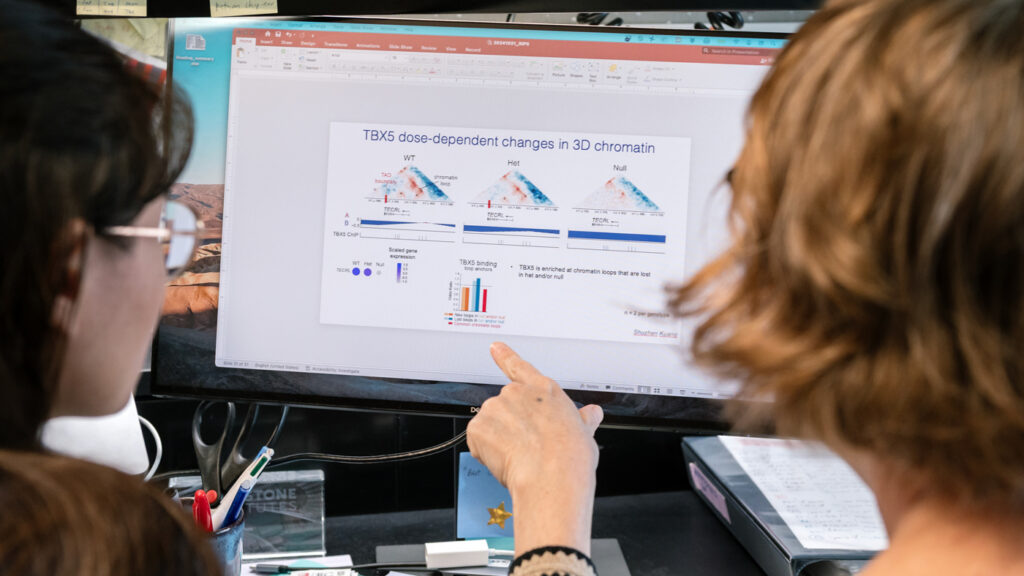
Misfolded DNA Blueprint: A New Origin for Genetic Disease
Gladstone researchers found losing just one copy a particular gene can disrupt heart development and lead to congenital heart disease.
New CRISPR Technique Selectively Shreds Cancer Cells, Including Those of ‘Undruggable’ Cancers
An innovative chromatin-shredding technique shown to destroy cancer cells carrying a prevalent mutation while keeping healthy cells intact.

Get Involved
Join the Team
Our people are our most important asset. We offer a wide array of career opportunities both in our administrative offices and in our labs.
Open PositionsPartner With Us
Discoveries don’t stay in our labs. Gladstone facilitates spinout companies to advance promising therapies, shortening the path between scientific discovery and helping real patients.
Learn MoreGive
Your gift to Gladstone will allow our researchers to pursue high-quality science, focus on disease, and train the next generation of scientific thought leaders.
Donate Now