Six Gladstone Scientists Named Among World’s Most Highly Cited Researchers
Listen:
Six scientists from Gladstone Institutes have been named to the 2025 list of Highly Cited Researchers by Clarivate. The list celebrates researchers from around the world who have demonstrated “significant and broad influence,” as reflected by the quantity of their research in the past decade that ranks in the top 1 percent in citations for their field.
“We celebrate the Highly Cited Researchers 2025 for advancing innovation and inspiring the global research community to tackle society’s greatest challenges with creativity and ingenuity,” says Bar Veinstein, president of academia and government at Clarivate, in announcing the annual list. “As research environments become more complex, we are committed to upholding the highest standards of research integrity by continuing to strengthen the foundations of our Highly Cited Researchers program.”
Of the world’s population of scientists, those who land on the Highly Cited Researchers list are 1 in 1,000, according to Clarivate. Each researcher on the list has authored multiple “Highly Cited Papers” that rank in the top 1 percent by citations for their field over the past 11 years. The list is then refined using other quantitative metrics and evaluated for evidence of community-wide recognition from an international network of citing authors.
The scientists from Gladstone who are named on the 2025 list are:
Ryan Corces, PhD
Corces studies how genetic and environmental factors can impact the risk of developing neurodegenerative diseases such as Alzheimer’s and Parkinson’s. While genetic mutations modify genes directly, other factors such as previous illnesses, exposure to environmental chemicals, or simply the process of aging can leave lasting imprints on the epigenome—the DNA sequences and proteins that control how genes are expressed. Using computational biology, large-scale genetic screens, and other technologies, Corces probes cells derived from patients with the aim of understanding the many facets of disease risk and developing novel therapeutic interventions. Corces is an assistant investigator at Gladstone Institutes and assistant professor of neurology at UC San Francisco.
Jennifer Doudna, PhD
Doudna is a global innovator in gene editing, and was awarded the 2020 Nobel Prize in Chemistry—along with her collaborator Emmanuelle Charpentier—for the development of a precise and versatile method for editing the genome called CRISPR-Cas9. CRISPR has opened the floodgates of possibility for human and non-human applications of gene editing, including for the treatment or cure of sickle cell disease, muscular dystrophy, and HIV. In addition to her scientific achievements, Doudna is a leader in public discussion around the ethical implications of gene editing and an advocate for thoughtful approaches to policies around the technology’s use. Doudna is a senior investigator at Gladstone, a professor at UC Berkeley, and an investigator at Howard Hughes Medical Institute. She is the founder of the Innovative Genomics Institute at UC Berkeley, UCSF, and UC Davis.
Alex Marson, MD, PhD
Marson and his cross-disciplinary team have expanded our understanding of the genetic circuits that control how the human immune system functions. He has pioneered new gene-editing technologies that offer faster, cheaper, and more precise ways to re-write DNA in immune cells so they can be engineered to treat a wide range of diseases. For example, his group is working to develop cells that can recognize and eliminate cancer, fend off infections such as HIV, and reduce inflammation in autoimmune diseases such as multiple sclerosis and rheumatoid arthritis. Marson is director of the Gladstone-UCSF Institute of Genomic Immunology and center director of the Parker Institute for Cancer Immunotherapy at Gladstone Institutes. He is also a professor at UCSF and director of the CRISPR Cures for Cancer Initiative—a joint effort between Gladstone, UCSF, and the Innovative Genomics Institute.
Alex Pico, PhD
Pico’s work is focused on developing innovative software tools, data visualization technologies, and other resources that can be used to unlock knowledge across diverse areas of biomedicine, from cancer and neurodegenerative diseases to heart disease and immune disorders. Pico pushes for aggressive open access and transparency, and makes all of his lab’s tools freely open to all. He has published data visualizations and other important findings through WikiPathways and the Pathway Figures found through Optical Character Recognition (PFOCR) portal. These efforts have paid off in many ways, including through tangible new insights into COVID-19, glioblastoma, and head and neck cancer.
Katie Pollard, PhD
Pollard and her team leverage data science and AI to decode how genomes work, evolve, and break in disease. Their analyses of massive sets of genomic and epigenomic data include investigating human genetic variation, understanding what makes humans unique compared with other species, and characterizing the genomic diversity of the human microbiome. An evolutionary focus, coupled with rigorous statistical methods and bioinformatics tool development, gives her lab a unique perspective on human biology and disease. Pollard is director of the Gladstone Institute of Data Science and Biotechnology. She is also a UCSF professor and an investigator at Chan Zuckerberg Biohub San Francisco.
Jimmie Ye, PhD
Ye studies the molecular basis of immune-related diseases and the genetic basis for natural variation in the human immune system. A specialist of “omics” technologies and algorithm development, he contributed to the detailed profiling of millions of immune cells from healthy individuals and patients with immune-related conditions, such as autoimmunity, cancer, and COVID-19. The resulting data has helped create the largest reference to date of immune cell biology in humans.
Up Next

Rethinking ‘Exhausted’ T Cells: Gilbert Herrera Named Inaugural Ellen & Bernard Marson Fellow
The fellowship provides three years of funding for graduate students pursuing groundbreaking immunology research.

Scientists Decode Gene Circuits of Human Immunity, Fueling New Era of Disease Research
An unprecedented map of 22 million immune cells provides the functional rulebook for virtual biology and next-generation immunotherapies.
New Toolkit Turns Macrophages Into Better Cancer Fighters
Gladstone and UCSF scientists developed a method to genetically edit myeloid cells, immune cells that act as the body’s first responders.
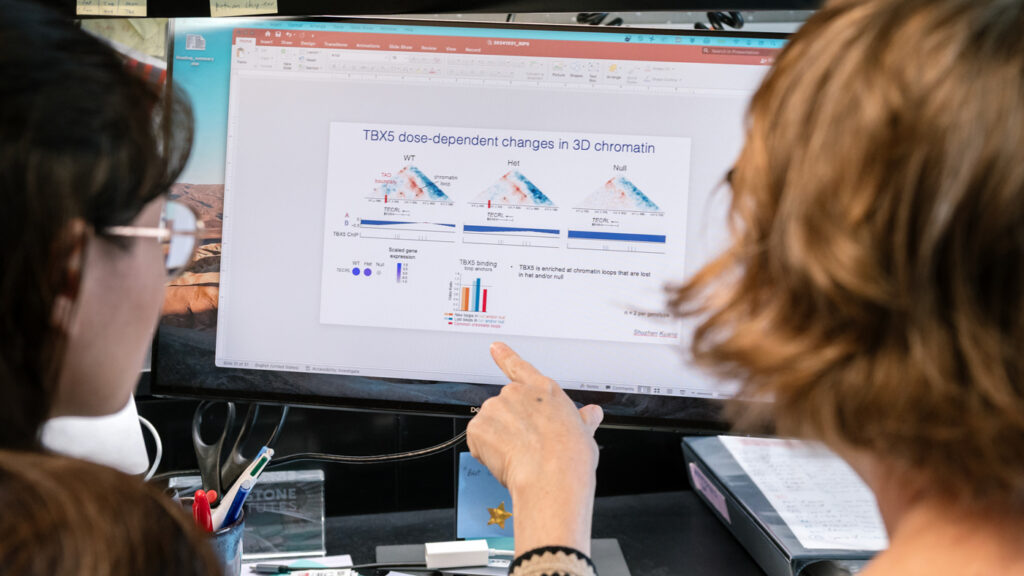
Misfolded DNA Blueprint: A New Origin for Genetic Disease
Gladstone researchers found losing just one copy a particular gene can disrupt heart development and lead to congenital heart disease.

Get Involved
Join the Team
Our people are our most important asset. We offer a wide array of career opportunities both in our administrative offices and in our labs.
Open PositionsPartner With Us
Discoveries don’t stay in our labs. Gladstone facilitates spinout companies to advance promising therapies, shortening the path between scientific discovery and helping real patients.
Learn MoreGive
Your gift to Gladstone will allow our researchers to pursue high-quality science, focus on disease, and train the next generation of scientific thought leaders.
Donate Now