Science in Seconds | A New Path Toward Life Without Daily HIV Pills
In this video, Nadia Roan and Ashley George explain how they uncovered a new path toward long-term health without the need for daily HIV pills.

Because the virus hides out in immune cells to evade the drugs, if a person living with HIV stops taking these lifelong medications, the virus quickly rekindles into active infection.
Gladstone scientists are aggressively pursuing a broad range of research that could finally lead to a cure for HIV, as well as ways to improve the overall health of people with HIV.
HIV attacks the body’s immune system, and if not controlled by established drug therapies, it leads to a severe form of the disease known as AIDS.
HIV primarily targets CD4 T cells, a type of immune cell that plays a central role in defending the body against pathogens. As the virus infects and destroys these cells, the immune system becomes progressively weakened, leaving individuals vulnerable to a wide range of infections and cancers.
In some CD4 T cells, HIV can lie dormant or hidden, forming what is known as a HIV reservoir. Although current antiretroviral therapy effectively suppresses HIV replication and prevents disease progression, it cannot eliminate the virus hidden in this reservoir, requiring people with HIV to remain on lifelong treatment to prevent rebound.
There are an estimated 38 million people living with HIV worldwide, many of them in low-income countries unable to afford or access daily antiretroviral therapy.
Melanie Ott explains why curing HIV remains a crucial scientific challenge.
Gladstone researchers have been studying the virus since 1991, when the HIV/AIDS epidemic was unfolding around us in San Francisco.
Our scientists were the first to clinically prove the effectiveness of a preventative daily tablet (called pre-exposure prophylaxis, or PrEP), leading to a global prevention strategy still in place today. They’ve since developed promising new approaches for targeting the HIV reservoir, such as by reducing the activity of virus, so that one day, it is possible that ongoing antiretroviral therapy will no longer be needed.
Gladstone also serves as the organizational hub for HOPE, a multi-institutional NIH-sponsored collaboration to find a cure for HIV using advanced epigenetic and gene therapy methods.
Nadia Roan is leading an international team of scientists, which includes Melanie Ott, to build a detailed, searchable map of immune cells in people with HIV.
This ambitious project will leverage artificial intelligence (AI) to map cells exposed to HIV against existing databases of human cells never exposed to HIV, in order to better understand at a global level the impact of HIV on the immune system. To achieve this, the study will bring together HIV virologists, immunologists, and computational biologists to integrate a variety of complex, high-dimensional single-cell datasets.
The final HIV atlas will allow scientists to compare treated and untreated infection, identify the features of rare virus-hiding cells, and show how HIV changes the immune system, both in the absence and presence of antiretroviral therapy. The goal is to guide better therapies and help reduce long-term health problems linked to the chronic inflammation experienced by people with HIV, even when they are fully suppressed by antiretroviral therapy.
Gladstone scientists are developing systematic approaches to shed light on how HIV interacts with human immune cells, particularly T cells.
In a close collaboration between the labs of Alex Marson and Nevan Krogan, the researchers combine the CRISPR genome editing technology with advanced proteomics, which is the study of all proteins in a cell or organism, to study the complex biological environment of HIV-infected cells. The teams mapped specifically how HIV interacts with hundreds of human genes, which could ultimately help identify new classes of drugs against the virus.
More recently, they unleashed the power of CRISPR in actual human T cells to study every gene in the genome and identify which ones are important for HIV. Their work revealed hundreds of hidden players in HIV infection, including two proteins that stop HIV in its tracks.
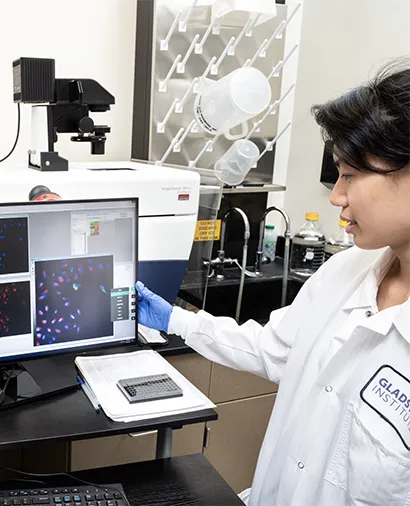
In addition to finding better treatments, another important field of work is trying to improve HIV testing. A team led by Melanie Ott and including Jennfer Doudna, Daniel Fletcher and Katie Pollard is developing a new CRISPR-based diagnostic platform to measure how much virus is in a person’s body. This low-cost mobile phone-based test could make it easier to monitor HIV around the world and improve care in many settings, particularly in low income countries.
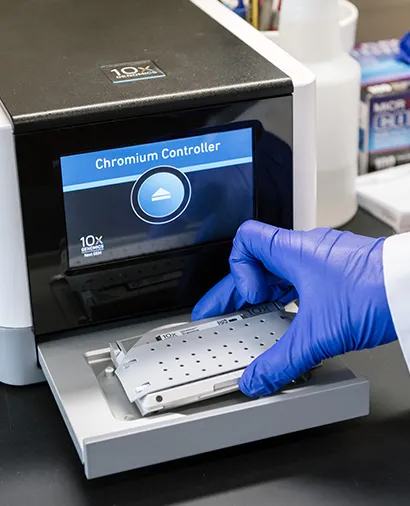
Melanie Ott’s lab is part of a growing NIH-supported initiative to examine what happens inside miniature lab-grown organs, called organoids, and immune cells as they respond to infection by the virus.Using cutting-edge tools—including single-cell, spatial and bulk genomic, transcriptomic, and proteomic technologies—her team is leveraging these organoids to study HIV infection and explore new ways to control or possibly cure HIV.
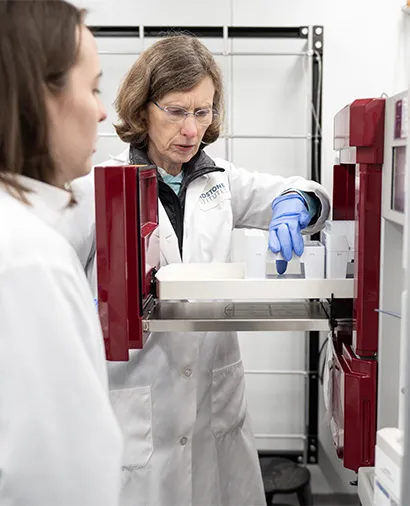
Researchers at Gladstone study how HIV persists in the body despite antiretroviral therapy, and why, in rare cases, individuals can keep the virus under control without medication.
Work in Nadia Roan’s lab looks at how the immune system can naturally control HIV in the absence of antiretroviral therapy, and the nature of the different types of HIV reservoir cells. Ongoing work seeks to compare how immune responses vary between people who naturally control the virus and those who do not. In addition, her lab is working with Possu Huang’s lab to target HIV reservoir cells producing specific HIV proteins. Together, these insights could help guide new strategies to better treat HIV infection. In fact, in one study, her team found that the common diabetes drug metformin might be able to delay—or even prevent—HIV rebound after people stop antiretroviral therapy.
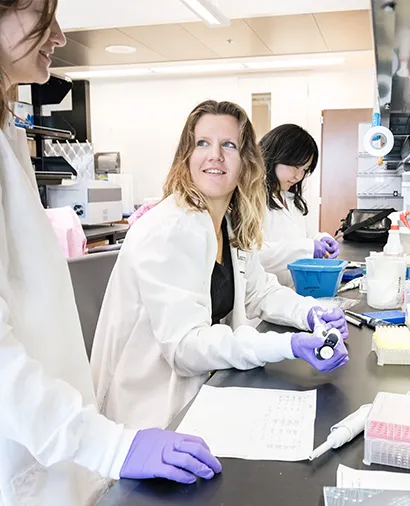
Our genome carries tens of thousands of virus remnants similar to HIV that have been successfully silenced and rendered defective. These “endogenous” retroviruses serve as an ideal blueprint of how to successfully inactivate HIV—accelerated by modern biology. Melanie Ott’s group is engineering a new way to shut down HIV inside infected cells, right where it’s hiding. They are developing a gene-targeting tool, delivered into cells using virus-like carriers, and drugs that permanently silence HIV, to try to achieve a functional HIV cure by allowing people to live without continuous treatment.
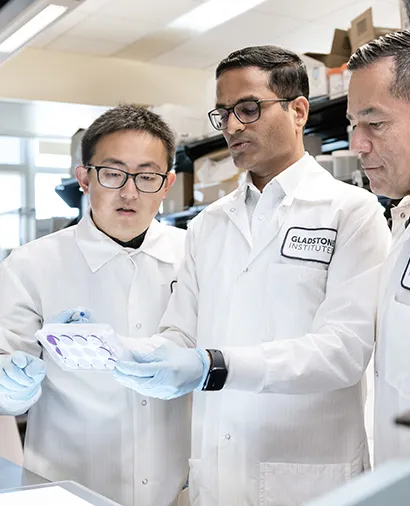
In Magnus Hoffmann’s lab, scientists are creating a new kind of vaccine against HIV. To do so, they are combining the strengths of two innovative technologies: mRNA and protein nanoparticle-based approaches.
This hybrid vaccine works by giving the body genetic instructions to build harmless, virus-like particles that help train the immune system to recognize and fight HIV. Promising results in mouse studies of COVID-19 suggest this novel vaccine approach could lead to a more effective immune response than either vaccine technology alone, and offer long-lasting protection against the virus.






Magnus Hoffmann, PhD
Assistant Investigator

Nevan Krogan, PhD
Senior Investigator
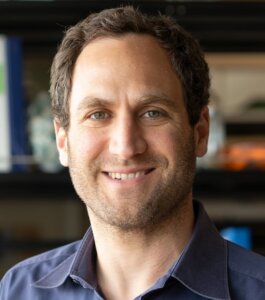
Alex Marson, MD, PhD
Senior Investigator and Director, Gladstone-UCSF Institute of Genomic Immunology

Melanie Ott, MD, PhD
Senior Investigator and Director, Gladstone Infectious Disease Institute

Nadia Roan, PhD
Senior Investigator
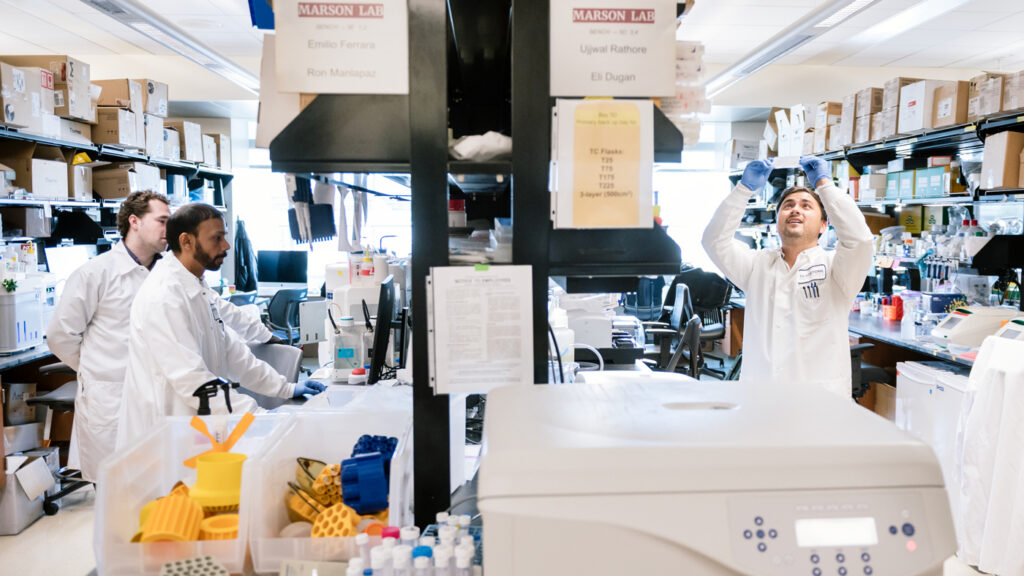
A new genetic roadmap reveals hundreds of hidden players in HIV infection, including two proteins that stop HIV in its tracks.
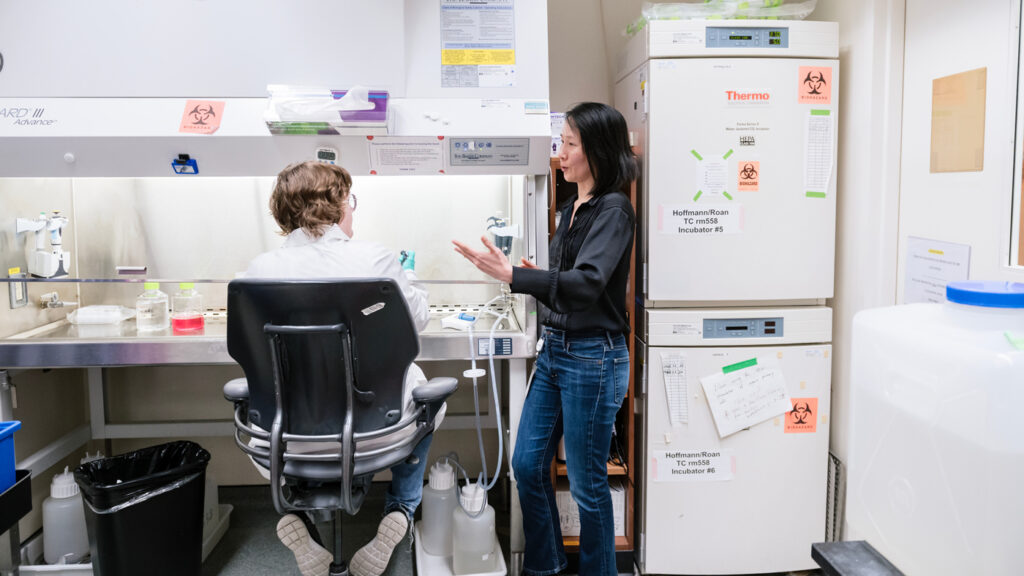
New research offers a path toward life without daily HIV pills, suggesting common diabetes pill could help achieve long-term remission.

Once a godsend, antiretroviral therapy is not what we should settle on. The time has come to finally cure HIV/AIDS.
Developed by Gladstone scientists, HIV-seq could uncover new opportunities for treating HIV.

Our people are our most important asset. We offer a wide array of career opportunities both in our administrative offices and in our labs.
Open PositionsDiscoveries don’t stay in our labs. Gladstone facilitates spinout companies to advance promising therapies, shortening the path between scientific discovery and helping real patients.
Learn MoreYour gift to Gladstone will allow our researchers to pursue high-quality science, focus on disease, and train the next generation of scientific thought leaders.
Donate Now