Gladstone NOW: The Campaign Join Us on the Journey✕



A new bipartisan group of national experts and institutions has released recommendations for a unified plan to end the pandemic.
With a vaccination campaign still in initial stages, Americans continue to experience record infection and mortality rates from COVID-19. Now, the COVID Collaborative—a bipartisan group of national experts and institutions—has released its Call to Action, a set of recommendations to support state and local efforts against the pandemic.
Melanie Ott, MD, PhD, director of the Gladstone Institute of Virology, helped develop the recommendations as an expert contributor to the collaborative, which brings together experts in health, education, and economics. And as a leader in COVID-19 research, Gladstone is one of the group’s collaborating institutions.
“Biomedical and public health research are critical components of an effective pandemic response,” says Ott. “Gladstone researchers have contributed since day one, when many of our labs pivoted to focus on SARS-CoV-2, the virus that causes COVID-19.”
As outlined on the COVID Collaborative’s new website, the new Call to Action rests on five key pillars: testing, contact tracing, public health and social measures, vaccines and treatments, and standardized indicators to measure success across states.
The collaborative has already launched several initiatives in line with its recommendations. For instance, it helped develop a $50-million vaccination education campaign informed by a survey on vaccine hesitancy in Black and Latinx communities. It also contributed to a guide on improving online learning, a toolkit to help states promote mask wearing, and a guide to equitable vaccine distribution.
“Our unified plan could play a crucial role in ending the devastating spread of this disease,” Ott says. “To ensure success, state and local leaders will need to focus on equitable solutions that engage vulnerable communities.”
The COVID Collaborative is co-chaired by former Governor, Mayor, and US Senator Dirk Kempthorne of Idaho, and former Governor, business executive, and civil rights advocate Deval Patrick of Massachusetts. Its Call to Action has so far received bipartisan support from more than 10 state governors, including California’s Governor Gavin Newsom.
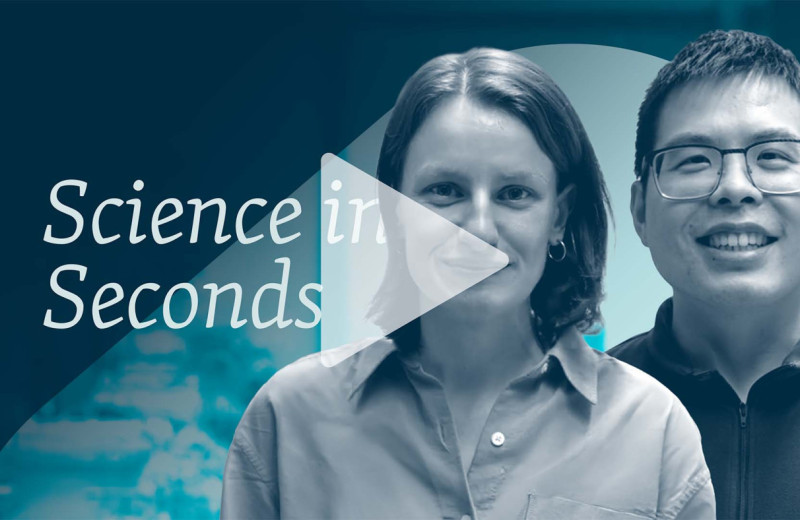
Science in Seconds | An Unprecedented Map of Human Immune Cells
Video
August 28, 2026
Science in Seconds | An Unprecedented Map of Human Immune Cells
In this video, Gladstone scientists Emma Dann and Ronghui Zhu explain how their new study offers a powerful framework for designing cancer immunotherapies and treating autoimmune conditions.
Turning the Tide on Tau: Q&A With Gladstone’s Lennart Mucke
Article
July 1, 2026
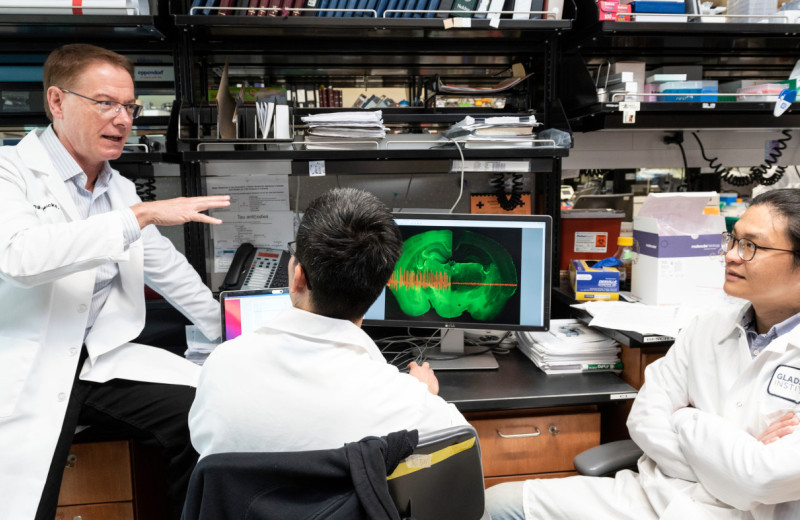
Turning the Tide on Tau: Q&A With Gladstone’s Lennart Mucke
Nearly 20 years after his landmark study uncovered novel roles of tau in Alzheimer’s disease, Gladstone's Lennart Mucke shares his perspective on new clinical data that could transform the future of brain health.
Mucke Lab Alzheimer’s Disease Gladstone Experts Neurological Disease News ReleaseThis Is AI Decoding the Genetic Cause of Disease
Video
March 23, 2026
This Is AI Decoding the Genetic Cause of Disease
In this video, Katie Pollard and Deepak Srivastava explain how Gladstone scientists are combining AI models with novel tools in the lab to finally decode the entire human genome.
Gladstone Experts Pollard Lab Srivastava Lab AI