Mapping the Gut Microbiome to Better Understand Its Role in Obesity
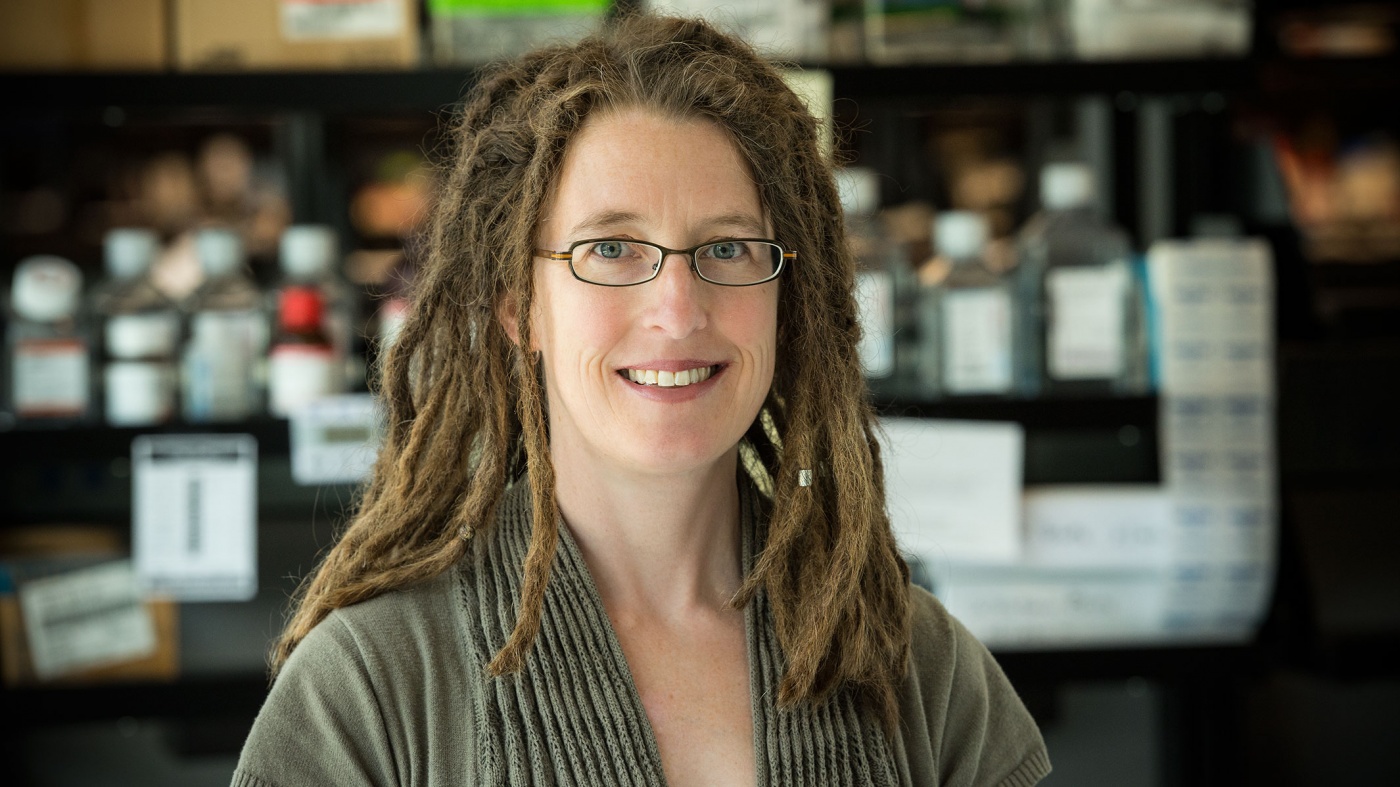
Several recent science studies have claimed that the gut microbiome—the diverse array of bacteria that live in the stomach and intestines—may be to blame for obesity. But Katherine Pollard, PhD, a senior investigator at the Gladstone Institutes, says it is not that simple.
Dr. Pollard will be presenting at the Obesity and Microbiome symposium at the AAAS Annual Meeting in San Jose, CA on Friday, February 13, 2015 at 3:00 PM PT.
Using powerful computational tools, Dr. Pollard and her team have reanalyzed several previous studies and revealed that there is no significant relationship between body mass index (BMI) and the types of microbes in one’s gut. In fact, her lab found that there was greater variability in gut bacteria between the different studies than between the lean and obese individuals within each study.
Instead, Dr. Pollard thinks that it is the genetic make-up of the different strains of bacteria that is most important. This is because the DNA in bacteria can vary wildly. For example, while the genomes of two humans may only differ by 0.1%, two strains of the same bacteria can vary by to 30%—similar to the variation between human and mice genomes. What’s more, the differences in the bacterial genomes are often essential pieces that are involved in metabolism or the processing of sugar and fat.
Besides reflecting key functional changes in bacterial genomes, losses and gains of genes also affect genome size. When microbiomes are studied using metagenomics—sequencing their total DNA—differences in bacterial genome size can bias the estimation of the proportion of each gene in the sample. By developing a computational shortcut to rapidly estimate genome size using statistical modeling, Dr. Pollard’s team has been able to improve the accuracy of microbiome studies.
“It’s not enough to say what type of bacterial species are present, because that doesn’t tell you what they’re doing,” explains Dr. Pollard. “Since two strains of the same species can have such different genomes, you really need to know what genes are there and what role they play in order to link someone’s gut microbiota to BMI or disease.”
Up Next

Gladstone Scientists Are Awarded $2 Million to Map How HIV Affects the Immune System
By uniting the power of single-cell sequencing, organoids, and artificial intelligence, scientists are entering a new era of HIV research.

Christina Theodoris Honored in Inaugural Cohort of Young American Scientists
Scientific American recognizes Theodoris for her pioneering work developing artificial intelligence models to find treatments for an array of diseases.

How an AI Microscope Is Learning to Do Science
Gladstone scientists have developed a thinking microscope that can conduct its own experiments, with the ultimate goal of treating neurodegenerative diseases.
Gladstone Launches Center for PhAIge Therapy to Harness AI in the Fight Against Drug-Resistant Infections
The center, funded by an NIH grant, will become one of three national centers dedicated to accelerating the development of phage therapy.

Get Involved
Join the Team
Our people are our most important asset. We offer a wide array of career opportunities both in our administrative offices and in our labs.
Open PositionsPartner With Us
Discoveries don’t stay in our labs. Gladstone facilitates spinout companies to advance promising therapies, shortening the path between scientific discovery and helping real patients.
Learn MoreGive
Your gift to Gladstone will allow our researchers to pursue high-quality science, focus on disease, and train the next generation of scientific thought leaders.
Donate Now