Gene Linked to Alzheimer’s Disease Impairs Memory by Disrupting Brain’s “Playback System”

Scientists at the Gladstone Institutes have discovered how the major genetic risk factor for Alzheimer’s disease causes memory impairment. A specific type of brain activity important for memory replay is disrupted in mice with the E4 version of the apolipoprotein E (apoE4) gene, which may interfere with memory formation.
The apoE4 gene creates a protein of the same name that markedly increases a person’s risk for Alzheimer’s disease and occurs in 65%–80% of people with Alzheimer’s disease. In the new research, published in Neuron, the scientists found that the apoE4 protein changes the activity of neurons in the hippocampus—an important memory center in the brain that is severely affected by Alzheimer’s disease. In this region, apoE4 decreases two types of brain activity that are important for memory formation: sharp wave ripples (ripples) and coincident slow gamma activity. During the ripples, prior experiences are replayed numerous times to help preserve the memory of them, and the slow gamma activity that occurs during the ripples helps to ensure that the replay of those memories is accurate.
“When we experience something new, cells in the hippocampus fire in a particular order. Later, these same cells fire over and over again in the same order to replay the event, which helps consolidate the memory so we don’t forget it,” explained first author Anna Gillespie, PhD, a former graduate student in the Huang lab at Gladstone. “Slow gamma activity that occurs during the ripples organizes the firing of these cells. If this activity is disrupted, the playback will be disorganized, compromising the memory.”
Mice with apoE4 had fewer ripples than mice with the normal apoE3 protein, and they had less slow gamma activity during the ripples. Based on these results, the scientists questioned whether these differences in activity affected the ability to form and replay memories.
To answer this, the researchers tested mice that expressed apoE4 in all cells except inhibitory neurons in the hippocampus. From earlier research, the scientists knew that these mice showed no signs of inhibitory neuron death in the hippocampus, and their ability to learn and form memories was not impaired. In the current study, the mice showed normal slow gamma activity despite having fewer ripples. Thus, slow gamma activity—the coordination of cell firing during playback—appears to be a critical factor in memory consolidation, rather than the number of replay events from the ripples.
“Our research suggests that disrupted slow gamma activity during ripples is a major consequence of apoE4 expression that likely impairs memory consolidation,” said senior author Yadong Huang, MD, PhD, a senior investigator at Gladstone. “With this knowledge, we can now work toward correcting or restoring slow gamma activity in the hippocampus to prevent or alleviate memory loss in Alzheimer’s disease.”
Up Next
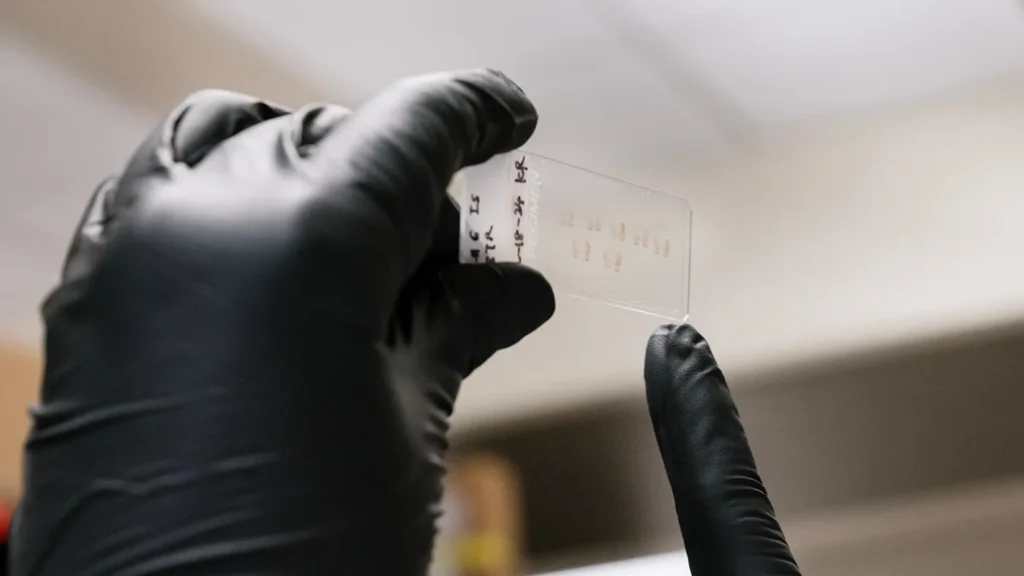
Turning the Tide on Tau: Q&A With Gladstone’s Lennart Mucke
Nearly 20 years after his landmark study uncovered novel roles of tau in Alzheimer’s disease, Gladstone's Lennart Mucke shares his perspective on new clinical data that could transform the future of brain health.

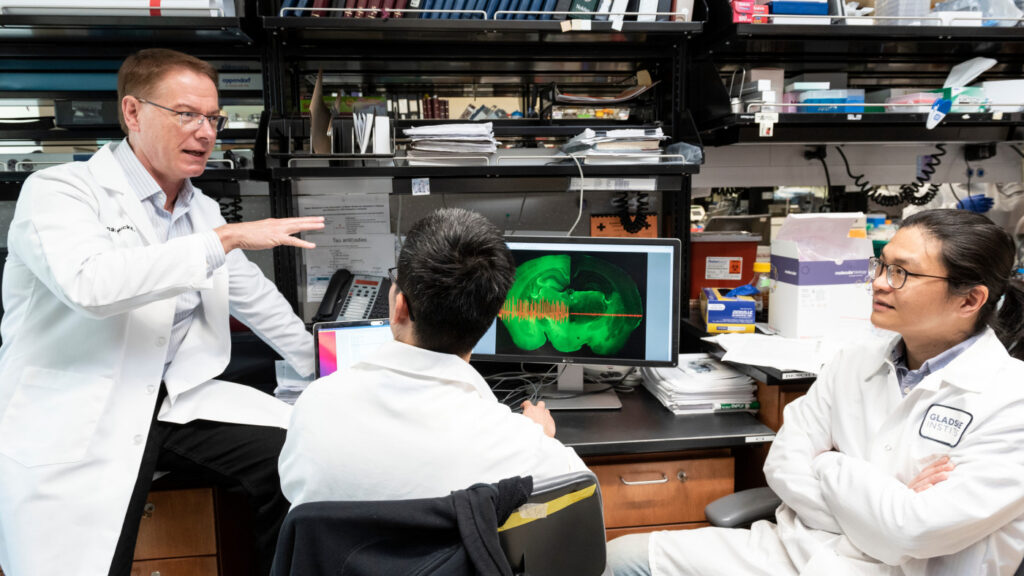
How an AI Microscope Is Learning to Do Science
Gladstone scientists have developed a thinking microscope that can conduct its own experiments, with the ultimate goal of treating neurodegenerative diseases.

Gladstone Investigator Andrew Yang Receives 2026 Sobrato Prize in Neuroscience
The prize honors scientists whose breakthroughs in brain research have high potential for patient impact.
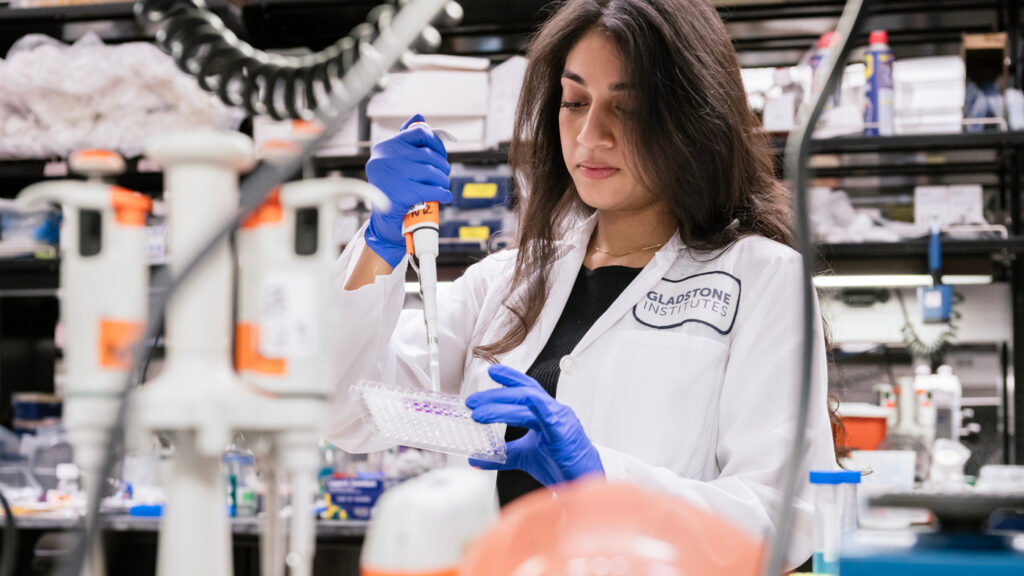
Mapping How the Brain Takes Out Its Trash
Gladstone scientists developed a new tool to trace how the brain clears “waste,” uncovering surprising new biology about how it keeps itself healthy.

Get Involved
Join the Team
Our people are our most important asset. We offer a wide array of career opportunities both in our administrative offices and in our labs.
Open PositionsPartner With Us
Discoveries don’t stay in our labs. Gladstone facilitates spinout companies to advance promising therapies, shortening the path between scientific discovery and helping real patients.
Learn MoreGive
Your gift to Gladstone will allow our researchers to pursue high-quality science, focus on disease, and train the next generation of scientific thought leaders.
Donate Now