
ARTICLE
15 Years Later: This Is How Scientists Are Using Induced Pluripotent Stem Cells
Gladstone researchers talk about the power of iPS cells in biomedical research, 15 years after Shinya Yamanaka first converted human skin cells into iPS cells.
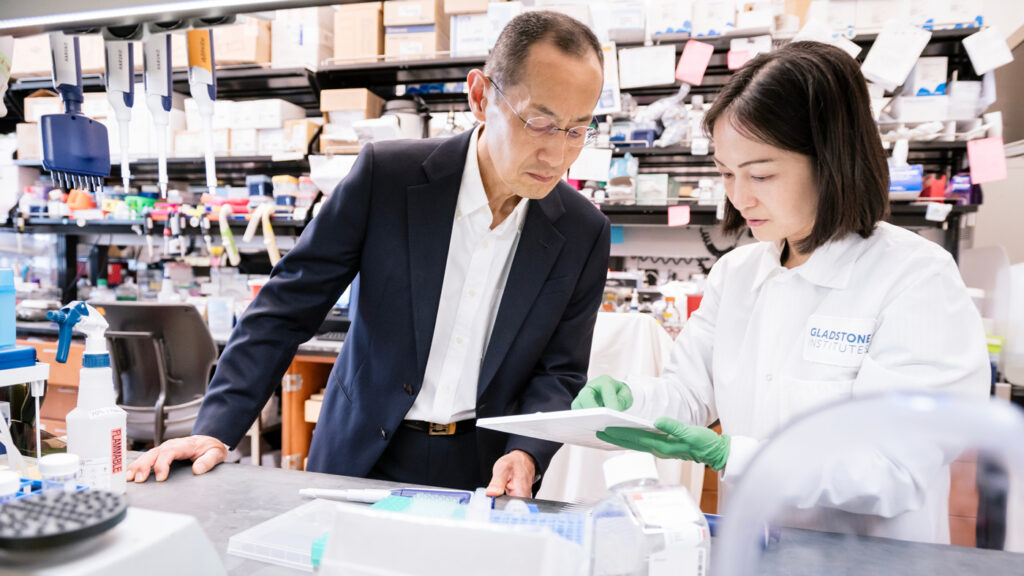
In November 2007, Shinya Yamanaka, MD, PhD, senior investigator at Gladstone Institutes, demonstrated for the first time that he could “reprogram” human skin cells into cells that function like embryonic stem cells, meaning they can multiply indefinitely and transform into any cell type in the body. These reprogrammed cells are known as induced pluripotent stem cells, or iPS cells.
Yamanaka was awarded the 2012 Nobel Prize in Physiology or Medicine for this breakthrough. His discovery fundamentally changed biomedical research and opened up promising avenues for studying and treating unsolved diseases.
Fifteen years later, researchers at Gladstone—and all around the world—continue to use iPS cells to study the cause of disease, test potential drugs, and develop new treatment options. Four scientists explain the power of iPS cells in research.
Up Next

Engineered Human Neurons Rebuild Damaged Spinal Cord Circuits
Gladstone scientists show that stem cell-derived spinal neurons can integrate into damaged neural networks in rats and improve breathing-related motor function after a traumatic spinal cord injury.
Misfolded DNA Blueprint: A New Origin for Genetic Disease
Gladstone researchers found losing just one copy a particular gene can disrupt heart development and lead to congenital heart disease.
A Gene That Keeps Stem Cells From Losing Their Way
Scientists find a gene essential for keeping intestinal stem cells stable, offering insight into how tissues repair themselves.

A Sculptor of Modern Regenerative Medicine
Among his myriad accomplishments, Rudolf Jaenisch—winner of the 2025 Ogawa-Yamanaka Stem Cell Prize—was the first to demonstrate the potential of induced pluripotent stem cells to treat disease.

Get Involved
Join the Team
Our people are our most important asset. We offer a wide array of career opportunities both in our administrative offices and in our labs.
Open PositionsPartner With Us
Discoveries don’t stay in our labs. Gladstone facilitates spinout companies to advance promising therapies, shortening the path between scientific discovery and helping real patients.
Learn MoreGive
Your gift to Gladstone will allow our researchers to pursue high-quality science, focus on disease, and train the next generation of scientific thought leaders.
Donate Now