Remembering Bill Rutter, a Biotech Visionary and Champion of Gladstone
Listen:
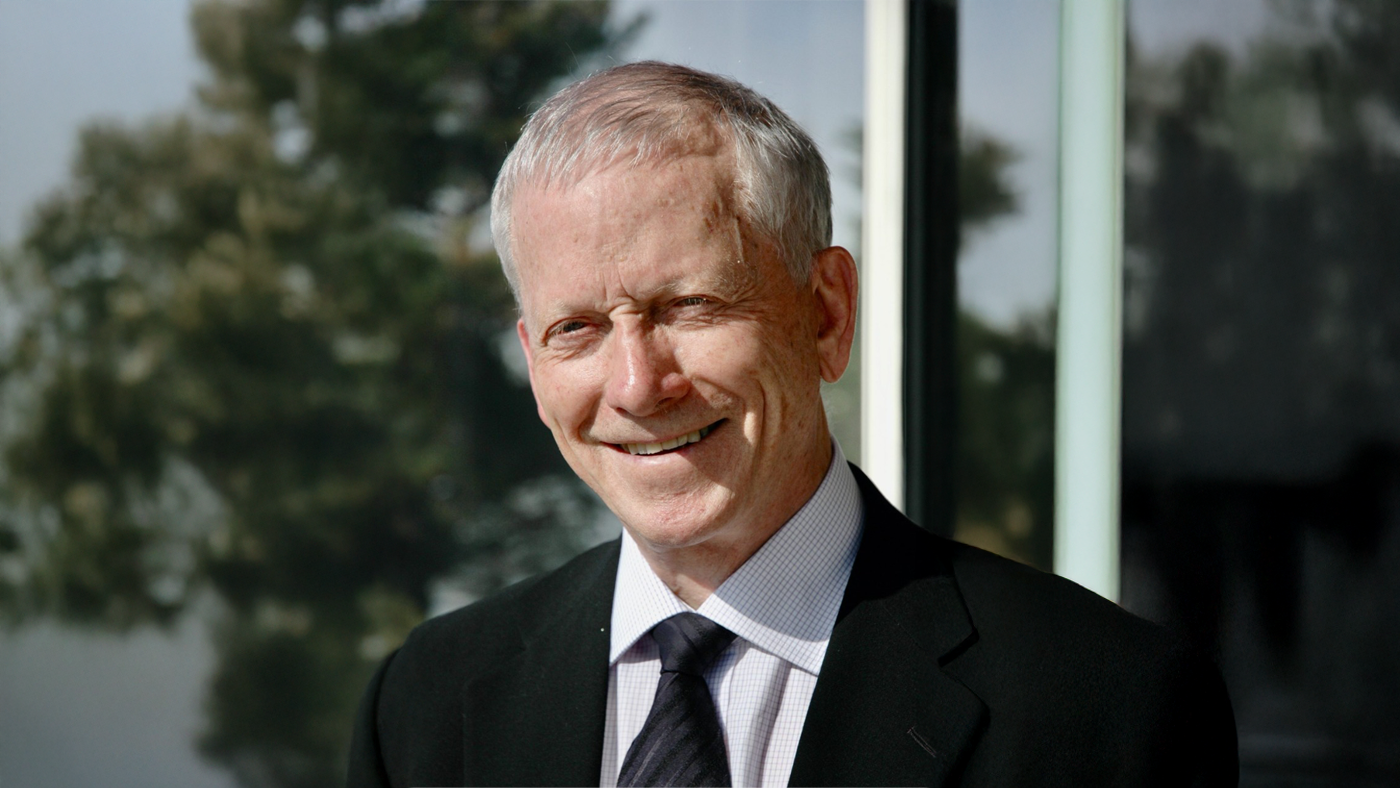
William J. Rutter, PhD, a loyal Gladstone Institutes supporter and biotechnology pioneer who was a catalyst for transforming San Francisco’s Mission Bay neighborhood into a thriving biomedical hub, passed away on July 11. He was 96.
A renowned biochemist and entrepreneur, Rutter’s bold ideas and collaborative spirit transformed UC San Francisco (UCSF) and helped forge the strong research alliance between UCSF and Gladstone that continues today. Rutter continuously advocated for Gladstone’s presence and prominence in Mission Bay and served as a mentor for countless Gladstone scientists.
“Bill’s vision for Mission Bay, and his belief in the power of institutions like Gladstone to contribute to it, shaped Gladstone’s trajectory in the most positive ways,” says Robert Mahley, MD, PhD, president emeritus and founder of Gladstone. “He had an uncanny ability to see not just what science was, but what it could become—and how to create the environment to make it thrive.”
Rutter’s decades-long career left an indelible mark on the life sciences, not only through his scientific discoveries, but also through his visionary approach to building institutions, nurturing talent, and integrating academia with industry. He believed that scientific discovery could have real-world impact, and that bringing together people from different sectors would accelerate progress.
“Bill’s vision for Mission Bay, and his belief in the power of institutions like Gladstone to contribute to it, shaped Gladstone’s trajectory in the most positive ways.”
Putting UCSF on the Map as a Scientific Powerhouse
Recruited from the University of Washington, Rutter joined UCSF in 1968 as founding chair of the Department of Biochemistry and Biophysics, when the university was at a crossroads. With a clear vision for the future of molecular biology, he set out to revitalize a department that had been without leadership for six years.
Partnering with Gordon Tomkins, a respected molecular endocrinologist from the National Institutes of Health (NIH), who joined as vice chair, they recruited a generation of promising scientists and began to build a new kind of research environment focused on collaborative science with small labs and interactive teams. Rutter’s leadership helped define a new model for scientific discovery at UCSF—one built on deep collaboration and a commitment to excellence. His strategic thinking and drive for innovation transformed not just a department, but the culture and aspirations of the entire institution.
“Without Bill Rutter, the biotechnology revolution may not have taken root in San Francisco the way it did,” says Deepak Srivastava, MD, president of Gladstone. “He had a rare ability to bridge ideas and institutions, and he never stopped championing a scientific community defined by excellence and collaboration.”
Rutter nurtured a culture of innovation that would come to define UCSF, positioning it at the forefront of academic biomedical research in the U.S.
Advancing Public Health Through Innovation
In 1981, Rutter co-founded Chiron Corporation, which quickly became a leader in the emerging biotechnology field, demonstrating the promise of recombinant DNA technology to create medicines.
The company developed the first recombinant hepatitis B vaccine and played a central role in identifying, sequencing, and cloning the hepatitis C virus—achievements that led to better diagnostics and treatments for millions worldwide. These breakthroughs helped launch the biotech industry and underscored Rutter’s belief in the power of science to serve society.
Championing Mission Bay and Gladstone’s Role in It
Long after his official retirement from UCSF, Rutter remained a powerful force for its future. He was a key driver in the vision and creation of UCSF’s Mission Bay campus, where he saw the potential to unite research, clinical care, and industry in one dynamic space.
As chair of the fundraising campaign and through his leadership of the Bay Area Life Sciences Alliance, he brought that vision to life. He also strongly advocated for the inclusion and long-term presence of Gladstone at Mission Bay, recognizing the value of integrating independent research organizations into the academic and biotech environment.
In 2007, UCSF named one of Mission Bay’s first major buildings the William J. Rutter Center, in honor of his extraordinary contributions to the university and the broader life sciences community.
“He had a rare ability to bridge ideas and institutions, and he never stopped championing a scientific community defined by excellence and collaboration.”
Rutter’s Legacy Lives On
Throughout his career, Rutter authored hundreds of scientific papers, held more than two dozen patents, and was elected to the National Academy of Sciences and the American Academy of Arts and Sciences. But his most enduring legacy may be the institutions he built and the generations of scientists he inspired.
“Bill’s passing leaves a profound void, but also a powerful legacy,” Mahley reflects.
His work helped launch UCSF into national prominence and his leadership catalyzed an entire industry. His belief in the role of science to serve society continues to shape the community he helped create at Mission Bay.
“Bill’s influence will be felt for generations—in the discoveries made possible by the institutions he shaped, and in the ongoing work of those who carry his vision forward,” Srivastava says.
Up Next
In Alzheimer’s Disease, the Brain’s Pacemaker Cells Lose Their Beat
Research in mice reveals how critical brain cells misfire in Alzheimer’s and identifies a targeted strategy to restore healthy brain rhythms.

Gladstone Institutes Launches Redesigned Website, Bringing Cutting-Edge Biomedical Research Into Focus
Discover disease research, explore the latest scientific news, and connect with experts through Gladstone’s enriched digital platform.
Newly Discovered Antiviral System in Bacteria Is ‘Strangest of Its Kind’
The complex Rube Goldberg-like molecular machinery could inspire novel technology to study and treat disease.
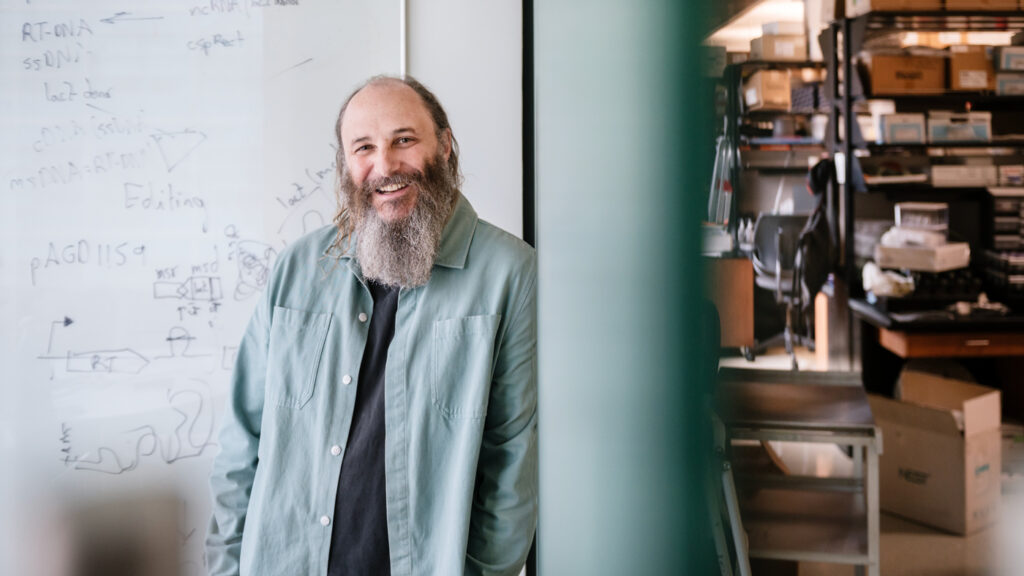
Gladstone’s Seth Shipman Named Fellow of the California Academy of Sciences
Shipman is recognized for pioneering molecular technologies that record cellular activity, expand genome editing, and target antibiotic-resistant superbugs.

Get Involved
Join the Team
Our people are our most important asset. We offer a wide array of career opportunities both in our administrative offices and in our labs.
Open PositionsPartner With Us
Discoveries don’t stay in our labs. Gladstone facilitates spinout companies to advance promising therapies, shortening the path between scientific discovery and helping real patients.
Learn MoreGive
Your gift to Gladstone will allow our researchers to pursue high-quality science, focus on disease, and train the next generation of scientific thought leaders.
Donate Now