Rethinking ‘Exhausted’ T Cells: Gilbert Herrera Named Inaugural Ellen & Bernard Marson Fellow
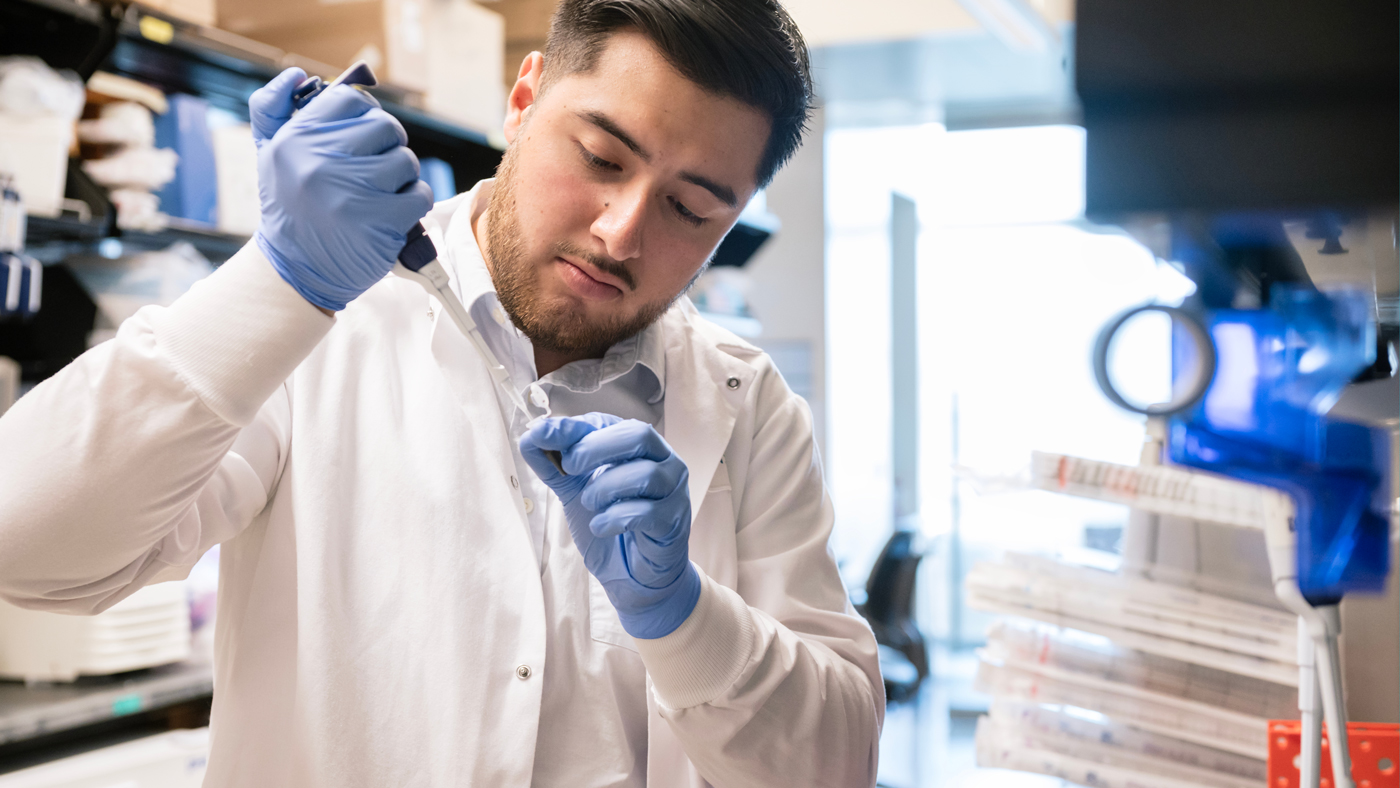
Gilbert Herrera, a second-year graduate student studying cancer immunology at the Gladstone-UCSF Institute of Genomic Immunology, has been named the inaugural Ellen & Bernard Marson Fellow.
Created through the generosity of Rosemary and Kevin McNeely, the fellowship provides three years of support for a promising trainee pursuing innovative immunotherapy research.
Herrera is co-mentored by Matt Spitzer, PhD, an investigator at the Gladstone-UCSF Institute of Genomic Immunology who also serves as a professor at UC San Francisco and an investigator at the Parker Institute for Cancer Immunotherapy; and Simone Minnie, PhD, a UCSF assistant professor whose lab is focused on tumor immunology.
“Gilbert asks ambitious questions and isn’t afraid to challenge assumptions,” Spitzer says. “His work could reveal new ways to harness T cells for cancer immunotherapy.”
For Herrera, who’s pursuing a doctorate in immunology, those ambitious questions center on T cells—immune cells with a remarkable ability to recognize and kill cancer. Cancer, however, presents them with an unusually difficult challenge, Herrera explains.
“T cells are normally sprinters,” he says. “When you get a virus, they rapidly activate, kill virus-infected cells, and then return to a resting state. But cancer isn’t a sprint. It’s a marathon.”
Over months or years inside a tumor, T cells change. Scientists often describe these cells as “exhausted” because many of their usual cancer-fighting functions appear diminished. Herrera is interested in looking at them differently.
If these cells have managed to survive for so long in a hostile tumor environment, he wonders, what adaptations have allowed them to persist, and could scientists use those adaptations to make them more effective? “We’re trying to understand these ‘marathon runners,’” Herrera says. “What makes them able to continue working against cancer, and how can we further enhance their function?”
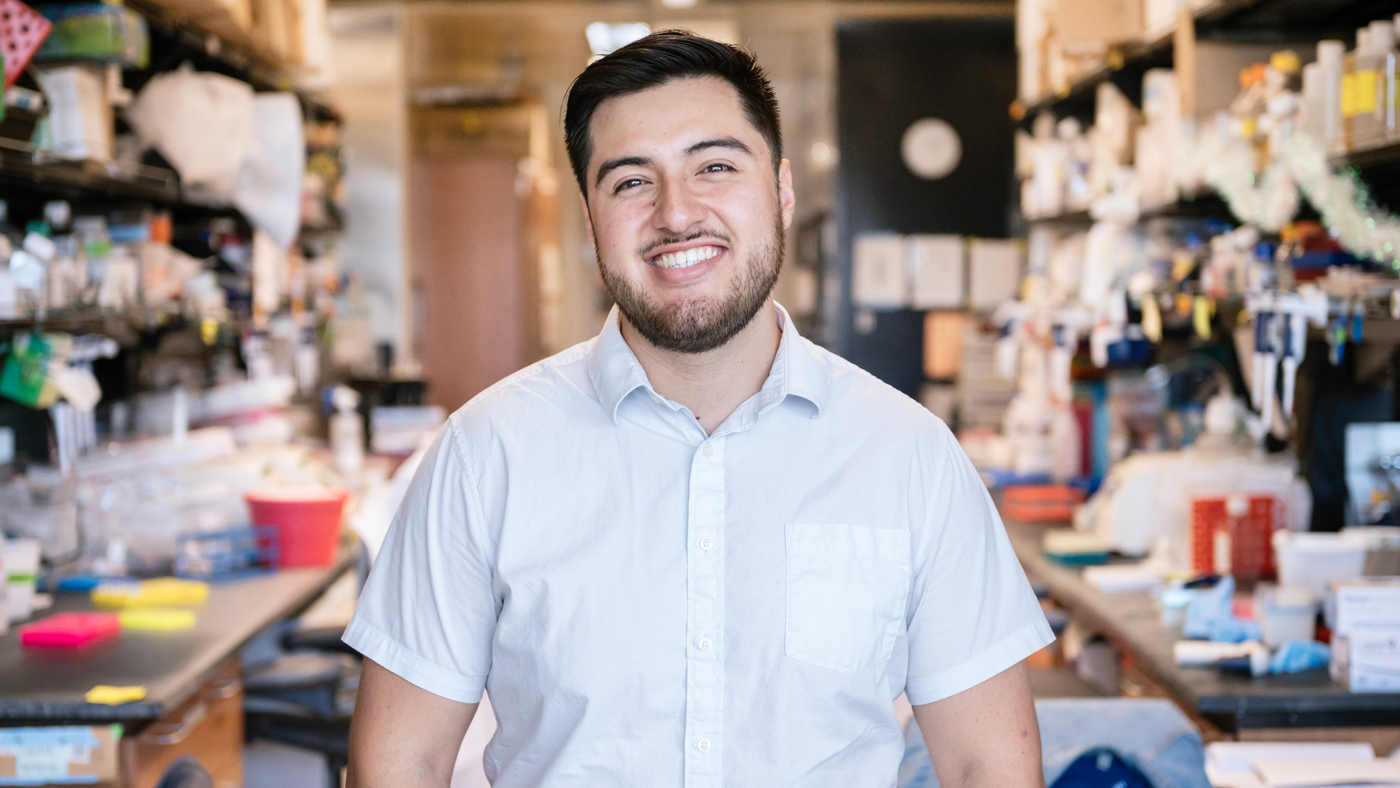
Finding a Path to Immunology
Herrera’s interest in science began well before he knew it was something he could do for a living. Growing up in Los Angeles, he was drawn to taking complex ideas apart and understanding how they worked. A high school chemistry teacher encouraged him to try research, leading him to a program at UC Santa Barbara that changed his perspective.
“It really opened my mind to the fact that you could be producing original research, doing things where no one has gone before and learning from it,” Herrera recalls. “That just blew my mind.”
He went on to study molecular biology at UCLA, where research in cancer immunology showed him how fundamental biological discoveries could help explain why diseases progress differently from one person to another and potentially point toward better treatments.
The potential of translating discoveries into therapies eventually brought Herrera to Gladstone and UCSF. He was particularly attracted by the breadth of expertise available and the ease with which scientists from different disciplines work together.
“One lab doesn’t need to be an expert in all these different things in order to benefit from the infrastructure,” Herrera says. “You have labs that are really good at immune cell engineering and others that are experts at profiling tissues spatially.”
His co-mentorship with Spitzer and Minnie reflects that environment. Spitzer studies how different immune cells work together in response to cancer, while Minnie focuses closely on the biology of T cells. Herrera’s project draws on both perspectives, allowing him to investigate his questions from the level of individual cells to the larger immune system.
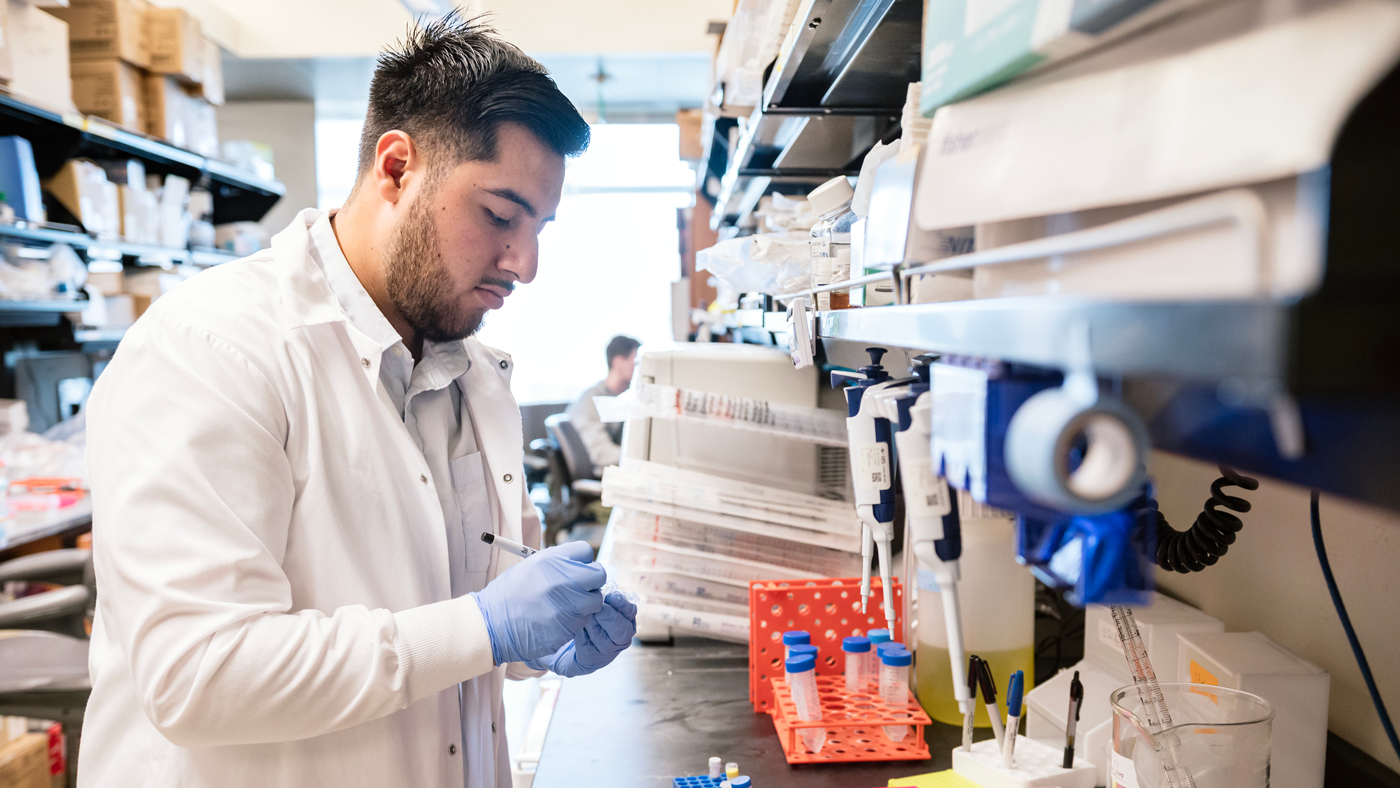
Freedom to Take Risks
That willingness to cross disciplines and challenge assumptions is exactly what Alex Marson, MD, PhD, director of the Gladstone-UCSF Institute of Genomic Immunology, hopes to cultivate in young scientists.
“Early-career scientists bring fresh ideas to science and are the driving force for innovation as we look forward to new immunotherapies,” Marson says. “We want to give exceptional trainees like Gilbert the freedom and support to pursue ambitious research that has potential to lead to major breakthroughs.”
The fellowship is named in honor of Marson’s parents, Ellen and the late Bernard Marson, who inspired him to pursue his passion for medicine and scientific discovery.
For Herrera, receiving three years of fellowship support during his graduate career creates precisely that kind of freedom. “Having this much funding so early on in my career means I can just hit the ground running,” he says.
The fellowship can support opportunities ranging from using emerging technologies to attending international conferences where Herrera can learn from other T-cell biologists. More fundamentally, it gives him room to experiment.
“Without secure funding, you’re sort of forced to be risk-averse,” Herrera says. “Having the ability to not be so risk-averse so early on makes me feel like I’m in a sandbox where I can play around. It opens up the possibilities of where I can take my research and my own development.”
For the McNeelys, that opportunity to invest in a scientist at a formative point in his career was central to creating the fellowship.
“There is something special about supporting a scientist at the beginning of their career, when the right opportunity can open so many possibilities,” say Rosemary and Kevin McNeely. “We’re delighted to support Gilbert and excited to see where his research takes him.”
Over the next three years, Herrera hopes to produce evidence that the T cells often considered useless in the fight against cancer may hold powerful abilities.
“These T cells have historically been written off as fundamentally broken,” Herrera says. “I hope to show that they do, in fact, possess powerful anti-cancer abilities and discover new ways to harness them therapeutically.”
Up Next
New Toolkit Turns Macrophages Into Better Cancer Fighters
Gladstone and UCSF scientists developed a method to genetically edit myeloid cells, immune cells that act as the body’s first responders.
New CRISPR Screening Platform Boosts Power of Immunotherapy Against Solid Tumors
A new screening platform uncovers gene edits that enhance CAR-T cells’ ability to infiltrate and eliminate solid tumors.
New CRISPR Technique Selectively Shreds Cancer Cells, Including Those of ‘Undruggable’ Cancers
An innovative chromatin-shredding technique shown to destroy cancer cells carrying a prevalent mutation while keeping healthy cells intact.
AI Discovery Reveals DNA Isn’t Locked Away in Cells After All
A new study upends long-held view about how DNA is stored, explaining how subtle shifts in gene activity contribute to cancer, aging, and other complex diseases.

Get Involved
Join the Team
Our people are our most important asset. We offer a wide array of career opportunities both in our administrative offices and in our labs.
Open PositionsPartner With Us
Discoveries don’t stay in our labs. Gladstone facilitates spinout companies to advance promising therapies, shortening the path between scientific discovery and helping real patients.
Learn MoreGive
Your gift to Gladstone will allow our researchers to pursue high-quality science, focus on disease, and train the next generation of scientific thought leaders.
Donate Now