Technology
iPS Cells

iPS Cells

Technology Banner Image

Induced pluripotent stem cells, or iPS cells, are one of the most important advances in modern biomedical research. These cells were first developed in 2006 by Gladstone Investigator Shinya Yamanaka, MD, PhD, who discovered that ordinary adult cells could be “reprogrammed” back into a stem cell-like state.

This breakthrough earned Yamanaka the 2012 Nobel Prize in Medicine and launched a new field of regenerative medicine.

Scientists at Gladstone and around the world have created thousands of iPS cell lines, learned how to turn them into many different cell types, and are using them to study disease and develop therapies for a range of diseases.

What Are iPS Cells?

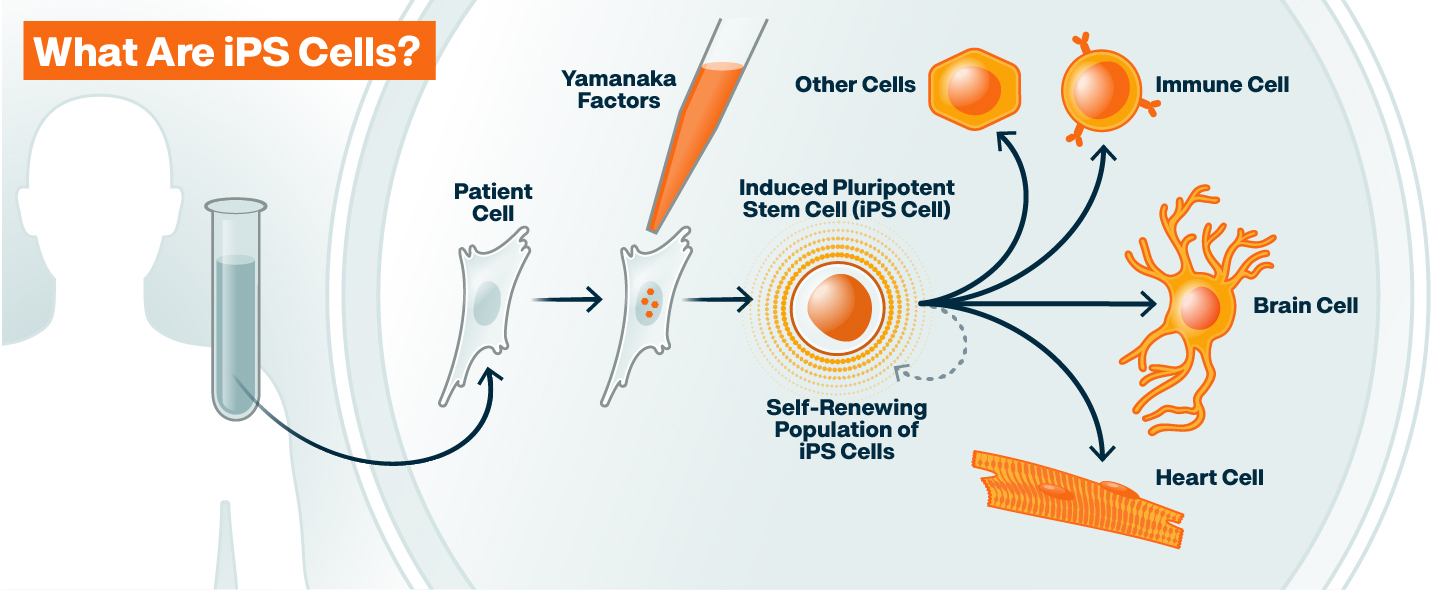
iPS cells are created by taking mature, specialized adult cells—such as skin or blood cells—and resetting them to an embryonic-like state. These cells can continue to replicate, creating self-renewing populations of cells that scientists can maintain for long periods of time in the lab.

And, just like cells in an early embryo, iPS cells are pluripotent, meaning they can develop into nearly any cell type in the human body. So, they can then be carefully guided in the lab to become specific cell types, such as heart cells, brain cells, or immune cells.

Cells of the early embryo have pluripotency, which is the capacity to turn into almost any other kind of cell in the human body. Induced pluripotent stem (iPS) cells are cells derived from adults that are reset to have this same potential. Patients donate blood or skin cells, and upon the introduction of small number of molecules—the “Yamanaka factors”—the cells lose their adult characteristics and begin to resemble immature, embryonic cells. In this state, iPS cells can make copies of themselves indefinitely, or be programmed to become heart cells, neurons, immune cells, or any other cell type in the body. These patient-derived cells can be used to study how human organs develop, and because iPS cells have exactly the same genome as the patient from whom they are derived, they can also be used to study genetic diseases and develop new therapies.

Yamanaka originally discovered that this reprogramming could be achieved by introducing a small set of genes, known as the “Yamanaka factors.” These factors effectively erase the cell’s specialized identity and return it to a blank, stem cell-like state. Since then, scientists have discovered how to directly reprogram adult cells into specific cell types, skipping the embryonic-like state altogether. This could eventually lead to therapies where cells in the body would be coaxed into becoming a different, helpful type of cell to fight or reverse disease.

A powerful feature of iPS technology is that the starting cells come directly from a person. Because these cells carry the individual’s unique genetic makeup—including any disease-related mutations—scientists can use them to model human disease in a controlled lab setting. This allows researchers to study how diseases develop, test potential drugs, and explore new therapies without risk to patients.

Today, iPS cells are widely used to investigate how organs form, understand the biological roots of disease, and move closer toward personalized regenerative medicine. Clinical trials are ongoing for diseases such as Parkinson’s diseases, retinal diseases, motor neuron diseases, dementia, heart failure, and cancers, as well as for spinal cord injuries and joint defects.

Visualizing Stem Cell Technology

Leading the Way Toward Safer iPS Cell Therapies

By reducing the need to use human embryos, iPS cells have solved a major ethical problem in traditional research and made stem cell research more broadly acceptable and accessible.

Yet, because iPS cells are so versatile, the technology also raises new ethical questions. Scientists could theoretically use them to clone humans or create artificial human eggs, sperm, and embryos in a lab. They have also triggered ethical debates regarding the genetic privacy of blood and skin cell donors. And, some people are worried that future iPS-cell treatments will only be affordable for the ultra-wealthy, threatening to widen the gap in global healthcare equality.

In addition, as the technology moves toward clinical therapies, previous studies have identified safety concerns, as these engineered cells can sometimes mutate and grow into tumors or cancer when transplanted.

At Gladstone, we believe that oversight is critical to ensure iPS cell research develops safely and responsibly. In labs, researchers must confirm reprogrammed cells behave predictably and do not cause unintended effects in the body. In parallel, we need ethical reviews, government regulations, and international standards to fulfill the promise of this technology.

To make iPS cells safer for medical use, our scientists use CRISPR gene editing to neutralize cancer risks, modify immune traits, and strictly monitor the quality of cells. In parallel, we work closely with leading international bodies like the International Society for Stem Cell Research—where both Shinya Yamanaka and Gladstone President Deepak Srivastava have served as past presidents—to support the transparent pursuit of iPS cell research.

By balancing innovation and responsibility, we are committed to advancing discovery while keeping ethics at the center of our work.
How Gladstone Scientists Are Leveraging iPS Cells

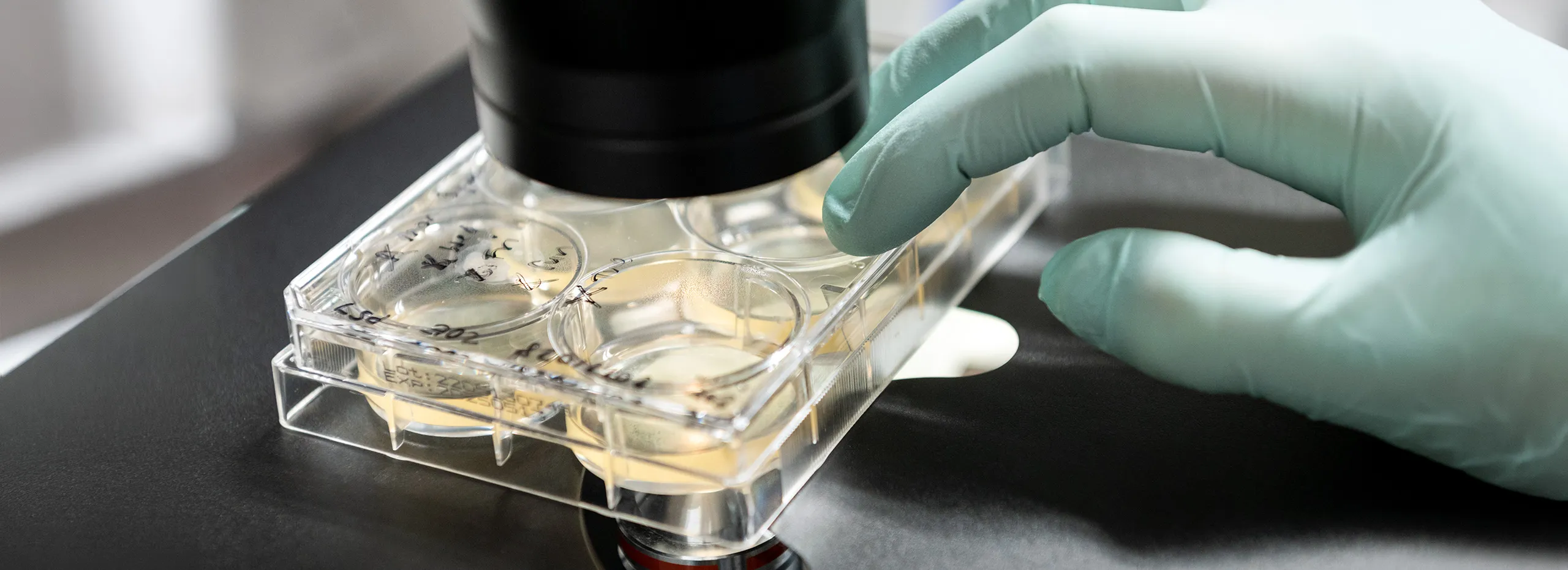
iPS cells are widely used at Gladstone to study disease, screen drugs, and develop potential cell therapies. Researchers are using patient-derived iPS cells to better understand how diseases arise and test ways to repair or replace damaged tissues.

Understanding Neurodegenerative Disease

Steve Finkbeiner has helped to build a collection of more than 2,000 iPS cell lines from patients with neurodegenerative diseases, including Alzheimer’s, Parkinson’s, ALS, and Huntington’s disease. His team converts these cells into neurons, and using robotic microscopy, they can compare healthy and diseased brain cells side by side, helping reveal the cellular changes that drive neurodegeneration.

Regenerating the Heart

Deepak Srivastava and his colleagues discovered that scar-forming cells in the heart can be converted into cardiomyocytes, the muscle cells responsible for beating. They first identified three genes that can trigger this transformation and later developed a second approach using small molecules instead of genes. These findings could help regenerate damaged hearts from within, and offer new therapeutic approaches to stave off heart failure or repair the scar tissue that results from a heart attack. Some of these discoveries are now in clinical trials.

Yadong Huang and his team generated iPS cells from individuals carrying the ApoE4 genetic variant, the major risk factor for Alzheimer’s disease. Using these patient-derived neurons, which display key features of the disease, they tested potential drug candidates targeting ApoE4. They found that an existing, FDA-approved drug called bumetanide reverses signs of Alzheimer’s disease in mice and may prevent the disease in humans.

Shinya Yamanaka’s lab continues to study the basic biology of iPS cells, including the role of the protein NAT1. Their work shows that NAT1 is essential for stem cell survival and plays a broad role in regulating the production of proteins across many genes, influencing both normal biology and disease processes.

For stem cell therapies to be effective and avoid being rejected by patients, they have been personalized to match a patient’s own immune “tags”—but making custom cells for every patient isn’t practical at scale. Using CRISPR, Shinya Yamanaka’s team is editing these tags to create universal iPS cell lines—similar to a blood bank—that could serve many patients. Clinical-grade versions already exist and are headed toward safety trials.

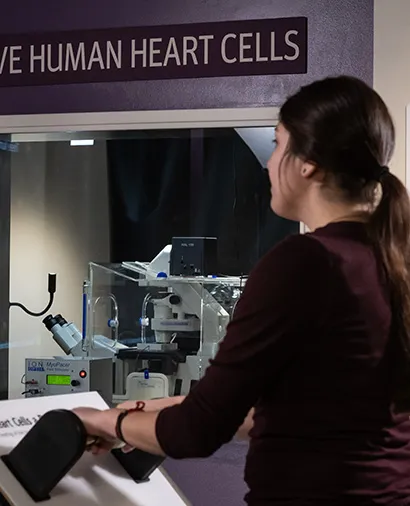
Gladstone scientists are also using iPS cell technology to help the public experience stem cell science firsthand. In collaboration with San Francisco’s Exploratorium, Bruce Conklin and his team helped create “Give Heart Cells a Beat,” an interactive exhibit featuring living human heart cells, created from adult skin cells using iPS cell technology.

Our Experts

Engineered Human Neurons Rebuild Damaged Spinal Cord Circuits
Read
News August 5, 2026

Engineered Human Neurons Rebuild Damaged Spinal Cord Circuits

Gladstone scientists show that stem cell-derived spinal neurons can integrate into damaged neural networks in rats and improve breathing-related motor function after a traumatic spinal cord injury.