Six Gladstone Scientists Named Among World’s Most Highly Cited Researchers
Honorees rank among the top 1 percent of researchers globally, reflecting Gladstone’s broad scientific influence.
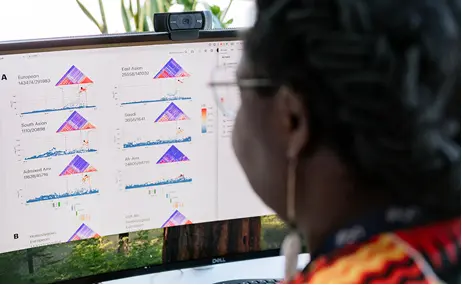
Whole-genome sequencing is now mainstream in medicine and research. But the potential of this technology to improve human health is stifled by a dearth of scientific knowledge on gene variants that cause, rather than simply being associated with, humanity’s most devastating diseases.
One reason for this knowledge gap is the lack of tools for identifying causal genetic variants beyond the relatively small share of the genome that code for proteins. The noncoding genome—which constitutes 98 percent of our DNA—is still uncharted territory, even though it controls protein expression and harbors immense disease susceptibility.
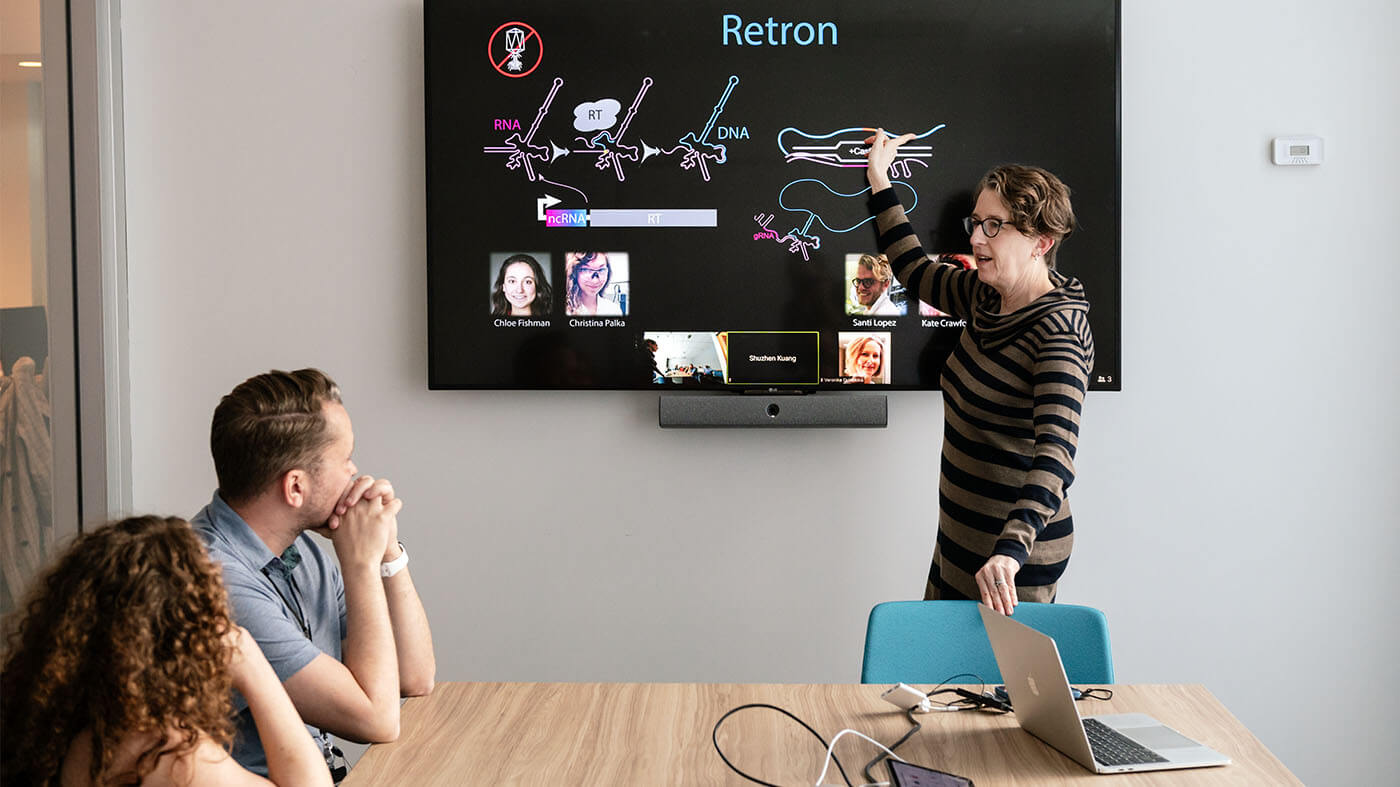
To characterize noncoding genetic variants, the Keck Center for Machine-Guided Functional Genomics is developing a closed-loop platform that combines deep learning, experimental mutagenesis using “editrons” (which leverage retron and CRISPR technologies), and “SAMOSA” long-read genomic methods to understand genome physiology.
This powerful hybrid strategy enables our team to predict and validate causal noncoding variants in a high-throughput and iterative fashion. We seek to accelerate the discovery of causal variants in parts of the genome associated with developmental disorders of the heart and brain, and will deeply interrogate rare and newly discovered variants to expand our understanding of their function.
The Keck Center for Machine-Guided Functional Genomics, supported by the W. M. Keck Foundation, will convert several early-stage technologies developed by Gladstone scientists into a robust, open-source platform that the team will share freely with others to promote discovery science and disease research. The center’s ultimate goal is to foster more effective clinical diagnostics and therapeutics for genetic disorders.
Your gift to Gladstone will allow our researchers to pursue high-quality science, focus on disease, and train the next generation of scientific thought leaders.
DONATE NOW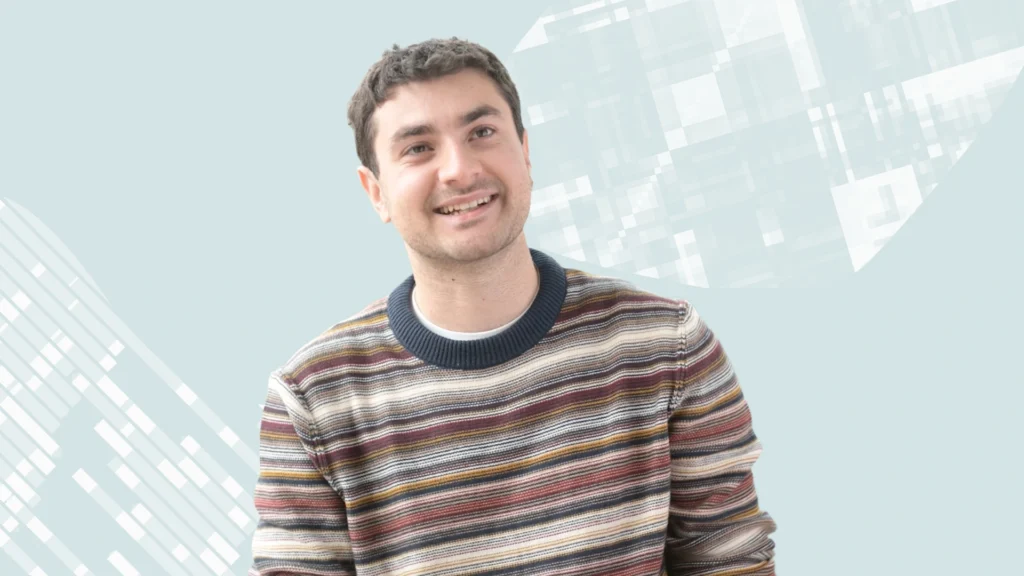
Research associate Sarp Dora Kurtoglu uses AI and gene editing in the Theodoris Lab to search for new ways to stop aortic aneurysms, driven by the patients he hopes his work will one day help.

After more than four decades of dedicated legal and governance leadership, including 22 years as a trustee, Garb will transition to emeritus status in 2027.
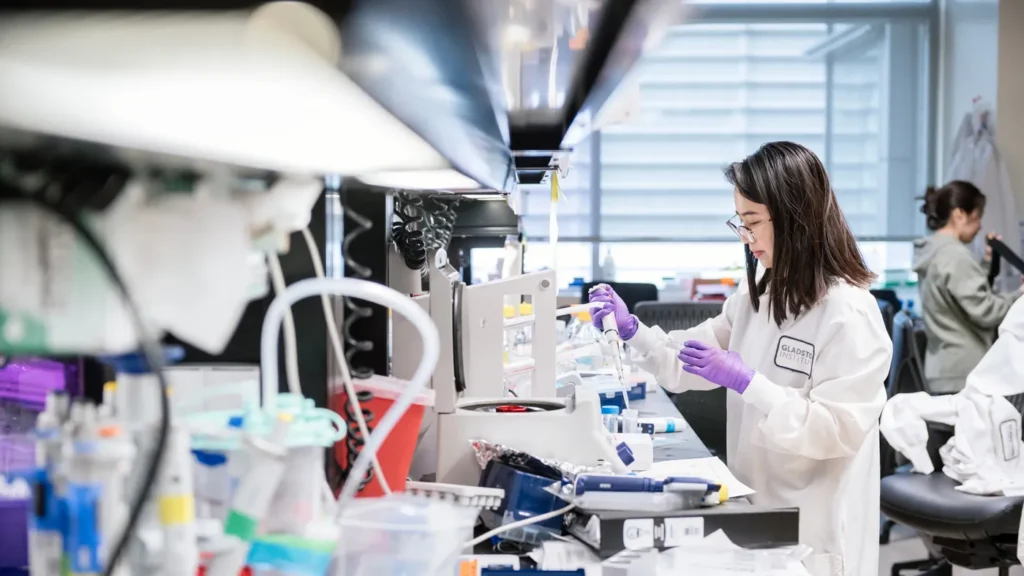
Gladstone scientists discover the dynamic barrier—long defined by what it excludes—imports an unexpected degree of protective proteins into the brain, revealing a new blueprint for treating Alzheimer’s disease.
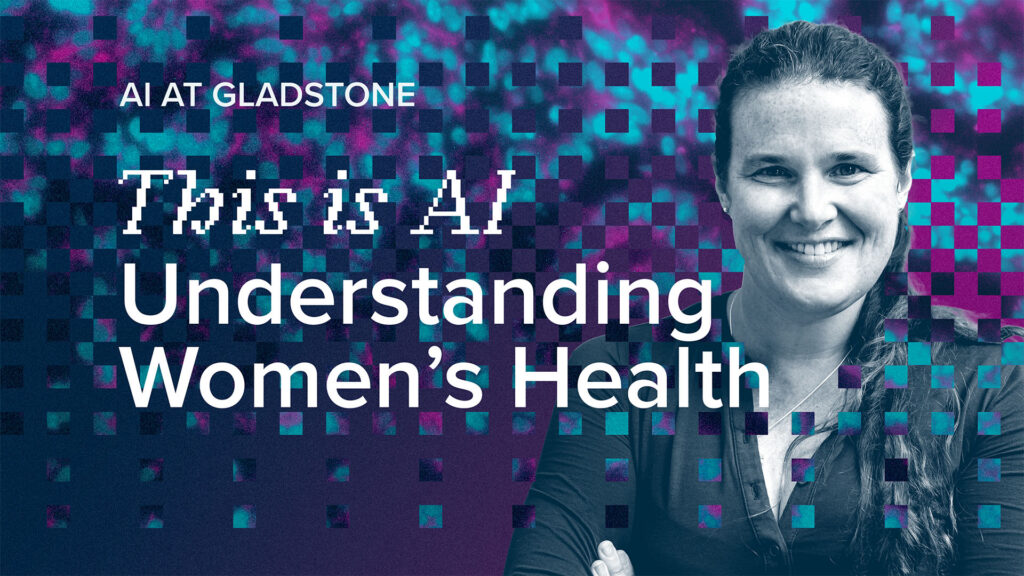
In this video, Barbara Engelhardt and Deepak Srivastava explain how AI can be used to empower women to understand how their periods reflect their health.
Our people are our most important asset. We offer a wide array of career opportunities both in our administrative offices and in our labs.
Open PositionsDiscoveries don’t stay in our labs. Gladstone facilitates spinout companies to advance promising therapies, shortening the path between scientific discovery and helping real patients.
Learn MoreYour gift to Gladstone will allow our researchers to pursue high-quality science, focus on disease, and train the next generation of scientific thought leaders.
Donate Now