Protecting the Heart from COVID-19
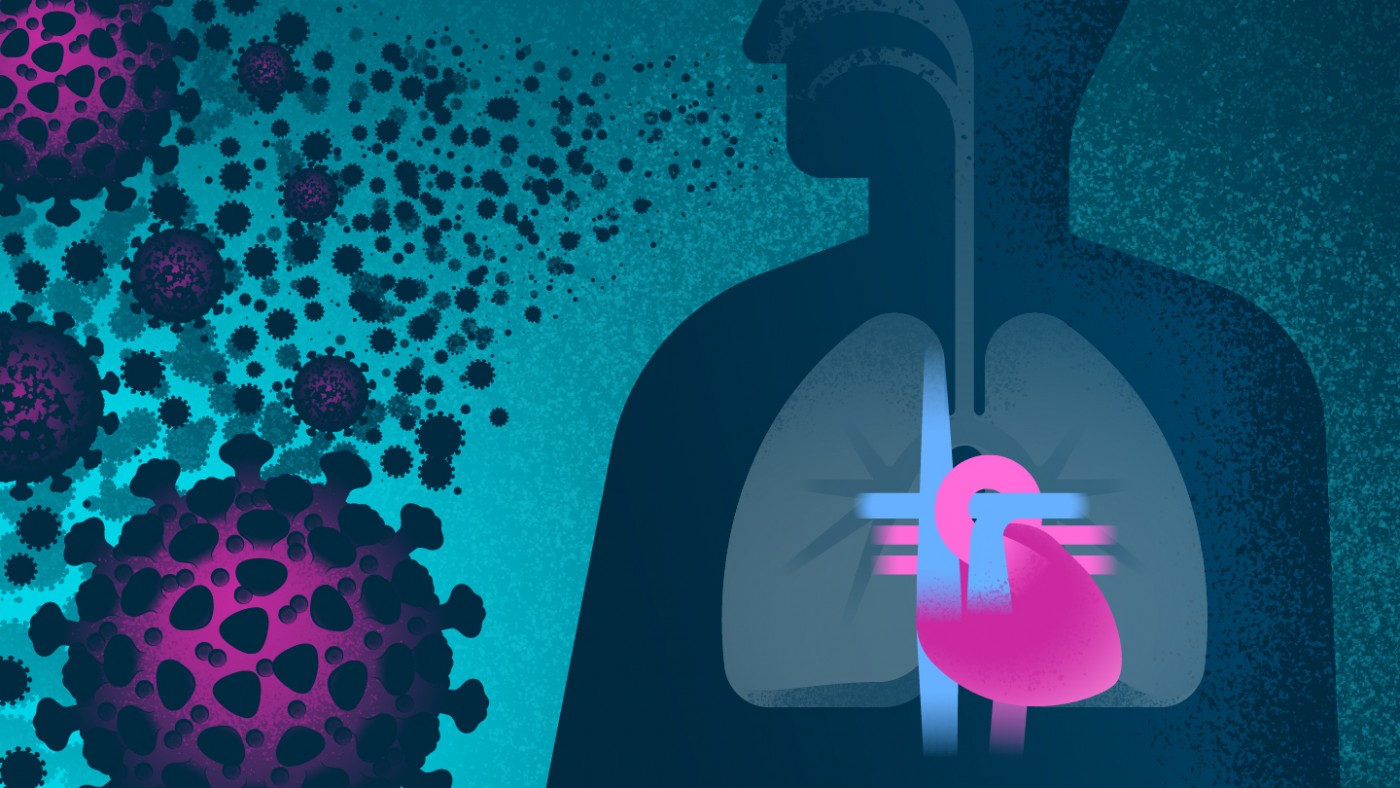
It’s well-known that COVID-19 affects the respiratory system, infecting healthy lung cells with the COVID-19 virus, but if it spreads to the heart it could become a much more deadly disease. A recent study found that in more than 10 percent of COVID-19 cases where heart damage occurred, there was no history of cardiovascular disease. Furthermore, a blood marker for heart damage (troponin) was the single best predictor of death, suggesting that heart damage is a key factor in mortality. Now the virus has been found in heart tissue, and the virus can infect human heart cells in a dish, stopping them from beating. Investigating the link between COVID-19 and damage to the heart is vital to preventing cardiovascular effects in future patients and perhaps finding a treatment for COVID-19 induced heart failure.
Senior Investigators Bruce Conklin, MD, and Todd McDevitt, PhD, are investigating how COVID-19 might damage the heart by asking two questions: How susceptible are the cells in the heart to infection by the virus, and what pharmaceuticals could be used to lessen damage to the heart or prevent the virus from infecting heart cells altogether?
Investigating heart cells and their susceptibility to the virus starts with gathering the cells themselves. In this case, the team will use cardiomyocytes, or heart muscle cells, and cardiac microtissues derived from human induced pluripotent stem (iPS) cells. Studying cardiomyocytes derived from human iPS cells offers the unique chance to follow the virus through the stages of infection and replication in its host. Cardiac microtissues offer an additional advantage in that they are a better approximation of a complex tissue like the heart than simply cardiomyocytes alone.
“Cardiac cells and microtissues are invaluable tools for human cardiovascular research that enable new insights into the causes of disease and discovery of potential therapies. They can model what the heart experiences when challenged by infectious diseases like COVID-19, so that we can directly observe the consequences,” explains McDevitt.
The team will use CRISPR interference (CRISPRi) to discover drug targets that could block viral infection in cardiac cells and microtissues.
“What CRISPRi allows us to do is screen the effects of silencing thousands of genes in parallel simultaneously. It’s like being able to calculate thousands of equations at once, rather than completing them one at a time,” says Conklin.
Screening with CRISPRi will identify genes in cardiac cells that modulate the levels of ACE2, a protein the virus uses to enter human cells. The results of the screening are the specific genes that can be targeted and manipulated by pharmacological agents, or drugs, to prevent or reduce the viral infection of the heart.
With COVID-19, Conklin and McDevitt take the same foundational approach they have previously applied to other cardiovascular diseases. Their work will yield therapies that can be deployed side by side with pulmonary therapies to usher in better outcomes for patients.
Up Next
How a Single Viral Protein Hijacks Immune Cells to Supercharge COVID-19 Infection
A new discovery reveals how a SARS-CoV-2 protein reprograms immune cells to accelerate viral spread—and points to a new strategy for therapeutic intervention.
New Toolkit Turns Macrophages Into Better Cancer Fighters
Gladstone and UCSF scientists developed a method to genetically edit myeloid cells, immune cells that act as the body’s first responders.
New CRISPR Screening Platform Boosts Power of Immunotherapy Against Solid Tumors
A new screening platform uncovers gene edits that enhance CAR-T cells’ ability to infiltrate and eliminate solid tumors.
Long COVID and Immune ‘Soldier’ Cells: A Q&A With Gladstone’s Nadia Roan
New research links long COVID to changes in virus-specific immune cells, particularly in women.

Get Involved
Join the Team
Our people are our most important asset. We offer a wide array of career opportunities both in our administrative offices and in our labs.
Open PositionsPartner With Us
Discoveries don’t stay in our labs. Gladstone facilitates spinout companies to advance promising therapies, shortening the path between scientific discovery and helping real patients.
Learn MoreGive
Your gift to Gladstone will allow our researchers to pursue high-quality science, focus on disease, and train the next generation of scientific thought leaders.
Donate Now