Gladstone NOW: The Campaign Join Us on the Journey✕




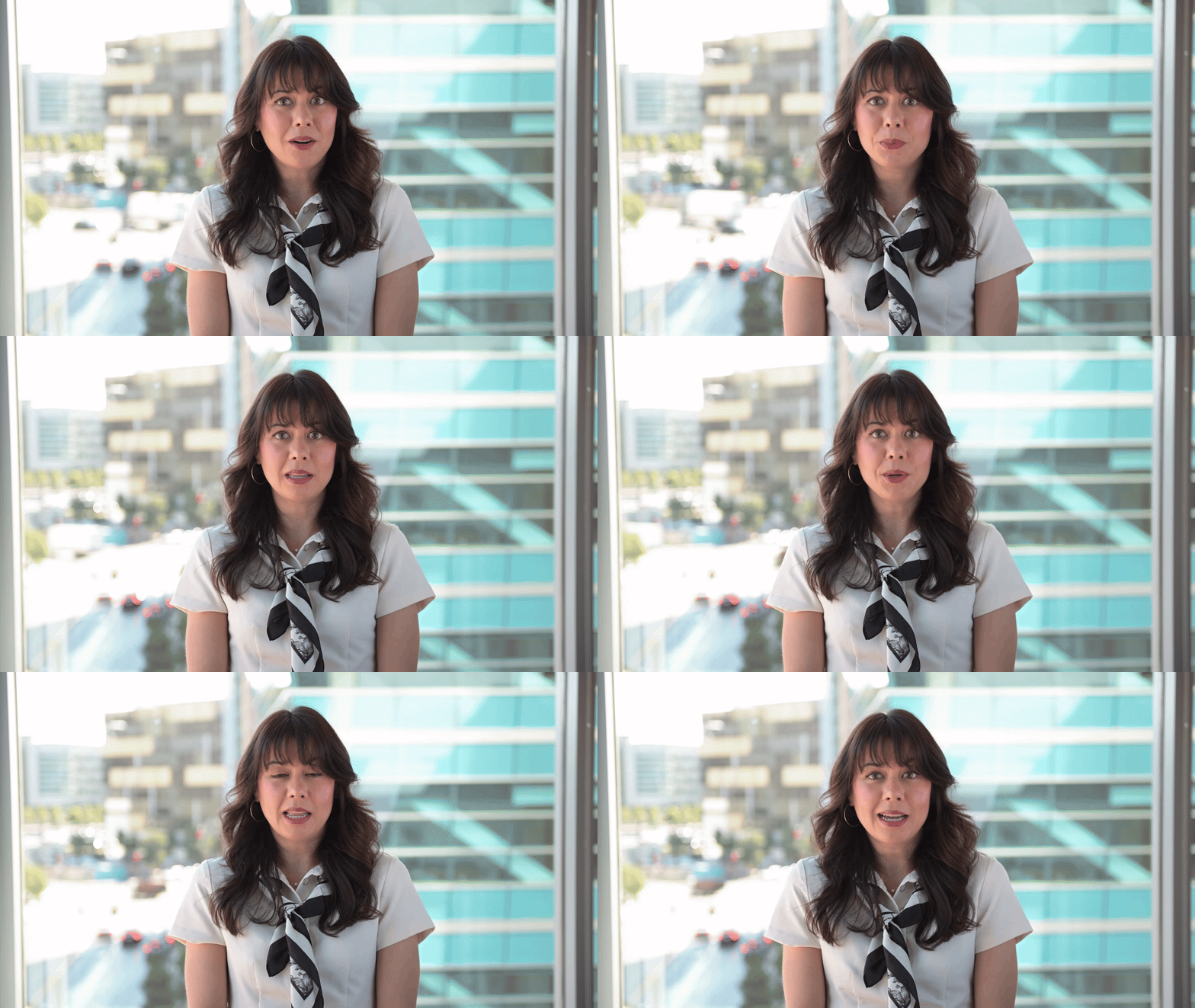
Kim Dam’s journey from the Midwest to the West Coast has been driven by a passion for collaboration and discovery—now, at Gladstone, she’s applying her expertise to help develop innovative vaccines that could transform how we prevent diseases like HIV, influenza, and malaria.
A Midwest girl at heart, Kim Dam, PhD, was born and raised in Wisconsin before moving to Chicago to pursue her undergraduate degree at DePaul University. After that, she headed west to Southern California to complete her PhD in Pamela Bjorkman’s lab at the California Institute of Technology.
After earning her PhD, Dam began working with Magnus Hoffmann—her friend and colleague from grad school—and later moved with him to Gladstone when he launched his lab. Here, as a scientific program manager, Dam leverages her background in structural biology to help engineer and optimize a new vaccine platform being developed in the lab.
What brought you to Gladstone?
When Magnus was offered the opportunity to become an investigator at Gladstone, he convinced me to take the journey to San Francisco so we could continue the projects we had started and expand them in a bigger way. I was excited by the chance to keep building our vaccine platform, but also to do it in an environment that feels truly collaborative and mission-driven.
What do you like about Gladstone?
Gladstone is a really special place. It’s small in the best way, and the mission feels aligned across scientists, staff, and leadership. People are genuinely invested in each other’s success, and there’s a community feel that makes it easy to ask for help, share ideas, and learn quickly.
Who or what has been your biggest influence in your scientific career?
I have always been inspired by women in science, from trailblazers like Rosalind Franklin, Marie Curie, and Barbara McClintock to modern leaders like Katalin Karikó, Carolyn Bertozzi, and Jennifer Doudna.
What motivates me most is not only what they discovered, but how they did it. Many pursued ambitious questions with creativity, rigor, and persistence, often without the recognition or support they deserved. Seeing that resilience reminds me there is space in science for many styles of leadership, and it pushes me to be bolder in my own work.
On a more personal level, having trained in Pamela Bjorkman’s lab, I saw what it looks like to be a strong female scientific leader. She consistently commanded a room with clarity, confidence, and rigor, and that was incredibly impressionable for me. She showed me you can hold high standards and lead with conviction while still being a thoughtful, supportive mentor, and that example has shaped how I approach science and how I try to show up for others.
What are the key areas of research you’re focused on?
My research focuses on developing next-generation vaccines against pathogens that have historically been difficult to vaccinate against, including HIV, influenza, and malaria.
At a high level, vaccines work by preparing the immune system in advance. They introduce a safe “preview” of a pathogen so immune cells can learn what to look for, build protective defenses, and form immune memory that helps respond quickly if you encounter the real infection later.
Traditional vaccines often provide this preview using an inactivated pathogen or a purified piece of it. mRNA vaccines—like the COVID vaccines introduced by Pfizer and Moderna—take a different approach by delivering a short-lived set of genetic instructions, called mRNA, that prompts your own cells to temporarily produce a harmless pathogen protein, known as an antigen, for the immune system to study.
Our hybrid mRNA vaccine platform builds on the strengths of conventional mRNA vaccines. In addition to directing cells to make the antigen, it’s designed to drive the antigen to assemble into small, virus-like particles that bud from the cell surface. These particles cannot replicate or cause disease, but they resemble key structural features of viruses. By presenting antigens in a more “virus-like” format, we aim to elicit stronger, more durable immune responses.
Ultimately, my work is about learning how to present the right antigens in the right way to guide the immune system toward the kinds of responses that have been hardest to achieve with traditional approaches. By engineering this platform and testing it across challenging pathogens, we hope to create a more versatile vaccine strategy that can be adapted quickly and effectively to protect people from diseases that still lack reliable vaccines.
What drives you in your research, especially when facing challenges or setbacks?
One of the best—and sometimes hardest—parts of scientific research is that setbacks almost always come with new information. When an experiment fails, it’s frustrating, but it also gives us clues. We can design the next set of experiments to figure out what went wrong, fix it, or approach the problem in a totally new way. That cycle of troubleshooting, iteration, and persistence is where a lot of discovery actually happens.
I’m also really fortunate to have a strong support system. Inside the lab, I work with people who are collaborative, optimistic, and not afraid to roll up their sleeves to solve problems together. Outside the lab, I have friends and family who keep me grounded and remind me that I’m more than my data. On tough days, that combination makes it much easier to reset and keep going.
How does interdisciplinary collaboration enhance the quality and impact of your research?
Interdisciplinary collaboration strengthens our research by bringing different perspectives and complementary expertise to the same problem. Vaccine development spans virology, immunology, molecular engineering, and disease biology. So working across fields helps us design better experiments and move ideas forward more efficiently.
One collaboration I’m especially excited about is with Babak Javid’s lab at UC San Francisco, where we are applying our platform to a tuberculosis vaccine. This is the first bacterial pathogen we’ve targeted, and we’re learning a lot from their expertise in tuberculosis biology, which is helping us adapt our approach beyond viral and parasitic vaccines.
What do you do when you’re not working?
Outside the lab, I love cozy time at home, especially cuddles with my cats, Kiwi and Luna, who fully believe they are the supervisors of my household.
I’m also a huge WNBA fan. While Caitlin Clark is my favorite player, I’m also cheering on the Golden State Valkyries.
What is your hidden talent?
I’m learning to design and sew my own clothes! It has been a creative outlet that’s also kept me humble. The process actually feels a lot like scientific research: you troubleshoot, iterate, and learn from mistakes until something finally works.
What advice would you give to young scientists or students interested in your field?
Seek good mentors. I owe so much of my education and career to people who took the time to teach me, support me, and push me at the right moments. A good mentor helps you build skills and confidence, but also reminds you that science is supposed to be challenging and that setbacks are part of the process.
Want to Join the Team?
Our people are our most important asset. We offer a wide array of career opportunities both in our administrative offices and in our labs.
Explore CareersAn Ancient Genetic Twist and Its Modern Impact on Brain Disease
Article
July 14, 2026
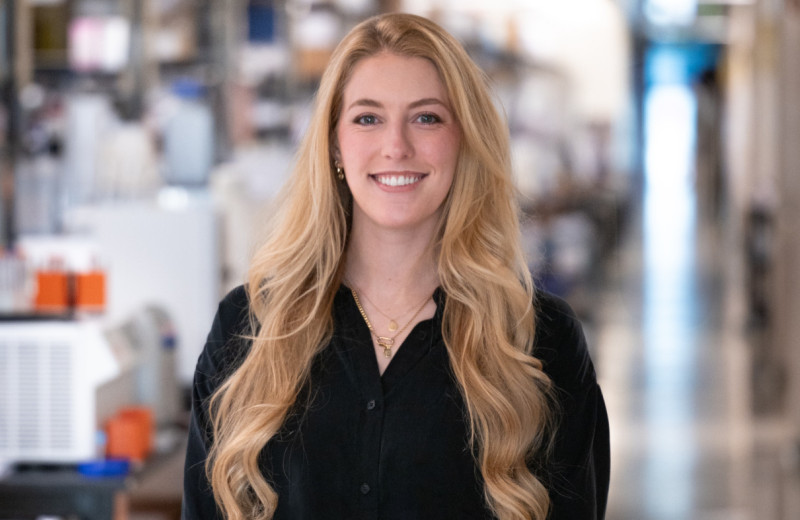
An Ancient Genetic Twist and Its Modern Impact on Brain Disease
NOMIS–Gladstone Fellow Cathrine Sant is studying an enigmatic region of the human genome linked to neurodegenerative disease risk.
Neurological Disease NOMIS Graduate Students and Postdocs ProfileMeet Gladstone: Kevin Pastores
Article
June 23, 2026
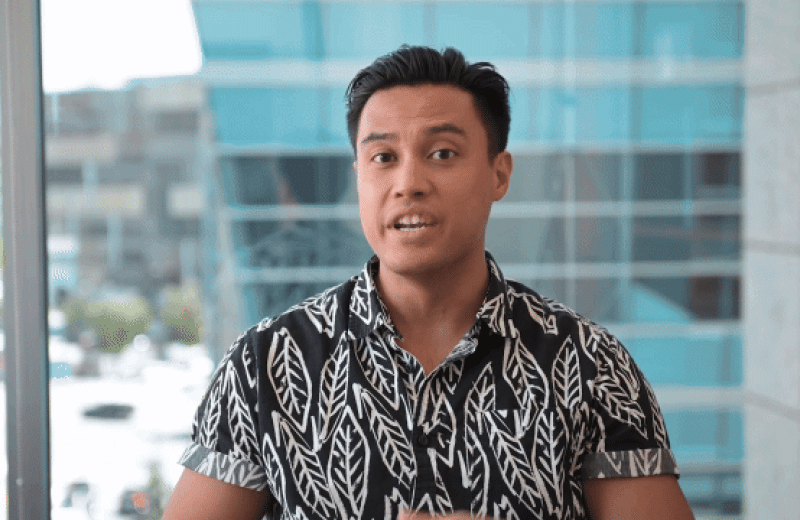
Meet Gladstone: Kevin Pastores
Kevin Pastores, assistant core director of Gladstone’s Flow Cytometry Core, helps researchers across disciplines design experiments, analyze complex cellular data, and harness emerging technologies like AI to accelerate discovery.
Profile Flow Cytometry CoreMeet Gladstone: Shu Zhang
Article
April 22, 2026
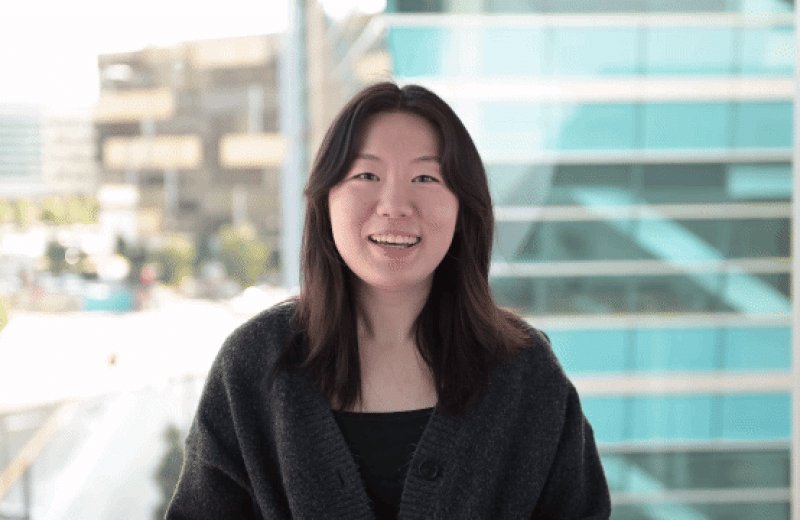
Meet Gladstone: Shu Zhang
Graduate student Shu Zhang uses machine learning to reveal how DNA variation shapes genome structure and drives disease.
Postdoctoral and Graduate Student Education and Research Development Affairs Graduate Students and Postdocs Profile