Gladstone NOW: The Campaign Join Us on the Journey✕
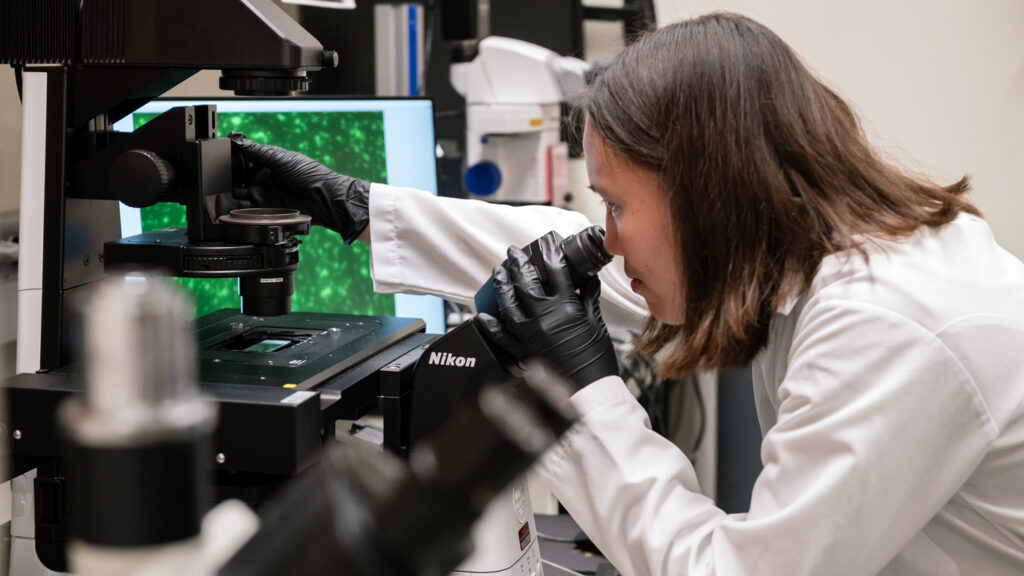
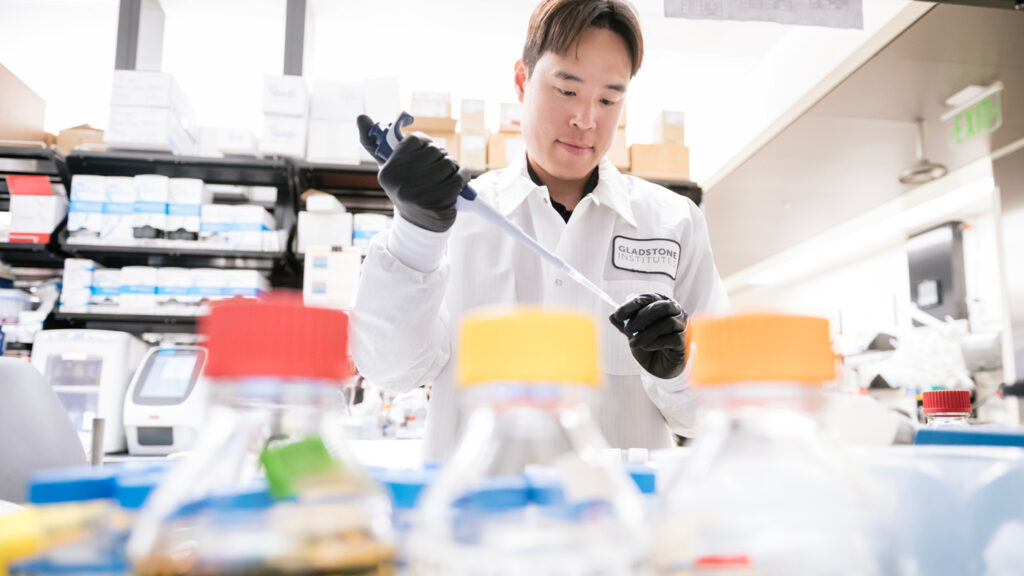
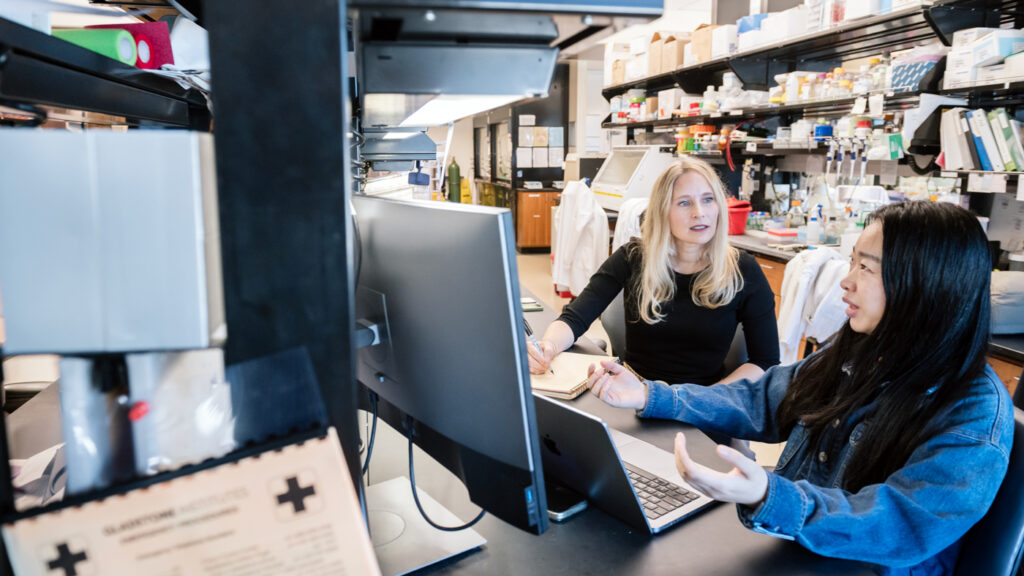
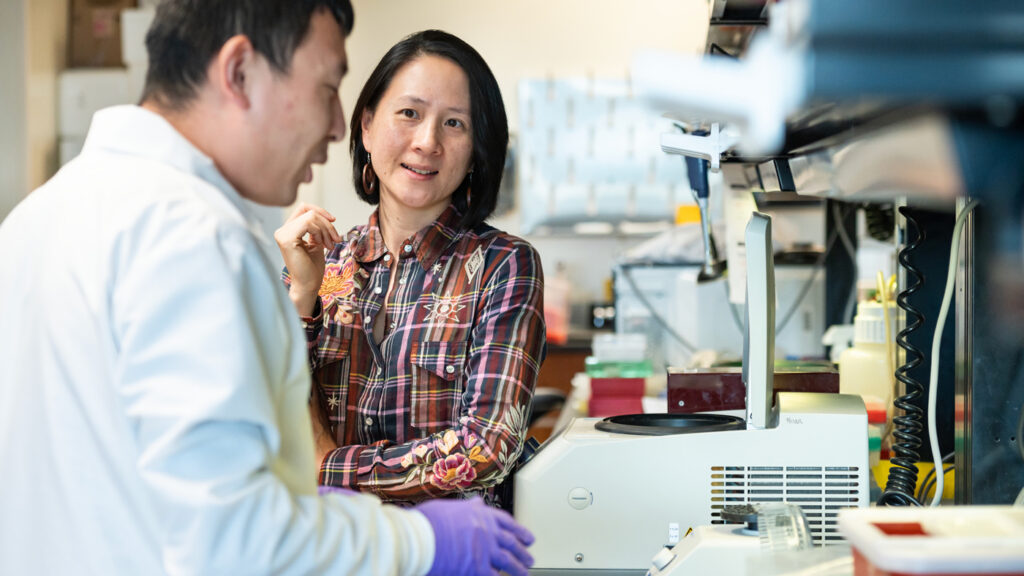
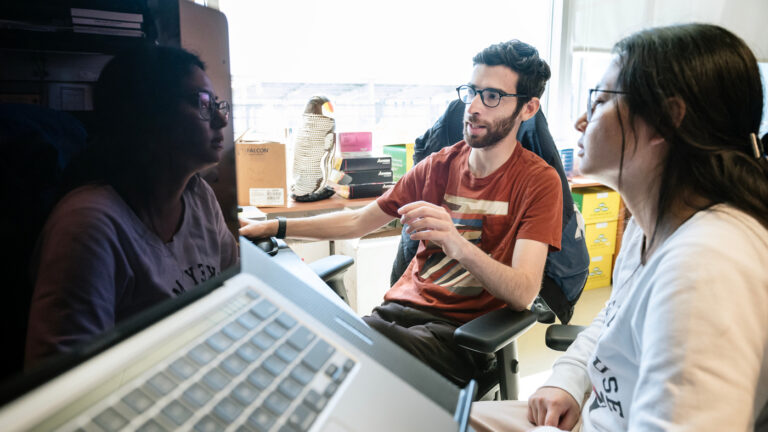
Nadia Roan (right) and her team—including Kailin Yin (left)—uncovered links between long COVID and changes in virus-specific immune cells, particularly in women.

Extreme fatigue, a racing pulse, shortness of breath, brain fog, aching joints—the symptoms of long COVID can vary widely, change unpredictably, and be difficult to even recognize as signs of the condition. Long COVID also remains difficult to treat, as no standard treatments yet exist.
To develop better care for long COVID, scientists need to understand what drives it. But its complex landscape of symptoms arises from equally complex biological mechanisms that may differ considerably from patient to patient. At Gladstone Institutes, new tools and discoveries are rapidly filling in the blanks.
Most recently, researchers in the lab of Nadia Roan, PhD, found evidence that people with long COVID have distinctive changes in immune cells specialized to protect against the virus that causes long COVID, alongside similar changes in cells that protect against two herpesviruses. The findings appear in Cell Reports Medicine.
We spoke with Roan, a senior investigator at Gladstone who is also a professor at UC San Francisco, about the new study and how it could influence the future of long COVID research.
The pandemic may be behind us, but COVID-19—and its accompanying long COVID—is unfortunately here to stay. Vaccination decreases your risk of long COVID but does not prevent it, and the more times you get COVID-19, the higher your risk. Long COVID impacts society in sometimes severe, heartbreaking ways. I’ve spoken with people who had their entire lives turned upside down, who had to take a leave from work and stop living their pre-COVID lives, because of long COVID.
We have not seen much success against long COVID with existing antiviral drugs. Doctors might prescribe anti-inflammatory drugs, and patients may try many different things to see what works. Still, there is no proven effective therapy.
Most likely, there will not be one treatment that works for everyone, because what’s really clear is that long COVID is heterogeneous, meaning it can have multiple causes. But we still don’t have a good understanding of exactly what causes it.
A major hallmark of long COVID is dysregulation of the immune system. In general, immune cells in people with long COVID tend to look different from immune cells in people who fully recovered from SARS-CoV-2 infection. For instance, in 2024, we reported that some immune cells behave in unusual ways in people with long COVID.

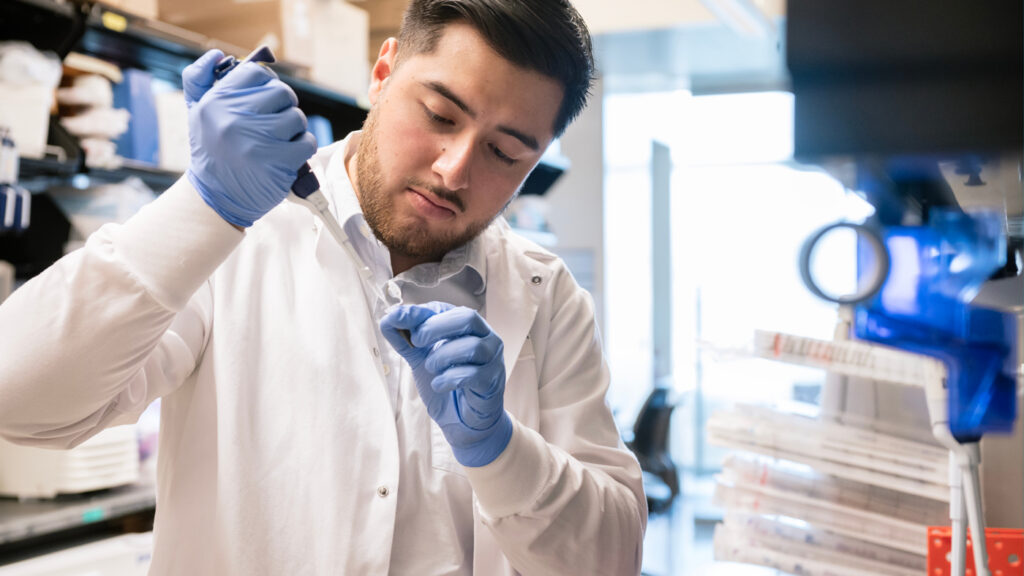
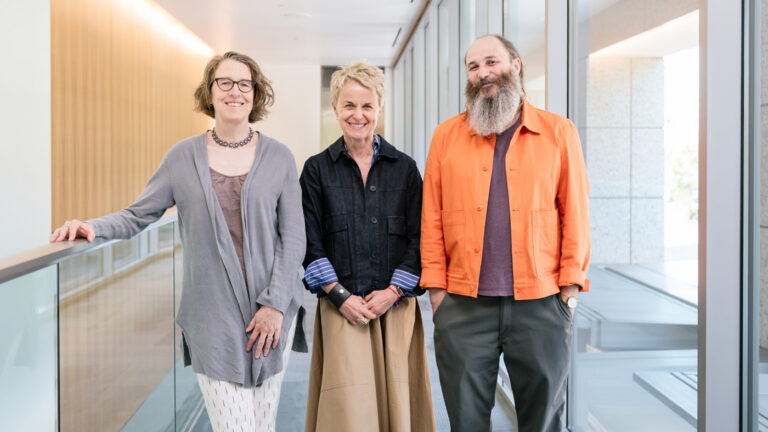
Tongcui Ma (right), the study's first author, and her colleagues used advanced techniques to study samples from people with particularly severe forms of long COVID. In this photo are also Irene Chen (left) and Rahul Suryawanshi (center).
Some intriguing evidence suggests that the normal characteristics of a certain type of immune cell, CD8 T cells, are perturbed in people with long COVID. CD8 T cells are the specialized “soldiers” of the immune system, because they can detect cells infected with a specific virus and destroy them to hopefully halt infection, while sparing healthy cells.
Each CD8 T cell is really, really specific. So, a CD8 T cell specialized against the flu virus will target cells infected with flu but spare cells infected with, say, a common cold virus. Some CD8 T cells are specialized to recognize SARS-CoV-2, the virus that causes COVID-19. But in the context of long COVID, most studies have only looked at CD8 T cells as a general category, so we were really interested in studying different virus-specific CD8 T cells.
It’s not easy to study these cells. Of the limited amount of prior research on virus-specific CD8 T cells in the context of long COVID, most used methods that couldn’t tell you for sure what the state of the cells had been in people’s bodies, before they were sampled in a blood draw and studied in the lab.
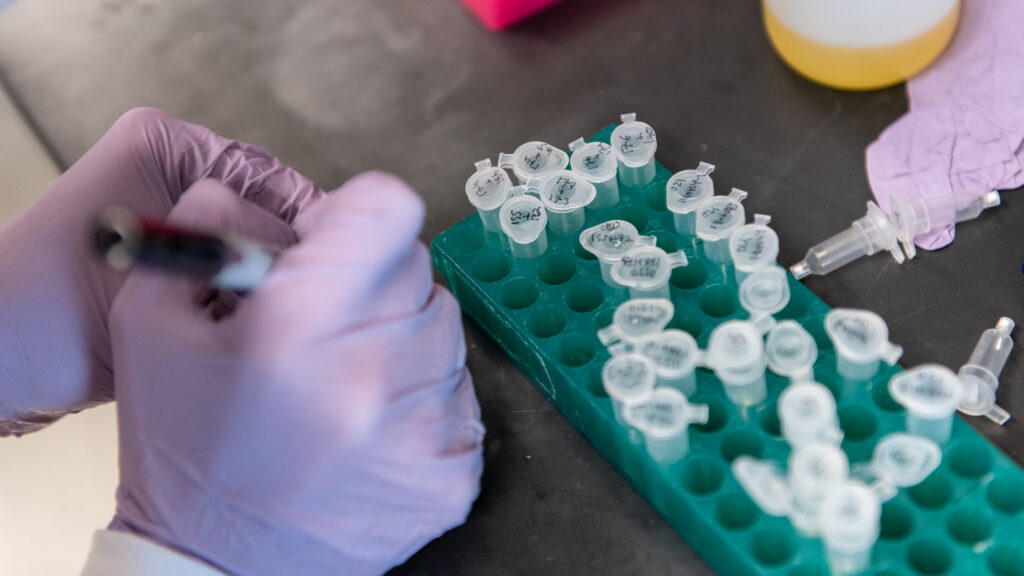
But one of the collaborators on this study, Evan Newell, PhD, of the Fred Hutchinson Cancer Center in Seattle, had developed a new tool, called combinatorial tetramer technology, that detects virus-specific CD8 T cells in blood samples without perturbing them, so they are as close as possible to their original state. We combined that with CyTOF, another advanced technique that deeply characterizes cellular features by detecting levels of 29 different proteins that can impact a T cell’s function. It’s essentially a 29-dimensional view.
We also have access to samples from a pristine group of long COVID patients and matched controls. I say pristine because when their blood was drawn, they had only been infected once, and vaccines were not yet available, limiting the amount of variables that could potentially affect immune responses and complicate the data. For the same reason, we only included patients with particularly severe forms of long COVID (such as those who experienced many symptoms). The patients are part of the UCSF-led study LIINC—Long-term Impact of Infection With Novel Coronavirus.
There is actually quite a bit of evidence suggesting that two herpesviruses, Epstein-Barr virus and cytomegalovirus may be potential drivers of long COVID. For instance, people with long COVID have significantly higher levels of Epstein-Barr virus antibodies. These are both extremely common viruses; most of us have them and they usually do not cause active disease, but they can cause disease in certain cases, such as in immunocompromised people or people with severe infections like COVID-19.
So, we used our technologies to detect CD8 T cells specific for SARS-CoV-2, Epstein-Barr virus, and cytomegalovirus in samples from our cohort. We also compared them with people who had previously experienced severe acute COVID-19 but recovered without developing long COVID, to see if there were any differences.
Our biggest finding was that, even though they target completely different viruses, these three virus-specific CD8 T cells shared certain features in people with long COVID that were not present in the people without long COVID. These cells showed signs of being worn out from repeatedly responding to the viruses they are designed to fight.
Perhaps most interestingly, all three types also appeared to be extra cytolytic, meaning they were had a high ability to destroy infected cells in a fiery manner. People with active COVID-19 do have lots of cytolytic CD8 T cells, but levels typically drop after recovery. It seems that in people with long COVID, these levels remain high. An inability to shut down the cytolytic response could be a possible driver of long COVID, or it could be a result of long COVID; for now, it’s a chicken-versus-egg question.

Kailin Yin (left), seen here with Julie Frouard (right), and other scientists in Roan's lab found that long COVID may not be the same disease in men and women.
Another really important finding was that the enhanced cytolytic features were especially pronounced in women with long COVID, as compared to men. Long COVID is much more prevalent in women, and this reinforces how essential it is to include women in disease research.
Because long COVID starts with SARS-CoV-2 infection, we expected to find the most differences in SARS-CoV-2-specific CD8 T cells in people with long COVID. But the most profound changes were actually in cytomegalovirus-specific CD8 T cells.
We don’t know yet what that means, but our findings add to evidence that keeps popping up that cytomegalovirus and Epstein-Barr virus may play key roles in long COVID, and now we know specific molecular features of the CD8 T cells that may be involved.
These immune changes are not necessarily permanent, and many people with long COVID do get better over time.
Can we design a therapy that accelerates that process? We are still in the early stages, trying to better understand this condition, but studies like ours will hopefully lead toward new treatments. Our findings also highlight the heterogeneity of long COVID, particularly that it may not be the same disease in men versus women.
At Gladstone, we recently developed a mouse model of long COVID that we hope will help us answer some of those chicken-versus-egg questions about what causes long COVID, as well as quickly test potential new treatments. We are also expanding beyond blood samples to study samples of patients’ tissues, where most of the action actually happens when immune cells are activated.
Some of this work will be in tissues of the female reproductive tract, and we are thrilled to have been awarded a grant to further investigate sex-specific differences in long COVID. We will look at factors such as hormonal effects and sex-specific genetic differences. And thanks to our new technologies and tools, we’ll be able to have a much deeper view of what’s going on at the cellular level than we could have in the past.
The paper, “Persistence of cytolytic CD8+ T cells recognizing SARS-CoV-2 and herpesvirus epitopes in people with Long COVID,” appears in Cell Reports Medicine on July 29, 2026. In addition to Roan and Newell, authors are Tongcui Ma and Kailin Yin of Gladstone; Heeju Ryu of Fred Hutchinson Cancer Center; and Thomas Dalhuisen, Doug Robbins, Tyrine Bailey, Sean Thomas, Emily Fehrman, J. Daniel Kelly, Jeffrey Martin, Kara Lynch, Sulggi Lee, Steven Deeks, Timothy Henrich, and Michael Peluso of UC San Francisco.
The work was supported by the PolyBio Foundation, the Van Auken Private Foundation, David Henke, Pamela and Edward Taft, the Hakman/Nyhus family, the National Institutes of Health (R01 AI193318), the National Research Foundation of Korea (RS-2024-00405650, RS-2026-25487445), and The James B. Pendleton Charitable Trust.
Gladstone NOW: The Campaign
Join Us On The Journey
In this video, Nadia Roan and Ashley George explain how they uncovered a new path toward long-term health without the need for daily HIV pills.
Gladstone Experts Research (Publication) HIV/AIDS Infectious Disease Roan LabNew research offers a path toward life without daily HIV pills, suggesting common diabetes pill could help achieve long-term remission.
News Release Research (Publication) HIV/AIDS Infectious Disease Roan Lab