Gladstone NOW: The Campaign Join Us on the Journey✕





Gladstone's Michael Alexanian, PhD, is studying two promising genetic avenues for addressing heart failure, a massive global health burden in need of innovative treatments.
Affecting approximately 64 million people worldwide and one of the leading causes of death, heart failure is a global epidemic in dire need of better treatment options. Scientists around the world are working to decode its cellular secrets, hoping to find a way to reverse or prevent the complex disease. At Gladstone Institutes, investigator Michael Alexanian, PhD, is at the forefront of these efforts.
Alexanian seeks to understand what triggers heart failure in the body, with the goal of designing therapies that preserve heart function or restore it from disease. He’s particularly interested in the “on” and “off” switches of certain genes involved in heart health.
Currently, the Alexanian Lab is deeply focused on two particular genes—BRD4 and MEOX1—that are inextricably linked to heart failure.
BRD4 acts as a master regulator for both inflammation and fibrosis, the buildup of scar tissue. And it also directly activates MEOX1—a gene turned on specifically in failing hearts. The heart needs these repair processes to recover from injury, but when they stay active too long, they cause more harm than good.
Alexanian and his team believe targeting these genes could restore normal function in patients with heart failure. He recently received two major research project grants from the National Institutes of Health (NIH) to pursue important questions related to how these genes’ cellular networks can be therapeutically targeted to improve patient outcomes.

Alexanian received two major research project grants from the National Institutes of Health to pursue important questions related to how two genes, BRD4 and MEOX1, trigger heart failure.
First, tell us a bit more about heart failure and why you chose to focus your research in this disease area.
I’m a molecular biologist and I’ve always been fascinated by DNA, the genome, and how genes are regulated. It’s been clear for a while that what makes us so genetically complex is not the number of genes we have; it’s the 98 percent of our DNA that doesn’t make genes at all but rather performs some kind of gene regulatory function. That’s what led me to epigenetics—the study of how external factors such as diet, lifestyle, or disease affects how our genes work.
From there, I could have chosen to dive deeper into any disease area. But I was overwhelmed by the crushing burden of heart failure, which kills nearly half of patients within five years—more than even cancer. It’s a chronic condition where the heart muscle is too weak or stiff to pump enough oxygen-rich blood to meet the body's needs, and it can be triggered by a wide number of other conditions. Because adult heart muscle cannot regenerate, treatments for heart failure are limited and it’s still considered an irreversible condition.
I realized early in my career, and still believe today, that we need molecular biologists to look at cardiovascular diseases—and especially heart failure—in entirely new ways.
One important part of your research involves inflammation, and, in particular, immune cells called macrophages. What role does inflammation play in heart failure?
Inflammation plays an essential role in repairing our bodies. For example, during a heart attack, immune cells arrive at the injury site to begin the healing process. Early immune responders eventually develop into more specialized cells, such as macrophages and neutrophils, which then initiate inflammation and fibrosis. If this didn’t happen, the heart wall could rupture, which would be fatal.
But unlike the skin, which can end these inflammatory and fibrotic processes when a wound is healed, the heart has no natural stop signal. From a therapeutic standpoint, this is a tightrope. When designing a treatment, we don’t want to discourage the initial healing process; we just want to turn it off when it’s done to prevent dangerous scarring.
My lab is particularly interested in the gene BRD4 because our data suggests it acts as a master regulator of immune cells involved in inflammation. Crucially, we found that disrupting BRD4 doesn’t stop macrophages from getting into the heart or blocking essential scar formation. Instead, it shifts macrophages away from a destructive, chronic inflammatory state and toward a healing state. This selectively reduces the runaway of inflammation that drives heart failure. We’d like to harness this as a possible treatment path.
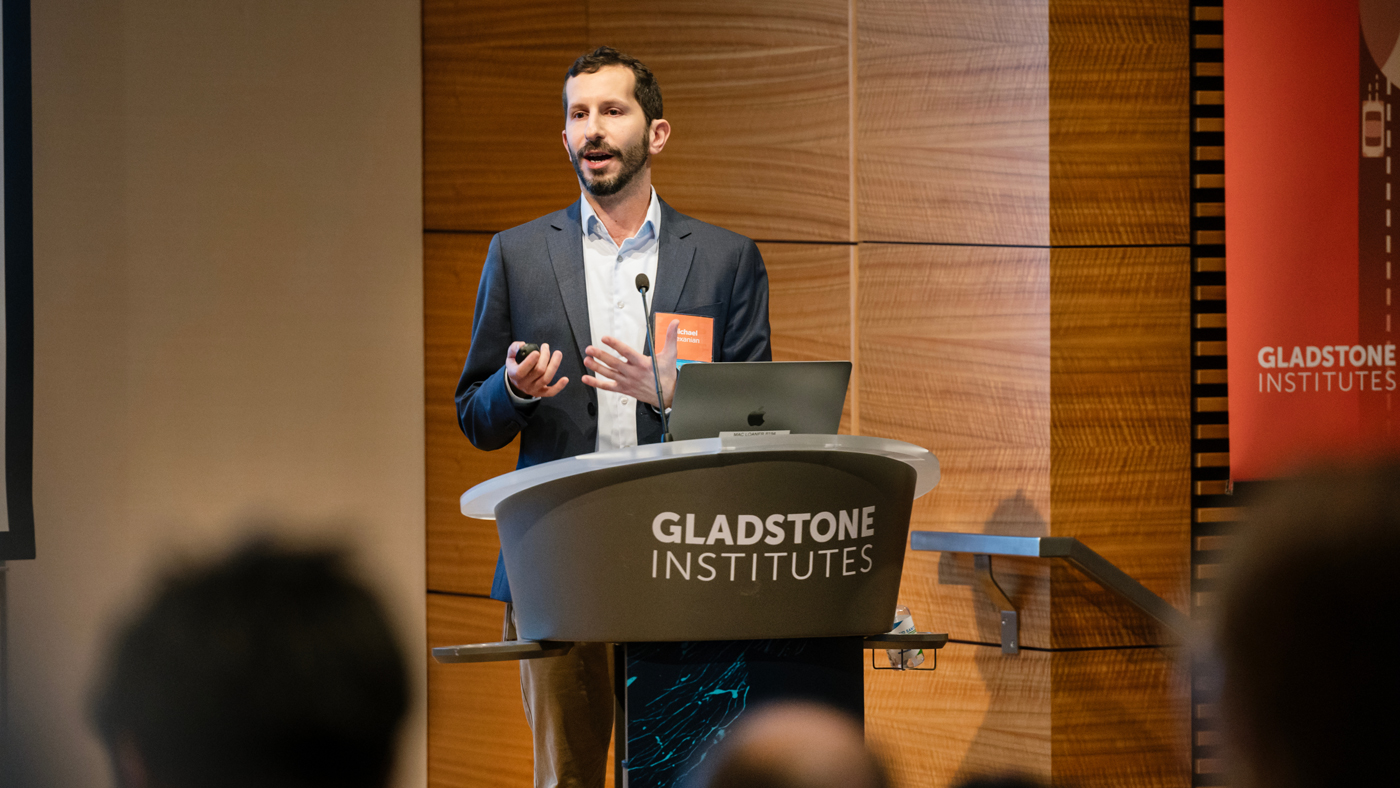
Alexanian hopes that his research will lead to new approaches for treating heart failure, a leading cause of death globally.
Tell us more about the other gene you’re studying, MEOX1, and how it’s involved in heart health.
Scientists once thought chronic tissue scarring, called fibrosis, was simply a passive byproduct of disease. Now, we know that fibrosis plays an active role in organ failure.
We discovered a drug that can significantly improve cardiac performance in animal models of heart failure. But when we withdrew the drug, heart function quickly declined again. This ability to toggle between a diseased and healthy state allowed us to pinpoint exactly which cells were reacting to the drug.
Interestingly, cardiac muscle cells weren’t strongly affected; the most sensitive cells were immune cells and cardiac fibroblasts—the cells responsible for producing scar tissue.
Looking closer at these fibroblasts, we found the gene MEOX1 and its associated protein was at play. It’s virtually invisible in healthy hearts but becomes highly active during heart failure. We found its presence is inversely correlated to heart function: When MEOX1 activity goes up, heart function goes down.
By removing the function of MEOX1 in animal models of heart disease, we successfully mitigated heart dysfunction and decreased fibroblast activation. Now, we want to map its exact gene networks to figure out how to block it safely in humans. We think this is another promising path to improving heart function.
How could your research findings about BRD4 and MEOX1 ultimately lead to better treatments for diseases other than heart failure?
Therapies that block BRD4 are already in clinical trials for cancer; this gene is seen as an intriguing drug target for many conditions. However, BRD4 controls many healthy daily functions across the body, so you can’t just shut them down everywhere. You must be able to shut them down selectively, only where it’s needed. That’s what we hope to do. We’ve already established new mouse models to study MEOX1’s role in cardiac fibrosis, and our next major push is finding therapeutic ways to inhibit this gene and stop disease progression.
The goal of our new NIH-funded projects is to uncover specific cellular partners that interact with BRD4 and MEOX1 so we can find precise pathways to safely target gene activity. Ideally, we want to design therapies that only activate inside the specific diseased fibroblasts or malfunctioning macrophages we want to treat. If the drug hits a healthy cell type, we would want it to essentially remain silent, eliminating toxic side effects.
Importantly, the findings of our research won’t be limited to the heart. Runaway inflammation and fibrosis are driving forces behind so many other chronic diseases affecting the brain, lungs, liver, and kidneys. By cracking this epigenetic code, we hope to give multiple organs the tools they need to break the cycle of chronic scarring and preserve their health.
Featured Experts
Matters of the Heart: A Conversation with Gladstone’s Benoit Bruneau

Article
February 25, 2025
Matters of the Heart: A Conversation with Gladstone’s Benoit Bruneau
Bruneau, director of the Gladstone Institute of Cardiovascular Disease, shares exciting recent advances in heart research and talks about the impact of predictive AI.
Gladstone Experts Heart Failure Cardiovascular Disease Alexanian Lab Bruneau Lab Pollard Lab Theodoris Lab AIGladstone Researchers Discover How Chronic Inflammation Worsens Heart Failure

Article
October 23, 2024
Gladstone Researchers Discover How Chronic Inflammation Worsens Heart Failure
The new findings have implications for developing immune therapies that target heart disease and chronic conditions in other organs.
News Release Research (Publication) Heart Failure Cardiovascular Disease Alexanian Lab Srivastava LabBiomedical Research That “Flows” in New Directions
Article
December 20, 2022
Biomedical Research That “Flows” in New Directions
Improvements in the cell analysis technique known as flow cytometry are helping Gladstone researchers make discoveries in immunology, stem cell biology, cardiology, and neuroscience
Gladstone Experts Flow Cytometry Core Neurological Disease Alexanian Lab Roan Lab