

How an AI Microscope Is Learning to Do Science
Gladstone scientists have developed a thinking microscope that can conduct its own experiments, with the ultimate goal of treating neurodegenerative diseases.

Disease onset can happen at any time, but typically occurs in adulthood, when people are in their 30s or 40s.
Huntington’s disease affects approximately 30,000 people in the U.S., and another 200,000 are at risk of developing the disease. Medicines are available to help manage the symptoms, but there’s currently no cure. Gladstone scientists are working across multiple fronts to better understand the disease and bring more effective treatments to patients.
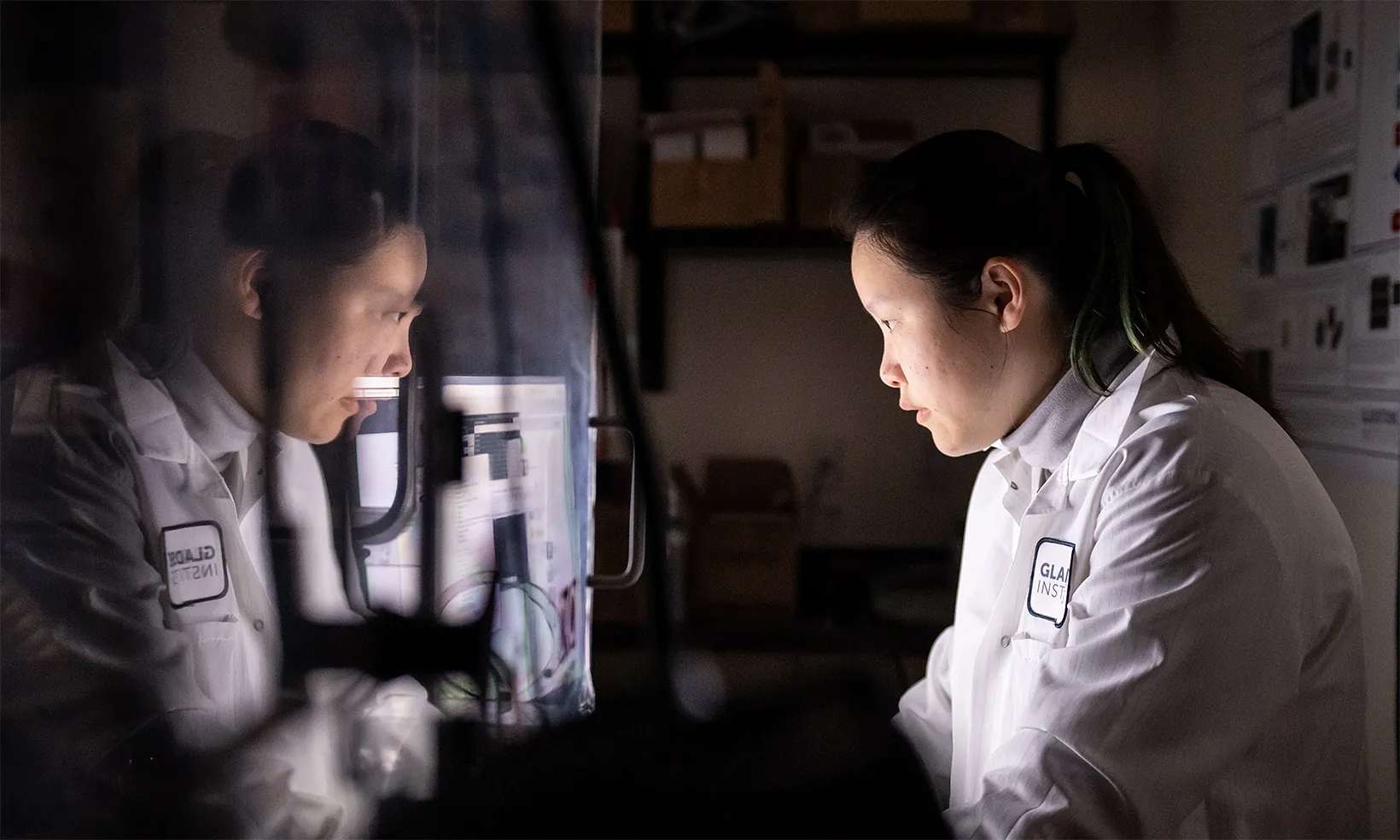
Huntington’s disease is caused by a mutation in a gene that encodes a protein called “huntingtin,” or HTT. The DNA sequence that encodes the huntingtin protein includes a stretch in which the same three bases, C-A-G, are repeated over and over, typically 30 times or more
Huntington’s disease follows an autosomal dominant inheritance pattern, which means a person only needs to inherit one copy of the mutated HTT gene from an affected parent to develop the disorder. Each child of a parent with the mutation has a 50 percent chance of inheriting the gene and developing the disease.
Disease onset typically occurs in adulthood, with symptoms that include involuntary movement of the hands, feet, face, and torso. Over a 10- to 25-year period, patients may also develop memory impairments and other symptoms, and may succumb to pneumonia or heart failure.
For decades, Gladstone scientists have been at the forefront of Huntington’s disease research, uncovering how the mutant huntingtin protein damages brain cells and identifying new opportunities for treatment. Researchers combine patient-derived stem cell models, automated microscopy, artificial intelligence, and human genetics to understand why neurons die in Huntington’s disease and how that process can be stopped. Their discoveries have challenged long-held assumptions about the disease, revealed promising therapeutic targets, and created powerful platforms for testing potential treatments.

Steven Finkbeiner and his laboratory use neurons generated from Huntington’s patients’ stem cells, as well as animal models, to study how the mutant huntingtin protein affects brain cells over time. By tracking individual neurons with sophisticated imaging technologies, the team made a surprising discovery: protein aggregates known as inclusion bodies—once thought to contribute directly to disease—may actually represent a protective response that helps neurons cope with toxic mutant huntingtin. This finding reshaped scientists’ understanding of Huntington’s and opened new avenues for developing therapies that support the brain’s natural defense mechanisms.
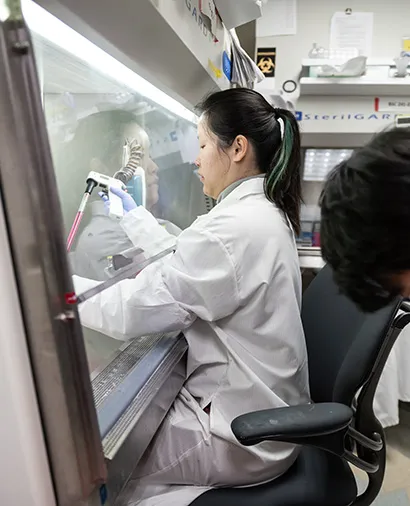
Gladstone researchers, led by Finkbeiner, have built a fully automated, high-throughput platform known as the “Thinking Microscope” that can evaluate potential Huntington’s disease therapies across hundreds of thousands of patient-derived neurons. The system combines advanced imaging, a highly sensitive cell-death biosensor called GEDI2, and machine learning algorithms capable of distinguishing diseased neurons from healthy ones. Scientists can use this platform to rapidly test drugs and genetic interventions, identifying approaches that restore cells to a healthier state. The technology is also supporting collaborations with biotechnology companies developing next-generation Huntington’s disease therapies.
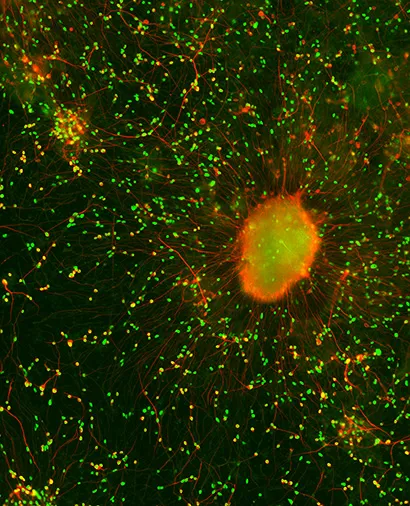
Not everyone with Huntington’s disease develops symptoms at the same age, even when they carry similar disease-causing mutations. Finkbeiner’s team is studying families with unusually early or late disease onset to identify genetic factors that influence progression. Using whole-genome sequencing and gene-editing technologies, Julia Kaye, Finkbeiner, and others have uncovered modifier genes that appear to protect neurons from damage. One promising modifier gene called OTUD3 may help cells clear toxic huntingtin proteins more effectively. By understanding how these naturally protective pathways work, scientists hope to develop treatments that are both effective and safe.

Many of the modifier genes that Gladstone scientists have identified are linked to biological pathways that already can be targeted with existing medicines. Researchers are investigating whether FDA-approved drugs and other compounds can influence these pathways and improve the health of Huntington’s disease neurons. Because these medicines have already undergone extensive safety testing, successful results could accelerate the path toward new treatment options for patients.
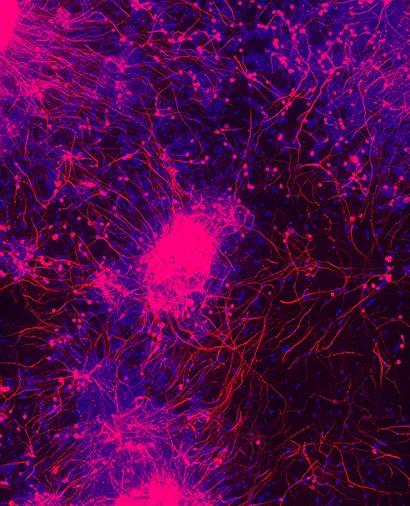
In addition to identifying drug targets, Gladstone scientists are searching for biomarkers—measurable biological signals that can track disease progression or predict treatment response. Several genes identified through the team’s studies, including a gene known as KALRN, show promise as biomarkers and may also represent new therapeutic targets. Better biomarkers could help researchers design more efficient clinical trials, identify patients most likely to benefit from specific treatments, and bring therapies to patients earlier in their disease.
As key members of the National Institute of Neurological Disorders and Stroke’s Huntington’s Disease iPSC Consortium, Finkbeiner and Kaye helped set the foundation for modeling Huntington’s using human stem cells. By turning patient stem cells into medium spiny neurons—the brain cells hardest hit by the disease—they created essential models containing the genetic CAG repeats that drive Huntington’s. This gives scientists an accurate platform to test potential drugs and identify treatments that could protect or save these neurons in actual patients.
Gladstone’s innovative approaches continue to reshape the field. In a seminal Nature paper, Finkbeiner revealed that protein clumps (inclusion bodies) actually protect neurons from mutant huntingtin. More recently, Gladstone researchers applied machine learning to explore CAG expansions, uncovering how the disease operates through both toxic gains of function and losses of normal protein activity.


Gladstone scientists have developed a thinking microscope that can conduct its own experiments, with the ultimate goal of treating neurodegenerative diseases.
A new genetic roadmap reveals hundreds of hidden players in HIV infection, including two proteins that stop HIV in its tracks.
New research offers a path toward life without daily HIV pills, suggesting common diabetes pill could help achieve long-term remission.

Once a godsend, antiretroviral therapy is not what we should settle on. The time has come to finally cure HIV/AIDS.

Our people are our most important asset. We offer a wide array of career opportunities both in our administrative offices and in our labs.
Open PositionsDiscoveries don’t stay in our labs. Gladstone facilitates spinout companies to advance promising therapies, shortening the path between scientific discovery and helping real patients.
Learn MoreYour gift to Gladstone will allow our researchers to pursue high-quality science, focus on disease, and train the next generation of scientific thought leaders.
Donate Now