


Preventing Heart Cells from Turning to Bone
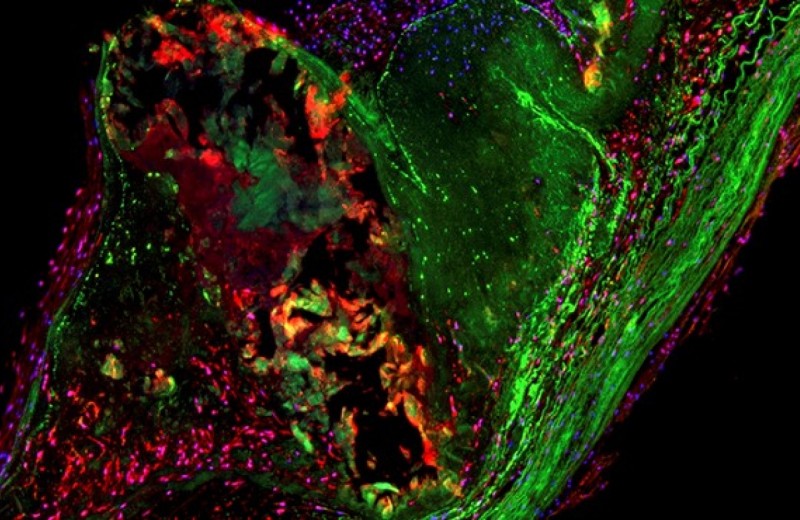
Scientists have discovered why some heart tissue turns into bone, and they may have learned how to stop it.
Srivastava Lab Stem Cells/iPSCsGladstone NOW: The Campaign Join Us on the Journey ✕
106 - 120 of 127 Results Clear All
Scientists have discovered why some heart tissue turns into bone, and they may have learned how to stop it.
Srivastava Lab Stem Cells/iPSCsThe first study to manipulate CRISPR genome editing using small molecules has important implications for correcting disease-causing genetic mutations
Cardiovascular Disease Roddenberry Stem Cell Center Ding Lab CRISPR/Gene Editing Stem Cells/iPSCsBy helping cells switch their type, we may have discovered a new way to repair damaged hearts, and potentially revolutionize the future of medicine.
Srivastava Lab Stem Cells/iPSCsTodd McDevitt will use his background in biomedical engineering to improve and accelerate the development of human tissues from stem cells.
McDevitt Lab Stem Cells/iPSCsWith his unique combination of biology and chemistry, Gladstone’s Sheng Ding is quickly becoming a tour-de-force in the field of regenerative medicine.
Diabetes Ding Lab Stem Cells/iPSCsNew gift from long-time supporter William Younger is helping two top scientists repair damaged hearts and prevent damage in developing ones.
Donor Stories Cardiovascular Disease Bruneau Lab Srivastava Lab Stem Cells/iPSCsSAN FRANCISCO, CA—The power of regenerative medicine now allows scientists to transform skin cells into cells that closely resemble heart cells, pancreas cells, and even neurons.
Ding Lab Stem Cells/iPSCsSAN FRANCISCO, CA—The power of regenerative medicine appears to have turned science fiction into scientific reality—by allowing scientists to transform skin cells into cells that closely resemble beating heart cells.
Ding Lab Srivastava Lab Stem Cells/iPSCsGladstone’s innovative technique in stem cells could boost scientists’ ability to study—and ultimately cure—genetic disease.
Conklin Lab CRISPR/Gene Editing Stem Cells/iPSCsA cure for type 1 diabetes has long eluded even the top experts. Not because they do not know what must be done—but because the tools did not exist to do it.
Diabetes Ding Lab Stem Cells/iPSCsSAN FRANCISCO, CA—A cure for type 1 diabetes has long eluded even the top experts. Not because they do not know what must be done—but because the tools did not exist to do it.
Diabetes Cardiovascular Disease Ding Lab Stem Cells/iPSCsNew study establishes platform for investigating chromosome regulation during early human development.
Yamanaka Lab Stem Cells/iPSCsSAN FRANCISCO, CA—There is no easy way to study diseases of the brain. Extracting brain cells, or neurons, from a living patient is difficult and risky, while examining a patient’s brain post-mortem usually only reveals the disease’s final stages.
Huang Lab Alzheimer’s Disease Stem Cells/iPSCsSAN FRANCISCO, CA—In the aftermath of a heart attack, cells within the region most affected shut down. They stop beating. And they become entombed in scar tissue.
Srivastava Lab Stem Cells/iPSCs Stem Cells/iPSCsSAN FRANCISCO, CA—Shinya Yamanaka, MD, PhD, a senior investigator at the Gladstone Institutes, next month will receive the Essey Award for his “Commitment to a Cure” from The ALS Association Golden West Chapter. This annual award represents the exceptional determination, spirit and dedication to the fight against amyotrophic lateral sclerosis (ALS), also known as Lou Gehrig’s disease.
ALS Yamanaka Lab Stem Cells/iPSCs