Gladstone NOW: The Campaign Join Us on the Journey✕




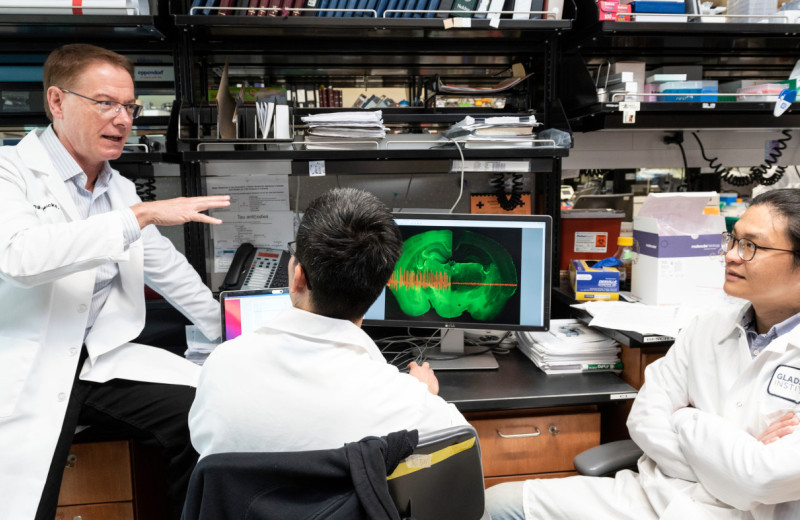
Scientists from Gladstone Institutes, UC San Francisco, and Stanford University, stress-tested genes across the genome in 22 million human immune cells. By using actual human immune cells from blood donors, they could observe how genes function in their natural state.
The resulting dataset helps decode how these genes actually work and how they impact health and disease. It also stands as the largest contribution yet to the Billion Cells Project, a massive effort led by Biohub.
In this video, Gladstone scientists Emma Dann and Ronghui Zhu explain the importance of this study and how it offers a powerful new framework for designing cancer immunotherapies and treating autoimmune conditions.
The study, published in Cell, was led by Alex Marson’s lab at Gladstone and UCSF, in close collaboration with Jonathan Pritchard at Stanford.
Gladstone NOW: The Campaign
Join Us On The Journey
Turning the Tide on Tau: Q&A With Gladstone’s Lennart Mucke
Article
July 1, 2026
Turning the Tide on Tau: Q&A With Gladstone’s Lennart Mucke
Nearly 20 years after his landmark study uncovered novel roles of tau in Alzheimer’s disease, Gladstone's Lennart Mucke shares his perspective on new clinical data that could transform the future of brain health.
Mucke Lab Alzheimer’s Disease Gladstone Experts Neurological Disease News ReleaseThis Is AI Decoding the Genetic Cause of Disease
Video
March 23, 2026
This Is AI Decoding the Genetic Cause of Disease
In this video, Katie Pollard and Deepak Srivastava explain how Gladstone scientists are combining AI models with novel tools in the lab to finally decode the entire human genome.
Gladstone Experts Pollard Lab Srivastava Lab AIScience in Seconds | A New Path Toward Life Without Daily HIV Pills

Video
March 20, 2026
Science in Seconds | A New Path Toward Life Without Daily HIV Pills
In this video, Nadia Roan and Ashley George explain how they uncovered a new path toward long-term health without the need for daily HIV pills.
Gladstone Experts Research (Publication) HIV/AIDS Infectious Disease Roan Lab